We just sent you a verification email. Please verify your account to gain access to
UiPath Forward 2024. If you don’t think you received an email check your
spam folder.
In order to sign in, enter the email address you used to registered for the event. Once completed, you will receive an email with a verification link. Open this link to automatically sign into the site.
Register For UiPath Forward 2024
Please fill out the information below. You will recieve an email with a verification link confirming your registration. Click the link to automatically sign into the site.
You’re almost there!
We just sent you a verification email. Please click the verification button in the email. Once your email address is verified, you will have full access to all event content for UiPath Forward 2024.
I want my badge and interests to be visible to all attendees.
Checking this box will display your presense on the attendees list, view your profile and allow other attendees to contact you via 1-1 chat. Read the Privacy Policy. At any time, you can choose to disable this preference.
Select your Interests!
add
Upload your photo
Uploading..
OR
Connect via Twitter
Connect via Linkedin
EDIT PASSWORD
Share
Forgot Password
Almost there!
We just sent you a verification email. Please verify your account to gain access to
UiPath Forward 2024. If you don’t think you received an email check your
spam folder.
In order to sign in, enter the email address you used to registered for the event. Once completed, you will receive an email with a verification link. Open this link to automatically sign into the site.
Sign in to gain access to UiPath Forward 2024
Please sign in with LinkedIn to continue to UiPath Forward 2024. Signing in with LinkedIn ensures a professional environment.
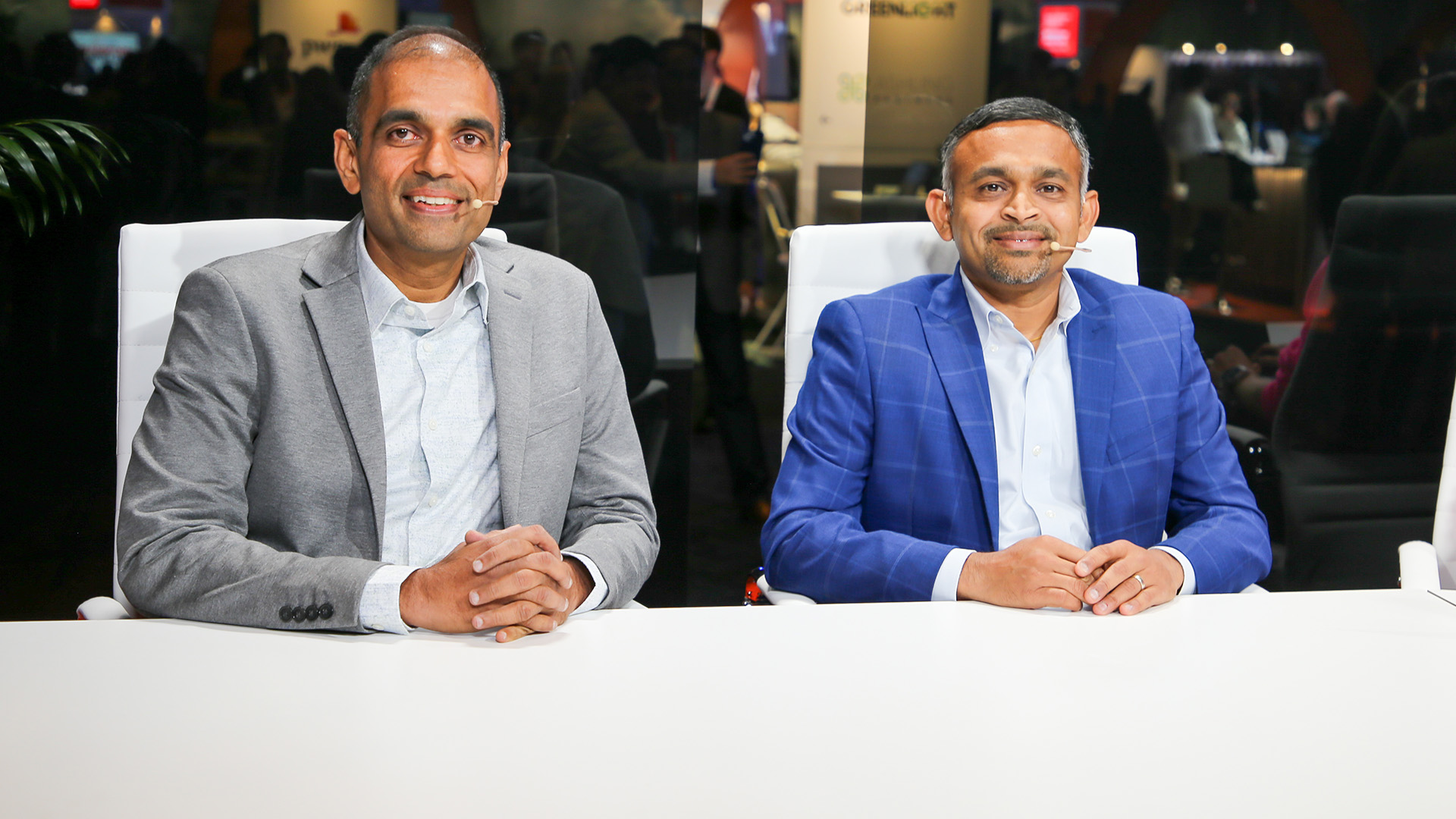
TheCUBE's Live coverage of UiPath Forward 2024 in Las Vegas features Srinivas Nagarajan, VP product and operations at Deluxe, and Prashanth Krishnamurthy, SVP and Growth Officer at qBotica. Deluxe is a leader in the payments industry, providing solutions for financial institutions to process payments efficiently. qBotica focuses on building AI and automation solutions for customers. Srinivas discusses how automation is driving operational efficiencies at Deluxe, streamlining processes and enhancing customer experience. With over 20 automations implemented, si...Read more
exploreKeep Exploring
What do Srinivas Nagarajan and Prashanth Krishnamurthy have to say about their companies and roles in the industry?add
What are some examples of how Deluxe utilized AI and automation to streamline their contract management processes and improve accuracy in payments and time tracking?add
What were the key factors in building trust and confidence in the collaboration between the organizations working together?add
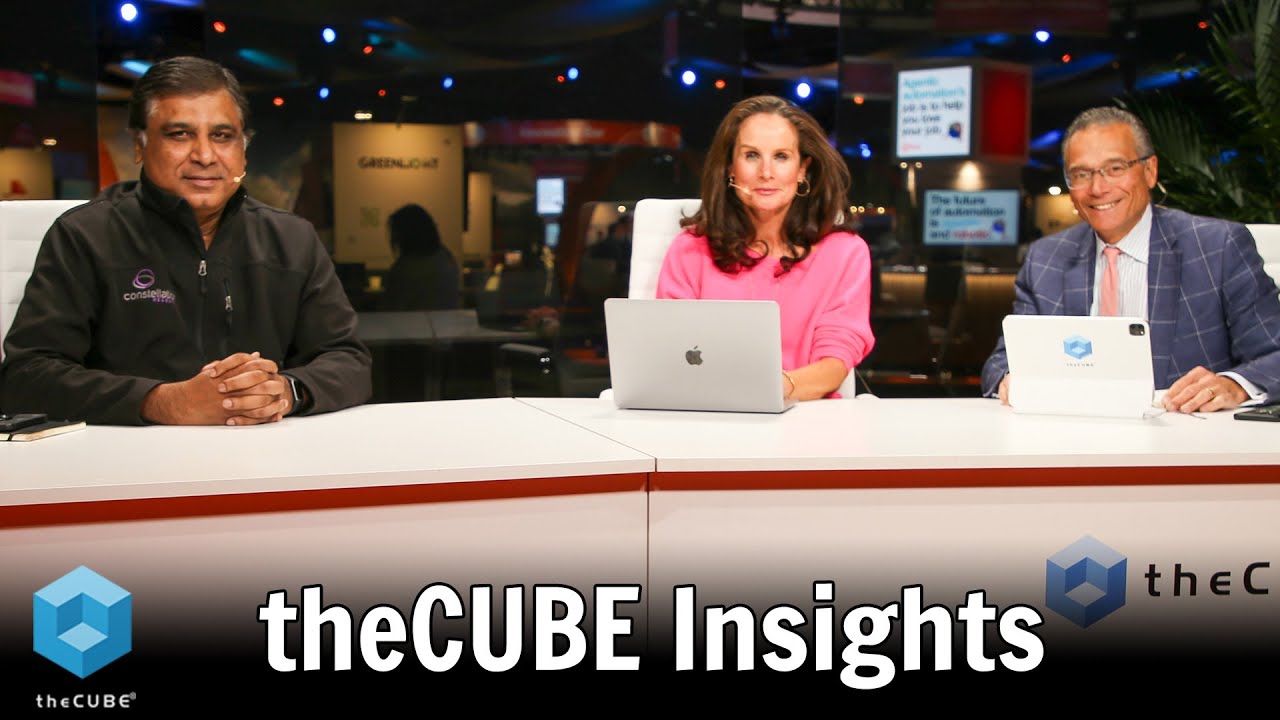
>> Hello, everyone, and welcome back to theCUBE's Live coverage of UiPath Forward 2024 here in Las Vegas. I'm your host, Rebecca Knight, alongside my co-host and analyst, Dave Vellante. We've got two guests coming up here. We have Srinivas Nagarajan, he's the VP product and operations at Deluxe. Welcome, Srinivas, and Prashanth Krishnamurthy. He's the SVP and Growth Officer at qBotica. Thank you so much for coming on the show.>> Hi. Good to be here. Thank you.
Rebecca Knight
>> So, I'd love to have you start, both of you by just introducing yourself to viewers, what your companies are all about, what you do. So, I'll start with you, Srinivas.>> Thank you, Rebecca. As you mentioned, I'm a VP of product and operations at Deluxe. My role within Deluxe is to really drive operational efficiencies and process improvement across the enterprise by leveraging AI and automation. So, those who don't know Deluxe and Deluxe is a long-established original payments company. As a leader in the payment space, we really help financial customers, big banks, large banks, small banks to really help them get paid or pay their customers and users, and also eventually help them grow with us. So, we provide the best-in-class products and solutions, and we keep or try to keep our customers in mind to help them grow with our products and solutions.
Rebecca Knight
>> Excellent. So P.K, tell us a little bit about qBotica.>> Sure. So my name is P.K., And I'm the Chief Growth Officer at qBotica. I was with UiPath for nearly five years before I joined qBotica a few months back. So, I'm very familiar with the UiPath platform, the product, the software. So qBotica is a company that primarily focuses on building AI and automation solutions for customers. We are a small company, so we have a very customer-oriented mindset. But, we are a large company from a delivery standpoint. We've done very complex projects, delivered very complex automation for customers. So, we are kind of mix and match with both. We have been partnering with Deluxe for about a couple of years now. We've helped them build several automations on UiPath. We're building a comprehensive automation roadmap for Deluxe. So, very excited about the partnership, and looking forward to this discussion.
Rebecca Knight
>> So, P.K., you are automation specialists->> Correct.>> Right? You're a professional services consulting company?>> That's correct.>> Right? Okay. And Srinivas, you guys in the payments, you help people get paid. That's a very important business.>> We do.>> So, the most important thing there is, I get it right, and I get it fast. So, how is automation affecting your ability to do those two things?>> That's a great question. For us, automation is a huge area of focus. It's part of our strategy, and the way we would like to think about it is, we don't use automations, not only to just drive innovation to our end customers, but also, we loose automation, AI, to also drive our internal operations more efficiently and more accurately. And so, to your point, what we are really looking at is, looking at our business operations end to end. As we support our customers taking the orders, processing the orders, shipping those orders, how can we provide the best in class experience in terms of making it faster to market, getting the accuracy and the speed that we need, processing information faster, all by leveraging technology and innovation in that space. And so, that's really... We are spending a lot of our time and efforts. And so, we're had a few pilots that we've done so far, or actually, production work with automation, and we're seeing some great results so far.
Rebecca Knight
>> Also, I'd love you to get into that. P.K., do you want to talk about some of the most impactful or innovative use cases you've had so far?>> Sure. So let me take the case of Deluxe, right? So we built a very... It is a complex automation where Deluxe had tons of contracts with suppliers, vendors, and other parties. And, it was all in different formats, different payment terms, and it was very difficult to keep track of how to pay, what to pay for certain people. Right? So, we use the power of AI and automation to bring all of these contracts under one single umbrella. So, now Deluxe has a very clear vision of what these contracts entail, when people should be paid, how much they should be paid. So, now they're able to avoid overpayments or underpayments and get into potential lawsuits and things like that. So, that's one example. There was another example around making sure that the time sheets of employees are coming in regularly, and somebody is tracking them, making sure the hours are accurate and so on. So, these are just a couple of examples, but we have built what, 20 automations so far, Srinivas?>> Yeah.>> We are able to save hundreds of thousands of dollars for Deluxe and for other customers.>> Curious as to how the automations are evolving, with respect to becoming more intelligent. I mean, for example, we're a small company. Cashflow is everything to a small business like ours. And during ZERP, we would get a lot of big... We do business with large companies. UiPath is one example, but big, big companies, right? All the big enterprise tech companies, Amazon, IBM, HPE, et cetera. During ZERP, we would get messages, if you want to get paid fast, we'll give you a little haircut. I'd be like, talk to our CFO. She'd say, "No, we don't... No, that's okay," or, "Yes. Okay, do it." That's dried up as interest rates have increased. Small example, but how are you using intelligence to optimize whatever objective you have, whether it's cash flow, or profitability, or size of payment, et cetera. Are we at that part of the journey yet, or is that sort of future? I wonder if you could comment.>> Yeah, that's a great question, Dave. I think we're actually doing it right now as we speak. I think the first thing we do is just start with an outcome. Right? It all starts with the why and a business outcome. What do we want to achieve as a business? And, for example, the case that PK had mentioned, in that case, we want to get a better understanding of our customers through our legal and contractual documents, right? We want to understand some of the details much faster, easier, so that we can serve them better. So, in this case, for us is superior customer experience, faster experience and more accurate delivery of our service to our customers. And that was a big goal for us. And in this specific case, it required us to really analyze complex legal documents that are in various different formats. Some of them are handwritten. Some of them are PDFs, and some of them you can't necessarily fully understand. But, we had to go through those complex landscape, get the information, digitize it, extract it, classify it, synthesize that information, and then be able to take the right level of action on those contracts and legal documents. And so, that required a whole lot of sophistication. We could have solved that problem through putting more time and more bodies into it, but we didn't necessarily do that, because we knew that putting a human into that, sometimes with that time mundane and repetitive task can be more costly and also can be error-prone. And that's really where we wanted something that is quick, that can be proven in a really short span of time, but also relying on the right tool sets and the right partner, which is really where UiPath came into the picture. We leveraged several of the document understanding capabilities within UiPath, and so we had a strong understanding of the problem, and then we chose the right tool set. In this case it was UiPath. But, more importantly, we already have a trusted partner who has done this before, who has done these implementations before, so that we don't reinvent the wheel. And that's really where qBotica and team brought the thought leadership and the implementation experience. And so, that's where we were able to quickly solve this problem in a really short span of time, which then gathered... Which basically proved that we can provide significant value to our business. In this case, it was more about hours saved. We had about 99.5% accuracy in terms of the information that we are able to understand from these contracts. Second is, we've saved thousands of hours on these contracts and legal documents, which I don't think would've been possible without the UiPath and the AI solutions that we put in place.>> So, what's involved here? You've got RPA, you've got document understanding. Is there process mining going on? All those pieces?>> Absolutely.>> And then, so paint a picture of us, where you are today, the kind of the as-is, and where you're going with Agentic, and what's going to be different?>> Sure, sure. So, it involves all of those components that you just described and more, meaning it's horses for courses. I mean, we need to select the right tool for the right problem.>> Love that term. it's a very British-
Rebecca Knight
>> It is.
Rebecca Knight
>> Chunk and cheese, right? There you go.>> So, we use document understanding, we use Gen AI, we use process mining, communications mining, pretty much leveraging the power of the entire UiPath platform, but making sure we use the right components at the right time to solve the business problem. Right? And, Deluxe is in a stage right now where they've used all of the basic features of automation. They know what automation can bring to the table. So, now we are in the process of building out a very comprehensive roadmap, business unit by business unit, department by department, so that there's an overarching automation program and there's executive alignment. Everybody knows about it, and they have a clear vision of where they want to be in the next two to three years. That's what we're working on.>> Oh, nice.
Rebecca Knight
>> So Srinivas used the T word a lot in his... we were talking about trust.>> Right.
Rebecca Knight
>> And I'm imagining that that is a huge obstacle, because just hearing that a lot of the documents that the AI was having to process were handwritten.>> Correct.
Rebecca Knight
>> And, I know my own handwriting, and I can barely read it a week later. So, I'm just curious how you work with customers to make sure that they are... That, first of all, they can trust the sources of data, and that they can trust how the machines are also interpreting that data.>> So, it's all about the collaboration. So, we can never do this in silos. So, when we work with a customer like Deluxe, Srinivas has been very transparent with this team, the rest of the Deluxe teams, in terms of what you're doing. So, it's a very collaborative effort. Everyone knows what we're doing. We do what is called a user acceptance testing, where the Deluxe folks come in and test what we do. So, that's how we build trust, right? Transparency, communication, being able to tell what the other person is doing. And this just grows over time. And that's what we've seen.>> Yeah. I'd like to add a thought there. I think for us, for me at least within the organization, what's been critical is engaging our stakeholders much early. But, using this as an example, we were able to prove that by leveraging our mission, it can provide significant value. But then, we brought them along the journey. They were from day one, where we looked at the data and we said what AI and automation can do. We showed them the results, and it took us several weeks to tweak and optimize. And then, not only that, then we took that data set and we put it into our sales team and other teams, which had no previous context to it, and they reviewed that information. That made them more comfortable. And so it went through all of those testing and change management, and bringing folks along, which then really helped with the overall and the trust. But, it was not all great and easy to begin with. There was a lot of learnings for us in terms of how we use and leverage data. Compliance and regulatory is huge for us. Deluxe, as a company, we serve some of the biggest banks. Our standards for compliance, regulatory and security, is very, very high. And so, we had to go through those set of checklists and requirements working with the tech team to ensure that the solutions that we put in place are safe, they're used to the strict compliance and security and regulatory requirements, which again, all of that helps from a technology standpoint to also build a little bit more confidence and trust. And then, when we piloted this, we found success, and then we really are trying to scale it now with all of our customer bases.>> So, I have kind of an awkward question given that we're here in UiPath's backyard, but I'll be respectful. So, have you guys seen or heard the Klarna story, right? The VCs talk about Klarna. They're going to replace all their SaaS. And when we started doing surveys with our partner ETR, when ChatGPT first came out, a lot of people felt like, "Oh, well, this is magic. It can replace everything." And RPA was one of those sort of targets. How did you guys react when you saw initial LLMs come out? Was there concern inside your organization or the customer base, or inside... Or maybe not concern, but anticipation that, "Hey," your CFO, "Maybe we don't have to spend all this money anymore. Maybe we can just ask ChatGPT to do it." So we saw that the impact of GenAI on existing software was somewhat negative in the early days. RPA popped up as one of those areas. And then people realized the data has changed. People realized, "Well, this stuff's not so easy. You can't just ask ChatGPT to..." And so we've started to see RPA again, pick up again in those automations as people... Gartner calls it the trough of disillusionment. How did you guys think about that? Daniel talked about today, about the relationship between bots and agents. So, how does this all play out in your mind? I wonder if you could each just go back to what you thought at the time. Did you feel like, "Oh wait, maybe we can replace some of this." Or, did you sort of know that it wasn't going to be that simple?>> Yeah, of course. That's a great question. I think for us, it's proving that value was one of the things that are paramount, right? Once you take some of the key use cases, prove that value to it and show them that there's significant outcomes that you can drive, then it becomes... Opens up the door, opens up for our organization. So, proving that value is being really, really key, but also putting the user in the forefront of everything. Right? I think there's a natural trepidation that, "Hey, automation can come and probably replace my jobs," or, "I don't need to do those anymore. My AI is going to take over." But it's not necessarily really taking over the job, but it's really changing the job. It's really augmenting them. It's showing them new ways of working so that they don't have to do those mundane, repetitive tasks. They can focus their time more on insightful work, analytical work, and an analytical type of work. And more importantly, spend more time with their customers, right? Whether it means servicing them, supporting them, talking to them from a pre-sales, sales and post-sales perspective. But, some of these use cases, deploying them really helped us unlock that education and awareness across the company, which then made it more easier for us to then look at other great opportunities. With this value that we created, now we have other people in our organization reaching out to us and say, "Hey, can you build bot for this? Can AI solve for this problem?" And so on and so forth. So, we've gotten some momentum there, which we're very really thrilled about. Again, it's really around how we go to market, quickly prove with a partner like qBotica, and using and leveraging all the toolsets that we have with UiPath has been really key for us.>> Just to add to what Srinivas said, I'm of the firm opinion that humans can never be replaced. There's never going to be a time on earth where machines are roaming around, and no humans around. I don't think that's ever going to happen. So, as tools evolve, as new technologies come in, it's really up to us to understand what the power of those tools are, how we can use those technologies. And that's why you need humans, because you need somebody to understand and use those technologies. Right? So, tools are going to evolve. New technologies are going to come in. How do you marry what you have today with the new stuff coming in and get the greatest benefit? That is the secret.
Rebecca Knight
>> So we're here at UiPath FORWARD. What are you seeing? What are you hearing? What kind of conversations are you having that makes you most excited to go back to work on Monday?>> Great question. A couple of takeaways for me is we have a theme around transforming the AI. It's huge. It's big. And the whole narrative around AI powered automation, which is now on automation, on steroids. How do you use AI within your automation? I think we talked a lot about automation today. We saw some pretty cool demos today, which I'm pretty sure, those are all the same complex problems that companies like us and many of us are looking to solve. So, I'm pretty excited, pretty upbeat about that, and we're probably going to look into some of that. But, I think the whole process of agent now really trying to help orchestrate and do the automation with an intelligence, I think that is exciting.>> How about you?>> A lot of cool stuff coming out in the market today. UiPath made a few announcements around the new features, new tools that are coming. At qBotica, we are always ready to embrace what's coming new. We have a Tiger team that's looking at new softwares, new products from UiPath, and trying to learn, train our employees, train our customers on how to use it. So, exciting times. I'm just happy we are part of this day and age where we embrace AI.
Rebecca Knight
>> Indeed, it is an exciting time. SrInivas, P.K., thank you so much for coming up.>> Thanks, guys.>> Absolutely. Pleasure.
Rebecca Knight
>> Thank you.>> Thank you for the conversation.
Rebecca Knight
>> I'm Rebecca Knight for Dave Vellante. Stay tuned for more of our live coverage of UiPath forward 2024. You're watching theCUBE, the leader in enterprise tech news and analysis.