We just sent you a verification email. Please verify your account to gain access to
UiPath Forward 2024. If you don’t think you received an email check your
spam folder.
In order to sign in, enter the email address you used to registered for the event. Once completed, you will receive an email with a verification link. Open this link to automatically sign into the site.
Register For UiPath Forward 2024
Please fill out the information below. You will recieve an email with a verification link confirming your registration. Click the link to automatically sign into the site.
You’re almost there!
We just sent you a verification email. Please click the verification button in the email. Once your email address is verified, you will have full access to all event content for UiPath Forward 2024.
I want my badge and interests to be visible to all attendees.
Checking this box will display your presense on the attendees list, view your profile and allow other attendees to contact you via 1-1 chat. Read the Privacy Policy. At any time, you can choose to disable this preference.
Select your Interests!
add
Upload your photo
Uploading..
OR
Connect via Twitter
Connect via Linkedin
EDIT PASSWORD
Share
Forgot Password
Almost there!
We just sent you a verification email. Please verify your account to gain access to
UiPath Forward 2024. If you don’t think you received an email check your
spam folder.
In order to sign in, enter the email address you used to registered for the event. Once completed, you will receive an email with a verification link. Open this link to automatically sign into the site.
Sign in to gain access to UiPath Forward 2024
Please sign in with LinkedIn to continue to UiPath Forward 2024. Signing in with LinkedIn ensures a professional environment.
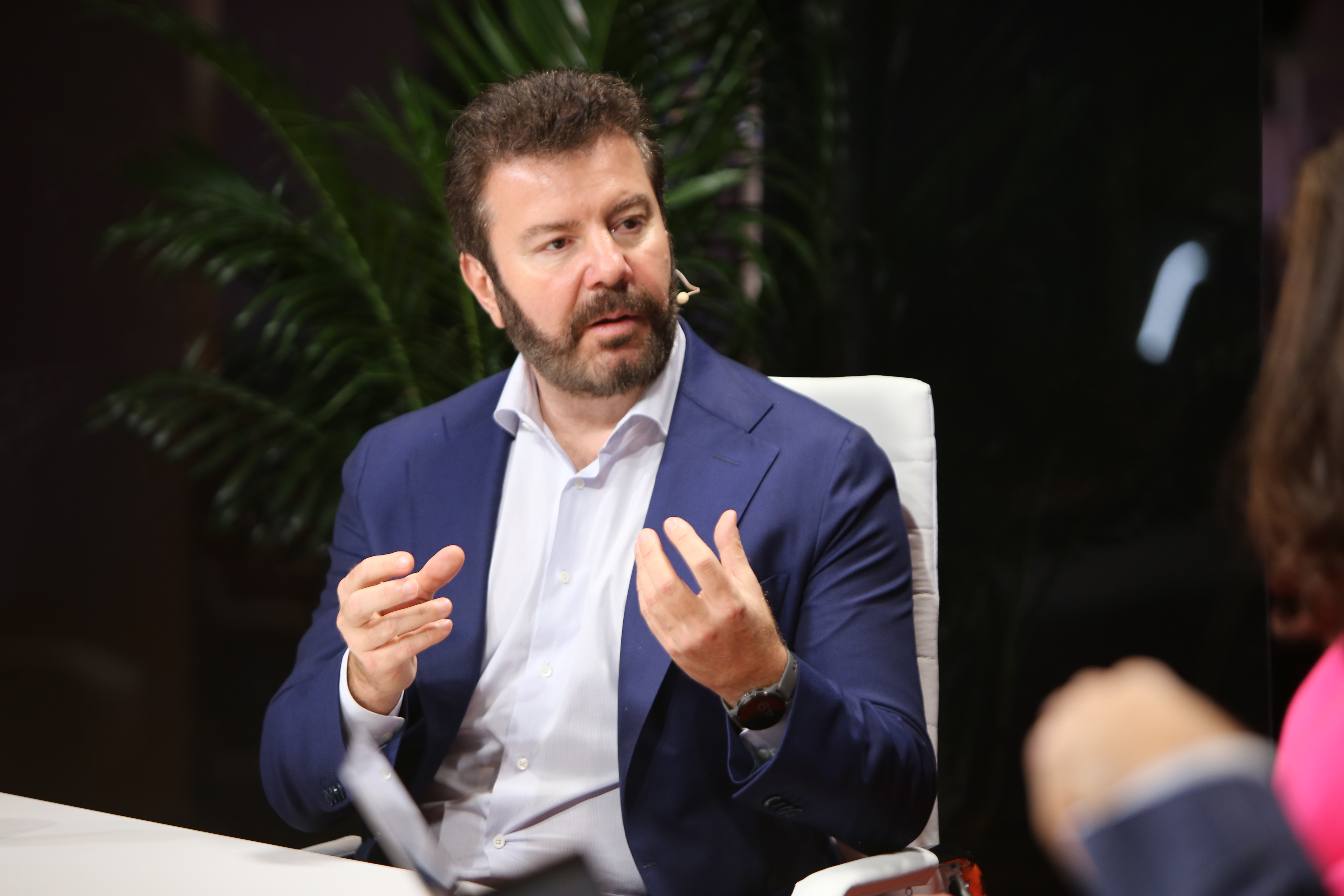
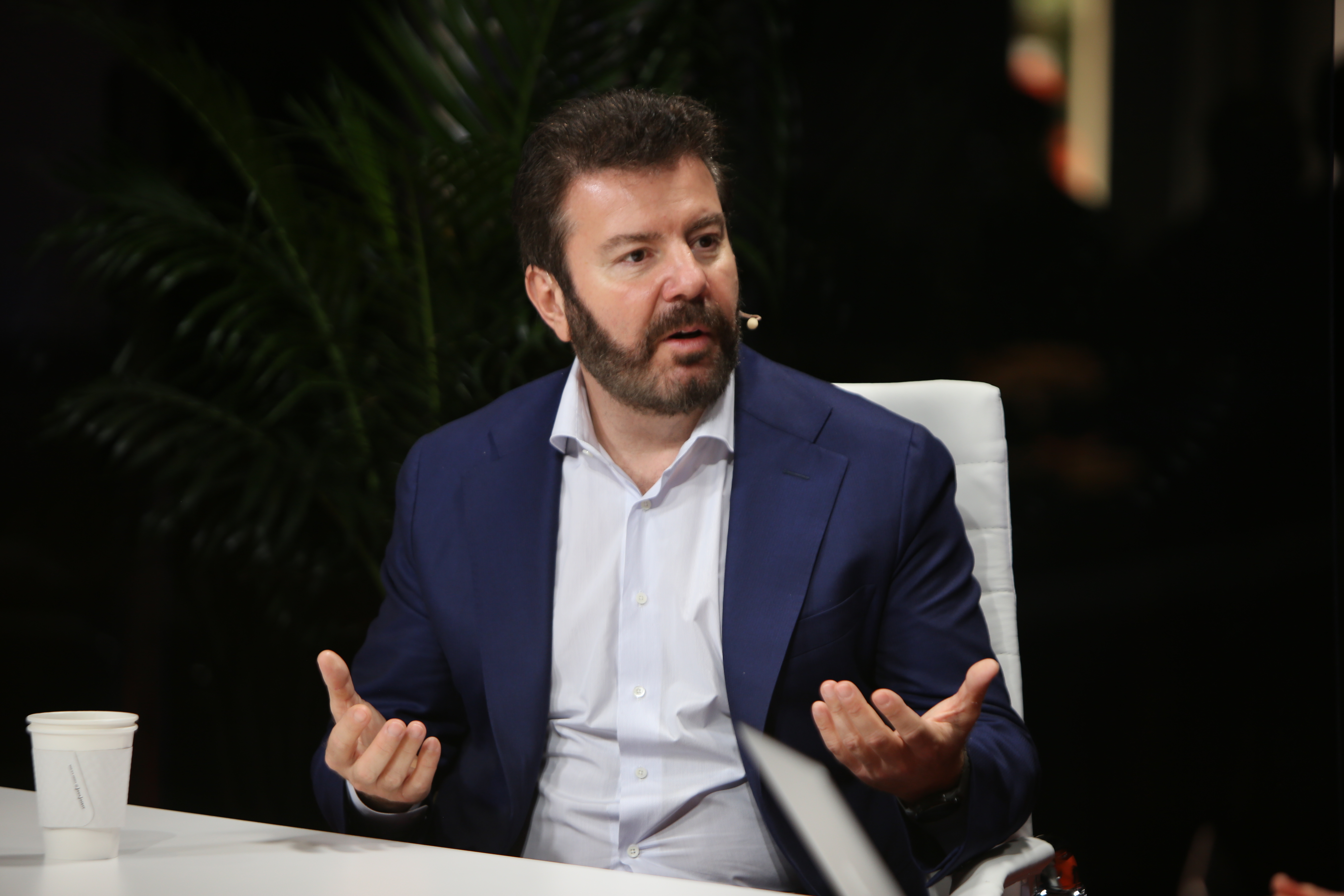
At the UiPath FORWARD 2024 event, CEO Daniel Dines discussed the transition to utilizing AI technology to handle unstructured content within enterprise workflows. Dines envisions a future where humans interact with AI in a common language, improving understanding and creativity. The development of agent technology will coexist with robot automation, changing how work is done. UiPath focuses on orchestrating agents securely and aims to improve process orchestration, data integration, and agent development. Connecting agents across applications is a priority, w...Read more
exploreKeep Exploring
What are some of the challenges in deploying gen AI technology with agency that is non-deterministic into an enterprise workflow context?add
What changes do you envision happening in the application stack as the UI moves towards natural language and the orchestrator becomes a key component in orchestrating agents in act two? This includes the UI, data platform, agent control framework, and backend connectivity.add
What are some potential implications of reducing human input in processes, as discussed in the example of a junior investment banker?add
What advancements are being made in managing and deploying robots and agents in the enterprise environment?add
What is an example of an area where robots are most helpful in providing agents with the specific data they need in the format they expect, without risking exposure to sensitive information?add
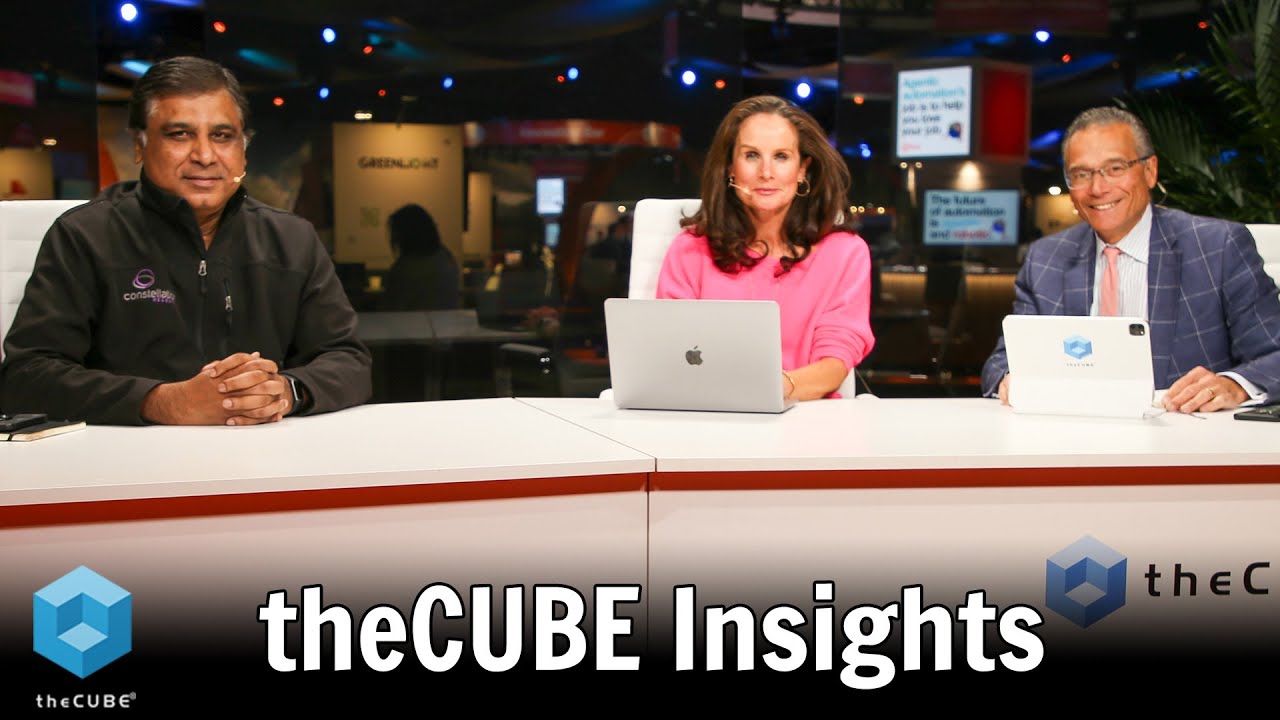
>> Hello everyone, and welcome back to theCUBE's live coverage of UiPath FORWARD 2024. We're kicking off two days wall-to-wall, back-to-back coverage. I'm your host, Rebecca Knight, alongside my co-host and analyst, Dave Vellante. Very excited to introduce our next guest, the man of the hour, the founder and CEO, the boss of the bots, Daniel Dines. Thank you so much for coming back on the show.
Daniel Dines
>> Of course. Thank you for having me.
Rebecca Knight
>> So, up on the main stage this morning you talked about how this is the most seminal moment in UiPath's history, which is not a very long history. I think the company is about 10 years old. You said, this is where we really start act two. Can you tell our viewers a little bit about what act one in your mind consisted of, and what is ahead for act two?
Daniel Dines
>> Act one was really about imitating people, doing repetitive work, as long as the work was defined by rules. And the information that the people used on their work was really structured so a robot can understand it. It was actually hard work to make it working reliably, because when you imitate people, it's always more difficult than when you go with other more precise ways, and there are also a lot of exceptions. We had to create this orchestration piece that combine robots and humans. And humans are capable of handling exceptions raised by robots. But that was that big limitation of act one. We cannot go after unstructured content, of the, what I call, unstructured parts of a process. You cannot interact with an automation in a natural language. You always have to be structured, to put in a form in front of an automation, send a request in a very structured form. That was really limiting, because if you look into enterprise processes, many of them will have a mix of rule-based tasks, and the unstructured type. And sometimes they are intermingled, so it's not so easy to separate them. Some of our clients would not even see the benefit to go after a small rule-based part in a bigger process, because they couldn't go after the entire end-to-end process. Now, I think with second act, in the next few years we have to learn, how can we deploy this gen AI technology that is capable of navigating the unstructured part? But the biggest challenge is this technology has agency, it's non-deterministic. How can we make a non-deterministic technology reliable, and how we can deliver into an enterprise workflow context that should be reliable? That's the key element of act two.
Dave Vellante
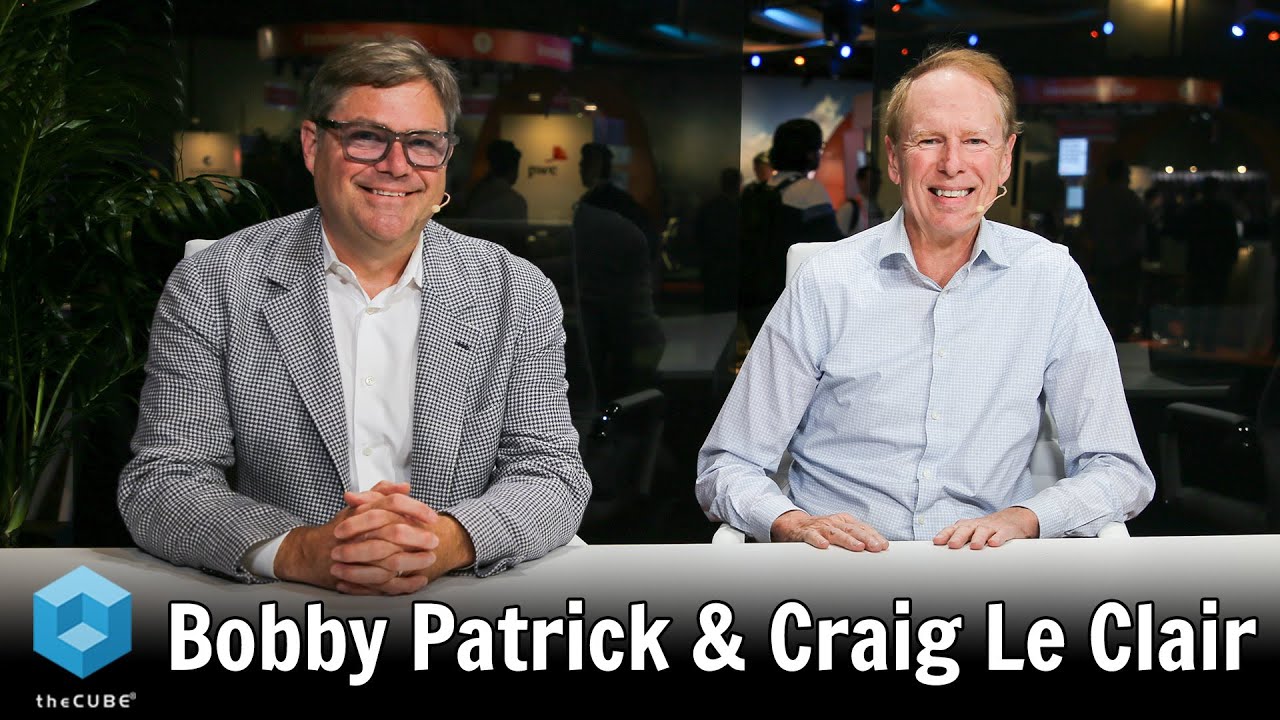
>> I have so many questions for you. I wish we were doing like a Lex Friedman podcast and had a couple hours. So much is changing. It's interesting, boss of the bots is what Bobby called you. I feel like ace of the agents is where you're headed. But I want to start with the name, UiPath. The UI is completely changing, and it's one that is going to become natural language. But not just the UI, the entire application stack is changing. I want to get your vision as to how that changes, maybe at a high level. And this idea that the key component of act one was the orchestrator, that's going to be a key component of act two, which is orchestrating the agents. How do you see the application stack, from the UI, the data platform, the agent control framework, how we connect to backend... how do you see that changing?
Daniel Dines
>> Well, look, it's not so easy to predict, Dave. I think we will see an acceleration of the transformation, that probably mainframes will disappear faster than we anticipated, because AI can record probably a mainframe application in .NET or Java faster. I don't really see that UI will disappear, because I think in many cases we act faster on UI than we talk. I think they will coexist in the new set of applications. Where I think it's actually the most relevant transformation is how we will deliver the work itself. And how much are we still using the applications, we as human versus technology? How much technology will touch the applications? What would humans be required to do in the new way of work? Look, if you are a junior investment banker, you spend most of your time building some reports, instead of analyzing them. If the technology, if the AI agents will build the reports for you, you'll get to spend a lot more time understanding them. It's a dramatic shift in how we are going to work. I think we are going to use less applications than before for doing clearly repetitive work, but I'm not sure the nature of the interface is going to necessarily change. You cannot act only via natural languages and applications. I don't think it's practical.
Dave Vellante
>> Just as you're speaking, I think that it's been decades since I actually went in and touched the database. Although I touch a database every day, but I never see it. Do you think that's what will happen with the application?
Daniel Dines
>> Yeah, I think that's a good analogy. Yeah. You might see a lot less of the applications, but still, there should be a way for humans and AI to interact. We need to have a common language, and really the language should be our language, either natural language or the user interface metaphor. I think they still have to exist. Because otherwise, AI can eventually create binary codes directly, and run binary code, but we are not going to understand whatever they will do. AI should work with us on a common platform, I think for many years to come, because we will want to validate the outcome of AI. Outcome of AI should always be in the form that we can, humans understand.
Rebecca Knight
>> On the main stage you said that there will always be humans in the loop, but at the same time, UiPath is aiming to reduce the human input in the process. I was really interested in what you were just talking about with that hypothetical example of a junior investment banker, right now is spending all of his or her time building these reports, but in the future they won't necessarily do that. What you're saying is that they will have more time to understand what these numbers are trying to tell them, which I'm extrapolating here, that you mean that they'll have more of a deeper understanding of what's actually going on, and more time to be creative about potential deals or potential acquisition targets. But how do you see this future playing out, and how do you think humans can prepare for this shift?
Daniel Dines
>> Look, I'm not sure there is a special preparation. We will just do what actually we are much better to do, rather than doing rote type of tasks. That's happened all the time, if you look in history, and like mechanization of agriculture. People started to do much nicer jobs, like supervising machines, and drones, and that, and basically they are in front of a command center, and make sure basically the machines work for them. I think it's kind of the same here. The transformation of our jobs will be in understanding how we can interact with these machines, how we can give them commands, and to do what we want them to do. But the essence of our jobs, I don't think... the nature of our brain and how we process information is not going to change.
Dave Vellante
>> You were talking about act one was all about enabling the bots, but those bots don't go away. One of the things you said is you got to be careful about the agents. You don't want to give agents all your credentials. The bots will protect them, because they're controllable. What technology foundations have you built over the last 10 years, whether it's RPA, which I think of sometimes as the plumbing, your computer vision capabilities, your orchestration, the machine learning and machine intelligence that you have, and many other pieces, what are the key components that will feed this Agentic vision that you have today, and what are the things that you need your product teams to create which didn't exist?
Daniel Dines
>> Yeah. I think we have the foundation. The way we are managing robots and deploying robots today will be very similar for agents. How you control access to robots, this is going to be similar. Who can run a robot, who can run an agent. How you can monitor thousands of robots will be similar, how you can monitor thousands of agents. All the traits that we use for robots will be similar for agents. Every application that an agent will touch, everything an agent will decide will be fully auditable using our existing platform. We have the enterprise workflow, the long-running workflow that can connect agents, robots, and people, because we have them today. You define a process as a series of steps, and you stitch the steps together. Some of the steps are robotic, some of the steps are Agentic, and also you can call APIs, models, but you can stitch them into an enterprise workflow. We have this technology. Now, of course we have to evolve our process orchestration technology to be capable of handling agents better, handling the interaction, agent to agent, agent to humans. And we are working to build more of this process definition in a human diagram, like a BPMN diagram, and adopt it for the Agentic work. This is a big work that we are doing. We invest in process orchestration a lot. Also in combining the data of what robots are doing, what agents are doing, but also system data, using our process mining. We aim to combine all of these data to give an enterprise a 360 view of all the transactions that happen into the enterprise. And of course, building the agent itself. We are introducing this agent builder, which is a low-code technology to build agents. And we aim that the persona that builds automations today, robots today, will be capable of building agents. Because I think it makes a lot of sense to deploy them together, to have agents and robots really working side by side. And even like Chandra of McKinsey said, they also say it's basically a stepping stone for agents to use robots, to extract information from enterprise systems, ground their outcome in real information, and also acting using robots. Agents will use robots to act on enterprise systems.
Dave Vellante
>> Is it fair to say that the agents, or the high-value systems of agency, the robots, maybe they don't get commoditized over time, but perhaps people are willing to pay less for robots, and they want to maybe shift some of their budgets to agents? How do you see that sort of value equation?
Daniel Dines
>> I think the robots will be actually even more valuable to the people. Without a good set of robots, agents will become useless. I think on the contrary, I'm not sure if you can charge a lot more for an agent as an entity. I think the margin on the top of an LLM call will not be big for an agent. And I think the value will be more in tools and in orchestration, actually. Building an agent in itself, deploying an agent in itself, I don't think will be as valuable as bringing the agent in a coordinated fashion, without other agents, without other robots and people.
Dave Vellante
>> You made this point in your keynote, it's somewhere in my notes. The way I wrote it down was being able to access multiple tool chains, and orchestrate those agents so that they can take advantage of those tool chains. That's where you see the value, and you see that as a high-value piece of real estate in the application stack presumably, going forward.
Daniel Dines
>> Yes.
Dave Vellante
>> I see. How do you think about, because they're... the Clippy joke, Microsoft announces co-pilots, they're really single agents today. Benioff calls it Clippy, which is fun, but it's somewhat true. It's not the vision that you're putting forth. But you've got Microsoft, Salesforce, I'd put Palantir in that category, all trying to do, let's call it Agentic, maybe it is along some spectrum. Oracle is another one. Within their application domains, Workday, I'm sure, same, they're going to be pushing agents. Explain your strategy to cut across horizontally, and how you add value in that world of application stovepipes.
Daniel Dines
>> As an SME, you rarely live inside only one plot. You have to conduct work across multiple plots, two, three, 10 business applications. This is very common. In our world, I think most of our revenue comes from high-value workflows that touch multiple business systems. Because always, we had to compete with in-application automations, because most of the... Excel provided macros, and so on, most of business applications have a form of in-application, right? But when you go to cross the borders of different applications, it's a much more complicated business. We are very happy to orchestrate and connect agents created by different application vendors, in a very similar way that we use their APIs today. We have connectors to Salesforce, to SAP, to Microsoft Dynamics. Agent will be just a new form of connectors. But the layer, the workflow layer above the applications, it's much more natural to be now our technology that is agnostic. We are the Switzerland of business applications, and we connect all of them.
Dave Vellante
>> I'd like to lay out a scenario and have you say, yeah, that's about right, or, no Dave, you got it wrong, because you would do that for me. When I've written in the past that I have it right, you say, that's right, you're right. When we put forth a premise that you don't think is correct, you course correct. What we see in the future, I talk about the application stack, is you have to have the connectors into the enterprise apps, both analytic and the transactional application. You have those. And they have to be two ways, I don't want to make copies all over the place. Eventually, I want to be able to push down to those. And then there's a data layer, I'll come back to that. Then you've got this agent control framework, the orchestrators working in concert with the bots, but those agents are able to access multiple tool chains, and they're governed, the security. They're able to be guided by top-down goals. I think of a tree. I want to increase revenue, but I want to keep margins... I want to gain market share but keep margins above 30%, whatever those top-down goals are. But then the agents can orchestrate bottoms-up outcomes. So far, so good? What about that data layer? Because I have all this disparate data, I have structured data, unstructured data, I have revenue, bookings, NRR, ARR, quarterly revenues, calendar year, fiscal year. How do I harmonize all that data? Is that your role? Is that somebody else's role? Because I feel as though if the agents don't have harmonized data, that it's garbage in, garbage out. Help us understand that feature.
Daniel Dines
>> This is one of the area where the robots are the most helpful, into presenting the agent exactly the data that the agent need, in the format that the agent expects. If you have an HR agent, and this agent, let's say they have to send a gift to an employee on their birthday. This HR agent doesn't need access to salary level of that employer, because it's not good. Someone can adversarially attack the agent. A robot will actually, can provide the credential to the robot. The robot will not spill out that credential ever, because it's governed by rules, and will present to the agent exactly the information the agent needs, which is the birthday date for that employee. In this way, we ground the agent into the enterprise data, but the enterprise data is dynamic. I cannot put it all into a vector database. Robots will get dynamic current data to feed the agents. I think it's a very powerful concept.
Rebecca Knight
>> Good. Here we are at FORWARD 2024. If all goes according to plan, what will we be talking about next year at FORWARD 2025?
Daniel Dines
>> I think we are going to talk about use cases. Right now we are in the early innings of deploying Agentic automation. We are seeing some patterns emerging, but we have to validate with customers in different industries, creating a catalog of use cases, customer references, and gradually rolling over to mainstream type of customers.
Rebecca Knight
>> Excellent. Well Daniel, thank you so much for coming on theCUBE. Always a pleasure talking with you.
Daniel Dines
>> Yeah, likewise. Thank you for having me. Thanks.
Rebecca Knight
>> I'm Rebecca Knight, for Dave Vellante. Stay tuned for more of theCUBE's live coverage of UiPath FORWARD. You're watching theCUBE, the leader in enterprise tech news and analysis.