We just sent you a verification email. Please verify your account to gain access to
UiPath Forward 2024. If you don’t think you received an email check your
spam folder.
In order to sign in, enter the email address you used to registered for the event. Once completed, you will receive an email with a verification link. Open this link to automatically sign into the site.
Register For UiPath Forward 2024
Please fill out the information below. You will recieve an email with a verification link confirming your registration. Click the link to automatically sign into the site.
You’re almost there!
We just sent you a verification email. Please click the verification button in the email. Once your email address is verified, you will have full access to all event content for UiPath Forward 2024.
I want my badge and interests to be visible to all attendees.
Checking this box will display your presense on the attendees list, view your profile and allow other attendees to contact you via 1-1 chat. Read the Privacy Policy. At any time, you can choose to disable this preference.
Select your Interests!
add
Upload your photo
Uploading..
OR
Connect via Twitter
Connect via Linkedin
EDIT PASSWORD
Share
Forgot Password
Almost there!
We just sent you a verification email. Please verify your account to gain access to
UiPath Forward 2024. If you don’t think you received an email check your
spam folder.
In order to sign in, enter the email address you used to registered for the event. Once completed, you will receive an email with a verification link. Open this link to automatically sign into the site.
Sign in to gain access to UiPath Forward 2024
Please sign in with LinkedIn to continue to UiPath Forward 2024. Signing in with LinkedIn ensures a professional environment.
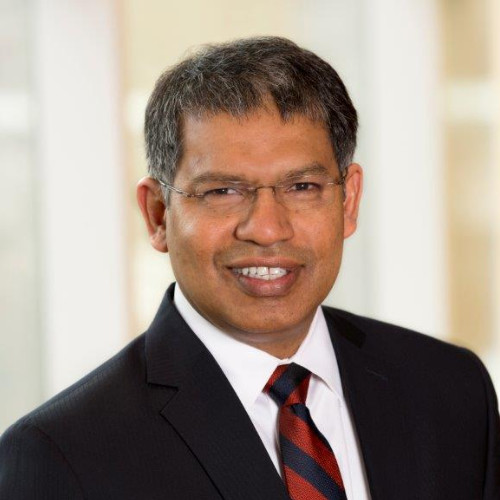
Senior Vice President Global Partners & EcosystemsUiPath
Pradeep Kumar, SVP Technology Services at UiPath, introduces the company's focus on generative AI and automation platforms to Rebecca and Bronwyn. They stress the need for partners to embrace new skills and knowledge in order to succeed. Training on emerging technologies is essential. The conversation covers the importance of technical expertise and addressing workforce skills gaps. Partnerships with SAP and Microsoft are crucial for growth. The discussion emphasizes adaptability, collaboration, and ongoing learning in the evolving automation and AI landscape...Read more
exploreKeep Exploring
What does the pivot mean for the organization and how will they ensure their partners are trained and onboarded effectively?add
What are the salient aspects that contribute to a successful partnership?add
What steps is UiPath taking to ensure that both their internal team and their partners have the necessary skill set to succeed in the automation industry?add
What is the balance between innovation, customer needs, security, governance, responsible AI, and managing different points in the customer journey within UiPath's organization?add
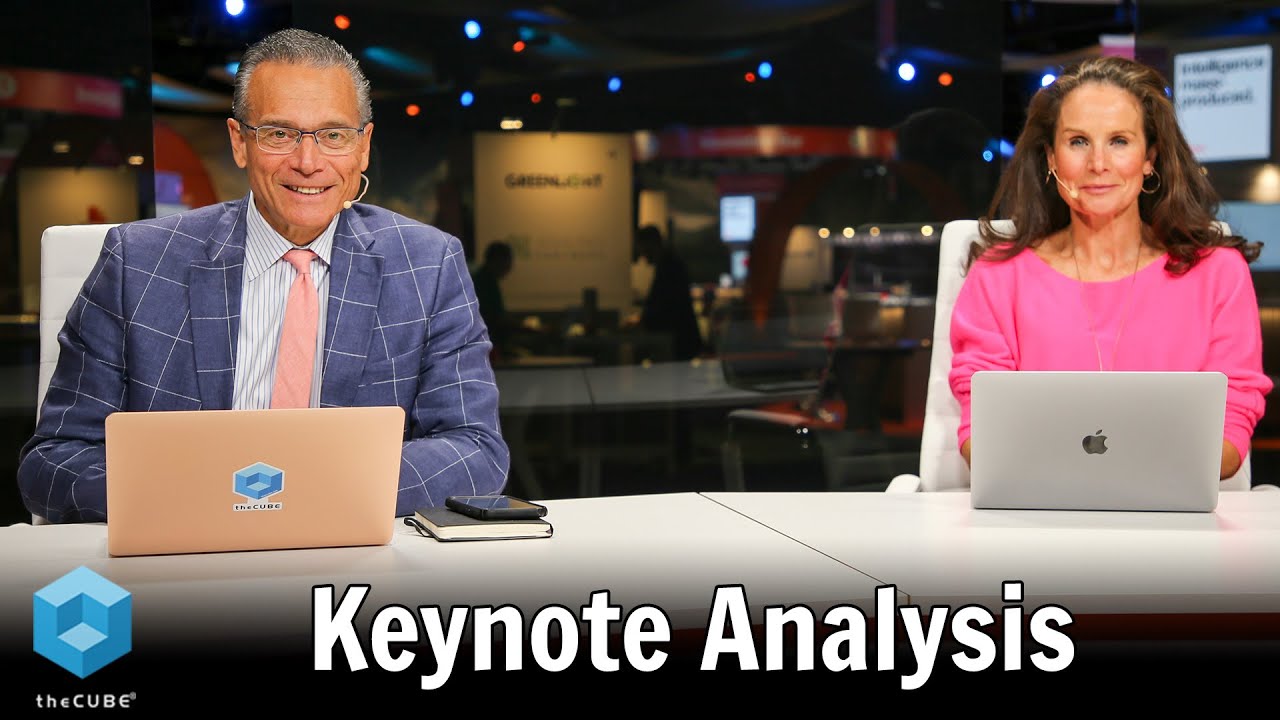
>> Hello, everyone, and welcome back to theCUBE's live coverage of UiPath Forward 2024 here in Sin City, Las Vegas. I'm your host, Rebecca Knight, along with my co-host and analyst, Dave Vellante. We've got two great guests for this next segment. We have Pradeep Kumar, he is the SVP Technology Services at UiPath. Welcome back, Pradeep.
Pradeep Kumar
>> Thanks, Rebecca.
Rebecca Knight
>> And Bronwyn Hastings, she is the SVP Global Partners at UiPath. Both in pink. You coordinated. It looks amazing.
Bronwyn Hastings
>> Well, we coordinated.
Rebecca Knight
>> Yeah, exactly.
Dave Vellante
>> Oh, it does. Go ahead.
Rebecca Knight
>> So Pradeep, you're a long-time friend of theCUBE, a many-time CUBE alum. It's great to have you back. Used to be, of course, with HP. Now you're wearing a new uniform, I should say. We're talking today about this evolving company strategy. We heard Daniel Dines say on the main stage that, "We're really, we're starting act two of UiPath." I'm wondering what that means for the partner ecosystem. Talk a little bit about this pivot and what it means for your organization.
Pradeep Kumar
>> Yeah, I think as Daniel said, we've done the act one, now we are getting into act two using generative AI and automation platform. I think when it comes to the partner ecosystem, I think making sure the partners are trained, skilled, understand what the customer issues are, and how to get there in a new way, and we need to lead them. And I lead the services organization, so I have a responsibility to take the partners on this journey, and some of these things are not identified yet. I think it's known versus the unknown. The unknown is difficult, right? It's easy to say to somebody, "Hey, this is the plan. This is you're going through a university graduate system," versus there are lots of things unknown that we need to build together. As Daniel pointed out, there are lots of things that customers would want that we don't even know, right? So it will be a journey and how does Bron and me take our partners on this journey would be the biggest challenge we are going to have.
Dave Vellante
>> Bron, what makes a great partner? Obviously, they can measure by how much you sell, okay, but what are the salient aspects that contribute to that successful partnership?
Bronwyn Hastings
>> I think what we are looking for are partners that have actually really leant in and getting that knowledge base that's going to allow us to go to the future. We've got a lot of partners that are really grounded in RPA at the moment and that had a very successful approach of being able to take a company's business and automate it. But right now, when you look at the vision and what they're seeing as an exciting opportunity, there's a little bit of apprehension with these partners because now they've got to build a whole new skill set. So what makes a good partner right now are ones that are actually looking at that vision and leaning into the knowledge sets that are required to move them forward to actually capture the opportunity that's there. So, that's one. I think the second one is meeting the customer where they are on this journey. Customers are in all sorts of places right now. With generative AI, they've had to deal with things that they don't quite know how to apply yet. So how do our partner base meet a customer where they are, but have enough of the knowledge set to actually walk them through and be their advisor to that direction? So there's a lot in the partner base right now that they may be a little bit apprehensive about, too.
Dave Vellante
>> So it's multidimensional. There's the automation, how to do automation right, there's also industry expertise and sort of tribal knowledge.
Bronwyn Hastings
>> Correct. Correct. Thank you.
Dave Vellante
>> And it seems like maybe it's not products, per se, that come out of it, but certainly templates that you can apply with an industry. Are there patterns that you're seeing that can help assuage some of the caution or trepidation that has shown early signs of success?
Bronwyn Hastings
>> Yeah, I think it's an interesting question, the patterns. I think what they look at is are there places, whether it's industry, whether it's trends they're seeing, that we can formulate responses for, that actually my partner in crime over here with the services organization, can we actually come alongside them and help them envision that, make sure that they're answering the customer's question, and actually make it sure that it's, I'd call it assured, that it's actually safe in the way that they're looking at it? So with Pradeep, we were actually doing a lot of things called assurance services to help take that trepidation away from the partner, one. The second thing is looking for those trends and patterns and really getting tangible outcome-based solutions with the partners, building those assets that actually allow them to see some repeatability. So we've brought something called an innovation fund, AI Innovation Fund to bear. Partners can tap into it, but the essence of that is, okay, we can see a trend, we'll come alongside you, we'll help you innovate for a customer, but now you can see customer two, three, and four behind it that allows you to bring that repeatability of confidence and that assurance to the table. So, it's an interesting time.
Rebecca Knight
>> So I know we're talking about automation, but of course this is really about people, and I'm curious, Pradeep, if you can talk a little bit about how you're securing the right technical aptitudes in terms of certifications and what you make of the skills gap, which we hear maybe a little less about as AI is taking over more and more, but how you see that right now in terms of the landscape.
Pradeep Kumar
>> Yeah, no, really good question because I think this is not technology alone, right? The majority is transformation, processes, which requires people and people's knowledge, as you say. And because the journey is different to a basic RPA, the skill set that requires in the whole workflow is different from different areas, and also, it could be different by industry and different by what customers are trying to do. So it's not the same skill set that could go in an elongated way; you may need different skills at different points of the cycle of this journey, and that is tricky. So starting with the big, biggest size, big Accentures of the world, to all the way down to little players, grappling with how to have the skill set and how to train. And what we are doing from a UiPath point of view is really understanding that, and one of the things we are doing is we have brought in the skill set into one place where we used to have partner enablement versus internal enablement. We have now combined the two because we want to go at the same speed as we are training our folks. Say, for example, agentic. We want to make sure when we are training our folks, we are training our partners' people at the same time, and not all the partners will be able to scale in this game and some will stay behind and some will take the journey and go faster. So we are trying to train them at the same speed, and also, as Bron said, we are trying to give them some delivery assurance because customers will want to find out whether their partner they have picked have got the right skills to deliver this. And it's sort of the underwriting behind, okay, because the partner may not have all the skills required in the journey, but we will underpin them, augment with our skills to make sure the journey is very clear. You with me? Not one person is going to have all the skills in this game.
Dave Vellante
>> So Daniel talked about act two, and at our kickoff, I said, "Well, act one was RPA, there was a 1A, and then now we're into act two." And so RPA was pretty straightforward. It was actually pretty profound at the time. We have software robots doing the mundane work of humans, and while there was some concern about losing jobs, people quickly realized, "I love my software robots. This is wonderful." And then the act 1A, I will call hyper-automation, got a little buzzy, but you brought some real to it with, "Okay, they're talking about end-to-end, we're going to bring in process automation and process mining, and so it's centers of excellence." And so people started saying, "Okay, I get this. We're now going to scale, go beyond point product."
How do you educate the partner ecosystem such that agentic isn't just a buzzword?
Bronwyn Hastings
>> I think that the way that... And I loved Daniel's slide from this morning, and I'm not sure whether you saw it. It says, "These are the things that are addressed by RPA. These are the things that are addressed by IDP. These are the things that are addressed by agentic." We almost need to break it down into those components. The first thing is making sure that we understand the pieces of the puzzle we are educating in, but giving them a true learning journey that builds the puzzle pieces together into almost that layer of agentic automation and how it comes together. So, that's one. The second is what Pradeep said is as we're learning, we're doubling down on learning alongside of, and that's what Pradeep was describing, learning alongside of. As we're getting these use cases, we're experiencing customers, we're actually bringing partners alongside us, making sure that they're gaining the skills along the way. And then the third thing is we are doing things like immersion labs, bringing the true use cases that customers are experiencing and giving the partners the chance to be immersed, to be part of understanding how these puzzle pieces come together, adding advisory services in this where we are getting customer direct feedback, partner direct feedback. It's almost a continuous learning environment that we are going through right now. And then it's also really being close on these initial customer scenarios where the customers are saying where are they getting value and building it back into it. So it's a journey, it's definitely a learning journey, doubling down with Pradeep to make sure that we are present with the partners, but also bringing some of the knowledge sets and the partners of what they're seeing because we've made announcements with different partnership types, whether it's our recent one we made with SAP and we're now a solution extension with them as part of their architectural footprint and now teaching our channels how to be part of an ERP world or an SAP world when you're doing these sorts of automations and intelligent automation, or whether it's with Microsoft, or when we are doing some of our orchestration. It's opening up this aperture to really help partners see what the opportunity is, but educate them in the opportunity they're trying to address.
So there's a lot going on, to be honest, in all the partner community.
Pradeep Kumar
>> But I would add, Dave, I think honestly none of us know exactly where this is going to end or what we exactly require, so it's a journey and then we are going through the journey. I think from a world point of view, I think there's a lot of things that is coming together. LLM models are much more specialized and much more accurate. And we, from our point, the automation, as you said, on the structured areas, the use cases have been really done well, so the accuracy and the speed is really good. And now with generative AI, it all comes together into a place. And as far as we be very logical in what the outcome that we want to achieve end to end, including very complex processes, then we are going to be winning. And that may be different from customer to customer, and process to process, right? I mean, that's a reality.
Dave Vellante
>> Makes sense.
Pradeep Kumar
>> And so some partners may concentrate in certain areas. I mean, before we started, you talked about IBM. Arvind was talking about customer service or support is the first thing that's ripe for change, and he's right. So those are the areas and we have a big thing to play in that area, right?
Dave Vellante
>> Yeah, contact centers, agree.
Bronwyn Hastings
>> Yeah, very much so.
Pradeep Kumar
>> Absolutely. Absolutely.
Rebecca Knight
>> Well, I mean, as you said when we first started talking here, you're giving customers maybe what they want, but maybe what they don't even know they want.
Bronwyn Hastings
>> That, and need.
Pradeep Kumar
>> Absolutely.
Rebecca Knight
>> And so I'm curious to hear how you balance that need for innovation with the fact that, as you both pointed out, customers are at different points in this journey with also, of course, the necessity of having good security, good governance, responsible AI. How do you manage that?
Pradeep Kumar
>> Yeah, it's a tricky one, Rebecca, and that's why we have a professional services organization within UiPath although we have a huge partner ecosystem, because what we want to make sure is when the product teams, Graham, develops something, we take it to customers and learn out of that experience, get the feedback, and it's an agile way of continuously changing. So when we have made a mistake, I think this is where Daniel is very good, "Hey, I made an assumption. This did not work, and I want to change track." I think us being a very nimble, humble organization, and a very quick-to-change organization, I think we are able to take that feedback from the customer, Rebecca, and then quickly change the thread into where we want to go, and that is mightily important. I don't think anybody can develop because they don't know where the puck is going to go.
Bronwyn Hastings
>> Excellent, excellent.
Dave Vellante
>> Awesome.
Pradeep Kumar
>> Anything to add?
Rebecca Knight
>> Well, Pradeep and Bronwyn, thank you both so much for coming on theCUBE. A real pleasure having you.
Dave Vellante
>> Oh, thanks, guys.
Bronwyn Hastings
>> Thank you.
Pradeep Kumar
>> Wonderful.
Bronwyn Hastings
>> Thank you.
Pradeep Kumar
>> Thank you. Thanks very much.
Rebecca Knight
>> Thank you. I'm Rebecca Knight, for Dave Vellante, stay tuned for more of theCUBE's live coverage of UiPath Forward 2024. You're watching theCUBE, the leader in enterprise tech news and analysis.