We just sent you a verification email. Please verify your account to gain access to
UiPath Forward 2024. If you don’t think you received an email check your
spam folder.
In order to sign in, enter the email address you used to registered for the event. Once completed, you will receive an email with a verification link. Open this link to automatically sign into the site.
Register For UiPath Forward 2024
Please fill out the information below. You will recieve an email with a verification link confirming your registration. Click the link to automatically sign into the site.
You’re almost there!
We just sent you a verification email. Please click the verification button in the email. Once your email address is verified, you will have full access to all event content for UiPath Forward 2024.
I want my badge and interests to be visible to all attendees.
Checking this box will display your presense on the attendees list, view your profile and allow other attendees to contact you via 1-1 chat. Read the Privacy Policy. At any time, you can choose to disable this preference.
Select your Interests!
add
Upload your photo
Uploading..
OR
Connect via Twitter
Connect via Linkedin
EDIT PASSWORD
Share
Forgot Password
Almost there!
We just sent you a verification email. Please verify your account to gain access to
UiPath Forward 2024. If you don’t think you received an email check your
spam folder.
In order to sign in, enter the email address you used to registered for the event. Once completed, you will receive an email with a verification link. Open this link to automatically sign into the site.
Sign in to gain access to UiPath Forward 2024
Please sign in with LinkedIn to continue to UiPath Forward 2024. Signing in with LinkedIn ensures a professional environment.
Vice President - Enterprise Digitization & AutomationTD Bank Group
Amit Kumar
Strategic Sales/Field CIOUiPath
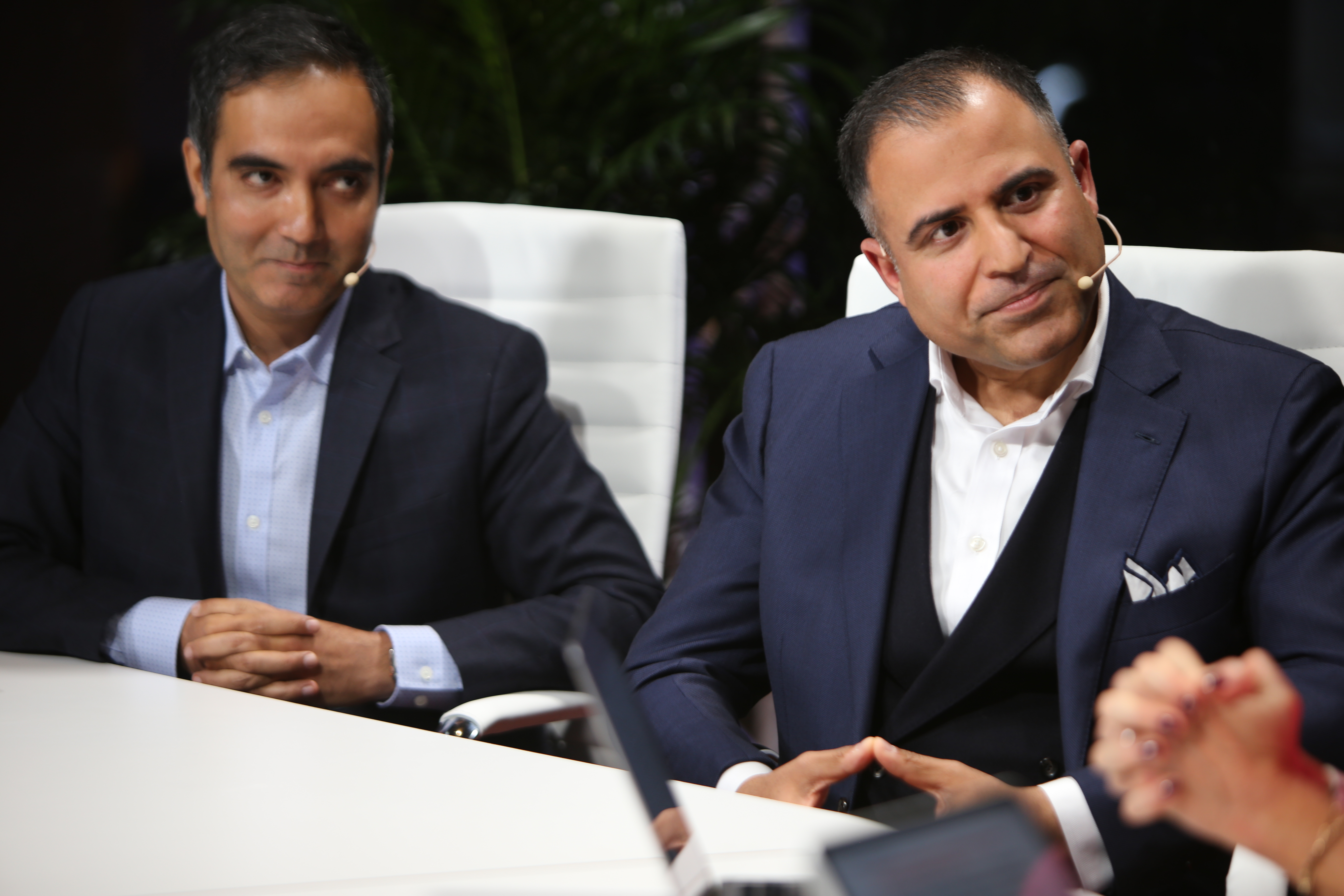
Coverage of UiPath FORWARD, 2024 features Amin Kermali, VP at TD Bank, and Amit Kumar, VP at UiPath. Amin leads enterprise digitization and automation at TD Bank, while Amit discusses evolution from RPA to agentic automation. They explore use cases in lending, client onboarding, and call centers, emphasizing shifting towards end-to-end automation. Amin stresses purpose-driven investments for tangible outcomes, while Amit discusses changing operating models to apply AI in day-to-day tasks. They also touch on AI's impact on customer experience and the importanc...Read more
exploreKeep Exploring
What are some key responsibilities and priorities within the enterprise digitization and automation team at TD Bank Group?add
What benefits can be achieved in the mortgage industry by combining RPA and intelligent document processing, leading to end-to-end automation with agentic automation as the end goal?add
What steps have been taken to bring together the automation team, analytics and insights team, and GenAI team within one organizational structure?add
What is Amit questioning about the playbook and its relationship to best practices across different industries?add
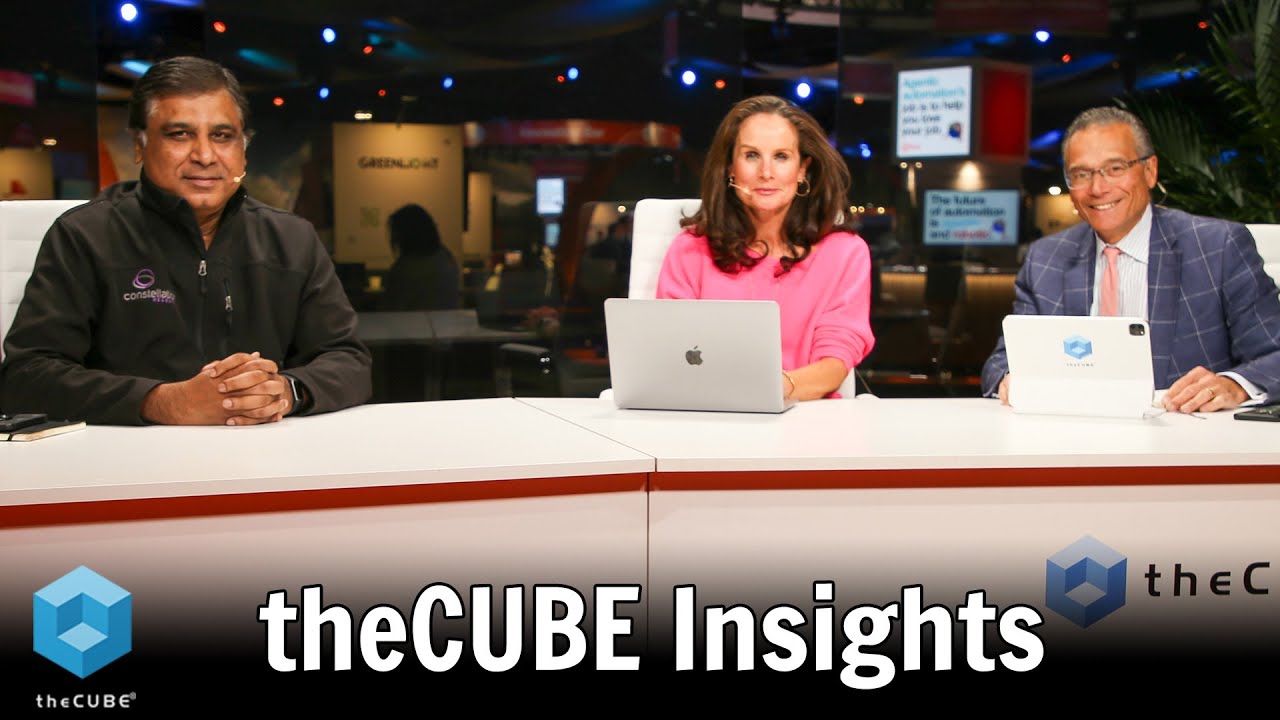
>> Hello everyone, and good afternoon. Welcome back to theCUBE's live coverage of UiPath FORWARD, 2024. I'm your host, Rebecca Knight, alongside Dave Vellante, my co-host and co-analyst. I would like to welcome two guests to this segment. We have Amin Kermali, he is the Vice President, Enterprise Digitization & Automation at TD Bank. Thank you so much for coming on the show, Amin.
Amin Kermali
>> Thank you, Rebecca. Thank you, Dave
Rebecca Knight
>> And Amit Kumar, VP Industry Practice at UiPath. Thank you so much.
Amit Kumar
>> Thank you, Rebecca.
Rebecca Knight
>> So Amin, I'm going to start with you. TD Bank, we're from Boston, your name gracious, our championship stadium for our Bruins and Celtics.
Amin Kermali
>> Thank you for supporting the Celtics. We appreciate that.
Rebecca Knight
>> But for viewers not as familiar with TD Bank, talk a little bit about the bank and also what you do there.
Amin Kermali
>> That's great. Thanks, Rebecca. So TD Bank Group, it's a North American retail bank, top 2 in Canada, top 10 across Canada and the United States. We have the privilege of serving over 25 million customers. We operate in every line of business, from retail banking to commercial banking, wealth insurance and the investment bank. So really privileged to be able to lead the enterprise digitization and automation team. That sits within our operational excellence team at the bank. And operational excellence at TD is a top enterprise priority. Intelligent automation is one of the levers that we have within there. We look at it from a people process and tools perspective. So we think about people, we've got a workforce capability that's really around driving customer obsession and equipping our colleagues in the front lines and the operations teams to drive customer value. From a tools perspective, we've got the automation toolkit. And then from a process perspective, we've got our process engineering team. We've integrated those together, so that we're providing holistic service to our business partners and our customers to drive outcomes like customer centricity, colleague empowerment, controls optimization and cost savings.
Dave Vellante
>> And Amit, you are focused on industry, which is really interesting. Because we're talking about large language models, small language models, small action models, industry specific models. So the future is bright for you and your partners, GSIs are obviously focused on that as well. How do you see the transition from where you were with RPA in terms of whatever industry specificity you were able to effectuate there to what you think is possible with the future of agentic and all this other cool LLM stuff that's going on?
Amit Kumar
>> Great, great question and thank you for having us here today. We at UiPath, especially from the industry perspective, we see this as a stepping stone approach. So you look at TD Bank. TD Bank has mortgage business. A mortgage business will have a lending origination journey. Now with RPA, we might be able to do steps two, seven and eight of that, and those are essentially tasks. Now, if you include intelligent document processing to it, certainly the business value increases because guess what? Mortgage has a lot of documents. Now, each of these loans has an underwriter, somebody who sits in TD Bank who analyzes the application. If we could give them an agent. Let's start with an Autopilot, we'll increase the business value even further. So we see it as a progression of crawl, walk, run and get to that end-to-end automation using that agentic automation as the end game.
Dave Vellante
>> It's interesting, Amin. When I first heard about RPA, I'd never heard the term before. It was a long time ago, and it was actually Martin Schroeder who's now the CEO of Kyndryl. He was the CFO of IBM at the time, and he said, "Anybody out there over here of RPA," and a couple of hands went up. He says, "This is unbelievable. We saved so much money and it was a back office thing." And it was the ROI was so obvious when you think about GenAI, it's like the opposite. Everybody's excited about it, everybody's heard of it, but everybody's in search of ROI. So how do you as the head of digitization and intelligent automation, balance that need for the cool new stuff and actually tangible ROI?
Amin Kermali
>> So for us, Dave, we ground and start everything with vision and purpose. Our vision is to build a better bank and our purpose is to enrich the lives of our customer colleagues and outcomes. And through that, we take a look at automations or gen AI use cases and say, "How is it going to help us deliver the business outcomes for our customers, our colleagues, or to help us drive optimization on our controls and our costs." And that really helps us to ensure that we're taking an outcome-driven approach to investing in new tools and capabilities. So it's always customer-based and it's always outcome-based. If I think about a use case that we're trying out right now, it's in the contact center and you've got a lot of contact center agents dealing with customers who've got queries on all sites, all sorts of things. We've taken a number of automation and AI tools to surface the right information at the right time in the hands of our contact center agents to really provide them with the tools to better serve our customers. So we always take a customer-centric approach, empowering our colleagues to unlock value ultimately.
Dave Vellante
>> First principle is you go back to that that playbook.
Amin Kermali
>> Yeah, that's right.
Rebecca Knight
>> Well, I'm really interested in what both of you are saying in terms of this agentic future, you're using the example of a call center, you use the underwriter. What are some other use cases in terms of how we are seeing this potential future? And also with things actually playing out right now with humans as supervisors working together?
Amit Kumar
>> I talked about lending, but let's look at client onboarding. Banks like TD, large banks, they onboard thousands of customers and clients, and I'm including both people like you and me and also institutions, and it takes a long time to onboard them. That's a classical journey that we see progressing through that RPA intelligent document processing to that agentic future and client onboarding teams are not sifting through the documents. They are essentially looking at exceptions and they're answering clients' queries, and time to onboard is reduced as much as possible. So that's another classical journey that I would like to put out in terms of the example.
Dave Vellante
>> I remember I was interviewing years ago, back when everything was cloud was new and exciting, and it was the CIO of Philips and he said, "People just want you to throw stuff in the cloud, lift and shift," they called it at the time. He said, "It's not going to do anything for you." He goes, "Maybe it'll save a couple of bucks, but it's the operating model that you have to focus on. That's where you're going to really see a difference." And we were having a conversation earlier today about the operating model. That's where you're going to get leverage. So how do you think about the operating model and how will it potentially change as you increase the levels of automation?
Amin Kermali
>> That's a great question, Dave. I'd say that's something we're working through as we speak. If we think about a few years ago, we recognize the potential of each of these capabilities, automation and AI individually to drive tremendous business value. So each of us worked independently to prove the business value, to introduce the capability and deploy it across the organization. Today, we see that bringing these capabilities closer together, puts us on the path to unlocking exponential potential, transforming the way we work and really future-proofing the bank. So we've taken a few measures to ensure that we get closer to realizing that potential. The first is that we integrated the process engineering and the automation team to become one. That allows us to take an automation-first approach to solving operational excellence challenges that our businesses have. It allows us to accelerate speed to value as well as do it at a lower cost to serve, because there's a lot of duplication in process engineering as well as automation from a discovery and a mapping perspective. The second thing we've done is organizationally, we've situated our automation team, our analytics and insights team, as well as our GenAI team within one organizational structure, which we call the transformation enablement and customer experience office. And in doing so, we're able to work a lot more closer together to identify use cases that would benefit from the combined power of automation and AI. So that's where we are today. I see us quickly getting to a spot where we're going to have a unified automation and AI operating model and ecosystem. I think that path towards agentic where we're able to really start unlocking the full power.
Dave Vellante
>> So it's much more evolutionary. It's not like changing the offense on a, "Hey, we run the Wishbone, it's really simple, but now we're going to run the West Coast office. 3, 4, 4, 3, wait a minute, time out." So it's a journey, step-by-step, you're not whole hog replacing the operating model, just too disruptive.
Amin Kermali
>> Evolution. Absolutely.
Amit Kumar
>> Yeah. And I think our responsibility as a platform is how do we make that happen? And we see this ad in three different ways. One is how do we bring business and operations teams to play with gen AI to be able to apply in their day-to-day tasks? So one of the experiences that we are talking about is Autopilot where an underwriter or a contact center agent can actually go ahead and kick off these automations, can actually set the context for those LLMs to take decision and finally action on top of it. I think that's something that we are trying to build upon.
Dave Vellante
>> I mean, at the same time you, anytime these new waves come along, you always look for new disruptions. Now, large banks do pretty well these days. Although hey, you never know. So there's a thesis that AI native companies will be born and try to disrupt the old guard. Now again, we've heard this before in financial services, crypto really didn't do it, the banks. But do you think about that from a competitive paranoia standpoint? Andy Grove, Only the Paranoid Survive.
Amin Kermali
>> I'd say again, for us it comes back down to customer centricity and our customers value trust, they value stability, they value security. So those investments are huge. And the partnership that we have with UiPath with a platform that allows us to have the appropriate governance and controls to demonstrate trust through stability, security, and safety, is potentially a bit of a defense that we've got. So that's the way we think about it.
Dave Vellante
>> And it's the nature of your industry. It's highly regulated.
Amin Kermali
>> That's right. Yeah.
Rebecca Knight
>> We know that technology is changing so fast. I mean, earlier in this conversation you couldn't even talk about five years. We've got to only talk about in groups of two. So how are you managing, I mean, in terms of what you are thinking about when you are doing your forward planning, and how are you navigating this incredibly fast-changing and exceedingly complex environment?
Amin Kermali
>> I'd say a few things. The first is always stay true to the purpose and the outcomes you're trying to drive. Staying continually abreast of evolving trends in the industry as well as emerging tools by staying close to partners in the innovation ecosystem, partners like UiPath. The third is having a framework to evaluate and experiment new tools and to rapidly deploy them across the organization in a risk-managed way. Partnering across the enterprise to bring everybody along because this is a team sport. We've got an TD Invent innovation ecosystem that gives us the right framework as well as brings the organization along. And then lastly and critically importantly, telling our story to generate excitement, to drive the change management, as well as to secure their required resources across the enterprise. Those are some of the things I think about.
Rebecca Knight
>> Amit, is this a playbook in the sense of these are the best practices of how it works across banking and manufacturing and retail or?
Amit Kumar
>> I mean, I can speak for financial services, and I do think this is the right way to go about it. One thing selfishly that I would like to point out as a success factor for executive is to... I mean, I talk about this quite often. Every week you open LinkedIn page, a new LLM comes up on the top. So what it means to these, it's not about the model that is going to win, but it's actually the orchestration layer that is going to win. So as long as leaders are focused on how these tools, which is agents, robots, integrations, data context will work together, I think that'll be a big success factor.
Dave Vellante
>> So how do you think that will change the way applications are developed?
Amit Kumar
>> We have come a long way from how traditional applications were built. I see business and operations team playing a front role in this particular pace. For example, we saw today how it's going to be important for the business and operations teams to think about what are the optimum prompts for these agents. That is going to win this particular game. I'm working with a big custodian bank today where it is the legal team that is defining prompts of how to get data from that credit agreement rather than the classical software engineering way where we'll have to go through requirements and go through engineering, sort what of waterfall model. So there are a couple of just snippets in terms of how the world is changing.
Dave Vellante
>> It's amazing when you use these advanced LLMs today, you can see them prompting themselves. You put a prompt in, my anyway lame English language, and then the prompt refines it or the LLM refines it and it prompts itself and it's doing multi-shot prompting. And the outcome is beautiful. And we're in the first second inning, we're in dial-up. I can only imagine how the application development life cycle is going to be compressed, but also just new ways to develop applications almost on the fly.
Amit Kumar
>> There is an example that we were conceptually talking to another bank wherein when they would enter a new market or new region, rather than starting with a traditional requirements document, why don't we start with the regulatory paper for that market along with the standard operating procedure as the initial point of time to create perhaps the first version of the workflow that can be deployed. So those are some of these examples that are coming up very often in financial services.
Rebecca Knight
>> I mean, last question. You've talked a lot about the customer eccentricity of TD Bank Group and customer experience has been a real key driver in terms of the automation journey for TD. How is AI accelerating this journey in this regard?
Amin Kermali
>> The best way is just to provide an example. So if we think about a customer who calls us or visits our branch to say that they've got a block on their credit card because of a risk of fraud, traditionally, what would happen is that the agent supporting the customer would have to call in the fraud loss prevention team. They would have to authenticate the customer, verify transaction history, understand why the flag was put on and manually release that. Today, we can activate automation tools like attended automation on UiPath as well as some AI capabilities to do that entire process automatically. So customer comes in, the agent activates the AI and automation tool, and it does the whole process end-to-end, eliminating the need to call into the fraud loss prevention team, do the handoffs, et cetera. What used to take two hours sometimes, now can be done in a matter of minutes. And that's truly transformation from our customer perspective
Rebecca Knight
>> And pure headaches for all of us. Thank you both. Amin, Amit, thank you both so much for coming on theCUBE.
Dave Vellante
>> Thanks guys.
Amin Kermali
>> Thank you so much.
Rebecca Knight
>> Stay tuned for more of theCUBE's live coverage of UiPath FORWARD. I'm Rebecca Knight for Dave Vellante. You're watching theCUBE, the leader in enterprise tech news and analysis.