We just sent you a verification email. Please verify your account to gain access to
UiPath Forward 2024. If you don’t think you received an email check your
spam folder.
In order to sign in, enter the email address you used to registered for the event. Once completed, you will receive an email with a verification link. Open this link to automatically sign into the site.
Register For UiPath Forward 2024
Please fill out the information below. You will recieve an email with a verification link confirming your registration. Click the link to automatically sign into the site.
You’re almost there!
We just sent you a verification email. Please click the verification button in the email. Once your email address is verified, you will have full access to all event content for UiPath Forward 2024.
I want my badge and interests to be visible to all attendees.
Checking this box will display your presense on the attendees list, view your profile and allow other attendees to contact you via 1-1 chat. Read the Privacy Policy. At any time, you can choose to disable this preference.
Select your Interests!
add
Upload your photo
Uploading..
OR
Connect via Twitter
Connect via Linkedin
EDIT PASSWORD
Share
Forgot Password
Almost there!
We just sent you a verification email. Please verify your account to gain access to
UiPath Forward 2024. If you don’t think you received an email check your
spam folder.
In order to sign in, enter the email address you used to registered for the event. Once completed, you will receive an email with a verification link. Open this link to automatically sign into the site.
Sign in to gain access to UiPath Forward 2024
Please sign in with LinkedIn to continue to UiPath Forward 2024. Signing in with LinkedIn ensures a professional environment.
play_circle_outlineEvolution of UiPath from consultancy to public company
replyShare Clip
play_circle_outlineAccelerating Business Transformation: Integrating AI into RPA for Hyperautomation and Streamlined Collaboration Among Bots and Agents
replyShare Clip
play_circle_outlineChallenges and opportunities in transitioning to new AI-powered work paradigms
replyShare Clip
play_circle_outlineEnvisioning Agent Orchestration & Digital Twin: Data, Processes, & Metadata Integration for AI Automation
replyShare Clip
play_circle_outlineFuture potential for productivity boost with AI and automation
UiPath Forward 2024 is focused on transforming businesses with AI and automation. Since its relaunch in 2015, UiPath has experienced rapid growth under CEO Daniel Dines, with a billion and a half in ARR, 10,000 customers, and nearly 20% annual growth. The company has shifted from RPA to hyperautomation, integrating AI capabilities like computer vision and machine learning. The keynote emphasized gen AI and the importance of bots and agents working together for enterprise automation, aiming to reduce human involvement in mundane tasks. UiPath is positioned to ...Read more
exploreKeep Exploring
What is the history and current status of UiPath as a company?add
What is the current focus of enterprise automation and the role of bots and agents in utilizing AI technology?add
What is the potential impact of AI on jobs and how can humans adapt to it?add
What is the typical structure of applications in today's technology landscape?add
What is UiPath's focus for Act 2 and what aspects need to be included in their agent control framework?add
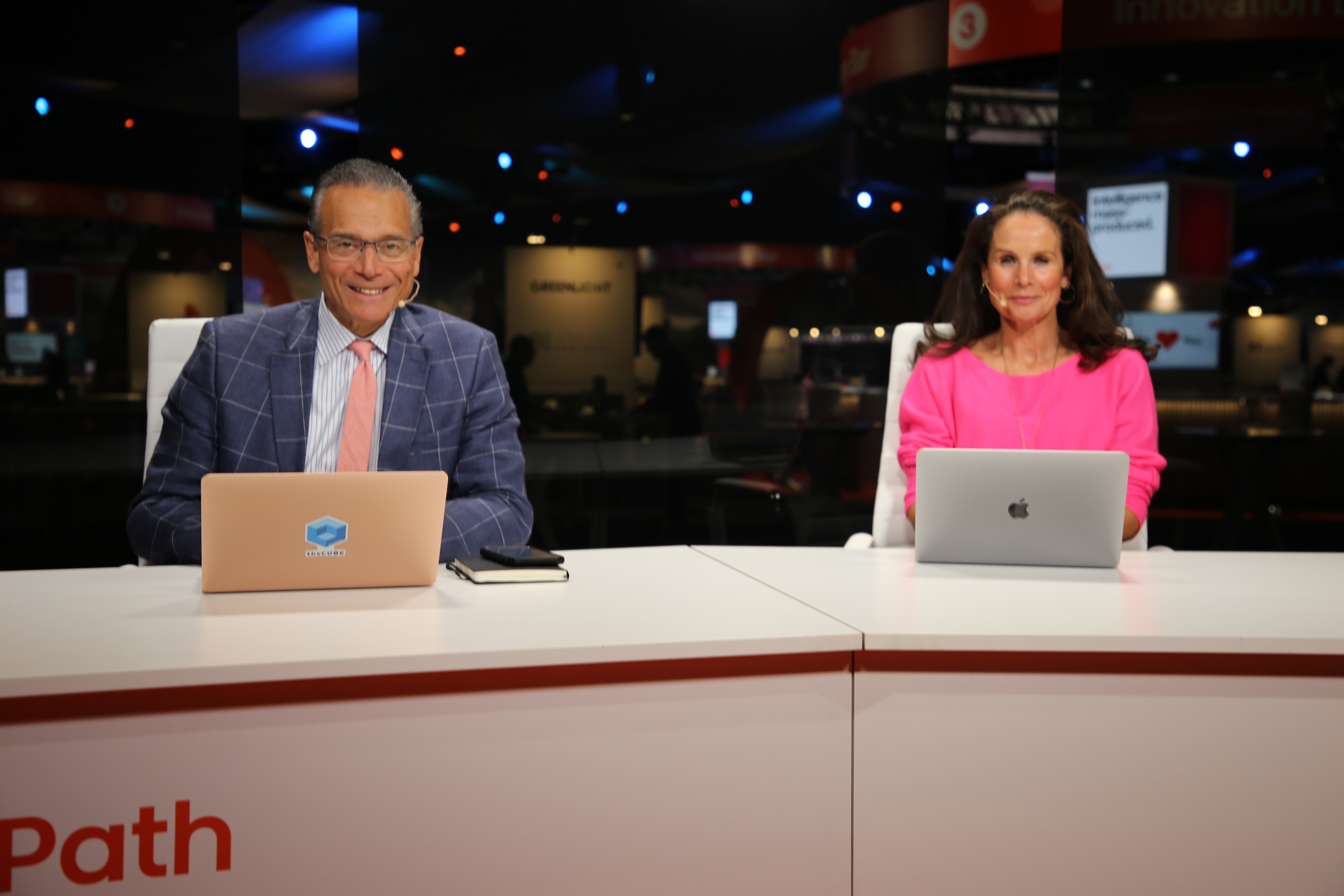
>> Hello everyone. We are kicking off two days of wall-to-wall back-to-back coverage of UiPath Forward 2024. We're here on theCUBE. I'm your host, Rebecca Knight, along with my co-host and analyst, Dave Vellante.
Dave Vellante
>> Hey Becca.
Rebecca Knight
>> Hello. Good to see you again.
Dave Vellante
>> Good.
Rebecca Knight
>> We keep meeting here.
Dave Vellante
>> Yeah. Good. Hey, what better place to meet than Las Vegas? Actually, it's October and the weather is stunning.
Rebecca Knight
>> It is. It is. It is. So we are both fresh from the keynote. We both just sat through Mary Tetlow, Bobby Patrick. Of course, Daniel Dines, the boss of the bots as he's named here.
Dave Vellante
>> Boss of the bots, that's good.
Rebecca Knight
>> I'd love to just hear your thoughts and impressions. I mean, obviously the theme is really about transforming businesses with AI, showing what AI powered automation looks like and how it is the future of work. What'd you think of it? What'd you make of it?
Dave Vellante
>> Yeah, UiPath is an interesting company, isn't it? I mean, they started as a humble consultancy. They realized they had lightning in a bottle in 2015. They sort of really relaunched the company and then as you well know, they soared. They ran up to a valuation that was off the charts and then they went public. They went public during the pandemic on the NYSE and have had an interesting journey, let's put it that way. I think the board felt like at one point, hey, we need to bring in some adult supervision because Daniel was a product guy. That didn't work out the way they had thought. Daniel Dines is back as a CEO. He's a true product visionary, and we heard him up there on stage today. The company has about a billion and a half plus in ARR. They're growing at almost 20% per year and a pretty good retention rate. They've got, I think, 10,000 customers. So many of them are here today. And I think what we heard was, this is act 1 for UiPath. Act 2 was RPA where they dominated. Now between act 1 and act 2, there was sort of act 1A, where UiPath emerged from or evolved from really a point product company just doing robotic process automation to one that was doing end-end automation. They made a number of acquisitions in the process automation area, like ProcessGold. They made some AI acquisitions, and so they really set out on this hyperautomation, end-to-end enterprise automation path. And then boom, gen AI hits. So the AI heard around the world. Daniel's right. They were doing AI for a long, long time. They started with computer vision, they had machine learning, etc. But then gen AI has changed everything. If you can interact with a natural language and is all this wonderful potential with AI, I think people looked at it and said, "Well, why do we need RPA?"
I think people are finding out that it's harder than they thought to implement AI in a way in which enterprises expect. So act 2 is all about going beyond bots into agents. And what Daniel laid out today was a case that you need bots and agents together. And that was interesting. I mean, I do largely agree. RPA is sort of like the plumbing. Without it, water will be spraying everywhere. And so the case that he made today was these agents have to evolve over time. They have to be governed and the bots will help with that governance because they're basically rules-based. They say, "Do this, then that," and they don't break those rules. Whereas as we know, AI sometimes does what it wants. So we're in the early days of agents, can you trust those agents? The example he gave, can you trust the agent with your passport and all your credit card information? Maybe we let the bots handle that and give bits and pieces of that information to the agents, let the bots execute on all the private stuff. So bots and agents and humans working together with sort of the vision he laid out. But he did say that over time, we want to really try to eliminate as much human interaction as possible with all the mundane stuff. So my take is that we're entering a new era that's no shock to anybody. And the application stack is about to completely change and UiPath hopes to play a major role in that agent orchestration layer. And we could talk more about how we see that changing what the role of AI is. Things like causal AI, how to harmonize the data, the whole agent orchestration framework, backend connections, all that stuff is increasingly important. And UiPath today has its fingers in a lot of those pies.
Rebecca Knight
>> Indeed, and a lot of what you were just saying really resonated with what we heard on the main stage this morning. I think Mary Tetlow, who is the chief brand officer, made a similar analogy. She quoted Daniel Dines saying, "what is automation without AI or AI without automation, I can't have my brain without my body." And really the combination of the two is bringing together this left brain right brain combination of the left brain being more analytical, doing that kind of critical analysis, the automated tasks. The right brain, bringing them more of the creativity, the innovation, bringing them together. And then deploying that at the enterprise enterprise scale. So that is the challenge before them.
Dave Vellante
>> And when they have 10,000 plus customers, so that's good news, and they have a great product. They've ebbed and flowed with go-to-market. I think at one point they're really trying to sell to the C-suite. And I think for UiPath, that's where partnerships come in. When you're working with some of these GSIs and other partners that have access to that C-suite, I think that's a good role for the partners. And I think UiPath brings the product expertise. But you saw it, every forward that I've ever been to, it starts with the customer and they have this really cool way of the customers actually kick off the vent. That's the only event where I've seen that consistently where you have customers standing up, introducing themselves, telling a story about who they are, what their automation goals are. That's where virtually every forward I've been to starts. And it's unique.
Rebecca Knight
>> It is, and it's incredibly powerful. As you say, we had someone from Omega Healthcare, her quote of the day is, "Healthcare in America runs on paperwork." Yeah, we know.
Dave Vellante
>> Right.
Rebecca Knight
>> As anyone who's ever received medical care in this country knows. And showing how they've reduced turnaround times, increased efficiency at Omega Healthcare, Ernst & Young, an image company talking about eliminating the invoice backlog. But most interestingly, he made the point that this is relieving stress from employees. I think that that was a message that really came out loud and clear is that people are overworked, let these new processes, these new systems, help relieve some of those burdens.
Dave Vellante
>> I got to ask you, because this is your wheelhouse. So the new way to work, future of work. Stu and I, I think it was 2015, we did a show in London with the guys who wrote 2MA, Second Machine Age. It was Andy McAfee and Erik Brynjolfsson from MIT.
Rebecca Knight
>> Who's now at Stanford, Eric.
Dave Vellante
>> Eric is now at Stanford, right. And so the premise of the book essentially was that machines have always replaced humans over the course of history, and that's led to greater productivity and more wealth and growth and more jobs. But this is the first time ever that we're replacing humans in cognitive functions. And so there was a little bit of fuzziness there. And one thing struck me is they made the point that it wasn't too long ago that robots couldn't climb stairs, and they certainly can climb stairs today. They could do a lot more than that. And so Brynjolfsson said, "We make a list every year of the things that humans can do that machines can't do. And that list is getting less and less."
And with gen AI, it's really getting a lot less. And so it's quite amazing. Now, the optimists would say, look, it's just another wave. And there may be some short-term pain, but there's always in these waves been long-term gain. At the same time you hear things like universal basic income and artificial general intelligence and this utopian vision of we're all sitting around just living life. Maybe we're quite some ways away from that. But what's your take? What is your research, your writings, your gut feel, tell you about this transition from where we were pre-ChatGPT to this new world of AI?
Rebecca Knight
>> I think that what we're hearing, I think it was even the magician at the very beginning. He was doing a little pre-entertainment, was talking about who's going to take our jobs. It's not AI that's going to take our jobs. It's the people who know how to work with AI. And I think that yes, that is in general true because humans are going to be around and we're going to need something to do. So I do think that there will be some short-term pain, as you said, there will be some jobs dislocation. There already has been, frankly. That will continue but I think also as this technology evolves, we will find new exciting ways to work with the technology because we're already seeing research coming out of MIT, coming out of Stanford about how humans can work together with AI and under what circumstances, what are the best practices with that. And for the longest time we thought, oh, it's humans that can bring the creativity, the empathy. But in fact, as you just pointed out, AI does that pretty well too. There's really interesting research about do you prefer to get medical information and advice from your doctor or from an AI bot even when you know it's an AI bot. Research says that well, the AI bot listens to me. The AI bot is more fully answering my question.
Dave Vellante
>> Engaged.
Rebecca Knight
>> Exactly. And we've all met some doctors with some questionable bedside manners. So I get it. But I also think that the creativity being, I mean, we've seen incredible images that AI has created. Just mind-blowing creativity that AI is showing. But I do think that maybe working with humans is the answer there, is that in fact, having AI iterate and test and try and add different things, a human maybe does the first draft or AI does the first draft, and then bringing the human brain in there. Because the one thing that AI will never know how to do is how to live a human life because this is what we bring to the table. We bring that experience, that judgment, and that humanity to all of this.
Dave Vellante
>> So what do you think that means for jobs? The media journalists almost always go to that loss of jobs. It's certainly a concern in Europe, it's a concern in Hollywood. It's a concern in the manufacturing industries. It's a legitimate concern. The last big, big, really meaningful productivity boom that I can remember was really PCs. I mean, it brought in the massive, massive productivity renaissance, and there were others in between. I'm not sure the internet had the same effect. I have to look at the numbers, but the hope is that AI actually produces that, and people are concerned about the debt, the national debt, productivity potentially drives more growth. Growth generally drives more jobs. Do you think that will be the case this time around?
Rebecca Knight
>> I do. I do. I'm optimistic that it is going to lead to a boon in productivity. If you just think about your everyday existence. A lot of us are drowning in admin. We're drowning in admin at work, but we're also drowning in it in our personal lives, I can't tell you how many apps I have to deal with to register my children for sports and tournaments and submitting different forms here and there, and that's just their sports, not alone their other extracurricular activities and their schoolwork. So just the fact that I have to deal with all of that, and I'm just one human being who also works a job. Think about all of that at a massive scale and if you can, in fact, if AI can eliminate that from our lives, it does give us more time to focus on the work that matters and to focus on our actual human beings in our lives that matter. So I'm really excited.
Dave Vellante
>> Hey AI, sign up my son for basketball, my daughter for volleyball, my other son for music. Just do it.
Rebecca Knight
>> Yeah, exactly. Maybe we can't trust it quite yet with all of our sensitive identification details and credit card information, but we're getting there.
Dave Vellante
>> Yeah, no. So I want to come back to what we were talking about before. I alluded to at the end of my rant on the application stack. And so if you think about the way in which applications are constructed today, you've got the infrastructure, which is, let's call it cloud infrastructure, whether that's public cloud or on-prem, it's a cloud-like experience. And on top of that, they're data platforms. So there's things like Snowflake or Oracle. There's databases, and those databases can be analytical in nature or they can be operational or transaction in nature, and they're largely stovepipe and you build applications on top of that. There's some middleware, and then you've got apps, whether it's human resource or CRM or ERP or financial apps, on and on and on. And all these apps contain business logic, they contain data, they contain metadata, and within their own domain, they work pretty well. They tend not to work well across domains as we know. Some companies have done a better job than others in sort of integrating, but generally speaking, we've created a world of application stovepipes, and the vision for Agentic is we're going to eliminate those stovepipes. We're going to create digital representations of our business that in real time, essentially a digital twin, that can represent our business and identify changes in the business and respond accordingly, with agents, swarms of agents that are working together that can make plans and present plans to humans that humans in the loop can approve or adjust and then ultimately execute against top-down goals, increase revenue, but don't lose money, keep margins at 30% or better, but gain share and give me a plan to do that, and then execute that plan bottom up. So what do you need to do that? You need connectors to back end systems like Salesforce and Oracle and SAP, et cetera. You need a data layer for sure. That's not UiPath, but there has to be a data layer there, and then you need a way to take all that disparate data and harmonize it so that revenue actually means revenue. It doesn't mean bookings, it doesn't mean NRR or ARR or quarterly revenue or annual revenue. So we're not arguing about that. There's trust in the data, and we've never had a single version of the truth in technology. Maybe we'll get there. But that harmonized data then gets served up to the agents, and the agents are orchestrated, they're managed, they're governed that they're secure, and there's an agent control framework that can do that. They can understand the top down goals, execute the bottom up, and be a digital representation of the business. That is the vision for the future. That, oh, by the way, if you really want to get exciting, throw in things like causal AI, so we know that there are relationships in data, but is it cause and effect? Well, AI is emerging, causal AI they call it, that can actually understand cause and effect, which maybe humans sometimes can't. We can see patterns in data. We can see correlations in data. We can make statistical correlations. We can run Monte Carlo modeling based on those correlations, but is it cause and effect? Okay, so this is I think going to take 8 to 10 years to evolve, but I think it will happen. So why am I talking about this? UiPath, as I said, has the plumbing. It has all these bots and automations running around that are pretty proven and trusted, and it's building out this agent control framework, which is a very high value piece of real estate to be able to execute on that vision. And so this is why they talk about act 2. Act 2 for UiPath is around that agent control framework, agent orchestration, and the important thing is it only includes data. It's also got to include the data, the metadata, the business logic, but also has to include the processes. And that's where UiPath I think has a great potential because they understand processes. They made some acquisitions years ago around ProcessGold and process automation. And so to the extent that you can incorporate that into your agent control framework, and then the agents can learn from humans over time through computer vision and other AI and machine intelligence, then new processes can be developed. And this is how I think existing incumbents become more AI first and new companies become or are born that are AI native. And that brings us back to the productivity boon. If that can happen then, this is David Floyer's premise is, you're now executing on business tasks and running businesses at one-tenth the cost and 10x the speed, and that's a new world.
Rebecca Knight
>> With more certainty, in fact that what you're seeing is in fact what's happening. Which I think is -
Dave Vellante
>> Yeah, and we should caution, none of this works today. In that sense -
Rebecca Knight
>> Exactly.
Dave Vellante
>> Today it's a lot of single-agent co-pilots. It's LLMs that hallucinate. It's a lot of deterministic capabilities that are rules-based, but we're laying out a vision and it's early of this new world, and I really do believe it's going to take a decade to evolve not only the technology, the technology to harmonize all this data, to control these agents, to make all these back-end connections. Some of that exists through APIs. It's not microservices. Microservices are hard-coded, but the technology's going to take some time. But beyond the technology, getting people to actually adopt it, understanding the processes, making sure that you're managing risk, the governance and the compliance piece of that, that's going to take a long time to evolve.
Rebecca Knight
>> Indeed. Well, Dave, I'm so excited to be here for two days of UiPath coverage. Lots of great announcements. We're having many customers on. We're going to be talking about AI in healthcare, AI in consulting, AI at Coca-Cola. It's going to be a great show, and I'm really looking forward to it.
Dave Vellante
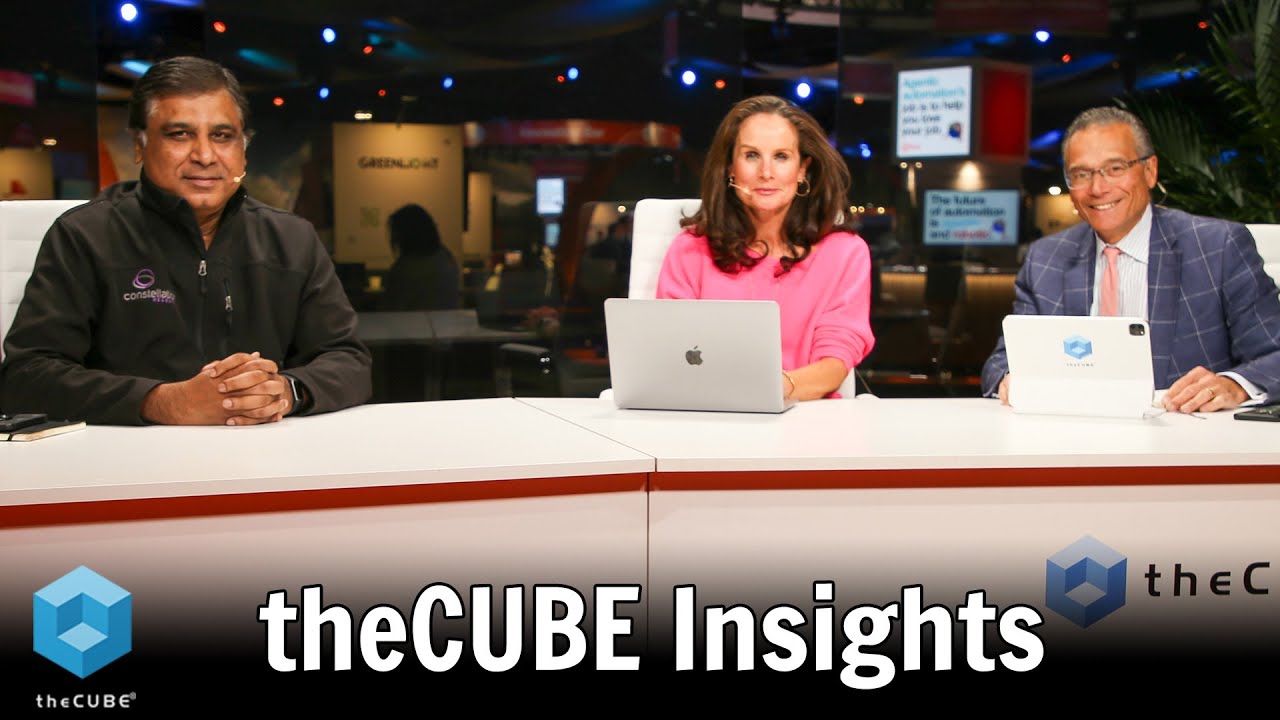
>> Yeah, they're always a great guest of ours. Some bottler comes on either Coca-Cola itself, or some region of the world that you, oh, wow, Of course. Coca-Cola's everywhere. We've got folks from, like you say, from healthcare. We've got partners coming on. We've got some analysts coming on. We have an analyst from Forrester. We have another one I think from IDC, another one from Constellation Research. And yeah, it's going to be an action-packed show, two days, as you say, of wall-to-wall coverage.
Rebecca Knight
>> Indeed. Well, I look forward to it.
Dave Vellante
>> Ditto.
Rebecca Knight
>> And you stay tuned to theCUBE. You are watching theCUBE, the leader in enterprise tech news and analysis. We'll be right back with more from UiPath Forward.