We just sent you a verification email. Please verify your account to gain access to
UiPath Forward 2024. If you don’t think you received an email check your
spam folder.
In order to sign in, enter the email address you used to registered for the event. Once completed, you will receive an email with a verification link. Open this link to automatically sign into the site.
Register For UiPath Forward 2024
Please fill out the information below. You will recieve an email with a verification link confirming your registration. Click the link to automatically sign into the site.
You’re almost there!
We just sent you a verification email. Please click the verification button in the email. Once your email address is verified, you will have full access to all event content for UiPath Forward 2024.
I want my badge and interests to be visible to all attendees.
Checking this box will display your presense on the attendees list, view your profile and allow other attendees to contact you via 1-1 chat. Read the Privacy Policy. At any time, you can choose to disable this preference.
Select your Interests!
add
Upload your photo
Uploading..
OR
Connect via Twitter
Connect via Linkedin
EDIT PASSWORD
Share
Forgot Password
Almost there!
We just sent you a verification email. Please verify your account to gain access to
UiPath Forward 2024. If you don’t think you received an email check your
spam folder.
In order to sign in, enter the email address you used to registered for the event. Once completed, you will receive an email with a verification link. Open this link to automatically sign into the site.
Sign in to gain access to UiPath Forward 2024
Please sign in with LinkedIn to continue to UiPath Forward 2024. Signing in with LinkedIn ensures a professional environment.
TheCUBE is in Las Vegas for live coverage of UiPath FORWARD 2024. Today, they have banking executives, healthcare executives, and representatives from other industries. Rebecca Knight and Dave Vellante are the hosts. They discuss insights from the event, such as the importance of agent control frameworks and the transition to building agents. They also touch on the idea of Agentic orchestration and the potential for true Agentic vision in the future. The conversation pivots to the market's expectations for companies like UiPath to leverage AI capabilities. Th...Read more
exploreKeep Exploring
What is the role of guardrails and guardians in ensuring the trust and security of agents, including robots?add
What is the main focus of the book "Random Acts of Automation" by the speaker mentioned in the text?add
What is the breakdown of the different levels of workflows in the pyramid presented by the speaker, and when can true Agentic orchestration be expected to have a meaningful business impact?add
What are some insights and opinions on the current market trends and specific companies like Qualcomm, Cisco, LLM vendors, and UiPath?add
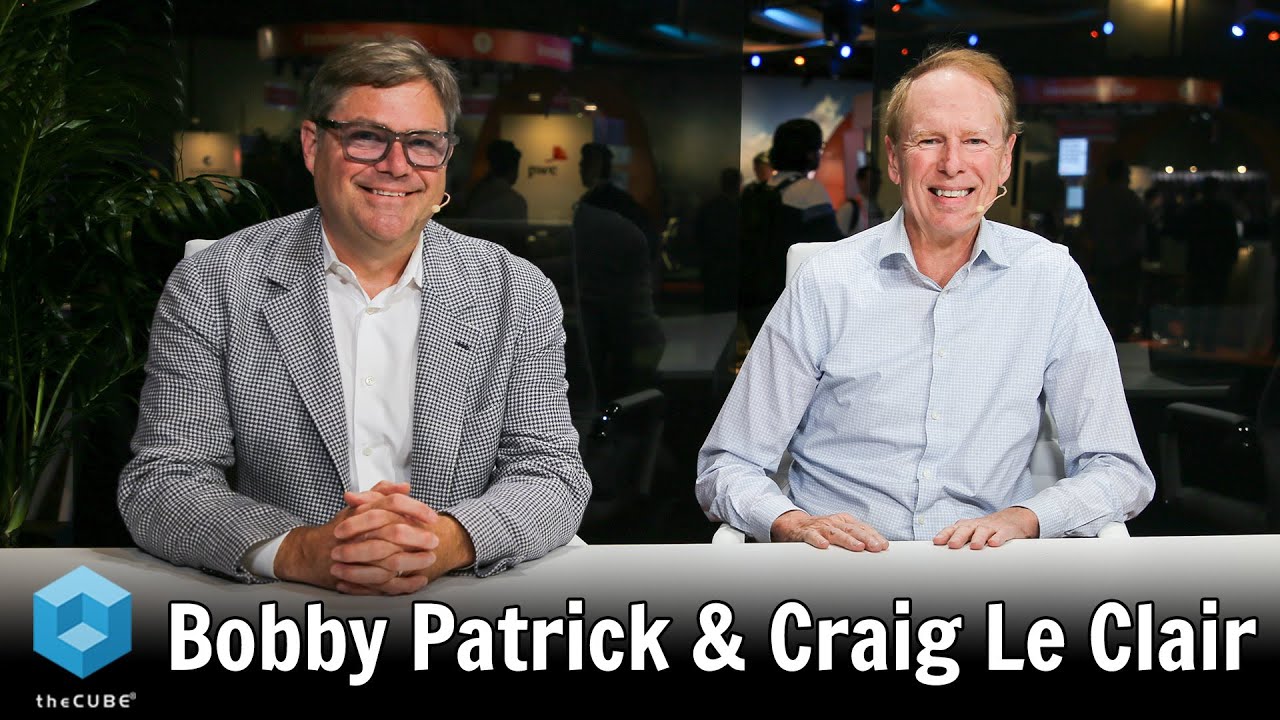
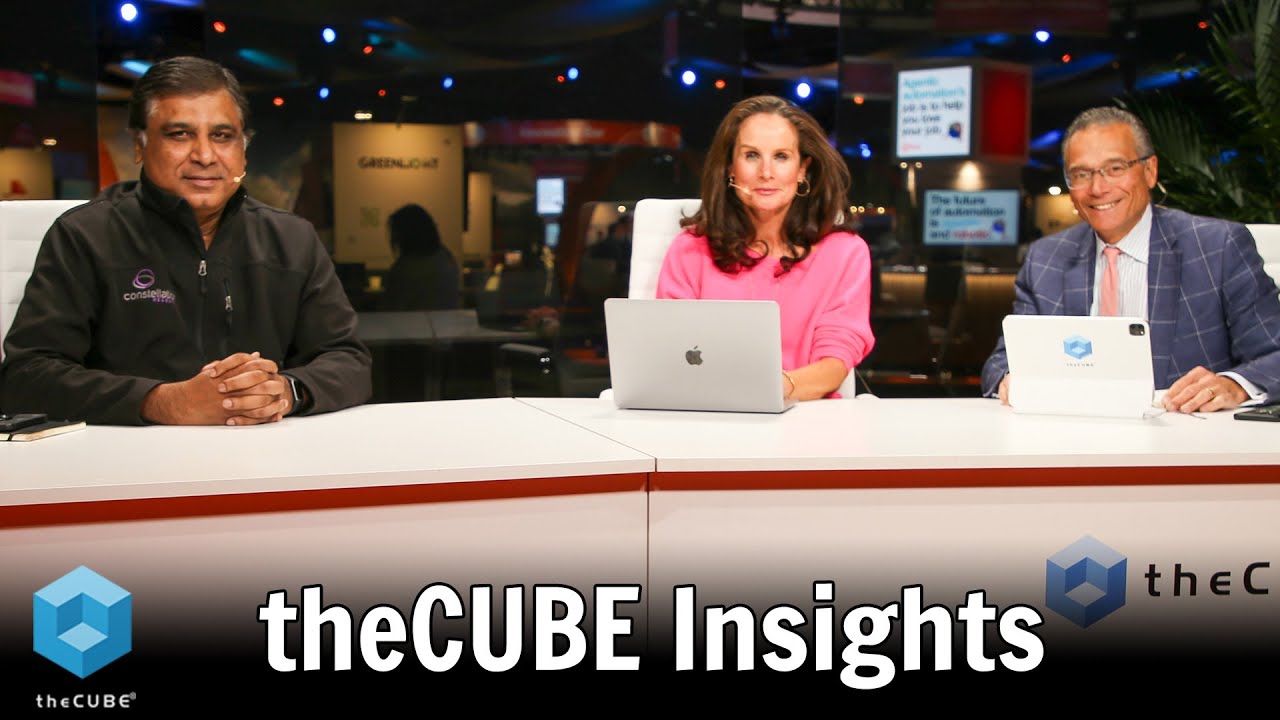
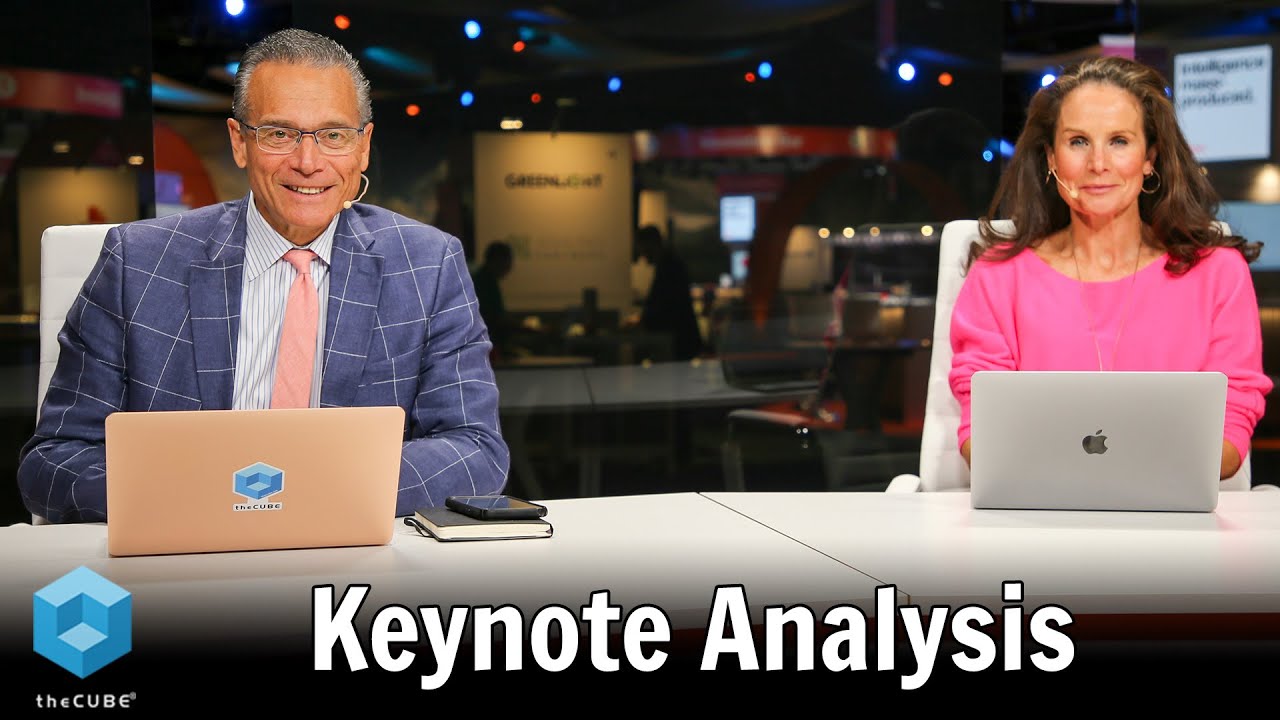
>> Good morning everyone and welcome back to theCUBE. We are here in Las Vegas. We're kicking you off day two of our live coverage of UiPath FORWARD 2024. Its two days, back-to-back wall-to-wall coverage. Lots of great guests. Banking executives, healthcare executives, people from bottlers and other retailers. I'm Rebecca Knight alongside Dave Vellante, my co-host and analyst. We are both just fresh from the keynotes. Bobby Patrick and Mary Tetlow, of course, as the emcees of the event. But we also just heard from Craig LeClair of Forrester Research who has a new book out. I am curious to hear your thoughts. What do you think?
Dave Vellante
>> I just want to talk about last night.
Rebecca Knight
>> No, actually you're right.
Dave Vellante
>> Earth, Wind & Fire, they were on fire. I was so impressed. Guys, Earth, Wind & Fire?>> Woo.
Rebecca Knight
>> The crew is whooping it up for those at home.
Dave Vellante
>> If you like to funkify, if you like that kind of music, horns. I felt cool just being near those guys. You know what I mean? It was just like coolness emanated throughout the day. They were having so much fun. What a great choice of a band. By I presume, Mary. I was right behind Mary. She was on the dance floor all night. Just she said, "I had a problem. I couldn't sit still." And that was true. I was just really thrilled.
Rebecca Knight
>> That's your jam.
Dave Vellante
>> That was definitely my kind of music. Our Power And Funkify with the Earth, Wind & Fire. And there were three original band members there and they were tight. They were really, really tight. Those guys are in their seventies and they had 12 of them up on stage. One white dude, he was getting into it. It was fantastic and really awesome.
Rebecca Knight
>> Yeah. Hey, UiPath they throw a great party.
Dave Vellante
>> They do.
Rebecca Knight
>> They do indeed.
Dave Vellante
>> And I like that they have the concert, the big event on Tuesday night during the event so you can attend. Because I'm always getting out of here on a red eye. And customers, they like to keep people here, but it's really good I think that they do that during the event. HPE does that too.
Rebecca Knight
>> It's energizing. Because and then it gives people this shared experience of fun and excitement and I think that's a really good point to make it while the show is still going on. Hey, we're here to have fun.
Dave Vellante
>> And they don't start the keynote until 9:00, which is cool.
Rebecca Knight
>> Yeah. Exactly.
Dave Vellante
>> Even though we're up at four.
Rebecca Knight
>> Indeed. We are.
Dave Vellante
>> East coast.
Rebecca Knight
>> East coast time.
Dave Vellante
>> Okay, so to the keynote. Bobby Patrick I thought did a really good job this morning. He laid out, he said five takeaways from day one. So I wanted to touch on.
Rebecca Knight
>>
Dave Vellante
>> The first one, single agents are not that interesting. George and I wrote about that along with Scott Hebner just recently. We really don't think single agents, single co-pilots are that interesting. We think they're pretty early days and rudimentary, it's the dial-up of Agentic, if you will. I like this term, swarm. We've used it a lot. I've used it a lot personally. He said he heard it around, so others are using it as well. Something that's new to me, at least I hadn't really thought through it, and Daniel talked about this on our discussion yesterday, Rebecca. Agents cannot be trusted. You don't want to give you credentials to an LLM. Certainly we know that. But what's new is the guardrails, the guardians of the agents, are going to be humans. That makes sense. But also robots.
Rebecca Knight
>> Right. Right.
Dave Vellante
>> I thought that was interesting and I want to test that a little bit with some of the customers, but it makes sense. Robots are deterministic. You say do this and they do it, and that's all they do. And to the extent that you can secure them and govern them, which UiPath has shown that they can do.
Rebecca Knight
>> But it is absolutely correct that it's reliant on the security and that you can trust that these are in fact secure.
Dave Vellante
>> Right. So if robots get hacked, and I haven't heard of the robots getting hacked, so I don't know how ... I mean, APIs are sort of somewhat vulnerable and robots sometimes interact with APIs. But maybe they're pulling data. So let's poke at that a little bit. But it's an interesting positioning in my view. And then this fourth point was Agentic orchestration is the conductor, the governor across agents, robots, people, models and scale. Totally agree with that.
Rebecca Knight
>> Yeah.
Dave Vellante
>> UiPath's building out an agent control framework, which is I think a very high-value piece of real estate. And then for UiPath Pro devs, automation devs, and citizen devs will give a seamless transition. Don't really love that word. Seamless. It's definitely not overused. Seamless transition to build agents. Agent Builder lands in 45 days. That's cool. It's not like, next year at FORWARD we'll be announcing GA. You're talking 45 days, so that's good. And you get started now, Autopilot for everyone, for free. UiPath has always done a good job Rebecca of having a freemium model. Prior to UiPath, you had to call for pricing. Hey, I want to do a trial. And they'd send an army of salespeople in to try to get commitments and arm twist. UiPath, they're like, here's essentially a community edition go play with it
Rebecca Knight
>> Right.
Dave Vellante
>> That's how they won. One of the reasons they won in RPA was because they had that mentality and they had a great product, but they made it really easy. In fact, I remember when we first heard about UiPath, we went through a process. George Gilbert participated, Peter Burris, and I think James Kobielus to download the UiPath community free edition and get it up and running. And they did. They tried to do the same thing with, I think it was Automation Anywhere and Blue Prism and somebody else. And we saw the full-body experience of salespeople calling, let's set up a meeting, and talk about how you can get access and what kind of commitment ... All right, we get it. That was sort of instructive. That was good. And then Craig LeClair, you brought him up. Let me ask you, what'd you think of his talk? Did it make sense to you?
Rebecca Knight
>> It absolutely made sense. He obviously is a great speaker. He's got a book coming out in next year, Random Acts of Automation where he described that this is really geared at the workers. This is really ... it's explaining how AI ... because this is the thing as employees, you hear, "Oh, AI is going to change everything. It's going to change your job. It's going to change the future of work and how work gets done." And you just are sort of left with this, "Okay, what do I do?" But he said that this is explaining the shifts and really about how if you are an independent worker, this is how it's going to change your gig model. If you work for an organization, this is how your life is going to change and how your processes that you do on a day-to-day basis will shift. So I think that I'm excited for the book. I guess I should say that. Other thing. I thought about his talk, which was something that I hear a lot from you, he sort of ended on this, what is his great prediction? He quoted Yogi Berra, "Predictions are difficult, particularly about the future." Yeah, that's accurate. He said a Agentic Process Management he predicts '27 to '28. That's when in fact we will see the rubber hitting the road in organizations. He said, look, some companies are still have fax machines. They are dealing with very basic digital transformation and they're still struggling with that. And so he does not see this really happening for another three to four years.
Dave Vellante
>> I agree with him on that. In fact, I think he may be even a little aggressive for this true Agentic vision. And I think our Agentic vision is a little bit more aspirational than what he's envisioning. I think he laid out this pyramid where the bottom piece of the pyramid is sequential workflows. That's the basic workflows. Then you get human-initiated workflows, which is pre-AI. You got intelligent automation and bots. And then you got semi-autonomous. He said the only real AI piece today in the UiPath portfolio was document understanding. That's where the most of the AI is today. And then Agentic is on top of that. I would say it's at least three to four years before you see true Agentic orchestration that is going to have meaningful business impact. Now beyond that, our vision is a digital representation of a business where you basically have a real time capability. You're connecting to both transaction systems and systems of analytical record. It's like Uber for everybody, where you've got the real time ability to orchestrate people, places and things, represented by agents with humans, yes, in the loop, but much less so than they are today. I mean, there's a human in the loop when you order an Uber driver.
Rebecca Knight
>> Well, right. Yeah,
Dave Vellante
>> You've got some certain controls. But the human interaction, there's not a dispatcher for instance. There's not somebody laying out the ETA or doing pricing and sending that to the ... No, it's just all automated. Imagine that for workflows throughout an organization. That's the vision that we've put forth. And I think that's more like five to seven years away at least. It's going to take 10 years to fully realize that vision and it's going to be steps along the way. But I agree, I think within three to four years. The big missing ... one of the things he said was, you're going to have 8 billion people that are not going to have to-
Rebecca Knight
>> I got the quote.
Dave Vellante
>> Yeah, great.
Rebecca Knight
>> "Over the next five, 10 to 15 years, 8 billion people will say goodbye to a complex web of mobile apps, sites and databases as AI dissolves the friction between humans and technology."
Dave Vellante
>> Thank you for capturing that. What's implied in that is the database becomes invisible and it's largely invisible today. I said the other day, I use databases every day, but I never touch them. I never see them. So that's cool. I'm not sure. It was interesting as I laid that out to Daniel yesterday, he was like, "I don't know about that. We still use command-line interfaces." You can't use natural language for everything. But what Craig's forecast there, his prediction, presupposes is that within Salesforce and ServiceNow and Oracle and Palantir and all these other ISVs that they don't fence off their apps. We've built stovepipes of application functionality and the history of this industry suggests that that could continue unless a company like UiPath can cut across and build an abstraction layer that can work with those stovepipes, but also create incremental value on top. Now, what's going to likely happen in the near term is you've got such lock-in with the application vendor and people are comfortable with those processes. So to imagine reinventing everything such that you don't even see those locked-in processes anymore, rather you're using a company like UiPath to abstract those away, I love the vision.
Rebecca Knight
>> Yeah, I love it too.
Dave Vellante
>> It's just not necessarily practical.
Rebecca Knight
>> Here's why I'm optimistic about it ... that it will dissolve in the silos. Because in our consumer lives it will, because we are going to demand it. We're going to say, "No, I can't deal with all these sports apps anymore. I need something much more seamless." And we know the technology is there. And I think that a lot of more consumer to consumer companies are going to have to face our demands. And because we're going to then expect it in our personal lives, if we go to work and we have to deal with all these different silos and systems that don't play well together, I think I'm optimistic that
Dave Vellante
>> Well, let's game this.
Rebecca Knight
>> All right. Okay. Okay.
Dave Vellante
>> You remember, you heard last week Uber is thinking about buying Expedia?
Rebecca Knight
>> Mm-hmm.
Dave Vellante
>> And the positive case on that is they'll build a super app. And to your point that you just made, you want a super app?
Rebecca Knight
>> I do. I do.
Dave Vellante
>> The counter to that is there will be certain apps that you're still going to want to use the app. I'll give you an example. Airline apps. Airline apps are pretty good. And if JetBlue comes up with some tile thing and they release it before the super app gets a hold of it, you're going to want access to the JetBlue.
Rebecca Knight
>> I need my status, I need that status.
Dave Vellante
>> Yeah. So they're going to have some functionality.
Rebecca Knight
>> Yeah.
Dave Vellante
>> I think the same thing could potentially happen in the enterprise where Salesforce maybe has ... Salesforce may be not a great example because they've never been terrific at integrating Slack and Tableau and all these.
Rebecca Knight
>> Right.
Dave Vellante
>> But they're working on it and they're working hard on it. But take Salesforce ... Oracle's, maybe a better example where all those Fusion apps, they took 10 or 11 years to actually integrate all the Siebel and the PeopleSofts and all the NetSuites, all the other apps that they bought. Charles Phillips was responsible for all that, our friend of theCUBE. But Larry insisted on building Fusion and orchestrating those things. So why is that important? Because if you're inside of Oracle, you're going to have better performance. You're going to probably have better security. You're going to have certain features that are always going to be better than the super app. Okay. So you're trading off the best of breed functionality for that suite, and that's an age-old tug of war inside the tech business and they both win. You're going to have a market, in my opinion, the way it's going to evolve is, you're never going to eliminate those stovepipes. I think there's just too much control by the ISVs that they can add value where the super app won't be able to. But to your point, the market will demand greater simplicity. And for those companies like UiPath that can deliver that, I think they'll do very, very well and they'll pick up a really meaningful, fair share of the market.
Rebecca Knight
>> Okay, well we're going to bring this idea to Craig to see what he thinks. We've got a lot of great guests today. We've got many UiPath executives of course, but also people from PWC and SAP and Eversource.
Dave Vellante
>> I want to also mention, UiPath had its investor meeting.
Rebecca Knight
>> Okay. All right.
Dave Vellante
>> With the sell side analysts, I think it was yesterday. And the reaction was positive, although the stock didn't react positively, but that doesn't mean it could have been the sentiment from the market, which is finally not going up every day. But here's the deal, act one to act two. What the market wants to see from ISVs like UiPath is proof that they can actually do what Daniel said last year at FORWARD, which is, We are making AI an advantage for us." Because we have the capabilities, the underlying plumbing ... I call it plumbing, that's not his word. But we have the underlying capabilities that we've built up for over a decade and we're going to leverage that and be a winner in AI. Now, you don't see companies like UiPath and they're not alone. Take MongoDB for example, who has put forth aspirations about AI. They're not automatically getting the AI uplift like an NVIDIA or even to a certain extent But these are picks and shovel companies. NVIDIA, Broadcom, AMD, Qualcomm, interesting arm, interesting. There's a little battle going on between Qualcomm, but it's basically those picks and shovel infrastructure, like Cisco during the internet days. Those are the ones that are getting the big tailwinds. And the LLM vendors who we have no idea how they're going to make money, but their valuations are going through the roof. The market is not going to reward companies like UiPath until they can prove that they can take advantage. That act two is actually going to be productive for them. It's going to drive new revenue growth, it's going to drive new profitability, and new free cash flow. The market is taking a wait and see, which is prudent. But I think that UiPath has a really great opportunity here to turn act two into a really great business.
Rebecca Knight
>> Okay.
Dave Vellante
>> So that's my take on things.
Rebecca Knight
>> Okay, well we're going to dive into all of that and more today on theCUBE. I'm looking forward to it.
Dave Vellante
>> Great. Thank you.
Rebecca Knight
>> I hope you will stay tuned to theCUBE's live coverage of UiPath FORWARD 2024. Your watching theCUBE, the leader in enterprise tech news and analysis.