We just sent you a verification email. Please verify your account to gain access to
UiPath Forward 2024. If you don’t think you received an email check your
spam folder.
In order to sign in, enter the email address you used to registered for the event. Once completed, you will receive an email with a verification link. Open this link to automatically sign into the site.
Register For UiPath Forward 2024
Please fill out the information below. You will recieve an email with a verification link confirming your registration. Click the link to automatically sign into the site.
You’re almost there!
We just sent you a verification email. Please click the verification button in the email. Once your email address is verified, you will have full access to all event content for UiPath Forward 2024.
I want my badge and interests to be visible to all attendees.
Checking this box will display your presense on the attendees list, view your profile and allow other attendees to contact you via 1-1 chat. Read the Privacy Policy. At any time, you can choose to disable this preference.
Select your Interests!
add
Upload your photo
Uploading..
OR
Connect via Twitter
Connect via Linkedin
EDIT PASSWORD
Share
Forgot Password
Almost there!
We just sent you a verification email. Please verify your account to gain access to
UiPath Forward 2024. If you don’t think you received an email check your
spam folder.
In order to sign in, enter the email address you used to registered for the event. Once completed, you will receive an email with a verification link. Open this link to automatically sign into the site.
Sign in to gain access to UiPath Forward 2024
Please sign in with LinkedIn to continue to UiPath Forward 2024. Signing in with LinkedIn ensures a professional environment.
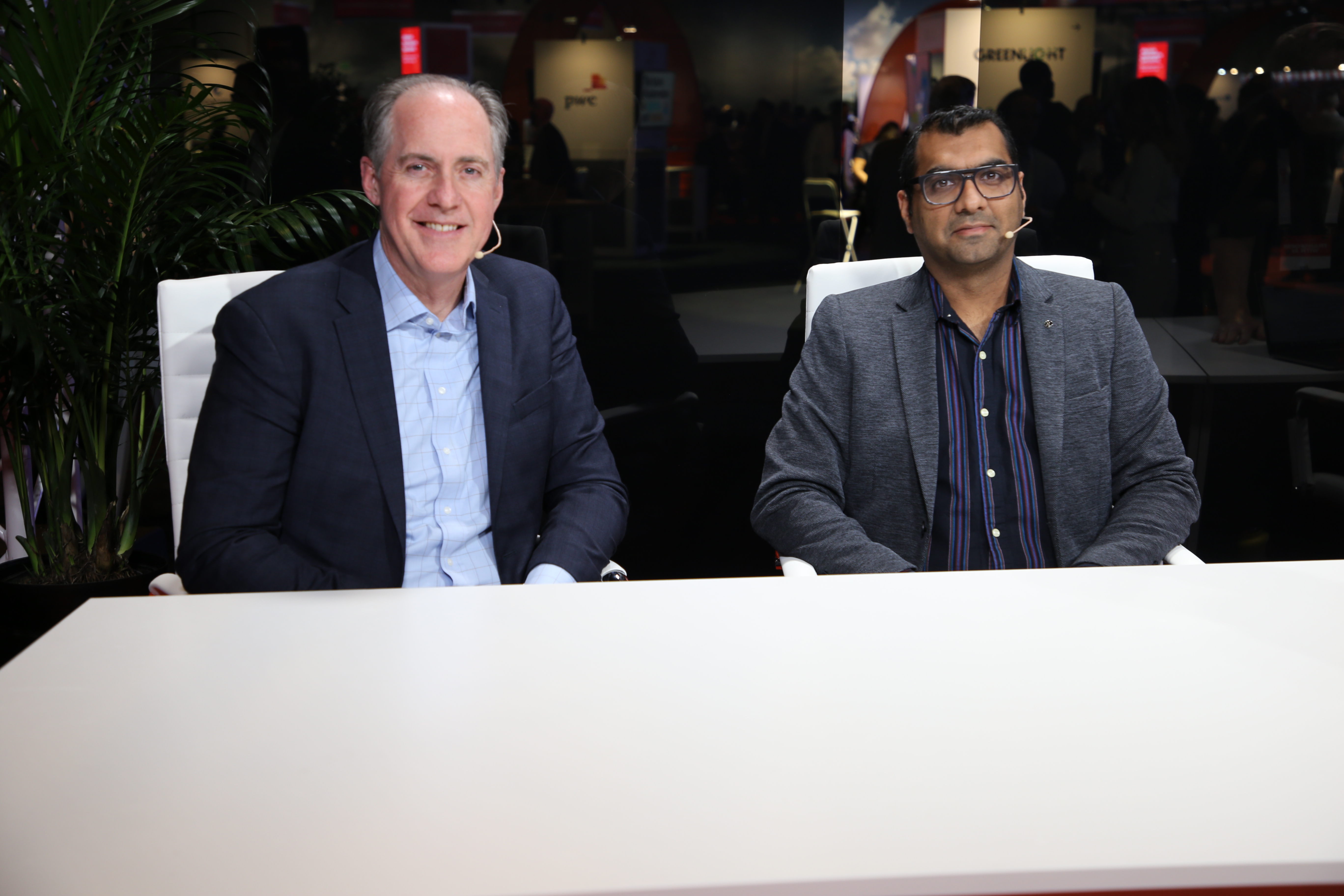
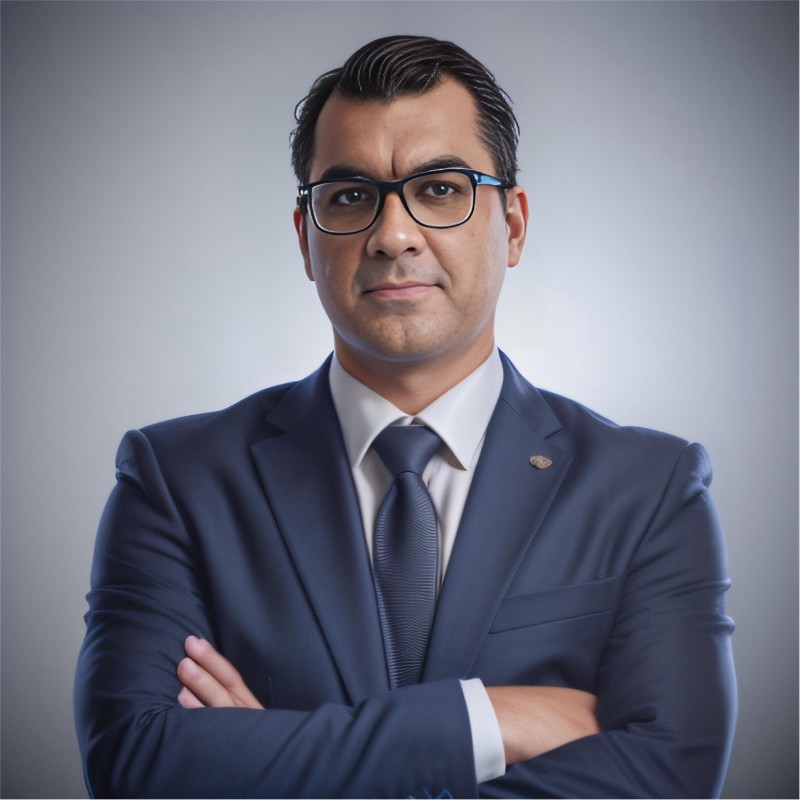
Vivek Valecha, Persistent Systems & Derek Downs, OutSystems
Vivek Valecha
Associate VP, Intelligent AutomationPersistent Systems
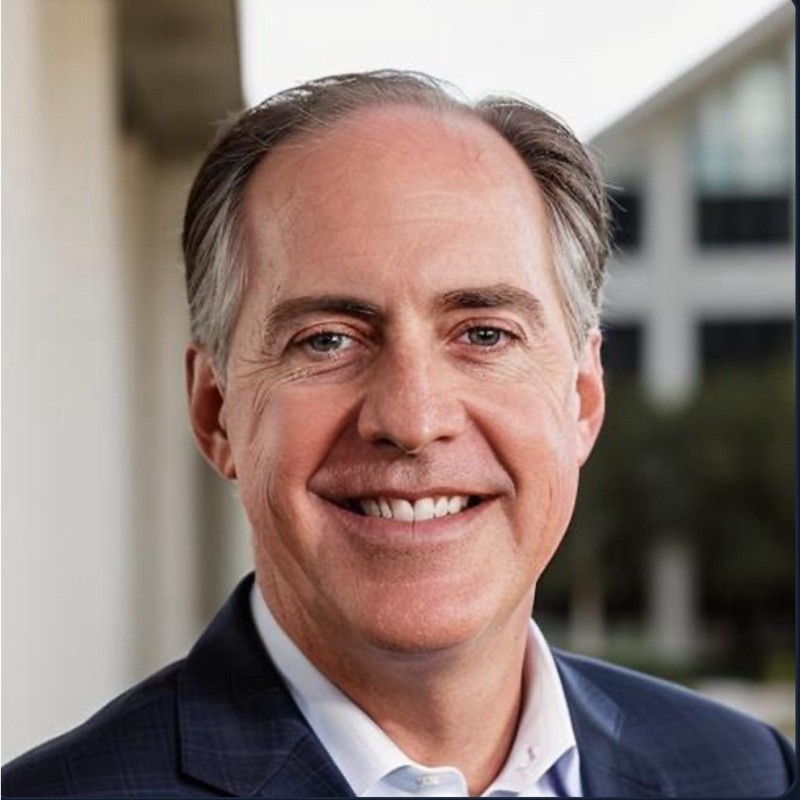
Derek Downs
Head of Channels & AlliancesOutSystems
Vivek Valecha, Associate VP Intelligent Automation at Persistent Systems, and Derek Downs, Head of channels and Alliances at OutSystems, discuss their partnership in providing end-to-end hyper-automation solutions. They highlight the modernization of industries like healthcare by leveraging technologies such as UiPath and OutSystems to maximize ROI and efficiency. The discussion also covers challenges with legacy systems, the role of governance and security in low-code solutions, and the importance of change management. Looking into the future, they discuss a...Read more
exploreKeep Exploring
What is unique about the partnership between Persistent Systems and OutSystems and what benefits does it bring to customers in terms of hyper-automation solutions?add
What factors do we consider when analyzing industries for process automation in order to maximize ROI for specific processes and improve the end consumer experience?add
What solution did the company develop called AssistX that earned them an award from OutSystems?add
What new product was announced by OutSystems in Amsterdam last week related to using natural language processing for developing applications?add
Vivek Valecha, Persistent Systems & Derek Downs, OutSystems
search
Rebecca Knight
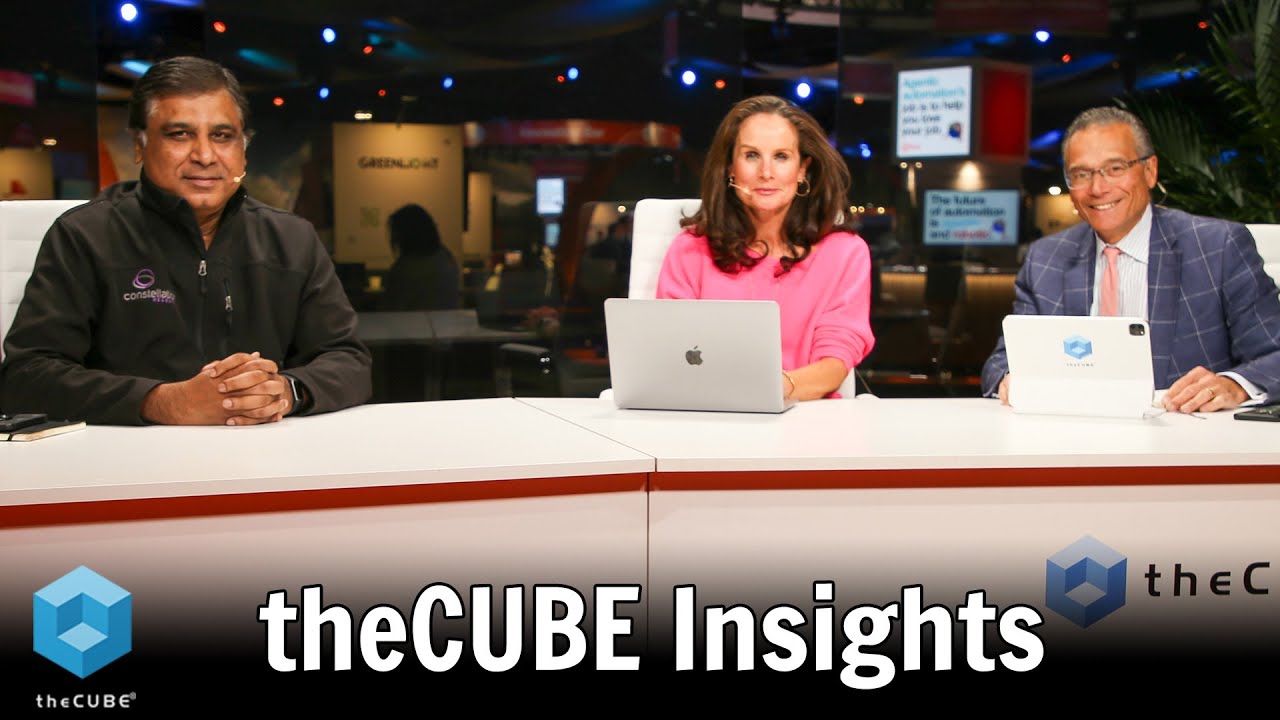
>> Good afternoon everyone and welcome back to the CUBE's Live coverage of UiPath Forward 2024. I'm your host, Rebecca Knight, alongside my co-host and analyst, Dave Vellante. We've got two guests for this segment. I'd like to welcome to the show Vivek Valecha, he's the Associate VP Intelligent Automation at Persistent Systems.
Vivek Valecha
>> Thank you. Welcome, Vivek. And Derek Downs, Head of channels and Alliances at OutSystems. Thank you so much for coming on the program.
Derek Downs
>> Thanks for having us.
Rebecca Knight
>> So I want to start, before we get into this low-code revolution here and Gen AI, I want you both to introduce yourselves and tell us a little bit about your companies and what you're all about.
Vivek Valecha
>> Absolutely. I'm Vivek, part of the Intelligent Automation Team at Persistent Systems. Persistent Systems has been around for 30 years, one of the fastest growing IT companies, and we are a core product engineering company that is trying to revolutionize the software development space and here we are partnering with OutSystems and UiPath for that.
Derek Downs
>> So I'm Derek Downs with OutSystems. OutSystems is actually around for 22 years, and the whole low-code space was actually coined originally by our CEO Paulo Rosado in some discussions with some of the analysts. He said, "Hey, what are we going to call this space?" But as we fast-forward now we see a lot of our customers are starting to figure out how do they do the heavy lifting and low-code OutSystems is there to do that.
Dave Vellante
>> I'm glad you brought that up, Paulo, and the history of low-code. Kong time ago I coded an Assembler that was not low-code. It was load A, store A, and you were loading registers. But then as higher-level languages ascended, were those like quasi-low-code. What was the demarcation point between legacy approaches and true low-code?
Derek Downs
>> Well, it really originated from, as software developments taking place, how do we get better at that and how do we start to optimize? So a lot of it originally was more on the process side. How do we start to make sure that we have the right process, the right structure? Then it was, how do we optimize and reuse some of the same components? And a lot of that work then started to go into a common body to say, "Oh, okay. Let's leverage this because it can help us do it a whole lot faster."
Rebecca Knight
>> So Persistent Systems and OutSystems have been partners for a little over seven years?
Vivek Valecha
>> Eight years, yep.
Rebecca Knight
>> Eight years, okay. So what makes this partnership so unique and what is the synergy at work here?
Vivek Valecha
>> So what's unique about Persistent and OutSystems is in terms of Persistent is looking not just at automation from a UiPath perspective or low-code from an OutSystems perspective, we want to take a step back, see the actual issue what the customer is facing, what technology can address it, and bring these technologies that are now residing in silos altogether, stitch them all back. So we are able to provide an end-to-end hyper-automation solution for our customers. It's more beneficial, brings you more ROI, and it's much better in terms of long run because we're able to design better solutions for them.
Dave Vellante
>> So can you explain the relationship between, George Gilbert, one of our analysts says, "Dave, all these agentic systems, first of all, they have to be a system. You got to have system thinking," which Vivek you alluded to. But the other piece he said is you need low-code. Can you explain both of those concepts, why you need systems thinking to succeed?
Rebecca Knight
>> Human systems thinking.
Dave Vellante
>> Yeah, well, a system. Whether it's human or machine, but it's got to be a system. It's got to be a closed loop system that learns and it's organic. And then low-code, what role each of those plays. Maybe, Vivek, you can start.
Vivek Valecha
>> So if you look how intelligent automation or low-code or RPA has evolved, we started with very basic RPA. We moved on to more of automation. Then we started calling it intelligent automation. Now we have Gen AI. But through all the spaces what has really changed is how you are changing. The underlying processes have remained the same. We have made them more efficient. The systems have become better in terms of automating it and making it more efficient. But if somebody like Persistent comes in, you're able to look at the long-term vision for a customer and tomorrow, instead of Gen AI, there's going to be a new technology. So if you're not doing the basics correctly, you're not going to be able to upgrade to the next version of whatever the next Gen AI is going to be. So Persistent takes a step back and helps you look at that long-term vision and then look at whether it's low-code, whether it's RPA, or a combination of the best of the breed technologies to help you design that solution.
Dave Vellante
>> And I think the concept is, I mean, the north star that we think about is a digital representation of your business. Some people call it a digital twin, but in real time, not strings that databases understand. But people, places and things. And this is perhaps where low-code comes in, because unleashing the power of the domain experts and the people that are on the front lines.
Derek Downs
>> It's definitely the case. And I think we also see a lot of customers, a lot of companies right now are saying, "Hey, Gen AI." It's much like cloud, for those of us a little older, cloud was. It was overarching and it was everything, but nobody knew exactly what they were going to do. We saw some of the same impact for a lot of the companies that are saying, "Gen AI, yes, we know we need to do it," but they went ahead and paused making decisions or investments because they just didn't quite know. And the fear and uncertainty was a big part of it. How do we make sure that we have some governance? How do we make sure we have security? How do we make sure we have control? And that's what's really led to say Gen AI plus low-code really starts to deliver that, because low-code was already built and established to make sure that you have the governance structure and security in place. So generative AI lets you do it quickly. How do we really leverage all of this power of automation? And you heard it from the main stage today, being able to move from just the bots to the agents, how do you have that intelligent driving? And then low-code really becomes a controlled structure to have that governance in place. Go ahead, please.
Rebecca Knight
>> I was just going to ask, how is it actually combining two modernized industries like manufacturing and retail and banking and healthcare? What is actually happening here?
Derek Downs
>> Do you want to?
Vivek Valecha
>> Absolutely. So when you look at any of these industries, what we do is we look at the heat map of the industry. What are the best processes that everybody's following, what is the industry norm over here? And then we start looking at which are the processes that are more prone to automation, which is where you're going to get your maximum ROI? And that's where we look at something like UiPath or OutSystems are marrying these technologies to bring you the maximum ROI for those specific processes and then provide that outcome to the end customer. Now, it does not matter whether it's BFSI, where you're talking about loan origination systems, or you're talking about healthcare where you're talking about patient experience. What really matters is how you're making this experience for the end consumer, whoever that might be, whether it's internal or external, more seamless and more agnostic to what the technology is.
Dave Vellante
>> So let's talk about this experience and let's take healthcare as an example of, really, an industry that most of us can at least relate to. And I want to come back to this idea of a system. So I think about healthcare and I think about my own experience, it's just this set of bespoke information that I can't get my arms around. Or the doctor might say, "Well, you should go see a dermatologist or maybe you should get a stress tester. What about that calcium test?" I'm like, "What is this?" . You don't even know. I'm just thinking about it here. You've got scheduling, you've got facilities equipment, you've got payers, providers, you've got historical records. You've got the patient in the middle of all this who's so confused. So this idea of a system comes into play. Are you envisioning that we will actually have a system in that industry and then we can talk about financial services and other industries?
Vivek Valecha
>> We're not just envisioning, we are actually implementing it. So we are doing that for one of the largest healthcare providers in the U.S. We call the solution as our digital front office or digital front door. It's mainly modernizing the entire patient experience. So as you're saying, it is confusing. It is sporadic. It is not consolidated altogether. So when we look at it, we're trying to build a unified system of layer at the top of it. So irrespective what your backend systems are, whether they are connected or not, OutSystems helps us give you that single pane of glass so that, as a patient, I am just looking at one single screen to look at either order my medication, look at my prescriptions, schedule appointments, and then UiPath becomes my automation at the backend where it's taking all this data from the backend systems and giving me all those pre-dashboards or appointments or reminders and things like that. So it's about looking at that and giving the patients the experience of doing it all together, and that's actually happening right now.
Derek Downs
>> And I think part of the pain that a lot of the companies have been feeling is they have these legacy systems at times that are archaic and they're essentially, "Hey, most of my people that know this have retired. Just don't touch it because they're really good at billing." Exactly, exactly. And so as we start to see that, they're like, "How can I move into this new era? How can I have a common system but at the same time leverage what I already have there as my core systems?" And that's where we're working with Persistent. It's one to go through and figure out what are those core systems, OutSystems becomes that layer across to be able to access the data and everything you have for legacy systems, but then to be able to abstract that and serve it up and then they can leverage UiPath to say, "Hey, now let's go ahead and accelerate and optimize." And it becomes that core system.
Rebecca Knight
>> Well, this is something we talk a lot about on theCUBE in that the technology in a lot of ways is the easy part, and what you were just describing, Derek, with having to try to get the workers themselves on board, adopting, believing and understanding in the mission, and then also seeing the benefit to continue working in the system. So how does Persistent and OutSystems work together to ensure that the process is smooth, or smoother, I should say?
Vivek Valecha
>> I think change management is a huge aspect in terms of any project that we undertake and it's OutSystems, Persistent, UiPath all put together. I think when the employees and resources start seeing the change, how easy it is and how seamless it is for them making their day-to-day jobs much more easier, it's all a blend of that, that brings in the confidence for them to adopt the change. It doesn't happen overnight, it takes time, but I think the proof is right in front of them to see it and start adopting it.
Dave Vellante
>> Go ahead, please.
Derek Downs
>> I was just going to say, I think a lot of times we make the mistake of just putting together the business case based on the technology, and what we found is, in most cases, it's about people. It's about people having to make this transition and make this change. And it's also generational because there's some older people with gray hair or loss of hair like me that are in a spot where they're like, do I really want to take on building this new system? And we're starting to see this generational change that's starting to drive that.
Dave Vellante
>> OutSystems One was a conference in Amsterdam.
Derek Downs
>> Yes.
Dave Vellante
>> By the way, theCUBE loves Amsterdam, just FYI.
Rebecca Knight
>> .
Dave Vellante
>> You guys won the OutSystems Innovation Award, presumably you were focused on business outcomes, but what was that award all about? What does that mean to you guys?
Vivek Valecha
>> It's been phenomenal. The partnership has been great. OutSystems has been very generous in terms of giving us the award, but specifically talking about it, we developed a solution called AssistX that is primarily using OutSystems, UiPath, bringing the whole GEN AI aspect to a more modernized call center solution, how you're able to modernize an after call center analysis. So taking a call, doing analysis on top of that, automating the backend systems, making the whole process of either ordering or complaints or reordering, cancellations much more seamless, helping with the bot. So bringing that whole solution together, that was the whole idea and that was the award.
Dave Vellante
>> Congratulations.
Vivek Valecha
>> Thanks so much.
Rebecca Knight
>> Things are changing so fast, but I do want to have you both look into your crystal balls and try to predict a little bit about what we're going to be seeing in this low-code revolution in the year, and years to come really, and what we'll be talking about next year at Forward.
Vivek Valecha
>> I think we already saw something in Amsterdam last week where OutSystems announced a new product on their platform where we're talking about how you can use natural language processing to develop applications. So you key in, the business is able to develop a framework of an application, and then somebody like Persistent is helping them enhance that application either using UiPath or other technologies. So we are already seeing that revolution happen, but I'll let Derek talk about more of that.
Derek Downs
>> I think that's a big part of it, is we're starting to see, we're right on the cusp. So we're seeing more power, more capability. You just said it, and with some of your discussions right before us, I think the power is there, the technology is there, and now we're starting to see companies say, "You know what? I can lean in and I can figure this out." And it's definitely moving to the point, how do we completely abstract away the difficulties in the software development life cycle? How do we make all that go away and let people just create and let them innovate based upon what they're really trying to do? And that's the whole effort I would say with UiPath and OutSystems.
Dave Vellante
>> So that's a vision way beyond generating code, converting COBOL to Java. I mean, that's nice, but you're talking about outcomes that are really visionary and meaningful to organizations and individuals.
Derek Downs
>> I can't emphasize enough the need for the governance and the structure, because we've seen a lot of companies that just really in a spot where they can't make a decision to move forward because of some of the fear and certainty and doubt. And that's where right now we're seeing the customers that say, "Wait a minute, I can have best of both worlds?" I can innovate and I can take those bold leaps forward and I can leverage platforms that give me the governance structure capability and then the guidance for both the change management as well as, hey, how do you go about adopting the technology?
Dave Vellante
>> That fear is the number one blocker. The concerns over legal and privacy and regularization are just holding people back. And like you said, there's a lot of navel-gazing going on as a result.
Rebecca Knight
>> So last question. What is your best advice for companies that are watching this segment and thinking, "I want to implement a low-code platform." Beyond, call me, what's your advice?
Vivek Valecha
>> I think, for me, from my perspective, it would be do not look at projects in isolation. Look at an end-to-end solution where you're able to bring different problem statements or different solutions and architectures together. Look at a wholesome solution and solve for that. Solve for the future and not here today's problem.
Derek Downs
>> And I know I'm a technology company, I should say talk to technology, but I would say most importantly, start with, what are the outcomes? What are you really trying to accomplish? And as you start to do that, then talk to some of those that are a little further ahead of you in that process. We've got a lot of customers that have been innovators and they're out ahead and they are very, very glad to have conversations with those coming along, just to put some of that fear, uncertainty, and doubt to the side and let them really be bold and move forward.
Rebecca Knight
>> Derek, Vivek, thank you both so much for coming on theCUBE.
Dave Vellante
>> It was a pleasure.
Vivek Valecha
>> Thank you.
Derek Downs
>> Thank you.
Rebecca Knight
>> I'm Rebecca Knight for Dave Vellante. Stay tuned for more of theCUBE's live coverage of UiPath Forward 2024. You're watching theCUBE, the leader in enterprise tech news and analysis.