We just sent you a verification email. Please verify your account to gain access to
UiPath Forward 2024. If you don’t think you received an email check your
spam folder.
In order to sign in, enter the email address you used to registered for the event. Once completed, you will receive an email with a verification link. Open this link to automatically sign into the site.
Register For UiPath Forward 2024
Please fill out the information below. You will recieve an email with a verification link confirming your registration. Click the link to automatically sign into the site.
You’re almost there!
We just sent you a verification email. Please click the verification button in the email. Once your email address is verified, you will have full access to all event content for UiPath Forward 2024.
I want my badge and interests to be visible to all attendees.
Checking this box will display your presense on the attendees list, view your profile and allow other attendees to contact you via 1-1 chat. Read the Privacy Policy. At any time, you can choose to disable this preference.
Select your Interests!
add
Upload your photo
Uploading..
OR
Connect via Twitter
Connect via Linkedin
EDIT PASSWORD
Share
Forgot Password
Almost there!
We just sent you a verification email. Please verify your account to gain access to
UiPath Forward 2024. If you don’t think you received an email check your
spam folder.
In order to sign in, enter the email address you used to registered for the event. Once completed, you will receive an email with a verification link. Open this link to automatically sign into the site.
Sign in to gain access to UiPath Forward 2024
Please sign in with LinkedIn to continue to UiPath Forward 2024. Signing in with LinkedIn ensures a professional environment.
Director Of Automation Engineering and Developmentdentsu
Imran Aziz
Senior Director, Product ManagementUiPath
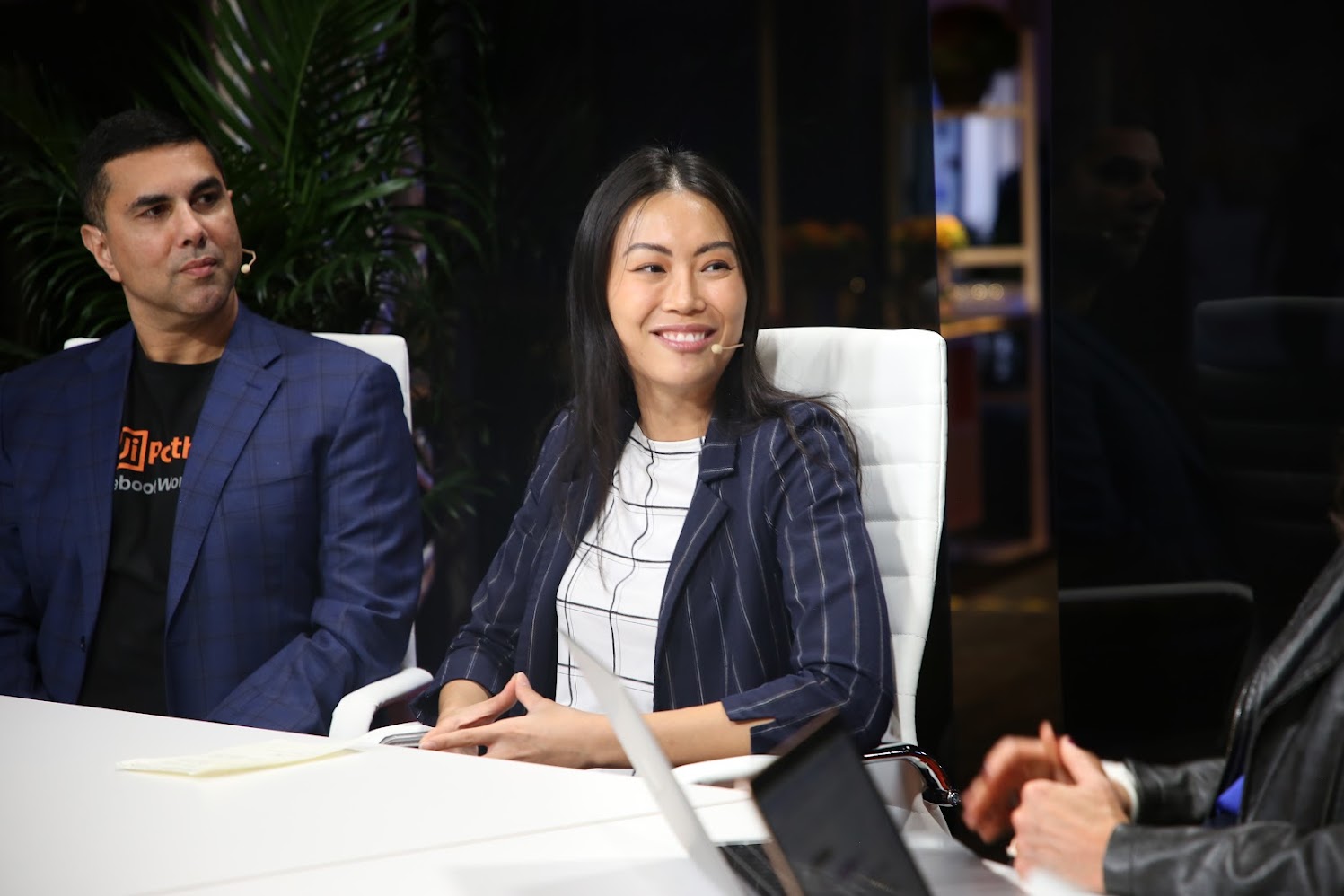
Flo Ye, director of automation at Dentsu, and Imran Aziz, senior director of product management at UiPath, collaborated on Autopilot, UiPath's conversational agent. Autopilot streamlines tasks, integrates with automations, and enhances digital paperwork processing and document understanding. Dentsu uses Autopilot for year-end reviews, addressing communication barriers and personalizing feedback for employees. The system prompts users to provide authentic content and tailors messages based on communication style preferences. Autopilot aims to standardize revie...Read more
exploreKeep Exploring
What problem is being addressed during the POC with HR and the talent team?add
What are some examples of how Autopilot is unlocking a new population of non-technical users to the UiPath platform?add
What requirements and capabilities did Flo bring to Autopilot over the last six months that have been key for its flexibility and success?add
>> Good afternoon, everyone, and welcome back to theCUBE's live coverage of UiPath Forward 2024 here at the MGM. I'm your host, Rebecca Knight, alongside Dave Vellante, co-host and analyst. We've got two CUBE alum for this section, the penultimate session, I should say. It is Flo Ye. She is the director of automation at Dentsu. Thank you so much for coming back on. theCUBE, Flo.>> Such an honor to be back.
Rebecca Knight
>> Yes. And Imran Aziz, senior director of product management at UiPath. Thank you so much.
Imran Aziz
>> So nice to be here.
Rebecca Knight
>> Yes. Okay, so let's start with you, Flo. Tell our viewers a little bit about Dentsu and what you're all about, what the company does.>> Absolutely. So I'm so glad to be back, second time already. Dentsu is one of the largest advertising company in the world. We have around 71,000 people across 120 countries. So we deliver a lot of award-winning work, including for household names like Amex and Microsoft. Essentially, it's a people business. We have an initiative this year actually innovating to impact. So combining technology and creativity, we want to deliver client growth, as well as societal positive impact, which is very convenient to what we talk about here and why we are at UiPath once again.
Rebecca Knight
>> Excellent. Excellent.
Dave Vellante
>> So two years ago, we met you. What's happened in the last two years? What's evolved?>> What hasn't happened? the crazy stuff, AI boom. So one of the biggest thing, I think I remember two years ago when I came on stage, we were talking about the AOM 2.0.
Dave Vellante
>> Right.>> It's when we just delivered the automation operating model, which has been such success and laid the foundation at Dentsu. So what we've been doing, it's actually now delivering AI and power automation. So Autopilot, it's one of the big program that we are working on. We are one of the earliest adopter of Autopilot. We currently already have one 60 plus users on Autopilot. So we're really seeing how using AI can also just kind of turn the automation up a notch of delivering the results, and we also saw the growth. Last year, I was also on stage with Graham talking about our program, and we have 1700 active members in our automation community. But with the AI boom, we now actually have 7,000 plus members on the AI connective, which is where we want to merge the AI and the automation together, because there should no longer be two things that silo. We want to see these solutions, and I think Autopilot is one of the very prime example of it.
Rebecca Knight
>> So Flo has already sung its praises, Imran, but do you want to give our viewers an overview of what is Autopilot for everyone?
Imran Aziz
>> Yeah. Autopilot is UiPath's first party conversational agent. It enables people to complete tasks ranging from authoring content, but also more importantly taking actions across apps. I get customer asking us a lot, but now you don't need to use ChatGPT at work because Autopilot can complete those tasks and also integrate with automations to perform those automatically. We've also integrated clipboard AI into Autopilot now. So digital paperwork processing, including semantic copying pasting from one application to other, Excel, web forms, enterprise systems, that's now a part of the Autopilot ecosystem. And document understanding is now additionally a part of Autopilot. So Flo will mention a little bit more what we've been working together, but those scenarios that she worked through, which is annual performance reviews and HR agent scenarios, are possible now because of those capabilities.
Dave Vellante
>> I'm behind on my 2023 performance. It's bad. Wonder if you got too much CUBE. Wonder if you can help me with that. So tell us about how you've maybe thinking about implementing Autopilot for everyone and how it's affected the annual review process.
Imran Aziz
>> For sure. So we are currently doing a POC with HR, our talent team, so really appreciate and grateful for their collaboration. So what we are seeing is we're trying to solve a problem that year-end review is at every organization. You can't escape it. And it is a human centric process, but it's not all sexy. There are a lot of tedious work that goes into the year-end review. One of the thing and opportunities, we saw it with context grounding, we were able to upload a lot of documents to Autopilot, so now our employees can just ask questions around, "Hey, when is the deadline? When do I submit these review process? What are the things that I need to know?" Because the truth is the documentation had been out there this whole time, it's just all over the place. It's always been hard to navigate. So using Autopilot, we can now deliver this information to our employees who's going through the process in a way that's really effective and easy for them to find. And the second thing that we are also seeing is that we're a global, like I mentioned, global company in 120 different markets, so a lot of people... Maybe you don't speak the same native language as your manager and that you're doing your performance review in different languages. So we use Autopilot to also help streamline the communication, so to make sure that I can write down a bunch of long paragraphs and ask Autopilot. And the key to this is that you still have to provide authentic content. You don't want Autopilot to just spill out a bunch of generic comments and generic performance so you can actually write whatever's authentic to you but have Autopilot to generate it in a way that's constructive. So that, we can hopefully, and we'll see this as a POC, we're really excited for it, seeing our manager easier to read these performance review, and then hoping our employees to do the process a little faster with less pain for sure.
Rebecca Knight
>> So what's so fascinating to me is that you started this conversation by saying this is a really human problem and we needed a human-centric approach, and so we went to AI to help solve the problem. Because as you've said, there are communication barriers, and also, your performance at work, it feels personal, even though->> Right.
Rebecca Knight
>> It's just business, but it does feel personal that you are being judged at work at a time. And this does require so much empathy and compassion and emotional intelligence. How does Autopilot have all of these things that can deliver this message in a sensitive way, but that also gets the message across?>> Yeah, absolutely. So I think one to start out, the users and the employees and the managers, they have to actually provide authentic content, right? And hopefully, I think that's something that we'll talk about in the future, if the systems are more integrated in our, Autopilot is more integrated across all different systems that we have at Dentsu, then we'll also know a little bit more about you, so that can provide more context. So that's hopefully the next level and the next collaboration in the future that we want to see integrating. But even now, just having the employees to provide that authentic content, that's kind of helping Autopilot to prompt. Make sure whatever Autopilot generated, it's actually tailored to what you try to deliver. And then I think that's other aspect of... Imran and I have worked on it a lot. It's just like the prompt... I think everybody's an engineer now. Everybody's a prompt engineer. So in a way, how do you want your message to deliver? You can simply just tell Autopilot. I know that you were doing some travel planning, and we were talking about-
Dave Vellante
>> With my team, yeah.>> Yeah. Like, hey, what do they like to do? And by providing that context, Autopilot can also tailor that information. So what is your communication style? And Autopilot allows you to... There's a checkbox. Do you like to talk more formal? Is that the preferred communication style? Do you like to be more casual? Autopilot can also help you send that message out.
Imran Aziz
>> One thing I liked about your scenario also is you use Workday, which UiPath also is user transferring information from Autopilot to Workday because we have that action capability. It was easy. So Flo just clicked a button once it was in Autopilot and just put it all in Workday. And then governance, as you can imagine, this is very sensitive. Your review is very personal, it's sensitive, so using that governance infrastructure the UiPath has where all that knowledge resides with you and the HR system was super important. And I think that's a huge part of being equivalent at work of what ChatGPT does for consumers.
Dave Vellante
>> Interesting. My takeaways both standardize certain aspects of the review process, but you've personalized it for the manager, and potentially even for the employee because you've got the capabilities to do that. I kind of like that I need this. The hardest part about performance reviews is they are tedious. But when you have one that's difficult, like a difficult employee, it goes too long because they just want to talk, and it's fine. But after two hours, you're like, okay, done. We have to end this performance review. Whereas you can structure them now in a way, but still have the empathy for the employee, but really focus on that standardized process for all employees so you have a comparable way to measure employees.
Imran Aziz
>> I was going to add one more thing, which is career ladder. So we've introduced career ladders at UiPath. It's not about performance review as much as growing the employee. So having Autopilot help you give guidance as a coach, saying, "Hey here, there's things you're really strong at. There's things you want to improve and to grow to the next level, or whatever your aspirations are." That's baked into the process as well.
Dave Vellante
>> The best performance review I ever had was on an envelope. The CEO, Axel Leblois, came in. I was young. It was in my 20s. They promoted me, a big job at IDC. And he said, "Here's your role. Here's your objectives. This is what I perceive as your strength. Here's the things you got to work on, and here's your growth path." And I can do these things for you, but don't expect too much from me. If you need some help, let me know. Boom. And he wrote it on the... Literally, he talked about... Wrote it in the back of an envelope. Here you go. And it was like 15 minutes. Got the message across, I understood what I had to do.
Dave Vellante
>> And maybe with Autopilot, you could have used 20 minutes to do the time improvement.
Dave Vellante
>> Right, but applying that maybe across the organization
Rebecca Knight
>> Yeah, no-
Imran Aziz
>> The consistency that brings... And how you feel about your employee and your review process, because oftentimes when you get a review, you feel like it's fair that all the considerations were met, and so forth. And that's part of what Autopilot also helps take care
Rebecca Knight
>> Of. Well, I want to actually ask about that because it does seem as though it has the potential to reduce bias. Because as you said, it is seeing a bigger picture of the employee, the workforce as a whole, I should say. Have you found that?
Dave Vellante
>> I think something very interesting and really inspired me is yesterday, I was at a neurodiversity panel, and they were talking about this, what they have. Dentsu previously have done work with Autonomy Works, which employ people on the spectrum. So one of the things that I was so fascinated someone raised in the audience was like, hey, when you are dealing with a neurodiverse population, sometimes people are not really great at advocating themselves, and also just different culture, right? Depending on the western and eastern culture, it's hard to be like, "Hey, I did all these amazing things," even though you did. So I think prompting Autopilot and having that kind of a friend and an assistant in a way to help you get these performance together and just say, "Hey, I've drafted the first draft, but no, I want to add some additional points, and I want to advocate myself in this area. I think that's really helpful, to put that review because I don't expect them to be one and done. It's more so having that conversation. And I think Autopilot helps with chatting, and you can put your constructive performance review together by just adding more and more points.
Dave Vellante
>> I think it's very helpful to do self-assessments also. And you could have Autopilot direct folks through that. Because a lot of times, I'll go, "Wow, I didn't know you did that. Thank you for sharing."
Imran Aziz
>> Actually, that's where she's starting, self- assessment.
Rebecca Knight
>> And now I know the deadlines very well. I didn't use to be really good with them.
Rebecca Knight
>> Well, it's funny because I cover with Future Work, and one of the things we always say is HR is not your friend, but it sounds as though this is your HR friend who is saying, "Hey, write about that report that you did that was so well received, or write about that presentation you delivered."
Dave Vellante
>> Why do you say that HR is not your friend?
Rebecca Knight
>> Because they work on behalf of the company. They work on behalf of the company. Their interest is that, not yours as an employee.
Dave Vellante
>> Oh, okay. You mean like legally, right?
Rebecca Knight
>> Yeah. Yeah, yeah, yeah.
Dave Vellante
>> Interesting. You write about that.
Rebecca Knight
>> I do. Sure, I do. Yeah, absolutely. So where do we go from here? This was a POC. As you said, you're working collaborating with HR, and that's clearly they're on board with it too because they must hear just litany of complaints from managers who have to do, oh my God, it's performance review time. So where do you go from here? What are some other use cases that you're foreseeing?
Dave Vellante
>> Yeah, for sure. I think there's many... HR would pick this one because it's a pretty simple one, and I think it's actually really relatable to any organization, doesn't matter there in the advertising industry or not. But we are also seeing Autopilot play a role in just helping your employees to take care of some of the tedious tasks day-to-day. One of the biggest thing that I would really like to grow the program, it's unlocking a new population of non-technical user to the UiPath platform. Because I think two years ago when I came on, most of the people who use UiPath are either some sort of automation builder, or they knew about automation, so they went out there and they asked people to create automation solutions for them. So now with Autopilot, we're seeing these non-technical user querying being the prompt engineer that they are, gathering information from different... So one of the use case we saw was they put together product details from different sources. So they were in PDFs, and they were in CSBs, so it was tedious to find all the product information. But just by uploading these documents to Autopilot, using the document understanding, the context grounding, they were able to produce this table within a few hours and with the reviews because you want that human in the loop, but that would've used to take them one or two days to complete. So we're transforming the culture from consuming the technology to now creating the technology so everyone can also be a part of creating automations and AI solutions.
Rebecca Knight
>> Excellent. And Imran, working together with Dentsu, obviously this company is a case study of how to do this. What are some lessons that you've teased out that you then can also work with other clients and coming up with these kinds of solutions?
Imran Aziz
>> First of all, let me acknowledge working with Flo has been tremendous, not only from the perspective of enabling the use cases, but she brought really hard requirements to Autopilot. So over the last six months, like, "Hey, governance, how much insights do I get from my users using it?" So we've got a thousand people using it. Do I get patterns from Autopilot and how they're using it? How can I improve engagement all the way to what model are using underneath? Are you flexible? Are you the Swiss army knife of models? If we have a better model for legal document, can you plug that in if you're using Anthropic or OpenAI? So those were key because Autopilot is flexible. So we announced Anthropic as our default model, but we use OpenAI model as well, use UiPath's understanding and specialized models too. So I think those are the impression. Obviously bugs and issues that . And then the tools the agents use, Autopilot as an agent, it operates on tools. And now Dentsu's already built a set of automation, so they were off to a good start. And with all those tools that Dentsu's built, you can use with an Autopilot, but feedback from Flo on, "Hey, I want more people to be able to create these tools, not just my development team," that was important as well. So it's a ease of use. Yeah.
Rebecca Knight
>> Excellent. Imran, Flo, this has been a really fascinating conversation. Thank you so much.
Dave Vellante
>> Thank you so much for having us.
Dave Vellante
>> Thanks guys.
Imran Aziz
>> It's been a pleasure.
Rebecca Knight
>> I'm Rebecca Knight for Dave Vellante. Stay tuned for one last session on theCUBE's live coverage of UiPath Forward 2024. You're watching theCUBE, the leader in live tech coverage.