We just sent you a verification email. Please verify your account to gain access to
UiPath Forward 2024. If you don’t think you received an email check your
spam folder.
In order to sign in, enter the email address you used to registered for the event. Once completed, you will receive an email with a verification link. Open this link to automatically sign into the site.
Register For UiPath Forward 2024
Please fill out the information below. You will recieve an email with a verification link confirming your registration. Click the link to automatically sign into the site.
You’re almost there!
We just sent you a verification email. Please click the verification button in the email. Once your email address is verified, you will have full access to all event content for UiPath Forward 2024.
I want my badge and interests to be visible to all attendees.
Checking this box will display your presense on the attendees list, view your profile and allow other attendees to contact you via 1-1 chat. Read the Privacy Policy. At any time, you can choose to disable this preference.
Select your Interests!
add
Upload your photo
Uploading..
OR
Connect via Twitter
Connect via Linkedin
EDIT PASSWORD
Share
Forgot Password
Almost there!
We just sent you a verification email. Please verify your account to gain access to
UiPath Forward 2024. If you don’t think you received an email check your
spam folder.
In order to sign in, enter the email address you used to registered for the event. Once completed, you will receive an email with a verification link. Open this link to automatically sign into the site.
Sign in to gain access to UiPath Forward 2024
Please sign in with LinkedIn to continue to UiPath Forward 2024. Signing in with LinkedIn ensures a professional environment.
At UiPath Forward 2024, analysts discussed the shift from robotic automation platforms to agent-based automation. The focus is now on creating a platform for agents and multimodal combinations. The move to agents is seen as a return to the company's roots in plumbing for automation processes. The discussion also touched on the importance of orchestrating agents, leveraging tooling, and the potential for dynamic workflow manipulation. Product announcements like Agent Builder aim to democratize technology development by allowing for low-code, no-code agent buil...Read more
exploreKeep Exploring
What is the evolution of UiPath's approach to automation and how has it shifted from RPA to hyper automation and intelligent automation?add
What are some key features of the Agent Builder that make it a significant tool for creating agents?add
What are some potential advantages of partnering with companies like IBM, Deloitte, and Cognizant in the field of LLMs and industry specificity?add
What are some ethical considerations and challenges surrounding AI implementation, particularly in terms of data collection and usage by different vendors?add
What is the potential difference between the request-retrieve model and agentic AI in terms of their impact on systems of agency?add
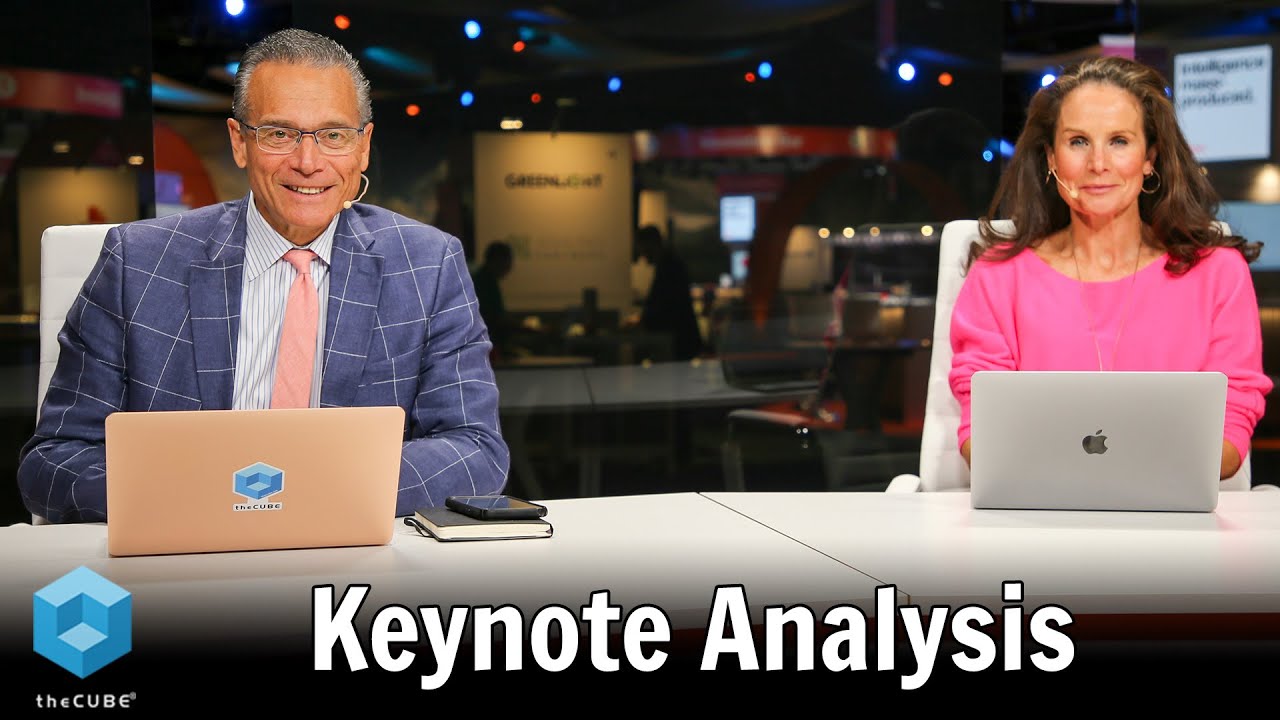
>> Hello everyone and welcome back to the last segment of the day of UiPath Forward 2024 here in Las Vegas. I'm Rebecca Knight and I'm surrounded by analysts. I'm here with Dave Vellante, my co-host and analyst, and Andy Turai, a good friend of theCUBE who of course is the VP of Constellation Research. So we've heard a lot today, according to Daniel Dinez, it's the start of act two for this company, the future is agentic automation. Are you picking up what they're putting down? I'm curious, what's your initial take on today's messaging?>> Yeah, first of all, thank you for having me here. So in a sense, I do buy that act two because remember a few years ago they were like the heart came in the town and when the IPO came out they were like went through the roof. And then after that they slowed down a little bit. Last couple of years you look at all these other companies releasing the agentic things, automation things, and then they kind of lost their mojo. But there are a couple of things they announced here, which we'll talk in detail. They announced that that's going to, or at least their vision-wise, I don't know about their execution yet, I haven't seen because it's all just generally made available or at least in the announcement level. But their vision has changed. Instead of doing more of robotic automation platforms, now they're interested in talking about agents and providing a platform for agents and also for multimodal combination. That I think is the difference they're bringing to the market.>> So I feel like, as you said at the beginning, it's act two, yes, but act one was RPA and it was really bots, software robots, speed. Kind of single product really wasn't a platform, as Andy says now. And then act 1A, which if we could call this act three, I'd be okay with it. But act 1A was the expansion into a platform. So they bought ProcessGold, which brought process Mining. They made a number of other acquisitions of a couple of little AI tukkins. And they built out a platform. And that was an important part of the transformation from product to platform. And I think UiPath's always been good at marketing. So it went from RPA to hyper automation and intelligent automation and now it's agentic. It's interesting because not only UiPath, but other RPA companies try to distance themselves from RPA because it was like, oh, that's passe. We got to define the hot new thing. Let's get IDC to define a new category or gardner, you know how that works. It's good marketing. But now I think they're realizing actually RPA is important. It's the foundation, it's the plumbing. Daniel Dinez in his keynote and also in theCUBE was saying, you need bots to work in concert with agents because you can't fully trust the agents. Let the bots do if rules-based work and let the agents get creative, left brain, right brain type of thing. And so it's interesting to me, Andy and Rebecca, that they're kind of going back to their roots, which I think is smart because it is the plumbing. Now the question is whether or not that is leverageable into the next wave and how they can execute on that. And we should talk about->> So the point you made about the fact that the robots versus agents, one of the areas where most of the RPA systems they are really good at and yet fail in my view, is that it can automate what can be automated, which means those are deterministic systems, which means when a decision was made, you know 100% of the time, it's the same decision that's going to make. So it is easy to automate and to automation of a robot and then leave it at that point. But now for the first time ever, the probabilistic decision-making engines are making its way into the enterprise. So when you put that in the automation scheme, it's not just about the agents, it's about the platform, it's about the workflow, it's about the ecosystem. There's a lot more involved in that and that's where I think they're set up. Are they going to win it? I don't know the answer to it, but they are set up with the components around it for them to go for the act two.>> Well, they're going after the, what we called in that piece, I think you picked up on it, the agent framework, right? And that's a very valuable piece of real estate in the new software stack, that agent control framework. They've got backend connectors into, name it, SAP and Salesforce and Oracle through APIs, and they say it's two-way. You don't have to copy the data, stick it into a data lake, and then it becomes another asynchronous system. I'm still not clear. I've asked the question a lot today, how do you harmonize all that data? I'm still unclear on how they do that, what the technology is to do that, whether it's UiPath or is it some knowledge graph company like RelationalAI or maybe some of the modern data platforms, or do they have to invent that layer? But it's very clear they've got orchestration capabilities that they're doubling down on. They also have low code chops, which I think is important to really drive productivity. And if they're taking a system view, which is also important, what are your->> Well, yes, but in my view, when it comes to the decision-making engine, again, going back to that, the deterministic system versus agent-tick.>> Yeah.>> Right now they're on a level that you know exactly what to call. That's why you can call. But then going forward, they're bringing to the possibility of, okay, you know what? I don't know what decision need to be done. I don't know what the system of record is. I don't know what action need to be taken. At this point, let me, they didn't talk about this particularly, but there are a couple of other companies I'm advising that I spoke with. What they're suggesting is I don't know the action to take at this point of my workflow. Let me even bid out to the agents saying that, hey, agents, I got a series of agents in my agentic workplace, in my agentic marketplace, 20, 40, 100 of them, you know what? Let me ask you. Let me bid it out and say that which one of you is capable of doing this job. So that dynamic workflow manipulation, that hasn't happened today with anybody. That potential I saw here today. Are they going to win it? I don't know an answer to that, but potential->> But you see a path forward?>> I see a path forward towards that saying that I can manipulate my message workflow. It doesn't have to be that static. It could be dynamic, it could be manipulated.>> So to me, the data piece is still fuzzy and I'm trying to understand if in fact it's just somebody else's role or they've got it figured out, it's unclear to me. So I'll park that. This idea of it's kind of the next best action. I think they are set up, because they can do step-by-step. They have step-by-step awareness, and they can govern those steps. And they have process. Maybe it's immature in terms of the agentic embedding, but they understand process. UiPath has good process chops.>> Right.>> And that's important. There's data, there's metadata, there's business logic.>> Governance.>> Then you've got governance, there's security. And there's also process, right? That's something that is going to become increasingly important because these processes are going to be organic. There's a lot of processes that are going to just become reinvented. And to think about how you did BPM in the past, you need to get around a whiteboard and you get these big books with all the diagrams, right?>> That's not where the problem is, right, Because->> No. It's an opportunity for them is what I'm saying.>> Exactly. Opportunity for them, because agents are small as possible AI work decision-making execution engines they could have that you could drop it in the workflow that will work. But their problem is going to be, if you looked at that, there are a lot of companies that are coming with the large action models, the LAMs, the LAMs, and the thinking models, thinking generative AI models, that's going to their biggest problem because what they're trying to do is to replace this entire workflow. You don't have to do any of... The workflow's rigid. That's where the problem is, right? So what these guys are trying to do is that you don't have to do any of that. Give me the data or point me where the data is, tell me what need to be done. I will figure it out using my->> I'll tell you what the workflow should be. The best possible workflow.>> Exactly.>> The other thing, and Daniel brought this up, is yes, orchestrating the agents is one thing, but it's really the ability to tap into the tooling, to leverage tooling.>> Yeah.>> And multiple tools, understanding the right tool for the right job, working in concert with other agents seems to be, what he feels anyway, is the advantage. Andy doesn't think the UI is going to go away.>> Exactly right. No. I'm actually curious to hear what you thought of the product announcements, because we're here at a conference, this is what they do. They announce new products and services. One that caught my eye was Agent Builder and in service of this idea of democratizing how this technology is built, what are some of the others that caught your eye that you find most interesting, Andy?>> The Agent Builder is actually a pretty big deal because if you are to think about it, there are two things that stood out to me. One, giving a component to build the agents more on a low-code, no-code basis. And not only that, you can build the agents from ground up, let's say if you're a business person, you don't understand the technology that much. You can take one of the existing models. They're also talking about the agentic marketplace where they'll have hundreds if not thousands of agents available. You'll take an agent and say that, okay, some of this will work for me, but I want to modify it a little bit. So you could build agents on top of existing agents. That one stood out to me, right? You could modify. The second one. I didn't realize that. They have, what is it, three million citizen developers that they have who can build models. So imagine putting the platform in front of them, have the three million people go at it to build models, agents. That would outstribe any of the existing agent model builders today. So that is a pretty big deal in my view. And also you talked about that I thought was a bold statement. You said, what, that three billion use cases, potential use cases, what they're exploring. I thought that was mind-blowing and that just a little high made up number, but the potential is there.>> Yeah.>> Potential is there.>> And then they announced some relationships with LLM vendors Anthropic and Inflection, which is interesting because people think, oh, Inflection, aren't they now a part of Microsoft? And no, they're sort of reformatting their business to focus on, you said large action models, maybe small language models and domain specific models is what Inflection's going after. So that's kind of interesting and that fits with UiPath, the industry specificity. You were at IBM with me last week. I think IBM and UiPath would make really interesting partners. Now there's SVP of partners said, "Well, we are partnering with IBM, but they're not super visible here." I think that UiPath as a consumer of LLMs with the Granite models that were just announced, but also Watson as a potential, as an ISV, they could take advantage of that. And companies like IBM, certainly others here. We heard from Deloitte and Cognizant is out here. The GSIs have that industry specificity. I think that's going to be a big differentiator for organizations. It's the ability to leverage their own proprietary data.>> Well, so I talked about this multiple times. The first wave of winners when the AI came out where the infrastructure and the picks and forks providers, right? Pitchforks providers.>> GP->> The N videos, NVIDIA providers, the networking providers, the storage providers, the infrastructure providers, they want that. They made a ton of money off of that. Then the next wave, surprisingly, is not the model makers as everybody thinks. They burn a lot of money, but they don't make->> I'm wondering how they're going to make money. unclear.>> They eventually might, but the next wave is the AI experts, the advisors, the consulting companies on advising companies on how to do that. That's the second wave that won out. The third wave when it comes to it, because the first two are more on a conceptual level, model training and all that, but implementing the right use cases when it comes down to it, in my mind, the companies that are building the platforms are going to win. IBM is an example you brought up. And UiPath is one industry specific platforms or examples that people can bring out with add-on value to that. That's the wave .>> And I think it's the ISVs, like a UiPath, that can partner with GSIs to go industry specific, but then provide horizontal capabilities across virtually any industry and multiple use cases because they're trying to scale. It's software economics, right?>> Well, we talked a lot about use cases here today on theCUBE. We had different companies. We had different industries represented. Healthcare, banking. Coca-Cola.>> Contact centers.>> Contact centers. Exactly. So when you think about the ways in which this new future of agentic AI is going to transform industry, what comes to mind in the sense of the industry that is going to change the most? For me just watching, it's healthcare. It's healthcare. It's just so exciting.>> I was going to say it was going to. But still, yes and no. The problem with healthcare is, one, for a reason it's closed. The players in there, they don't want anybody else to come in. That's issue one. Issue two, it's also, we talked about this multiple times, you can't have a probabilistic decision making engine such as AI make a final decision on healthcare. It's not going to happen. How could you have a 50, 70, 80, even a 90% probability? And the funny thing is, as I was reading one of the, I think it was a HB article that I was reading through it, AI every single time with its probabilistic decision engine is a lot more accurate than any of the doctors you go to or any of the MRI and those people you go to. But still people are like, no, that's a human versus AI. So again, going back to my original point, we are at the level we are augmenting humans with AI. That's going to be there for a while. Is it going to be next two years, five years, 10 years? I don't know. I don't have an answer to that. But eventually the ones that are going to win are the ones that are going to augment AI with humans. In other words, you will have a semi-automated or as much automated AI agents as possible. When there's an issue, as they were showing one of the demo, when there's an issue, the AI will pop out saying that, you know what, I'm not confident in this particular decision. You take care of it. The rest of it falls within my boundaries you have given me, I'm going to work on it.>> What do you make of, totally changing the subject here, causal AI?>> Okay.>> You know Scott Hebner, he's hot on causal AI. It's a new term for a lot of people.>> Yeah.>> You know this stuff really well. What's your take on how real it is, how important it is?>> It depends on which vendor you talk to, right? Causal AI, trustworthy AI, responsible AI, all those topics are a lot of people talk in vagueness. A lot of people talk about some meaning to it. It's not about what they talk about, it's about what they implement. There are some players that are getting in there. At the end of the day, it's not about the results what do you get out of that, it's about having a process that's trustworthy from the beginning. It's about your data collection. That's where the whole issue is hung up on even now. Remember the New York Times is showing one of the other LM vendors now. Supreme Court or some high courts need to make a decision saying that who wants the data? Right? Which data is usable? If it is out there in the print or media or anywhere, is a data usable? And how much do you lock in and who should get paid? And there are some companies, Adobe for an example, you and I talked about this multiple times, they do data collection more of an ethical and responsible way. They either collect only the responsible data or they pay for the data that they're collecting, which is not licensed to put it in their models, which is a good noble thing. And this is not particular about Adobe, but generally speaking, if you are to pay for the data, then your amount of data, what you have, is going to be less, which means your model is going to be less accurate, which means you can't do that. The L the LLMs and all of those things may not be as accurate, which means you need to move towards the SLMs and more towards the SAMs where you have a more specific data in certain areas. You want to train your specific model using your corporate or enterprise data. But again, it's a catch-22 situation. If your original base model itself is not that accurate, what's the point?>> But the organization is going, to me anyway, is going to pay not for the small language model or the large language model, whatever it is, they're going to pay for the outcome of the system that allows them to extract their proprietary data and use it for competitive advantage, whatever that system is. And that's what that platform, back to platform, that's what UiPath->> Then also, there are a couple of vendors talked about this, IBM's one being a classic example. They always talk about this. Let's say that you train a model, all your data is in there. And then either a code decision comes in or somebody else comes in saying that, "You know what? I don't want my data out there. Take it out of there." Can you model do that now? It can't.>> Yeah, good question.>> Right? So IBM is pretty big on that. They're like, you know what? We are training our models. Darryl Gill, that's what, on one-on-one, that's the discussion we had. We are training our models in such a way that we are going to take that out. So if you look at their models, the way they're training it, their models are not humongous models of this one trillion tokens and so on and so forth. The parameters are much, much, much smaller, but again, much higher performing. So again, the whole AI, large language models, it's not very mature yet. It's still evolving. What was hot yesterday is not hot today. It changed today already. We learned about some things today. Probably tomorrow this will be outdated. So it's changing so fast. And remember just about a few months ago, it's all about I get an LLM, I RAG it and I do a fine tune, I RAG a combination of it. That's all good and done. Now we're like, no, that's not good enough. We got to do agents.>> Well, RAG, the whole request-retrieve model, it's interesting, but it's not needle moving in my opinion. It's like a kind of a cool experiment. Whereas agentic has the potential to systems of agency.>> The differences is one is because one is more of a content producer versus the other is more of an actionable AI, as they call it. They can do actions for you. You could do actions on a natural language way. Remember, you and I talked about it, the very first time when we had the AI conversation. You asked me, why is it so different? It's because until now, humans were made to talk in the machine language. For the first time ever now with AI, machines are talking human language, so which means we can converse in the NLP language with them. So imagine the power you're telling an agent that there is an incident that happened on my IT system, something has gone down. You tell an agent saying that, "Hey, I don't know what happened. That's the incident. Go figure it out. Talk to other agents, figure out what the problem is, figure out a way to fix it." And the agent will do all the work.>> Yeah. Bossing those agents around.>> Yeah. Exactly.>> Amazing.>> I get combative with LLMs.>> I do too. I do too.>> I'm combative anyway.>> That's you banned on LLMs.>> I argue with them all the time. I just got a message from ChatGPT said, "Be careful. You're going to be violating requests.">> Oh no.>> Oh, wow. Excellent. Well, this has been fun, Andy and Dave, I really appreciate it. A really good conversation.>> Thanks Rebecca.>> Lots more to unpack tomorrow at more of theCUBE's live coverage of UiPath Forward. So thank you both for joining me and I hope you will join us again tomorrow when we are here again at the MGM for UiPath Forward 2024. You're watching theCUBE, the leader in enterprise tech news and analysis.>> See you tomorrow.