We just sent you a verification email. Please verify your account to gain access to
UiPath Forward 2024. If you don’t think you received an email check your
spam folder.
In order to sign in, enter the email address you used to registered for the event. Once completed, you will receive an email with a verification link. Open this link to automatically sign into the site.
Register For UiPath Forward 2024
Please fill out the information below. You will recieve an email with a verification link confirming your registration. Click the link to automatically sign into the site.
You’re almost there!
We just sent you a verification email. Please click the verification button in the email. Once your email address is verified, you will have full access to all event content for UiPath Forward 2024.
I want my badge and interests to be visible to all attendees.
Checking this box will display your presense on the attendees list, view your profile and allow other attendees to contact you via 1-1 chat. Read the Privacy Policy. At any time, you can choose to disable this preference.
Select your Interests!
add
Upload your photo
Uploading..
OR
Connect via Twitter
Connect via Linkedin
EDIT PASSWORD
Share
Forgot Password
Almost there!
We just sent you a verification email. Please verify your account to gain access to
UiPath Forward 2024. If you don’t think you received an email check your
spam folder.
In order to sign in, enter the email address you used to registered for the event. Once completed, you will receive an email with a verification link. Open this link to automatically sign into the site.
Sign in to gain access to UiPath Forward 2024
Please sign in with LinkedIn to continue to UiPath Forward 2024. Signing in with LinkedIn ensures a professional environment.
Partner, PwC Advisory, Intelligent Automation and Digital Upskilling LeaderPWC
Amit Kumar
Strategic Sales/Field CIOUiPath
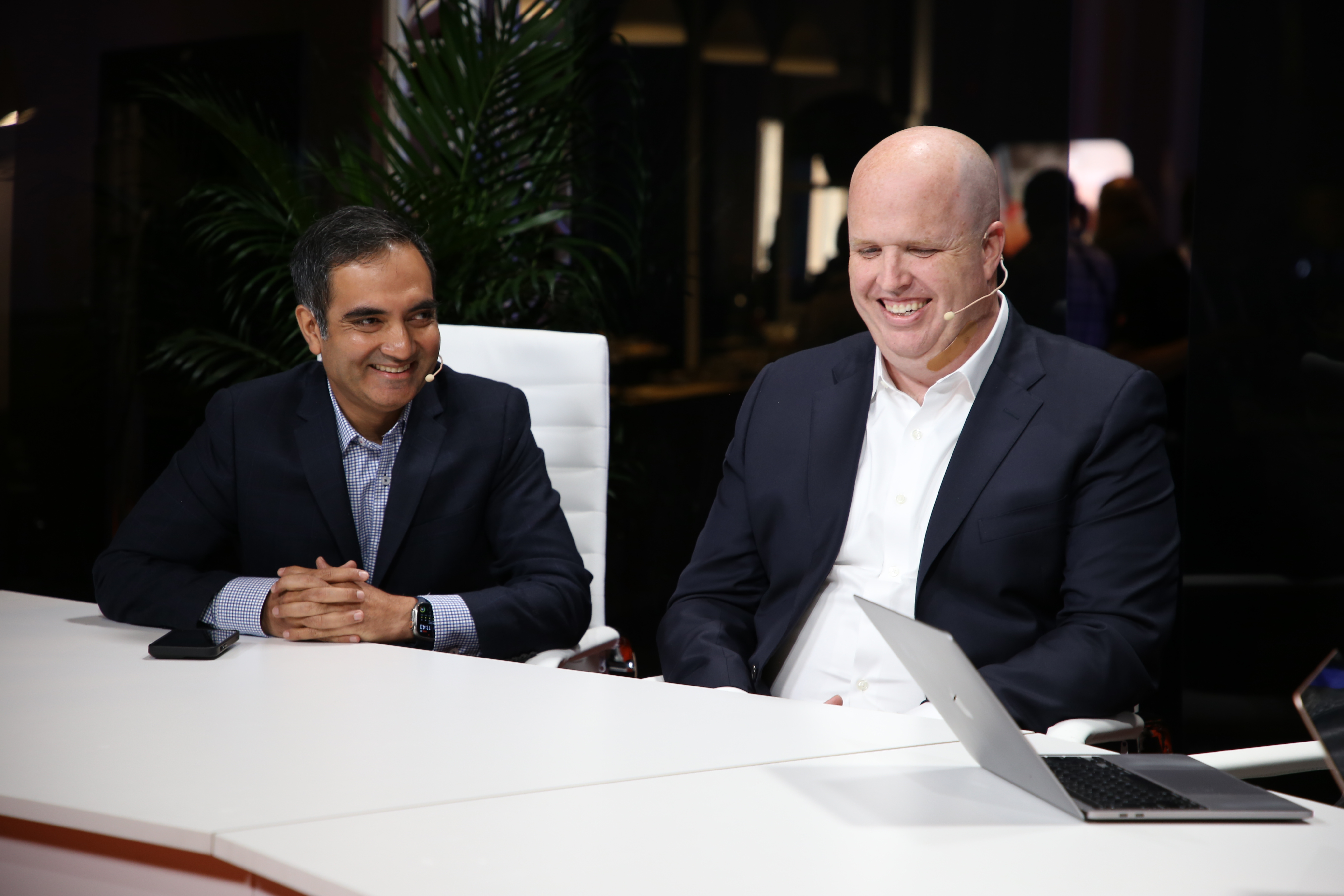
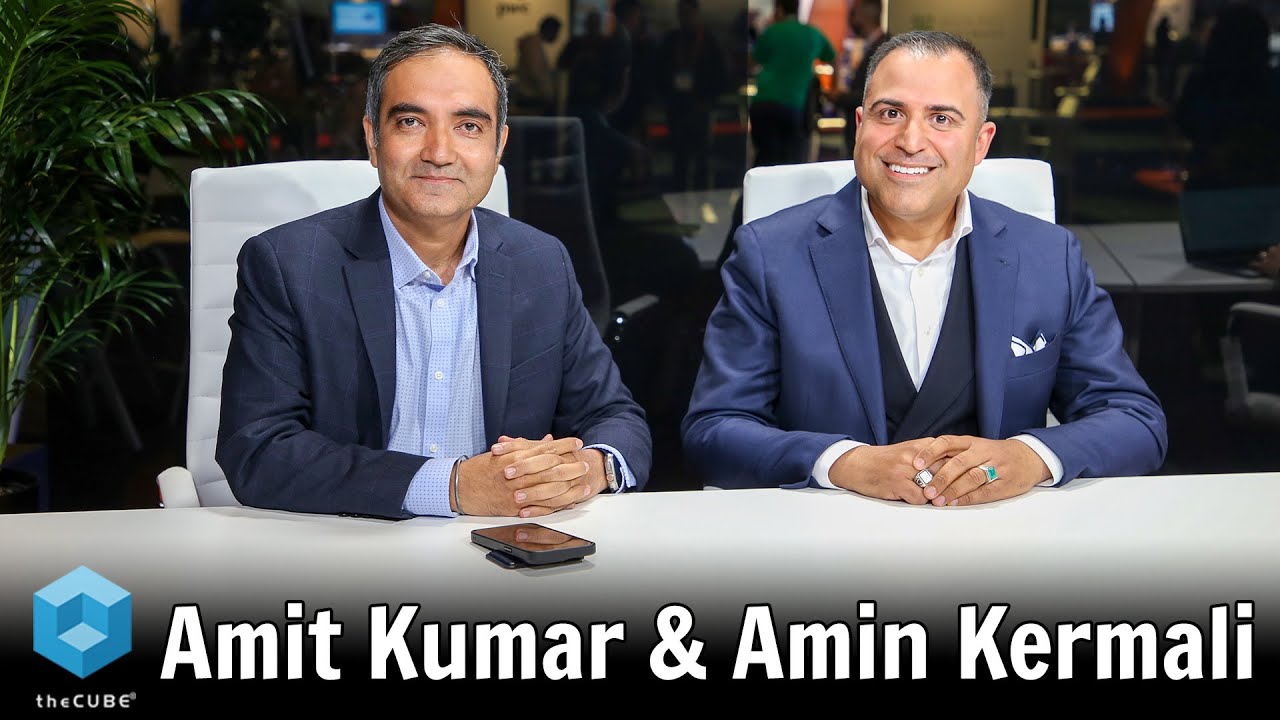
At UiPath FORWARD 2024, Kevin Kroen and Amit Kumar discussed PwC's research on banks' investments in hyperautomation and gen AI. Contrary to expectations, investments in hyperautomation are increasing, not decreasing. Banks are struggling to connect their gen AI and hyperautomation strategies. RPA is seen as a stepping stone to agentic automation. The hyperautomation toolkit includes RPA, low code, intelligent document processing, productivity tools, data workflow tools, integration layers, and AI. Banks are still cautious with their generative AI strategies....Read more
exploreKeep Exploring
What prompted PwC to conduct the research on the transformative effects of gen AI on banks' investments in hyperautomation?add
What technologies have banks been implementing to improve their business value and efficiency, specifically regarding RPA, intelligent document processing, and new gen AI experiences like Autopilot?add
What are some important components of the hyperautomation toolkit?add
>> Hello everyone. Welcome back. We are here at theCUBE live, UiPath FORWARD 2024. I'm your host, Rebecca Knight, along with my cohost and analyst, Dave Vellante. We've got two CUBE alum for us this session. Kevin Kroen, he's partner, PwC Consulting, technology and transformation hyperautomation leader at PwC. Thank you so much for coming back on theCUBE. And Amit Kumar, VP, industry practice at UiPath. Thank you so much, both of you.
Amit Kumar
>> Thank you.
Kevin Kroen
>> Thanks for having us.
Rebecca Knight
>> So today we're talking about some research that PwC conducted, resulted in a really interesting article. It's clear we know that the banks are going to continue to make investments in hyperautomation, but in the longer term, gen AI is really going to have a huge and transformative effect on banks and changing the way that work gets done and introducing all sorts of new capabilities. Kevin, I want to start with you. What prompted this research now? What were you seeing that made you say, "We need to dive into this?"
Kevin Kroen
>> Sure. So banks were one of the first major investors or buy-ins on robotic process automation technology dating back to 2016, 2017 timeframe. And probably we felt had the biggest kind of tranche of lessons learned from what worked and didn't work. And so our hypothesis, actually, which was disproven in the research, was that we actually were going to see a decrease in some of the early generation automation investments, some of the pure play RPA investments that were happening. And as gen AI was becoming a much bigger piece of the transformation picture, our hypothesis was let's take all ... there's a lot of lessons learned from the investments, the good, bad, and ugly, in terms of what's been done. Let's take those lessons and really try to inform how banks think about the next generation of automation investment. So that was our hypothesis. What I'll say what we found from the survey were two major themes that came out of it. One theme was around the fact that investments and what we're calling hyperautomation, the collection of automation technologies, including RPA, are actually increasing, not decreasing, and it's as relevant if not more relevant than it was in 2016. The second piece was, as banks are forming their generative AI investments, there's definitely a lack of connection between their generative AI strategies and their hyperautomation strategies, and there's a huge opportunity to better converge this. And I think as we think about the theme that we've heard throughout this conference on agentic automation, there's a big opportunity to think about how hyperautomation really drives action and drives value for generative AI investments.
Dave Vellante
>> So the death of RPA, Amit, was greatly exaggerated as the city goes and you guys are making the case that RPA is essentially maybe even a prerequisite for a successful agentic automation or certainly an accelerant toward it. Your thoughts?
Amit Kumar
>> No, I completely agree and I think I personally call it a stepping stone. And this is a journey that we have lived with most of the banks who have been part of the survey, which is they first started with RPA, they scaled it to all the business units, to all their core processors. Then they started deploying intelligent document processing to take care of the unstructured data. So that expanded the business value that Kevin spoke about. And now they're beginning to use new gen AI experiences like Autopilot and that bodes well for the agentic future that we are trying to paint for financial service industry. So, to your point, I think that's how we look at it as well.
Dave Vellante
>> It's interesting, Kevin, because you went into the study with that thesis, which was disproven, and I think a lot of people felt like, well put the brakes on RPA and gen AI will take care of everything. But why do you think that hasn't happened? Is it because people just realize it's a lot harder than just talking to an LLM?
Kevin Kroen
>> I think there's probably two different things. There is still a lot of legacy process that has been built up amongst our banking clients. And you're looking at decades of business processes that still need to be tackled from an overall understanding and optimization perspective. And I kind of said, more simply, work was not completed in those early phases of RPA. And so I think there's still tons of opportunity to really drive more simple automation cases. At the same point, I think as you look at what a lot of the use cases that are coming out from a generative AI perspective, banks, technology, architecture, their stack and how action actually gets done, is not the top thing that's coming out. A lot of it's really about how do you drive insight, how you drive better analytics, but then you really have to think about this concept of action. And I think as we start to make the connection, and this may be through how hyperautomation extends the power of the gen AI toolkit, or it could be on how gen AI accelerates implementation of hyperautomation, there's a ton of opportunities to move quicker and implement more powerful use cases.
Dave Vellante
>> So, Amit, I thought Bobby Patrick coined the term hyperautomation, but it turns out it was Gardner and Bobby just picked up on it. But so help people understand what that is, because I think when Gardner put that term out, a lot of people kind of ran away from RPA. "Oh, that's legacy. We're not legacy. We're hyperautomation." How should we think about the difference between the two generally, and then specifically, within banking?
Amit Kumar
>> I like to take an example to illustrate that. And if you look at every customer journey in a large bank, it comprises of a lot of deterministic steps and also a lot of the steps where judgment and reasoning is involved. So take a look at commercial banking client onboarding. Essentially, that would mean that somebody in bank would take the documents from the client, will run the checks on those documents, extract the details, and then go ahead and do the KYC, anti-money laundering, look at some exceptions, look at those alerts, figure out this is a legitimate entity or not, before they go ahead and onboard the client. Now if you really look at the journey, there are pieces where RPA works perfectly, where you would need to integrate with legacy systems. You would like to call third-party services. RPA is the answer. And then you need to look at the other weapons in the quiver. You'll have to go to intelligent document processing to handle client documents. You will have to bring in Autopilot to get the client or onboarding team to work on exceptions and do ad hoc queries. So I think that's the scope, that is the spectrum that in real world exists and hyper-automation through its multiple technologies need to address it into it.
Kevin Kroen
>> Yeah. The one of these I'll just add on quickly, we saw this in the data, the investment strategy in banks largely had different kind of centers of excellence or different groups manning different aspects of the technology. So you would have an RPA COE, you would have a BPM workflow COE, you'd have a document processing COE, and one of the lessons learned is like investment's going in here, but we need to actually rationalize and bring that all together as a single offering. To the extent you're successful in doing it, there's a bigger opportunity to then have the discussion on how does this intersect with your overall generative AI strategy? Because you're talking around how an entire ecosystem of tools you're managing intersect into that. I also think it's helped out with the problem of picking on a single technology like RPA and saying, "Well, this thing can't do everything." Well, no, it wasn't designed to do everything. It was designed to solve certain problems as is all these other capabilities are designed to solve problems and the power is really the collection of all those capabilities together.
Dave Vellante
>> So Kevin, you're seeing those COEs come together even though, I mean, banks can have a tendency to be pretty stovepipe, but the COEs were cross-functional, is that right, previously, or were they oftentimes embedded inside of certain components of the ?
Kevin Kroen
>> We saw two different things coming out. I think one was as part of the convergence of the technology capabilities together, I think one of the themes we heard universally from the center groups, like a Center of Excellence, was this is actually a combination of a technology play and an overall process optimization productivity play. How do we actually think about looking at this more from a business functional lens than a technology lens? And really, how you converge that all in the capability? Really just thinking about that, which lends itself well to thinking about this hyper-automation concept in the collection of technologies versus everything else. I think the other thing that we saw, and I think it's also been a shift, a lot of the decisions on how things get implemented are shifting into more federated parts of banks. And a lot of this becomes, how do you take the capabilities that a center of excellence incubates and apply it in a major transformation effort? So as you think about how you're transforming your compliance function, your client onboarding function, your finance and accounting function, how do those things intersect? And in a lot of cases, it's the teams that own those initiatives who are really responsible for executing with support from the Center of Excellence. That's a maturity, right? Because if I rewind the clock back five years ago, there was kind of a feeling like we're just going to build this single group and the single group does everything. And that's definitely not the case and definitely not what the data showed.
Rebecca Knight
>> So one of the recommendations from the report, I am quoting now, "As a no-regret move, we recommend investment in the citizen activator persona." And we've talked about citizen development before here on theCUBE with you, actually. You say organizations should identify the right mix of digital and human skills to drive innovation and establish more formal up-skilling programs. To what extent are banks embracing this now? Or are you sort of saying, "Guys, don't regret this."?
Kevin Kroen
>> Well, one of the questions that we asked in all the interviews that we did was around how is citizen development emerging? And citizen development's actually a still fairly controversial topic amongst banks because you're talking about giving business users the power to do development that traditionally has resided with an IT function and you get into this IT versus business serve debate, and there's all sorts of risk and governance considerations. What we found from the research is it's become a thing in banks and it's emerging as a capability, but it's a niche capability. There are specialists in business functions, particularly in more data-intensive functions like finance and risk, of people that are used to working and spreadsheets and Python and others, that really have an aptitude for picking up and becoming a citizen-developed profile. That's fine, and that will continue to be a thing I think as we've talked about in the past. But what we heard consistently across the board was, that that may only cover 10 or 20% of the organization. We're thinking about the other 80% and how do you actually start to tackle that? And the big demand that most of the automation executives that we interviewed saw was, how do I engage business users more cohesively? How do I educate them on all the technology options that are available? How do they play a bigger role in developing those solutions? How do they play a bigger role from an innovation perspective? And really, as generative AI enters the picture, how do they understand where AI is useful, where basic automation technology is useful, where other may be useful? And so a lot of this turned to, we're trying to figure out what that looks like. And so the citizen activator term was a term we coined because to us, it was different than a citizen developer, is really thinking about what is the digital aware business user of the future and how do you actually set up the right programmatic efforts to cultivate that?
Rebecca Knight
>> And semantically less scary for banks who are concerned about all the issues you just talked about.
Kevin Kroen
>> Exactly. And it's also, I mean, it goes a little bit at as generative AI ... just picturing people start worrying about the future of work and what their roles look like, this is a little bit of a counter bounce to that because if people can actually be part of that transformation process. They can help define what those roles and jobs in the future look like.
Dave Vellante
>> We just had Ed and Taqi on going through the stack, and there's a finding in here, the hyperautomation toolkit is a collection of technologies, not just RPA, and it basically lays out the capabilities that are needed. Low code is one, I want to come back to that. Intelligent document processing, productivity and process measurement tools, got to measure it to see if it be effective. Data workflow tools critical to the agents have access to that, consistent integration layers for existing application stack. I think this is really crucial because you get all this business logic and data and metadata locked inside of apps, so you got to be able to integrate to that. And then, obviously, intelligent agents and conversational interfaces, everybody can kind of relate to that. And then AI injected into all of these capabilities throughout the stacks. I thought that was a pretty good mapping to the stack that we just talked about with Ed and Taqi. The low code piece is interesting. It's intriguing to hear, Kevin, you talk about that maybe there's a little bit of blowback. I know when you talk to developers, like citizen developers, they're like, "Don't even use that term," right? But to really harness the knowledge with those frontline workers, you have to give them tooling to be able to at least affect some kind of automations, don't you?
Kevin Kroen
>> And I'll give a very quick example. You had Ed here who's obviously father of our communications mining platform, and that's a good example where most of the large banks have a messy inbox problem. These are the business teams who continue to get complaints and escalations and requests from the clients. What we are finding is that if you give them a highly intuitive user interface like communications mining, these are the business users who are going to build these models. They are the ones who are going to test their hypothesis in terms of which is the best route for these emails to go and then productionize and deploy them with the help of technology teams. I think that's a citizen activator role. From our perspective, our endeavor is to how do we make it as intuitive and visit-driven and user-guided as much as possible for these operations teams.
Rebecca Knight
>> So what is next? What's in store for hyperautomation? And I'm also interested to hear whether or not the trends that you're seeing in banking, especially in light of their gen AI investment agenda, if you're seeing them in other kinds of companies and industries. I know you mentioned that they were early adopters of RPA for all the reasons you discussed, but what are you seeing in terms of banks and are they leading the way?
Kevin Kroen
>> So yeah, we chose banking because we thought that they were one of their early adopters and probably had the most amount of data and experiences to give a well-rounded view and other industries are a little bit laggards to this and so this would hopefully somewhat predict how we're seeing this in the future. I think the interesting part is from a hyperautomation perspective, I think that's true. I think if we flip to the generative AI agenda, one of the pieces of feedback we got pretty consistently through the interviews were that most banks are moving pretty cautiously with their generative AI strategies as they work through concerns on risk and governance. And they're all in on the technology, but they're obviously doing it in a methodical way. So I think one of the things we might see as other industries evolve, there's going to be a bit of a convergence because you may see other industries that are moving a little bit quicker on the advanced end of this. And part of our recommendation come out of the paper was really thinking about how do you actually better converge a lot of those ecosystems? Going back to your center of excellence questions, the generative AI kind of organizational structure in most organizations is still very central. It kind of looks like what RPA looked like in 2016. There's reasons why a lot of that may actually stay central, so you can get better leverage out of the investments and a lot more repeatability solutions are being built. But as you try to figure out how that actually intersects with our automation, I think there's a big open question around, "Okay, how do you take a lot of those federated efforts that are now happening and actually converge it into what's happening in the center of AI?"
Rebecca Knight
>> Well, Kevin, Amit, thank you both so much for coming on the show. A really great conversation.
Dave Vellante
>> Good to have you guys.
Kevin Kroen
>> Thanks for having us.
Amit Kumar
>> Thanks.
Rebecca Knight
>> I'm Rebecca Knight for Dave Vellante. We're going to take a quick break, but I hope you'll return from more of theCUBE's live coverage of UiPath FORWARD 2024. You're watching theCUBE, the leader in enterprise tech news and analysis.