We just sent you a verification email. Please verify your account to gain access to
UiPath Forward 2024. If you don’t think you received an email check your
spam folder.
In order to sign in, enter the email address you used to registered for the event. Once completed, you will receive an email with a verification link. Open this link to automatically sign into the site.
Register For UiPath Forward 2024
Please fill out the information below. You will recieve an email with a verification link confirming your registration. Click the link to automatically sign into the site.
You’re almost there!
We just sent you a verification email. Please click the verification button in the email. Once your email address is verified, you will have full access to all event content for UiPath Forward 2024.
I want my badge and interests to be visible to all attendees.
Checking this box will display your presense on the attendees list, view your profile and allow other attendees to contact you via 1-1 chat. Read the Privacy Policy. At any time, you can choose to disable this preference.
Select your Interests!
add
Upload your photo
Uploading..
OR
Connect via Twitter
Connect via Linkedin
EDIT PASSWORD
Share
Forgot Password
Almost there!
We just sent you a verification email. Please verify your account to gain access to
UiPath Forward 2024. If you don’t think you received an email check your
spam folder.
In order to sign in, enter the email address you used to registered for the event. Once completed, you will receive an email with a verification link. Open this link to automatically sign into the site.
Sign in to gain access to UiPath Forward 2024
Please sign in with LinkedIn to continue to UiPath Forward 2024. Signing in with LinkedIn ensures a professional environment.
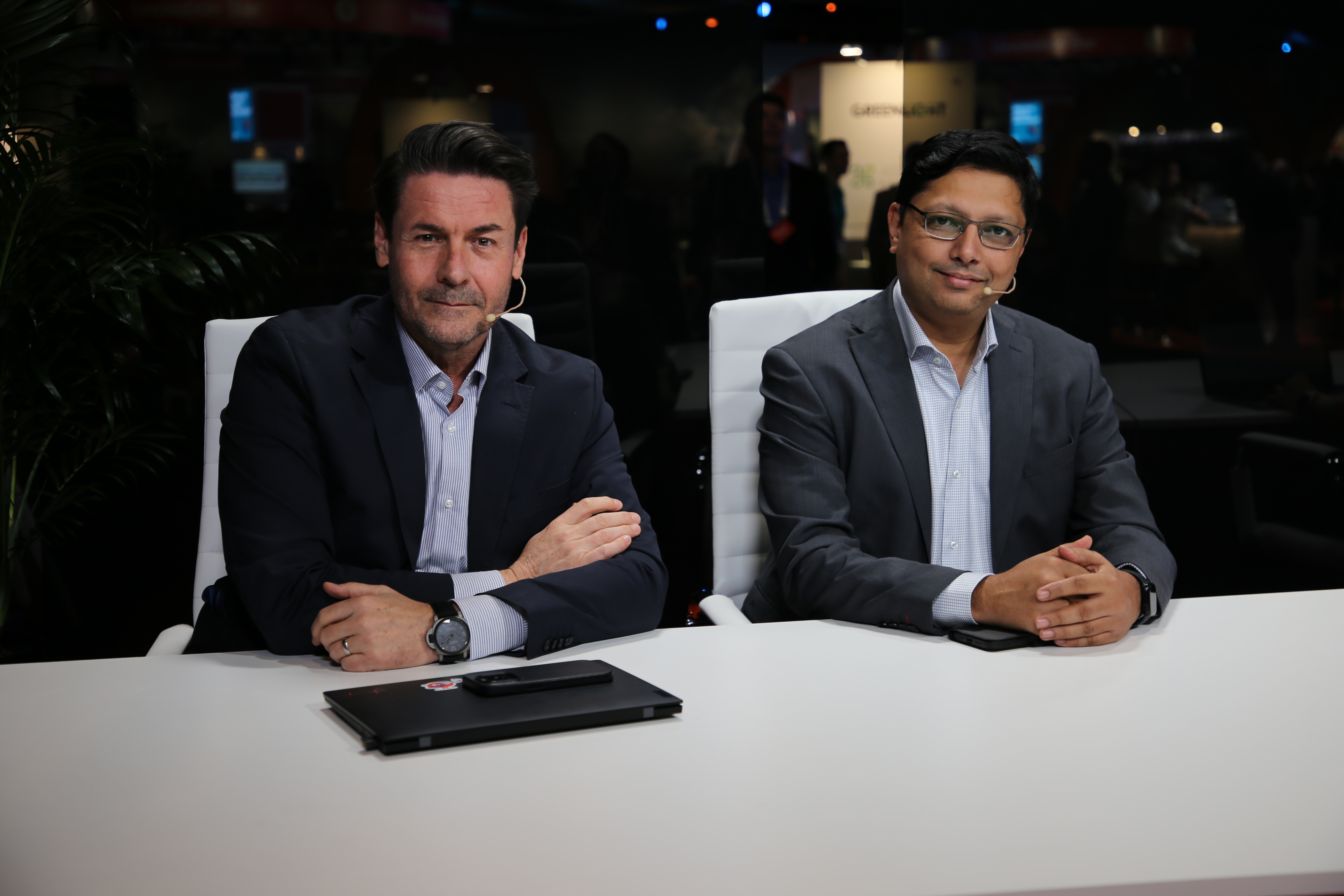
Tanmay Hoshing from Deloitte and Gerd Weishaar from UiPath discuss their partnership. The use of GenAI has significantly improved ROI in test automation, making it more efficient and cost-effective for clients. They talk about the benefits of eliminating manual efforts, pre-delivered bot libraries, autopilot capabilities, and auto-healing features. The goal is to move towards autonomous testing with Agentic AI, which will revolutionize the industry and increase efficiency. The conversation also touches on the impact on job satisfaction, skills needed in the i...Read more
exploreKeep Exploring
What changes in test automation with the use of GenAI and partnership with UiPath?add
What is the history of test automation at UiPath and the journey they have been on?add
What are some benefits of using UiPath in building bots and maintaining them, and how do they contribute to the overall ROI for customers?add
>> Hello everyone and welcome back. We are on theCUBE. We are here at UiPath Forward 2024 at the MGM in Las Vegas. I'm your host, Rebecca Knight, alongside David Vellante, my co-host and analyst. We've got two guests for this segment. I'd like to welcome to the show Tanmay Hoshing. He's the engagement delivery leader at Deloitte. Welcome Tanmay and Gerd Weishaar, the SVP of product test automation at UiPath. Thank you both so much for coming on theCUBE.
Tanmay Hoshing
>> Thanks for having us.
Gerd Weishaar
>> It's a pleasure.
Rebecca Knight
>> I'm going to start with you Tanmay. Talk a little bit about the partnership between Deloitte and UiPath and what the original impetus for it is.
Tanmay Hoshing
>> Absolutely. We started the journey around a year back when we wanted to significantly transform the way we do the test automation, specifically on the package technologies. I would say in the last 20 years, specifically when it comes to implementation type of engagements, the penetration of test automation has been fairly limited because technology, the ROI which was generated was not as good, but now with the power of GenAI, we are thinking that the ROI is significantly better than what it was and that's where we started investing into this technology using our strong forte, which has been institutionalized knowledge, that through consulting we have gathered over, I would say past 30 years and we need a very strong partner for automation, specifically with the test capabilities and that's where we partnered with UiPath to combine their strength with Deloitte's strengths and bring a very powerful solution to the market.
Tanmay Hoshing
>> Why was the ROI somewhat muted and explain why GenAI changes that equation?
Tanmay Hoshing
>> Sure. Specifically in the space of test automation, typically when you go on implementation engagements you would do a testing, I would say three to four times manually and if you want to have something built on automation, the effort it takes to build that automation, we are not significantly giving that saving compared to doing it manually. Now what it changes with GenAI is the activities that lead up to the testing, from test script writing, test preparation, building of integration test scenarios, building off test data, all of that with ability of GenAI we are able to significantly accelerate that. That's part one of it. Second thing with partnership with UiPath, we have invested in building a predefined library of automation bots and that is something that we give as an out-of-box solution to the engagements where we work and that significantly saves the efforts to having to build them manually and that's where the ROI comes in.
Tanmay Hoshing
>> Gerd, I imagine a pyramid where pre-GenAI there was at certain scale, there was an ROI, right?
Tanmay Hoshing
>> Yes.>> But it was the tip of the pyramid. You had to be big enough and now you're sort of widening that aperture. Maybe you could discuss the history of sort of test automation at UiPath and the sort of journey you've been on.
Gerd Weishaar
>> Yeah, I mean in general, so you said pre-GenAI, right?>> Yeah.
Gerd Weishaar
>> There was an ROI, but it never really took off. Testing has been around for what, 25 years? I've been 25 years in that business. It was hard to create automation and it was hard to maintain it over time. That's why typically customers have a low automation rate of like 30, 40% only. With GenAI now we are able to generate test cases, we can create up to 90% automation rates and that's truly what the customer needs and that accelerates everything. I think that's what you're referring to as well in terms of the efficiencies.
Tanmay Hoshing
>> It's human labor reduction, but it's also quality as well.
Gerd Weishaar
>> Absolutely.
Tanmay Hoshing
>> Absolutely and I can give an example. When typically if you write a test tool to write the manual test cases, many of the times they miss out on thinking of the negative test cases or exceptional test cases. That's where when we bring the power of GenAI, we are able to do a specific prompt engineering which asks for, along with the happy part test case, build those exceptional test cases, so that gives a very comprehensive test coverage. Another capability that we have built in which our clients ask, do I need to test everything? If it is a package solution I'm buying, I expect the product company would've taken care of those scenarios. Tell me what is important to test. With power of GenAI baked into the solution, we are able to tell our clients what is critical versus non-critical, focusing their efforts, their energy on testing what is required and taking out something which is not required.
Rebecca Knight
>> What is the upshot for the customers that, as you said, you're able to identify what's critical, what's not critical, here's what you need to do and then what is the upshot for them in terms of being able to have this data from the testing?
Tanmay Hoshing
>> I would say in terms of efficiencies, of course it frees up their internal resources quite a lot. It reduces a lot of back and forth cycles that they need to do as a part of whole validation process and there is another element which our customers quite often face. It is maintaining the library after the initial implementations are done. That is tough and specifically when you have scenarios where you have a lot of business packages, multiple vendors coming in, usually it's a hard effort to maintain, but with everything brought into a one system or one test suite together, we are able to give them that ability.
Gerd Weishaar
>> A lot of system discussion today. I think much of the testing, correct me if I'm wrong, was compartmentalized. We can automate this piece or that piece or this piece. Now you can automate end to end.
Tanmay Hoshing
>> That's true.
Gerd Weishaar
>> How does that change the uptake with customers and the business value?
Gerd Weishaar
>> We can automate literally any technology. We can automate end-to-end processes spanning five or six different systems, for example. We've been just talking about SAP systems here, but it usually involves several systems that the customers are testing in the end-to-end process. You know what the beauty is now with all these SAP transformations, most of these customers want to go back to clean core and clean core means that they don't change that much, which means we have customers 93%, 95% clean core. You can generate a lot of the testing artifacts directly for the customer without having customizations or any heavy lifting on the automation. That is a huge value for the customer, I think.
Tanmay Hoshing
>> Absolutely.
Tanmay Hoshing
>> Yeah. No custom mods, right? You're sort of eliminating those custom modifications, which like you say, it becomes fragile because you've got to maintain them and then that just blows the whole thing apart. You mentioned SAP. Do you have a specialization around SAP specifically or ERP generally?
Tanmay Hoshing
>> I would say it is much suited for package technologies, SAP, Workday, Oracle, ServiceNow because the advantage with package solution is that usually your standardization is very high compared to custom development. Because standardization is high, we bring our Deloitte-specific libraries, which are kind of like reviewed by experts, know that it has verified content. It fits very well with package technologies. We have our framework called Ascent Framework. That is something that we have built over all the institutional knowledge we have and that's what we use to help our customers accelerate their journey.
Rebecca Knight
>> We started this conversation by talking about how difficult it was to find ROI in this and therefore how slow uptake was. How does this change those dynamics and particularly in terms of customers finding value and finding efficiencies?
Tanmay Hoshing
>> Sure. First thing in terms of writing of the test scripts, it was earlier completely manual efforts. Now with GenAI we are having a significant effort take out of that part, so that increases the ROI. Secondly is the pre-delivered bot library. Earlier bots had to be manually developed. Now with a bot library, which is pre-delivered, for the standard transaction they don't need to re-innovate those efforts or building something, so it works better sometimes, in many of the cases for manual efforts as well. The third one is with the autopilot. Autopilot of UiPath, significantly accelerate time it takes for us to build a bot. Earlier it used to be quite a lot time consuming size. Now we are able to do it much faster. The next one is the auto-healing capabilities of UiPath. First time build is still okay. Maintaining the bots was very, very effort sensitive activities, but now with the auto-healing capabilities that UiPath brings forward, that effort goes down. All of these one things added together, it generates the overall ROI for the customers.
Gerd Weishaar
>> If we fast forward, let's say five to seven years, as Agentic actually becomes mature and more real. Today it's aspirational. What will change in the world of testing in your view as that Agentic is... There's no end state, but closer to an end state.
Gerd Weishaar
>> Five years is almost too long.
Tanmay Hoshing
>> Yeah, exactly.
Gerd Weishaar
>> The pace. Things are changing at the moment. I wouldn't feel comfortable to say more than two years ahead.
Tanmay Hoshing
>> Totally. I agree.
Gerd Weishaar
>> If you ask what's going to happen, so testing is the one area that will be impacted the most by GenAI. The analyst firms said that already a year ago. Now we have the GenAI capabilities like Autopilot for tester, which is a huge success and we're taking it up to the next level, which becomes Agentic and in Agentic it means, more or less, that you can solve complex tasks, not just a little help or assistance. You can ask, test all the new functionality that was released in the last sprint site for example and Autopilot will go and we'll find all the requirements, will create the test cases for you, will automate them without you touching anything. We are getting very close to autonomous testing, which wasn't possible so far, but with Agentic I think we will get to the autonomous state.>> That's one of the early examples of basically eliminating humans from the drudgery of testing.
Gerd Weishaar
>> Yes.
Rebecca Knight
>> But also eliminating humans means... This is the thing Daniel has gone to great pains to say there will always be humans and we always need their judgment, their understanding, their contextualization of this. I hear it and I got a little nervous with the jobs dislocation question. When you are talking to customers about this and clients, how are you not giving the testers hives?
Tanmay Hoshing
>> It's testing. Everybody hates testing.
Rebecca Knight
>> But some people do it for a living and so the question is how-
Tanmay Hoshing
>> I would say around this one, there is so much work, we are just not able to do it because it's expensive. You see softwares, right? You run into softwares which are not most elegant softwares and the vendor of that software is not able to update and make it elegant because it costs money. Think about it. If you're able to drop the software development cost to one 10th of what it is, they would go and do it. The volume of work it will generate will far outpace the number of humans that we can take out. Everyone will have more work than it is now because of all these automations coming together. I'm just kind of very excited because there are a lot of elements of work which people don't enjoy doing currently because they have to do it because there is no other way to get it to the market without doing that kind of grunt work. We'll be able to do it. If you ask any developer between coding and testing, what do you want to do? They'll say, I want to do coding. If you ask a system designer, a functional consultant as we call it in our world, between running design workshop and testing the system, what do you want to do? He wants to run the design workshop. He wants to be with the client. We'll be able to create, I will say, more happy experiences of workers in their whatever working is, than having to do those components of work which they don't really enjoy doing.
Rebecca Knight
>> That really is not nothing because those kinds of small things, as you said, the things that just make you want to tear your hair out, are what cause burnout and stress and work-related anxiety and depression. If you are eliminating that drudgery, it could be really meaningful for people's job satisfaction and their retention and lots of other things.
Tanmay Hoshing
>> Absolutely. I just want to give one example. Typically when you work on life sciences client, you have to record the entire test scenario, screenshot by screenshot. One screenshot, you take it in a wrong, you just missed the date section. You have to go and start from the beginning. Think about it. Someone has to do it four to five times? That one will not be your friend after doing that.
Gerd Weishaar
>> Nano testing is torture. If you think about it, it's torture. You're doing the same thing over and over, like the same step by step instructions. That's for a human, that's torture. Eliminating that I think will make their jobs better and they can focus on other areas. Testing is a true discipline. When you look at a professional tester, they know exactly what they're looking for. They know how to find defects and problems in the software system. They're well trained professionals actually. Getting rid of that, we are doing them a favor actually.
Tanmay Hoshing
>> No doubt.
Rebecca Knight
>> How are the skills that are needed to be in this industry changing in the sense that, as you said, it's very disciplined, very focused and obviously you can use those things in a lot of different kinds of jobs, but because the machine is taking away a lot of those repetitive tasks and therefore it's freeing up their time to do more creative, more innovative tasks, how do you foresee the skills needed?
Gerd Weishaar
>> I would say will shift for me is always a comparison. I talk with friends and some of them say, we will lose the capability to do this manually anymore and whatever. It's true, we probably will, but remember there was a time where you had maps in the car, that you had to open.
Rebecca Knight
>> I don't want to go back to that.
Gerd Weishaar
>> Then there was Google Maps. All of a sudden it became so much easier, you had navigation in the cars. I think technology will progress and we will become more efficient with it. You don't need the maps anymore in your car. They might be outdated by the way and so forth. I think it'll be similar with the skills that will shift. We will lose some of the skills, but we will get much better on top of the skills and more precise. Maybe more experts on certain areas and those kinds of things. Spend less time getting lost.
Rebecca Knight
>> That's right. Exactly. Not accounting for traffic. Exactly. Exactly. Last question. We're here at UiPath Forward. What are the kinds of conversations that you're having at lunch and in the hallway that are most interesting and exciting to you?
Tanmay Hoshing
>> Of course in the conversations that we had, people are really excited, specifically with me, talk about the Deloitte's Ascent test solution and the mature capability it brings or the ROI it generates on day one. I'm personally very excited about Agentic AI and the conversations we are going to have as to how we can embed that Agentic AI in the transformation we are doing. Totally excited about it.
Rebecca Knight
>> Yeah. How about you Gerd?
Gerd Weishaar
>> There are two kinds of conversations that I really enjoy. I mean, the Agentic stuff is anxiety. That's fueling our daily work, but I love to talk with customers who are implementing our tools. Real world examples of customers who are getting value from what we have created, more or less. They're using the tools, they give you compliments. Sometimes they have requests or questions, which is totally awesome that they do this, but I think those conversations, they energize.
Rebecca Knight
>> Exactly. Excellent. Well, Tanmay and Gerd, thank you both so much for .>> Thanks guys.
Tanmay Hoshing
>> Pleasure having you here.
Rebecca Knight
>> I'm Rebecca Knight for Dave Vellante. Stay tuned for more of theCUBE's live coverage of UiPath Forward 2024. You're watching theCUBE, the leader in enterprise tech news and analysis.