We just sent you a verification email. Please verify your account to gain access to
theCUBEd Awards. If you don’t think you received an email check your
spam folder.
In order to sign in, enter the email address you used to registered for the event. Once completed, you will receive an email with a verification link. Open this link to automatically sign into the site.
Register For theCUBEd Awards
Please fill out the information below. You will recieve an email with a verification link confirming your registration. Click the link to automatically sign into the site.
You’re almost there!
We just sent you a verification email. Please click the verification button in the email. Once your email address is verified, you will have full access to all event content for theCUBEd Awards.
I want my badge and interests to be visible to all attendees.
Checking this box will display your presense on the attendees list, view your profile and allow other attendees to contact you via 1-1 chat. Read the Privacy Policy. At any time, you can choose to disable this preference.
Select your Interests!
add
Upload your photo
Uploading..
OR
Connect via Twitter
Connect via Linkedin
EDIT PASSWORD
Share
Forgot Password
Almost there!
We just sent you a verification email. Please verify your account to gain access to
theCUBEd Awards. If you don’t think you received an email check your
spam folder.
In order to sign in, enter the email address you used to registered for the event. Once completed, you will receive an email with a verification link. Open this link to automatically sign into the site.
Sign in to gain access to theCUBEd Awards
Please sign in with LinkedIn to continue to theCUBEd Awards. Signing in with LinkedIn ensures a professional environment.
Service Co-Pilot by Aquant (Top AI-enabled products: Manufacturing)
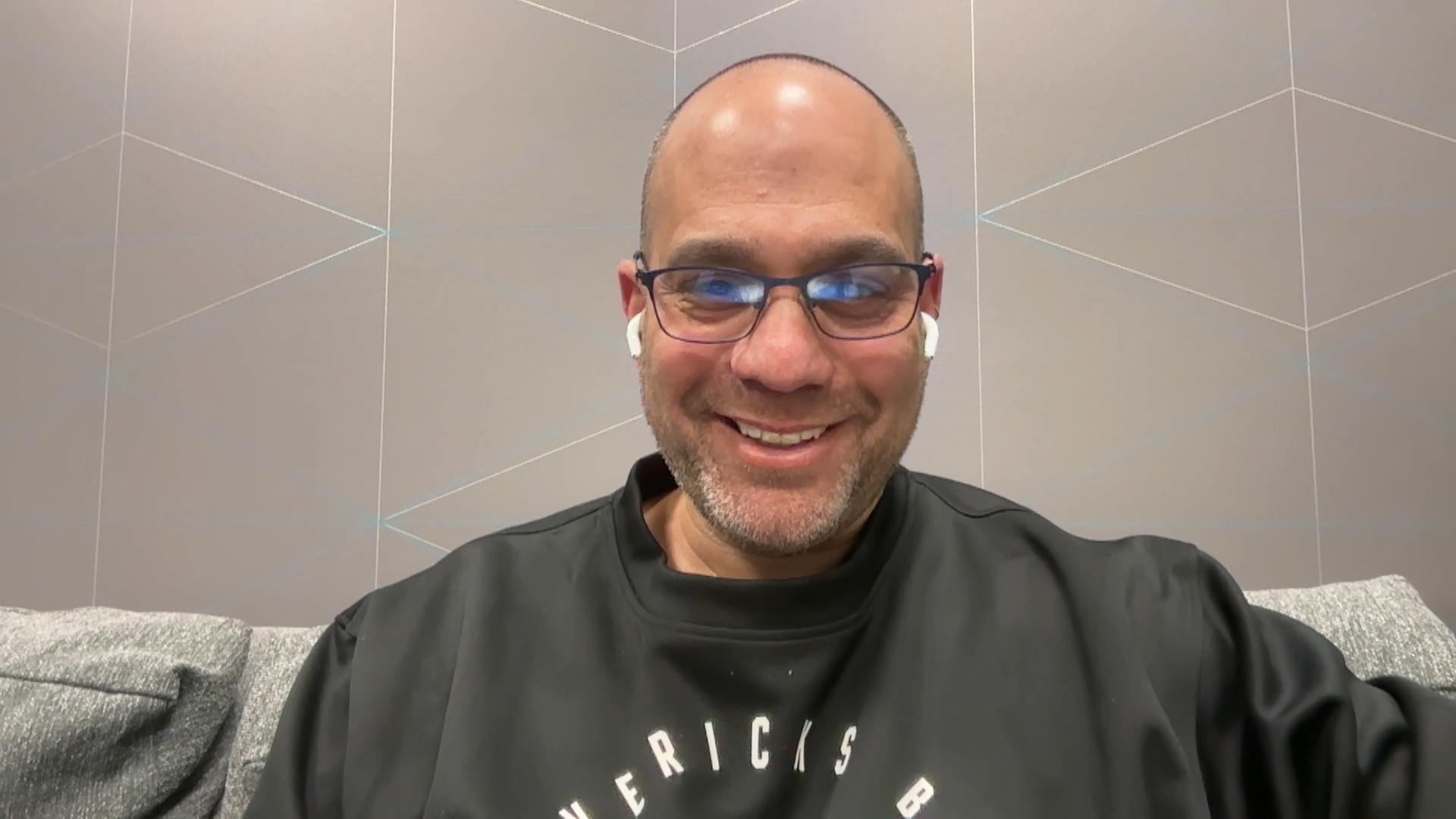
Assaf Melochna
Co-Founder & PresidentAquant
Assaf Melochna, president and co-founder of Aquant, engages in a conversation with Christophe Bertrand, principal analyst at theCUBEResearch, about the innovative strides made by Aquant, recently acknowledged with a PAP Honors award for their exceptional product in the manufacturing category. Melochna shares insights into their latest offering, the Aquant Platform for Service Professionals, an Artificial Intelligence-driven solution designed to enhance service operations by aligning with the company's strong brand identity.
The discussion highlights ...Read more
exploreKeep Exploring
What is a specific example of how the company approached a challenge in an innovative way and the impact it had on customers as they built the solution?add
What impact does having AI as a guided support in the field have on productivity and customer satisfaction?add
Service Co-Pilot by Aquant (Top AI-enabled products: Manufacturing)
search
Christophe Bertrand
>> Hello everyone. My name is Christophe Bertrand, principal analyst at theCUBEResearch, and welcome to theCUBE's Tech Innovation CUBEd Awards. It's our inaugural program, and we had a great number of fantastic, high-caliber entries that really showcase the incredible innovation happening across the tech landscape. Today, we're joined by Assaf Melochna, who's president and co-founder of Aquant, and we're going to discuss their award-winning entry, the innovation behind it, and how they are driving the industry forward. Aquant took the PAP Honors in the product for manufacturing category, so congratulations and welcome.>> Thank you, Christophe, appreciate the reward and being here.
Christophe Bertrand
>> It's a pleasure to have you. Just to clarify, I believe you recently changed the product's name, actually, it is now called the Aquant Platform, is that correct?>> It is correct. It's the Aquant Platform for Service Professional, it's an AI platform. And what we have noticed is that the brand name of the company was so strong that we wanted to ensure that people align between the brand name and the product.
Christophe Bertrand
>> That's great to hear, and that's definitely a perfect definition of success in the market when that happens. So we're here to talk about innovation, and it's really central to these awards, so could you share a specific example of how your company approached a challenge in a way that was really innovative, or the type of impact that it had on customers as you built the solution?>> That's a great question, Christophe. What we do as a company, we are helping manufacturers with their service professionals to do a better job, and when we do that, basically, it's across the entire lifecycle of the service. And if you look at the contact center of people in the field or the operators of big machines, they all face some challenges with their service operations. The impact is high. We are able to resolve a problem quicker, in some cases before the customer even needs to worry about it or without calling the contact center, and people in the field, for the service technician, when they go to resolve problems in the field, they can do it faster with less spare parts and ensuring uptime of those machines to the satisfactory of their customers. So the impact is high. Think about out a farmer that has a very limited time to crop his yield, and his John Deere tractor doesn't work as expected. John Deere is one of our customers using our product in order to ensure that when there is an issue, it's being resolved as quickly as possible in order to ensure the successful yield of that crop.
Christophe Bertrand
>> Well, that's a great example. I'd love to double-click on that, because you're dealing here with what can be complex machinery with definitely lots of impact on the end user, on the business. So tell me more about how you leverage specific technologies, AI certainly comes to mind, and what is that experience for the service professional in the field, literally in this case?>> Yeah, absolutely. So first of all, we've been doing AI before AI was a sexy word. In the last couple of years, it became a huge wave and a huge buzz. Back in the day, it was forbidden to say AI. We used to say different words, like machine learning and deep learning and some other stuff. Today, everyone is using AI. For the people in the field, think about it, they have a coach next to them, or a buddy next to them, but instead of a physical buddy or a physical coach, it's actually the AI helping that person to do a better job. In many cases, in our industry, people are phoning a friend. So now, instead of two people working on the same problem, one over the phone and one in the field, now we can have the AI to be your guided support to do your job better. And there's a great impact for the people in the field, so they can accomplish more jobs per day, they can do faster resolution, and the customers are happier because their machine are getting to uptime much faster.
Christophe Bertrand
>> Right, yeah. I think you bring up an important point here, which is this is really AI supporting the professionals, it's not taking jobs away. On the contrary, it's actually augmenting the efficacy and efficiency of those professionals, resulting in end customer satisfaction. So obviously, the minute you get involved in services and manufacturing, you're going to have these type of impacts. But I think what's interesting here is it really is a value chain of benefits, and it's very fascinating. So let's double-click a little bit more on what it looks like for a customer of yours to deploy your solution, what is the platform? How do I deploy it? How does it all work?>> Yeah, that's a simple answer. It takes a couple of weeks to implement the platform. But you mentioned something very, very interesting about augmenting the human being with AI, and I would like to elaborate about that as well, because many people are concerned that AI will take jobs from people, and we believe that AI actually going to augment it, exactly as you said. Now, if you look at the AI, the AI would be good as the data is being served. What we know in our industry, that there's a lot of tribal knowledge, there's a lot of things that happens in the head of the most senior experienced people in each organization. And what's happening is that, how can you take that data and knowledge and experience that they have in their head and augment it into the AI? These are judgment and opinions, and you need to incorporate that with historical data. We brought, many years ago, to the company, different PhDs, that that was their position and profession about how to combine and augment opinions of people and their judgment together with historical data, so the AI could be much better than just the data that we are serving them. Now, think about a documentation. What happens is that the documentation is correct for the day that it has been released. What will happen the day after, or even the week after? Things have changed. So you can have your knowledge team consistently update those documents, that's a lot of effort. But in our platform, there's an option to edit those responses. Now, it sounds easy to edit those responses. One, there is an approval process that you need to ensure that no one is adding noise and some nonsense to the data so the AI will not be as accurate as it should be. The second thing is, what would happen if I ask the system, or will ask it the same question but in a different way? I need to understand the intent of what I meant in order to ensure that they still look at the same edit of that specific situation. So we added a lot of different layers in our product in order to ensure that we are delivering the most accurate answer in the industry for every service interaction. So we call it the right answer in the right time for every service interaction.
Christophe Bertrand
>> I have to say, on a personal note, I wish that I had sometimes service technicians who were using your product here on some of our systems at home, because documentation was always something that was brought up as one of the issues. And I can't imagine on more complex systems, you mentioned maybe a tractor or something that has intense use in the field, literally, I can only imagine the complexity of dealing with that. So it sounds to me like the secret sauce that you're bringing to the market here is a combination of, well, first of all, deep expertise in cognitive systems with ML and AI, but you haven't talked much about the interface or the consumption of the technology. What does that look like? And is there a difference between the super admin, for lack of a better term, and maybe the technician in the field? What do they look at? What do they use? Can they do it on a laptop, on their phone? How does it all work?>> Absolutely. The system has a few different layers. One layer, one application, will be for the end user, the person in the field. It could be the operator of the machine. Now, for the operator of the machine, he has a mobile application. It's very similar to what the field service technician might see. However, the information that that person needs to receive is much different than what the information that the field service technician who is certified can see in the system. Let me give you an example. Let's assume that they expose, I would like to resolve problem, I would like my customers... I'm a service organization, I'm a manufacturer, and I would like to ensure that my customers are able to resolve problems by themselves. So I engage the documentation and I give them access to my documentation. There's a lot of liability. Not everything someone without the right certification and with the right tools and with the right knowledge can do that. In some cases, it could be very dangerous. So you need to ensure that while there are different application, one application for the mobile, one application for the contact center, one application for the manager, and it's all under the same platform, you need to have what we call personas. Every persona get a different layer of the data because of the certification and the liability that the manufacturer has. So for example, if there is need to open the hood of the machine, okay, only a certified person can do that, I cannot present that answer to the layman person.
Christophe Bertrand
>> It makes perfect sense, and I think this is definitely a great solution. I'm not surprised you won with all of these capabilities. So Assaf, I'd like to thank you so much for joining us today.>> Christophe, it was a pleasure to be here, and I extremely appreciate the award from theCUBE.
Christophe Bertrand
>> Well, our pleasure, definitely a great solution. So the Aquant Platform, take a look at it, great solution to support manufacturing environments with their services, teams and requirements. Thank you everybody for joining. My name is Christophe Bertrand, principal analyst here at theCUBEResearch. We'll see you on the next one.