We just sent you a verification email. Please verify your account to gain access to
theCUBEd Awards. If you don’t think you received an email check your
spam folder.
In order to sign in, enter the email address you used to registered for the event. Once completed, you will receive an email with a verification link. Open this link to automatically sign into the site.
Register For theCUBEd Awards
Please fill out the information below. You will recieve an email with a verification link confirming your registration. Click the link to automatically sign into the site.
You’re almost there!
We just sent you a verification email. Please click the verification button in the email. Once your email address is verified, you will have full access to all event content for theCUBEd Awards.
I want my badge and interests to be visible to all attendees.
Checking this box will display your presense on the attendees list, view your profile and allow other attendees to contact you via 1-1 chat. Read the Privacy Policy. At any time, you can choose to disable this preference.
Select your Interests!
add
Upload your photo
Uploading..
OR
Connect via Twitter
Connect via Linkedin
EDIT PASSWORD
Share
Forgot Password
Almost there!
We just sent you a verification email. Please verify your account to gain access to
theCUBEd Awards. If you don’t think you received an email check your
spam folder.
In order to sign in, enter the email address you used to registered for the event. Once completed, you will receive an email with a verification link. Open this link to automatically sign into the site.
Sign in to gain access to theCUBEd Awards
Please sign in with LinkedIn to continue to theCUBEd Awards. Signing in with LinkedIn ensures a professional environment.
Medidata Clinical Data Studio by Medidata (Top AI-enabled products: Healthcare, HealthTech, MedTech)
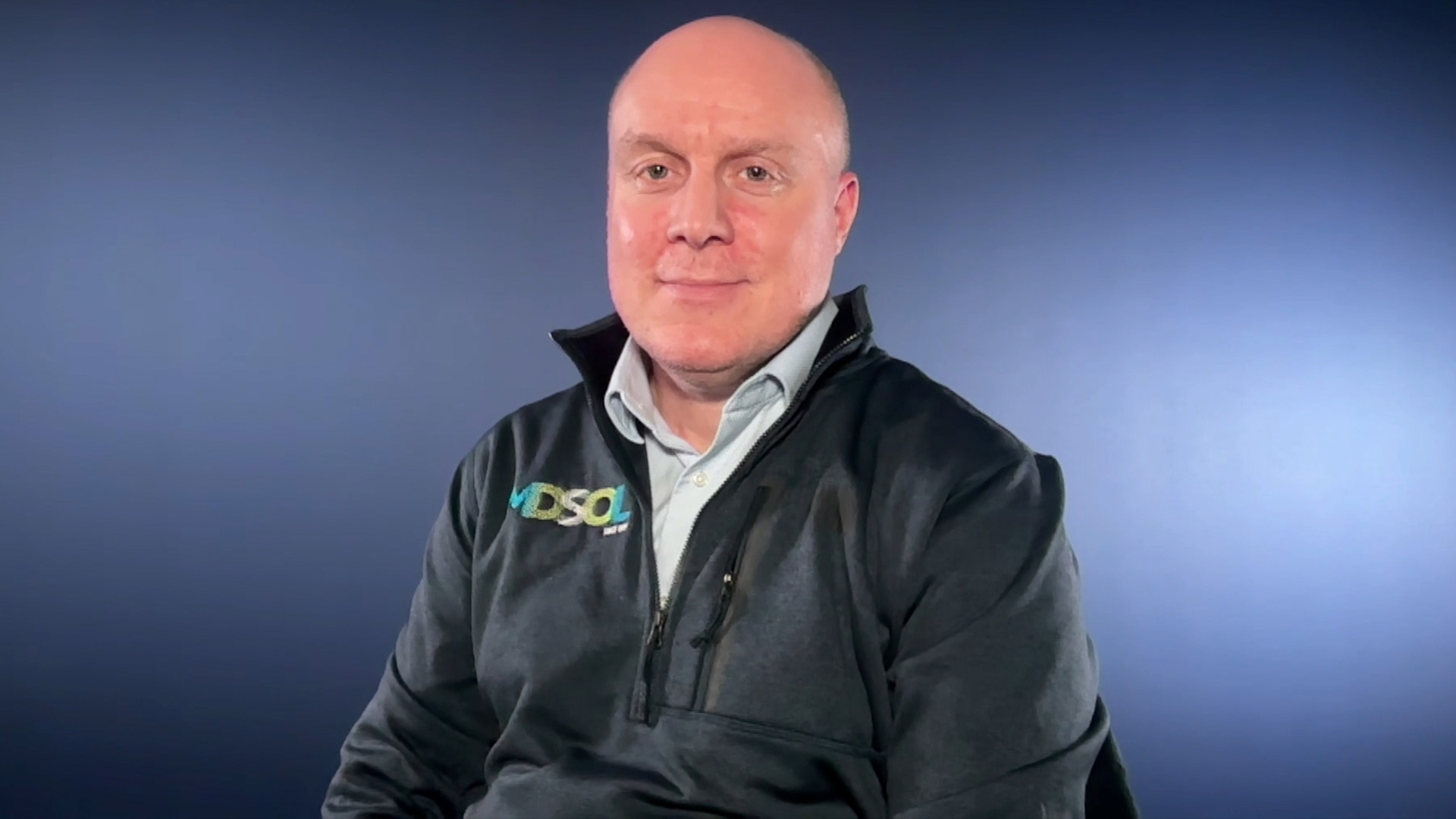
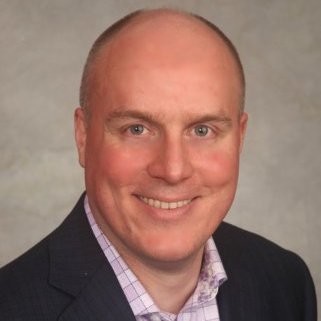
Tom Doyle
CTOMedidata Solutions
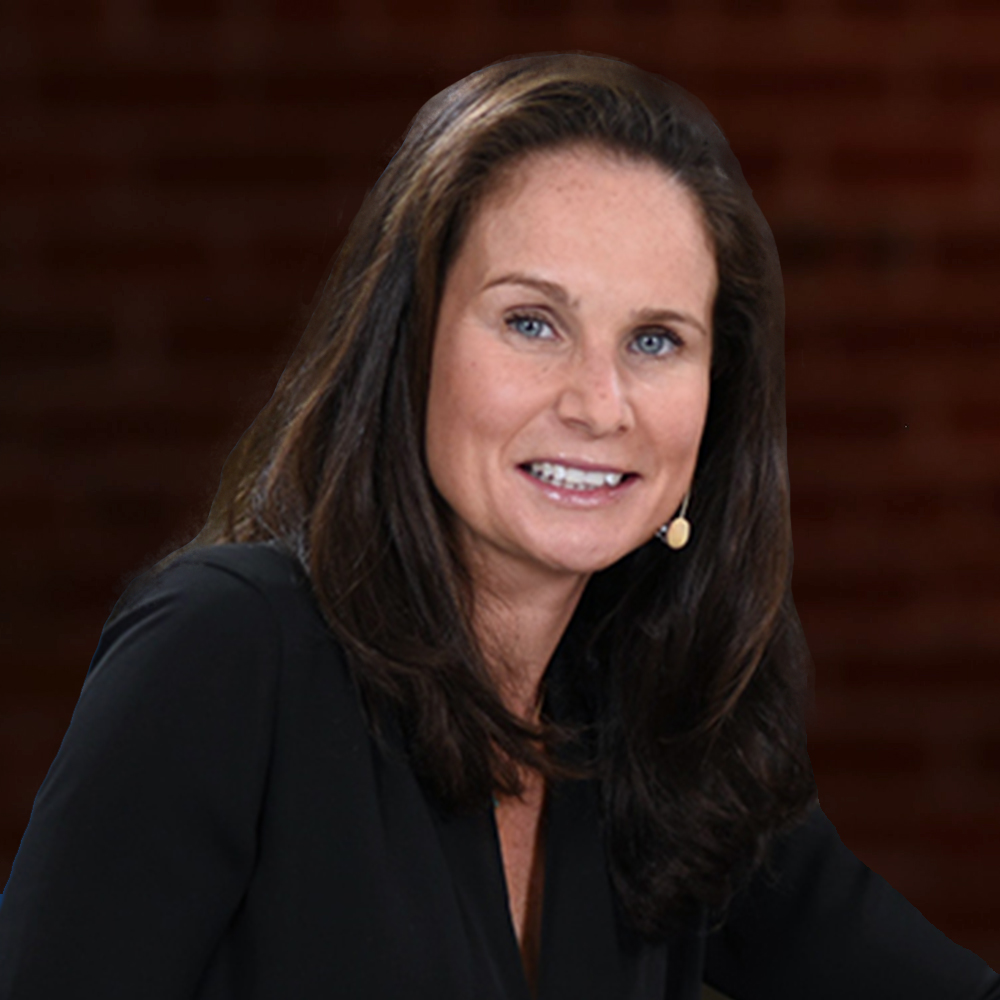
Tom Doyle, the chief technology officer at Medidata, joins Rebecca Knight in this segment of theCUBE's Tech Innovation Cubed Awards. Doyle, who leads a team recognized for the Top AI-Enabled Product in Healthcare, discusses the impact of Medidata Clinical Data Studio in revolutionizing clinical research. theCUBE's analysts explore the platform's capabilities, particularly in how it harnesses Artificial Intelligence to streamline data collection and enhance decision-making in clinical trials.
According to Doyle, a key takeaway is the transformative ro...Read more
exploreKeep Exploring
What award did Tom Doyle win at theCUBE's Tech Innovation Cubed Awards, and for which product?add
What are the criteria for winning an award for AI-enabled or AI-enhanced products in the respective sectors?add
How is AI being used in clinical trials to analyze and make sense of the increasing volume and sources of data being collected from patients?add
Medidata Clinical Data Studio by Medidata (Top AI-enabled products: Healthcare, HealthTech, MedTech)
search
Rebecca Knight
>> Hello everyone and welcome to theCUBE's Tech Innovation Cubed Awards. I'm your host, Rebecca Knight. And we are celebrating the winners of our inaugural program, showcasing the incredible ingenuity and creativity happening across the technology landscape. Today we are joined by Tom Doyle. He is the chief technology officer at Medidata and the award winner in the Top AI-Enabled Product in Healthcare for Medidata Clinical Data Studio.>> Thanks so much. And it's great to be here, Rebecca.
Rebecca Knight
>> So before we get started, I want to let our viewers know that this award recognizes cutting edge AI-enabled or AI-enhanced products that have significantly impacted and transformed how people do their jobs in their respective sectors. And this award recognizes solutions that demonstrate exceptional effectiveness, creativity, and adaptability. So that's a lot. Congratulations again. But when we get started, why don't you tell our viewers a little bit about Medidata Solutions?>> Yeah, great. Medidata has been in the life sciences sector for the last 25 years, bringing technology together with partners around the industry, largely medical innovators, CROs, as well as sites where clinical trials are run, and more recently, together with patients to really advance the course of medicine, to research new therapies, look into medical unmet need spaces, but also to test and demonstrate the effectiveness and the safety of all the great new therapies that our customers, our partners, are bringing to the market. Over that 25 years, as you can imagine, a lot has changed. What began as a very paper-based, very time-consuming, very difficult process for patients, for sites and for those medical innovators has evolved quite rapidly into what we see today. Much more technology forward, more about how do we create a more seamless experience for patients, for sites, and for the sponsors that play such a key role in this important business. But also now really a transformative moment in our industry, how we look towards AI that can really accelerate and also surface signals that were quite difficult to find in the past.
Rebecca Knight
>> Well, exactly. So that's Medidata Solutions. Tell us a little bit about the product Medidata Clinical Data Studio, and specifically how it uses automation and AI to manage clinical research data.>> Yeah, absolutely. Clinical Data Studio is meant to really help in that core part of clinical research, which is about bringing together all the data that's collected in the course of a clinical trial and synthesizing that in a way that helps us uncover the signals and also make sure that we've got a high quality data set that is demonstrating the safety and efficacy. That is the core principle or the core purpose of the trial itself. Over the years, trials have gotten increasingly more sophisticated. We are reaching into new modalities of data, new sources, more and more technology that's both patient facing and also physician facing. And that has created a more difficult space for sponsors, but also all trial participants to work in. Clinical Data Studio aims to simplify that. So both in how we bring all of that data together, we integrate it into a single view and how we use technologies like AI to surface the signals that help us make much faster decisions, ensure that the data is cleaned and ready for analysis, and also automate the creation of a lot of that analysis so that good decisions can be made much, much, much faster.
Rebecca Knight
>> Well, it all sounds exceedingly complex. And you just painted a picture of what things used to look like. But before we get into that, in terms of your users, its pharmaceutical companies, biotechnology firms, academic institutions. So how are all of those organizations using Medidata to transform their trials?>> Yeah, the largest number of users in the clinical trial space are patients themselves and also site personnel who are day-to-day meeting with patients who are conducting the tests, providing the medication, and ensuring that they're seamless process. There are a lot of monitors, for example, that are making sure that trials are run effectively and to plan and to protocol. So there's a lot of different stakeholders in the conduct of clinical trials. The sponsor who's ultimately accountable for the trial execution has a very large interest in making sure that all the data collected is of that high regulatory grade quality, also is fit for purpose for the research and to answer the important questions that they will seek to answer throughout the clinical trial. And they spend a great deal of time and effort in doing that. And again, that's an area where as an industry we've really worked together to leverage the power of technology to leverage things like AI that help really make that much, much more seamless, remove a lot of the friction, but also remove a lot of the time and cost that we've historically seen in clinical research.
Rebecca Knight
>> Can you provide some examples of how organizations and the users themselves are using this? I mean, you just talked about all the friction points and the time and the energy and the resources that it took. Can you describe now how it is much more a seamless process?>> Yeah, absolutely. One of the big areas of focus of clinical trials is engaging of patients. And so it's now collecting more information directly from patients. We also are seeking to build a much better understanding of disease progression, the efficacy of the new therapies or the new treatments that those patients are undergoing. And so you can imagine the volume of data has increased quite significantly as have the sources of where data is being collected. One of the use cases that we've embedded of our use of AI is to make sense out of all of that data. So think anomaly and signal detection that is surfacing an anomalous data that needs further review that you want to do more investigation on. But also looking for the ticking and tying the medical histories, the adverse events, the medications that patients are on, and making sure that the whole story around the patient really makes sense. So it's a combination of bringing the scientific acumen together with mathematical or statistical principles using technology like AI to help make sense and bring that all to life. Very excitingly though is we've also looked to AI to transform the way that users interact with the experience. So making what can be a very complex process a much more human. So a more natural way to interrogate data to use generative AI, for example, and the power of language models or large language models to help us understand the history of the data. Think the audit trails, for example, the order in which data was collected and making sure that that story all kind of makes sense as well. So you'll see different parts of AI all around the platform really helping to guide the users through that journey. And in the end, getting to good clean data that is answering the questions that we need to answer.
Rebecca Knight
>> That's really fascinating that you're bringing in AI to make it more humanistic and to bring a more empathetic approach.>> Yeah, it's one of, I think, the really exciting next frontiers for technology, is we think about this as... Oftentimes I think we think of technology like AI is going to create more distance between the user, between that human experience and the data, for example. When really what we see is quite the opposite, is we can create a much more immersive, a much easier to understand experience for users, whether they are professionals, say, biostatisticians or data scientists who have a long history and how to analyze large data sets. Now we can make that faster, more seamless. We can make that experience better for them. But also at the completely other end of the spectrum, patients who are just trying to understand, "Am I doing the right thing? Am I staying on track?" And for all the site personnel that's working through these very complex protocols, we can provide something for all of them to make that a much more seamless experience.
Rebecca Knight
>> So innovation is central to these awards. Can you share a specific example that you or your team had in its approach in the way that it challenged a notion in an innovative way and the impact that it had?>> Yeah, innovation is central to the healthcare space and life sciences. So much of what we use today and the experiences you have today when you go to a hospital or treatments that you might be on, comes from innovations that were developed years prior and a lot of the work that we do in clinical research. So we take that mindset into everything that we build. A lot of times it's the coming together of different technologies, different approaches, different patterns that actually is the true innovation. So it's very rarely one specific piece of technology, but more how that fits into a bigger picture. In this case, for example, it's how we create that single view over all of this data and then use different AI algorithms that begin to surface and do a lot of the work for those who are tasked with reviewing it. And we can put in front of them the actions that they need to take, the areas that they may want to put more focus on, that is what is driving a lot of the innovation. And then lastly is really going at areas that have historically been quite challenging. I mentioned bringing that human experience. So you can imagine working with these large data sets can be quite challenging. And not all of them were designed for review. They weren't designed necessarily for human consumption. Audit trails and logs are a great example of that. Sensor data is another great example of that. And so using technology like AI to create a more frictionless experience for the user, a more natural way of working with that data is a key part of what Medidata is really focused on.
Rebecca Knight
>> You started our conversation by talking about this moment in healthcare as transformative. You've been in this industry a long time. Can you just riff on that a little bit and tell our viewers a little bit about what working at this particular time means to you?>> Yeah. I mean, it really can't be understated of the excitement... Or sorry. It can't be overstated of the excitement that we should have right now in what we believe is possible. So the coming together of our ability to collect more data, to build a deeper understanding, to build that understanding together with patients, together with innovators, together with all the site staff that work so hard to help patients in a very difficult part of their life. But really that technology is now beginning to unlock a lot of what that experience should feel like and could feel like. What we are seeing with AI is a way to make all of that very complex experience, a very complex ecosystem, come to life and tell a story. Tell a story about what is that data telling us about disease? What is that data telling us about the quality of life of a patient, the positive impact that we can have, but also what it's telling us about how people interact with our software. In particular patients and caregivers who struggle through a lot of clinical trials in healthcare more broadly, this is a moment in time that we can seize on that helps us create a much better experience for all of those involved. 10 years from now, we will look back and I'm confident that we'll say, "This was the time where we put in a lot of those foundational components." In the same way that other parts of life sciences, for example, the development of discovery technologies that have helped us move much faster through drug discovery, we'll look back on this moment and say, "This is what really helped propel clinical research and the development process and how we engage with patients."
Rebecca Knight
>> So final question is about your leadership as chief technology officer. How do you and your team stay ahead of industry trends, particularly at a time when there is so much hype and buzz around AI and make sure that you are creating meaningful solutions rather than just following the buzz?>> Yeah, a lot of that just really comes down to partnerships. So partnerships both in technology. You could imagine we have developed deep partnerships with other technology providers and innovators in our space. But we also partner quite closely with academic institutions, big research centers to understand how that technology and the technology we develop is being adopted. About seven years ago, we also launched our Patient Insights program, which has helped us build a much better understanding into how patients adopt our software and what they seek to get out of it and how we can make that experience better for them. So you can see we are trying to understand not just what is possible in the lens of technology what is all the cool things that we can build, but we also want to make sure that we're doing that in a way that's adding value to all the stakeholders that are involved, but also creating a much better experience for all of those involved. Whether they are on the receiving end of the therapeutic or whether they're on the discovery end of the therapeutic, our goal is to make all of their lives better.
Rebecca Knight
>> A clear-eyed human first approach. I love it. Tom, thank you so much for coming on the show. And congratulations again.>> Thank you so much, Rebecca. It was great having you.
Rebecca Knight
>> And thank you for tuning into this special segment of theCUBE's Cubed Tech Innovation Awards. I'm Rebecca Knight. Stay tuned for more.