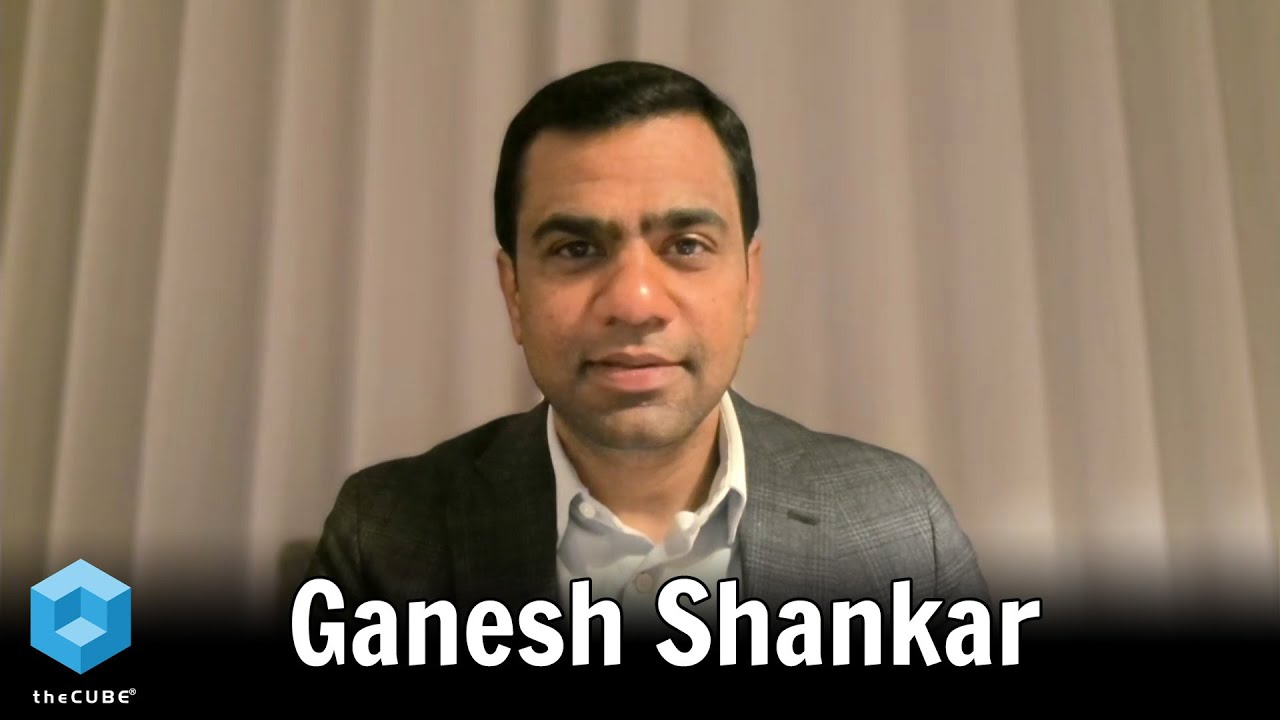
Manoj Saxena, founder, chairman and CEO of Trustwise, sits down with theCUBE’s Shelly Kramer after being recognized as one of the “Most Innovative Tech Startup Leaders” at the Tech Innovation CUBEd Awards. Their conversation centers on Saxena’s dedication to ethical and safe AI practices, reflecting his broader commitment to responsible innovation.
Saxena details his career path — from leading IBM Watson to establishing the Responsible Artificial Intelligence Institute — culminating in the creation of Trustwise. He introduces Trustwise’s flagship product, Optimize: ai, explaining how it serves as a trust layer for AI systems. They also focus on Saxena’s mission to ensure AI technologies are both beneficial and trustworthy.
Saxena emphasizes the necessity of cultural alignment and ethics in AI development, drawing parallels between AI safety features and those embedded in everyday appliances. He outlines how Trustwise offers real-time trust assessments to help companies manage AI with greater confidence.
Find more SiliconANGLE news and analysis https://siliconangle.com/
Follow theCUBE's wall-to-wall event coverage https://siliconangle.com/events/
Learn about the latest theCUBE events https://www.thecube.net/
00:00 - Intro
00:05 - Introduction and Journey: Welcoming Manoj Saxena's Career Path
03:02 - Establishing a Trustworthy Foundation for AI: The Role of Responsibility and Trust
06:57 - Trustwise: Building and Expanding the AI Trust Layer
10:33 - The Role of Responsible AI Institute
13:28 - Empowering Industries: Education and Applications of Trustwise Agentic AI
17:33 - Cultural Influences on AI and Final Insights
#theCUBE #CUBEdAwards25 #Trustwise #theCUBEresearch #OptimizerAI #AI
Forgot Password
Almost there!
We just sent you a verification email. Please verify your account to gain access to
theCUBEd Awards. If you don’t think you received an email check your
spam folder.
In order to sign in, enter the email address you used to registered for the event. Once completed, you will receive an email with a verification link. Open this link to automatically sign into the site.
Register For theCUBEd Awards
Please fill out the information below. You will recieve an email with a verification link confirming your registration. Click the link to automatically sign into the site.
You’re almost there!
We just sent you a verification email. Please click the verification button in the email. Once your email address is verified, you will have full access to all event content for theCUBEd Awards.
I want my badge and interests to be visible to all attendees.
Checking this box will display your presense on the attendees list, view your profile and allow other attendees to contact you via 1-1 chat. Read the Privacy Policy. At any time, you can choose to disable this preference.
Select your Interests!
add
Upload your photo
Uploading..
OR
Connect via Twitter
Connect via Linkedin
EDIT PASSWORD
Share
Forgot Password
Almost there!
We just sent you a verification email. Please verify your account to gain access to
theCUBEd Awards. If you don’t think you received an email check your
spam folder.
In order to sign in, enter the email address you used to registered for the event. Once completed, you will receive an email with a verification link. Open this link to automatically sign into the site.
Sign in to gain access to theCUBEd Awards
Please sign in with LinkedIn to continue to theCUBEd Awards. Signing in with LinkedIn ensures a professional environment.
Manoj Saxena, founder, chairman and CEO of Trustwise, sits down with theCUBE’s Shelly Kramer after being recognized as one of the “Most Innovative Tech Startup Leaders” at the Tech Innovation CUBEd Awards. Their conversation centers on Saxena’s dedication to ethical and safe AI practices, reflecting his broader commitment to responsible innovation.
Saxena details his career path — from leading IBM Watson to establishing the Responsible Artificial Intelligence Institute — culminating in the creation of Trustwise. He introduces Trustwise’s flagship product, Optimize: ai, explaining how it serves as a trust layer for AI systems. They also focus on Saxena’s mission to ensure AI technologies are both beneficial and trustworthy.
Saxena emphasizes the necessity of cultural alignment and ethics in AI development, drawing parallels between AI safety features and those embedded in everyday appliances. He outlines how Trustwise offers real-time trust assessments to help companies manage AI with greater confidence.
Find more SiliconANGLE news and analysis https://siliconangle.com/
Follow theCUBE's wall-to-wall event coverage https://siliconangle.com/events/
Learn about the latest theCUBE events https://www.thecube.net/
00:00 - Intro
00:05 - Introduction and Journey: Welcoming Manoj Saxena's Career Path
03:02 - Establishing a Trustworthy Foundation for AI: The Role of Responsibility and Trust
06:57 - Trustwise: Building and Expanding the AI Trust Layer
10:33 - The Role of Responsible AI Institute
13:28 - Empowering Industries: Education and Applications of Trustwise Agentic AI
17:33 - Cultural Influences on AI and Final Insights
#theCUBE #CUBEdAwards25 #Trustwise #theCUBEresearch #OptimizerAI #AI
Manoj Saxena, founder, chairman and CEO of Trustwise, sits down with theCUBE’s Shelly Kramer after being recognized as one of the “Most Innovative Tech Startup Leaders” at the Tech Innovation CUBEd Awards. Their conversation centers on Saxena’s dedication to ethical and safe AI practices, reflecting his broader commitment to responsible innovation.
Saxena details his career path — from leading IBM Watson to establishing the Responsible Artificial Intelligence Institute — culminating in the creation of Trustwise. He introduces Trustwise’s flagship produ...Read more
>> Hello, and welcome to theCUBE's Tech Innovation CUBEd Awards, where we are celebrating the winners of our inaugural program and we're celebrating the incredible ingenuity, creativity, and innovation that's taking place all across the technology landscape. I'm Shelly Kramer, and today I'm joined by CUBE alum Manoj Saxena, who's the CEO of Trustwise, and he's a winner in theCUBE's Most Innovative Tech Startup Leaders category. And we're going to explore today how Manoj and his team are working to innovate and drive the industry forward. Manoj, this is not the first time I've had the pleasure of interviewing you, and I could not be more thrilled to see your success in this CUBEd Awards category. I'll also note before we dive in that in addition to your recognition as an innovative tech startup leader, Trustwise's Optimize:ai, which you and I have talked about before here on theCUBE, brought home the win in the Most Innovative AI Product category. Congratulations. What an amazing set of accomplishments.
Manoj Saxena
>> Well, thank you, Shelly, and it is great to see you. Always enjoy our conversations. I want to first start off by saying thank you to theCUBEd and the panel of judges. The award, it is never about one person. It's the entire team that has enabled me to get to this point. So on behalf of both all the employees at Trustwise and the investors and customers, this is a huge shot in the arm for us, so thrilled to be winning those dual awards.
Shelly Kramer
>> Absolutely. Absolutely. Well, and I'm going to say that they are incredibly well-deserved. So, Manoj, the thing that has always resonated with me the most about you is your passion for ethical and safe AI practices, and it is in no way an understatement to say this is truly your life's work. I know that you've been referred to as the father of IBM Watson, based on the many years you've spent with IBM and your amazing accomplishments there. Will you indulge me just a moment and share with us a bit about your career backstory?
Manoj Saxena
>> Sure, happy to. I'm one of those blessed immigrant stories. I came to the US about 35 years ago. I've built and sold a few companies, one of which was bought by IBM, and then I had the honor of being asked by the IBM board and CEO to run IBM Watson as the first general manager of it. And about a year into it, an incident happened that literally changed the direction of my life and put me on this path. I was in Washington DC talking about how we were putting Watson to work in cancer, and about 8,000, 10,000 people in the room. And this gentleman stops me within 10 minutes of my talk, right dead in my tracks, and says, "I know what you're doing. My wife has a third-stage breast cancer, and with Watson and cancer cure, you're building the Obama death panel machine. This machine will decide whether she's going to live or die, and this machine can't explain itself as to how it took the decision it did."
I mean, you talk about a moment that hits you in your face. And I was literally in tears driving down to the airport saying, "My entire life, 20-plus years, all these companies are built and sold, was built on this premise, this false premise, of move fast and break things." That's what Silicon Valley was all about. And I realized, this was 10 years ago, that there's nothing like that that's going to work with AI. There's nothing artificial about AI. This is going to impact human beings like this gentleman's wife and what he was concerned about. So that's when I sat on this journey and I created this nonprofit called the Responsible AI Institute nine years ago, almost like an independent verification company, because each of these companies are going to grade their own homework and say, "I've got the best AI." So I said, "We need a nonprofit, almost like an underwriter's lab, so your toaster doesn't kill you," right? So we've created Responsible AI Institute. And then I was teaching responsible AI at the University of Texas, Austin and down in Cambridge in England when ChatGPT got launched. And that's when I realized how fast this technology has moved, and I also realized how exponential this is going to continue to grow. And everyone was focused on building the engine, the nuclear core. No one was looking at, how do I build the dome, the safety control systems for these if it gets out of control? So that has brought me to starting Trustwise, again, as my fourth startup. You could call me a certified masochist for being a CEO four time around, but it's awards like this and recognition from customers that keeps us driving. And I fundamentally believe we are working on the most important problem in AI today, which is how do you unlock the potential of these AI systems safely for both companies and society? We have an 82% failure rate, so the AI projects not getting into production, because people are scared. And the market, the approach, and the policies now being pulled aside, it's almost like recently with EU and the US administration throwing the policies out of the window, basically it's like asking people, and we have already done this, we are jumping out of the airplanes with parachutes and we are designing the parachutes as we are falling. That's literally how AI is being designed. So I get passionate about saying, "These are things that's my duty. This is not just an opportunity to build a company and make money. This is what technology should be used for, is to make technology safer." And that's sort of where Trustwise is and that's what our mission is, to build this trust layer of AI so people can use that with confidence and people can use that with quality.
Shelly Kramer
>> I love it. I love it. I'm a fan. And I will tell you that we all bring our own experiences and our biases into whatever it is we do. I spent my very, very early career days as a paralegal thinking I wanted to go on to law school and be a trial attorney, and I didn't end up going that path. I started my first company when I was 34, and every step along the way, I am always risk-aware and I'm thinking about things like trust and security and building on a foundation of security and things like that. And I continually find myself butting up against the Silicon Valley mantra that exists even today, Manoj, of move fast and break things, and that's the way forward. And I think that that can be a very dangerous strategy for consumers and users, and so protecting them I think is incredibly important. So let's talk a little bit about this passion of yours, this passion for making responsible AI adoption attainable for any sized organization. And I know this is what's driving what you have created with Trustwise. So talk with me a little bit, if you would, about how you're embracing innovation to address that critical need for secure and trustworthy AI in enterprise applications.
Manoj Saxena
>> Absolutely. Happy to. I think it was the Google CEO who said it. He said, "AI is as powerful and transformative to humankind as fire and electricity was," and I think it's very true. But unlike fire and electricity, we haven't figured out a way to safely build systems to harness it. Fire was only useful when you could trust it in a lantern. Electricity was only useful when you had a grounded plug that won't short you when you use it. We don't have those trustworthy containers around AI, and that's what enterprises are looking for. Specifically I'm doing my work at three levels. One is by starting a company that is building these real-time trust layer into every prompt. So if I am a bank or a healthcare company, how do I make sure that every prompt that I'm putting into the system is actually aligned with my intent and my goals as a company? Because today, LLMs are nothing but giant engines with no steering wheels, no safety bells, no emission control, and it doesn't tell you how it's going to behave. So getting it to a place where companies can steer the output of these prompts and these AIs. And agentic AI is going to make this problem a thousand-fold more dangerous. So one we are doing is we are building these trust layer, almost like a tool. We call it Trustwise as a tool. And if you had the time, I would've shown a demo. If you're in cloud, if you're in ChatGPT, you can actually tell cloud now or ChatGPT, "Score this response you gave me on trust. Tell me how safe you are. Tell me how aligned you are with my business policies. Tell me how much carbon that I just used in the prompt that I sent you. Tell me how much you're going to cost me over the next five years." So what we have done is we have in line embedded Trustwise as a tool in all the models. So no matter what cloud you use, no matter what model you use, now in real time you can invoke Trustwise almost like a spell checker you would do in a Word document. You can now use a trust checker for safety, alignment, cost, and carbon of your system. That's what enterprises are looking for is confidence that these systems are aligned with my internal policies and external regulation. That's the first thing. That's what Trustwise does, and I'm thrilled to say we exceeded our numbers. We are going to grow about over 400% this year, and we are funded by Hitachi Ventures and Allstate Ventures and an incredible number of customers, who are banks and healthcare companies and professional services companies who have become... Even young brands, Pizza Hut, Taco Bell, they're deploying us over a thousand locations to do voice AI in KFC and Pizza Hut and Taco Bell. So these are the kinds of customers who are beginning to now safely and in a trustworthy manner deploy. So that's the first piece is a startup that's giving you trust as a service, as an API right into your models. The second thing I'm doing is continuing the work with Responsible AI Institute, and now, we have announced this about a month ago, we are massively shifting the direction of Responsible AI Institute. We're going to give out agents that will give you badges. So now we are actually going to have a human-led agent on responsible AI, so if you say... If I'm, say, Schwab, I just met the CIO at lunch today, he says, "I want to verify my work. Can I send the output of some of my AI to Responsible AI Institute, and they will safely and securely and in real time score and badge my work and send it back to me that I can display to say, 'Here's all my agents, here's all my AI systems, and this is the trust code on all of them. Here's how much it aligns to NIST AI RMF, here's how it aligns to EU AI Act. Here's how it align to OAF security policies'?"
So that's the second part is a badging service that we're announcing, the 10 different badges that we're announcing with the Responsible AI Institute. That gives you the external validation. I like to say that Trustwise lets you verify, and Responsible AI lets you... Sorry, Trustwise lets you trust, and Responsible AI lets you verify. So you trust using our software, but you verify it using a third party and to say, "Is this core compatible with what the standards say?" So that's the second piece. And the third piece I continue to do is teach and have speaking arrangements where I can go in and talk to the world about how things are working. And particularly with agentic AI coming in, the problem is, like I said, a hundred-fold bigger, a thousand-fold bigger, because what is agentic AI? It's essentially an action layered on top of LLMs. But now the agents can start using tools, they can start logging into computers, they can start reflecting and making decisions. So all the issues of hallucinations, of data leakage, of carbon impact, all of they go exponentially bigger. So those are the three layers in which I'm spending my time: Trustwise, Responsible AI Institute, and education and funding. Most of my wealth I have given to my foundation, so we invest in companies that start applying AI in a trustworthy manner.
Shelly Kramer
>> I love it. I love the whole concept of trust as a service. I don't think that's something we've really seen before, and I think that's really cool.
Manoj Saxena
>> Thank you.
Shelly Kramer
>> Yeah. Absolutely. So, Manoj, can you walk us through an example of how customers are using Trustwise to solve problems related to responsible and ethical AI that maybe weren't possible? You talked about the badging and the assessment capabilities. Any other examples you might be able to share with us?
Manoj Saxena
>> Yeah, I'll give you a couple. So one of our partners is KPMG. They are reselling our product in the market. But before that, they said, "We want to become customer zero ourselves. We want to actually use this for KPMG tax and audit and make that system that we are doing more trustworthy." So they have 15,000 tax and audit professionals, and they have about 50,000 pages on how to do audit of different companies, and they came to us and said, "We would like this prompt that we generate to be a lot more faster and a lot more accurate and free from hallucinations, a lot lesser hallucinations."
So when we took on their systems, I'll just say that the response time that they were using to generate a prompt that was validated and evaluated was in the double-digit seconds. Okay? And they were seeing hallucinations in the answers, and their cost numbers were going up as more and more users were coming on, and they were worried about what the carbon footprint of these models are going to be. So within two months, we were able to take their workload, and we were able to optimize it, and we reduced their total cost of ownership by 83%; we showed them another 30% hallucinations that they were not catching; we reduced their carbon by over 66%; and we reduced their latency down to a couple of seconds. So this is one example that is allowing them now to unlock auditors being able to audit much faster, almost using like a ChatGPT. Same thing in legal. We could do the same with the legal profession. If you're preparing for a case, it can make sure that it is not hallucinating and making up cases, like AI has done before, where it's made up cases. It hallucinated. So that's one example. The second example is we are working with NHS England on the healthcare side. They want to use AI to start training medical students for diabetes. So they have these 700 guidelines on how treatment should be done for everything from COVID to cancer to liver surgery, and they want to use a ChatGPT-like system to train these medical students. But clearly they want to make sure that the output is aligned to the protocols because London may have slightly different protocols than Walsworth. So can the AI understand that the output based on the question, "I have to give you a different answer"? So there is no alignment, we help you align that. Second, they want to make sure that the hallucinations are not there. Third, they want to make sure that the carbon footprint is the smallest because they have a gap of over 300,000 workers in NHS England over the next seven years, and they want to use AI to cut down on non-clinical things like office administration and all. So they are using us in two different ways. One, we are working right now with them on helping create a training GPT, we call it MedAssist GPT, so more students can be trained and more nurses can be trained faster and they can use AI in a confident way with lower cost, lower carbon, lower hallucinations, and higher alignment. The second thing now we are starting to deploy is agents in the back office for hospitals, because 50% of the time that nurses and doctors spend is on onboarding patients and prescriptions and communications and all that stuff. So we are now beginning to work with them on putting agents in place that are trustworthy, that can start automating these manual processes. I can go on and on. There is a bank example, and there is even Pizza Hut and how they are using it for voice ordering. But I just want to stop. But there are many examples I can give you.
Shelly Kramer
>> Oh, I love it. Well, I thank you so much for that. So, Manoj, as we wrap this conversation, your mantra, which has always stuck with me since our first conversation, "Do good, have fun, and make good money, but never get that sequence confused," that mantra of yours is really all about culture. Will you share with us a little bit the role that you see culture playing in success with AI and about how you personally are fostering culture and creativity within Trustwise?
Manoj Saxena
>> Well, absolutely. Culture is the operating system and the glue that makes us who we are as humans. That's what makes us accomplish things or not. And I can say this recently, and I was so delighted... I had the honor of speaking to American Express and hundreds of their lawyers and people internally, and the chief legal officer at American Express started off by saying, "We have these blue-box values of American Express that we use on all parts of the company, and our AI systems start with embodying those values." And I told them, "This is so refreshing to see everyone start looking at AI not as a technology, but as a way to implement and amplify your values."
So to me, I think that's step number one. There are a lot of companies doing that. American Express is one I recently found. But truly building a culture where AI is seen as augmented intelligence and not artificial intelligence, something that... Every knowledge worker will have their own Iron Man Jarvis suit, so we can now do a lot more things with AI. And that means to look at AI not as a technology and models and data, but as a way to deliver value to our customers and partners and work back on it. So culture starts with setting the tone around, "This is about outputs. This is about human impact. This is about the values with which we deliver human impact."
And in terms of Trustwise, to me, I've said this many times to the team, "What is culture? Culture is nothing but..." To me, it's only two things. It's beliefs and actions. What do we believe in, and do our actions line up with what we believe in? And every account, every customer, every product feature that we build, we ask the question, "So what," and "What does this mean to the end customer? Is it just because Manoj got up at 3 AM, he's got a great idea for a feature? Or is it because he can connect the dots from this as to why this matters to the end customer?"
So I think as a team, we embody that in everything with respect to how we deal with customers, how we build products, what investors... We are in a great position with the number of investors who are interested in investing, but I've only raised three million, and I'm almost cashflow breakeven. We are not looking to raise a whole lot of money at this stage, but our values are... We're talking to a lot of investors, and we will take money from those who embody these values and this thesis that AI is about doing good, having fun, and then making a lot of money, in that sequence.
Shelly Kramer
>> I love it. No fluff, no smoke and mirrors-
Manoj Saxena
>> There's too much-
Shelly Kramer
>> ... walking the walk, talking the talk. I think that this really resonates with, I'm sure, your customers and your team, so that's amazing. Manoj, congratulations to you and the whole team at Trustwise for the recognition that you've earned. I am so thrilled by your well-deserved success. To our audience, thank you so much for tuning into this special segment on theCUBE Tech Innovations Award. I'm Shelly Kramer. Stay tuned for more.










 Shelly Kramer