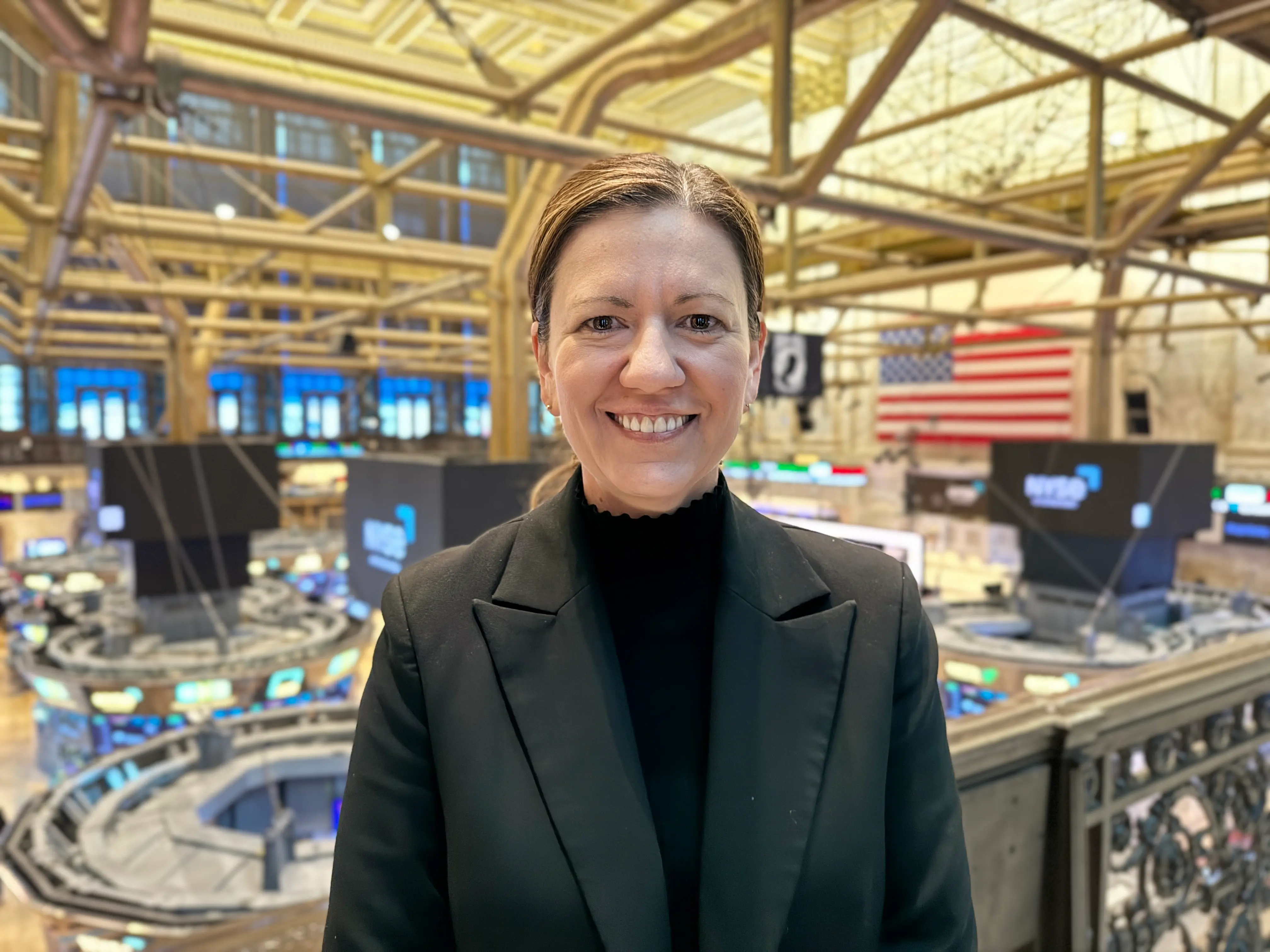
In this theCUBE Research conversation at the Tech Forward Innovator CUBEd Awards, Loreal Lynch of Jasper is chief marketing officer and outlines Jasper's journey from early generative artificial intelligence to the emerging agent era and the company's award-winning innovations.
Hosted by John Furrier of SiliconANGLE Media and theCUBE Research team, the discussion covers marketer use cases such as search visibility, personalization at scale, content engineering and the consolidation of MarTech driven by AI.
Key takeaways include the shift from prompt-driven workflows to goal-driven agents and the need to codify brand architecture and governance to ensure consistent messaging. Lynch explains that governance layers that combine brand voice, audience nuance and data connectors are essential to scale agents effectively and deliver ROI through cost reduction, faster campaign velocity, market expansion and higher engagement. The conversation offers practical insights for marketing leaders, MarTech professionals and product teams applying AI to content and customer experience.
Forgot Password
Almost there!
We just sent you a verification email. Please verify your account to gain access to
theCUBEd Awards. If you don’t think you received an email check your
spam folder.
In order to sign in, enter the email address you used to registered for the event. Once completed, you will receive an email with a verification link. Open this link to automatically sign into the site.
Register For theCUBEd Awards
Please fill out the information below. You will recieve an email with a verification link confirming your registration. Click the link to automatically sign into the site.
You’re almost there!
We just sent you a verification email. Please click the verification button in the email. Once your email address is verified, you will have full access to all event content for theCUBEd Awards.
I want my badge and interests to be visible to all attendees.
Checking this box will display your presense on the attendees list, view your profile and allow other attendees to contact you via 1-1 chat. Read the Privacy Policy. At any time, you can choose to disable this preference.
Select your Interests!
add
Upload your photo
Uploading..
OR
Connect via Twitter
Connect via Linkedin
EDIT PASSWORD
Share
Forgot Password
Almost there!
We just sent you a verification email. Please verify your account to gain access to
theCUBEd Awards. If you don’t think you received an email check your
spam folder.
In order to sign in, enter the email address you used to registered for the event. Once completed, you will receive an email with a verification link. Open this link to automatically sign into the site.
Sign in to gain access to theCUBEd Awards
Please sign in with LinkedIn to continue to theCUBEd Awards. Signing in with LinkedIn ensures a professional environment.
In this theCUBE Research conversation at the Tech Forward Innovator CUBEd Awards, Loreal Lynch of Jasper is chief marketing officer and outlines Jasper's journey from early generative artificial intelligence to the emerging agent era and the company's award-winning innovations.
Hosted by John Furrier of SiliconANGLE Media and theCUBE Research team, the discussion covers marketer use cases such as search visibility, personalization at scale, content engineering and the consolidation of MarTech driven by AI.
Key takeaways include the shift from pr...Read more
>> And welcome back to the Cube. I'm John Fur, your host here at our NYSE Studio. Of course, we have our Palo Alto Studio connecting Silicon Valley and Wall Street. This is a special cube conversation highlighting the Tech Forward Innovator Cubed Awards. A winner here. Jasper has won the most innovative company as part of the Cube, was one of our most prestigious titles. L'Oreal Lynch is the CMO here. Melanie, the founder's been on before. Great to see you. Thanks for coming in. Congratulations on the Tech Forward. Thank, >> Thank you so much. We're excited. Thanks for having me, John. So, Jasper >> Was one of the early companies pioneering ai. Generative AI before, right? When the transformer paper came out, right? Right after. But really on the front end of the wave, the frontier of the models. And now everybody's doing it. It's like, it's one of those things where it's transitioned. Generative AI era is over. Now we're in the A agent era, so the infrastructure's getting stronger. We're seeing all the tokens being used as, you know, recruiting engineers, having a budget for tokens. Just the innovation is off the charts. Okay, so first adopters were marketers because the first generation was, you know, chat GPT. And the obvious thing there was, Hey, make my stuff look better. So you guys were on that front end. So what are CMOs doing right now as you guys look at your roadmap and your, and your, your path? What is the, what are some of the use cases? What are some of the things they're thinking about? Yeah, >> So yeah, you're right. Five years in, in AI land is actually ancient. And so we've been there from the start and we've evolved right along with the market. So we've seen that our customers use cases, the CMO and marketing use cases evolve, have evolved. Similarly, I think in the early days it was, you know, you prompt, you get an output. So like you mentioned content creation, you put in a prompt, someone can, you know, AI can write you an email. Then we kind of saw it evolving more into scaled use cases. So rather than, you know, I can use AI to write me one optimized blog posts at a time, it became I can use AI to rewrite 500 blog posts at a time that are no longer getting traffic. I think now what we're seeing it move into, as you talk about the agent era is no longer even needing to prompt for scale. But the AI prompts you, so the agent actually says to you and monitors your website and says, your performance is decaying. I've gone ahead and rewritten these for you while you check, take a look and make sure that everything looks good. So that's kind of how we've seen the evolution. So I did start off with one use case, which is I think top of mind for every CMO right now, which is search visibility, especially AI search. That's really, it's a board level priority. I think it's a little bit of a crisis right now. Everyone is trying to wrap their heads around. I think that's one of our top use cases. I think the second one is probably personalization. Personalization at scale is something that's been promised to marketers for the last decade with the, you know, CDPs and, and customer data that's available. But until you really have gen gen ai, you can't synthesize the right message Yeah. At that right time. And so I think that's unlocking a lot as well. >> You know, it's interesting also about Jasper's history as we've been following the company since the beginning, is you've at the crossroads of the SaaS era and the AI native era. In fact, I just wrote a post this morning because Kub Con and CNCF links found is having their European version of cloud native, and the post was cloud native meet AI native. And so you have the cloud world now coming together with the AI world and still the, the theme there is developers are, are thirsty for more. There's a huge gap in terms of the cloud native conversion to ai. So that's kind of on the infrastructure side, but at the same time, the AI native developers aren't the same as say, a cloud native cloud developer because it's democratized a bit. So you have a lot of people who can not vibe code, but actually code. So now the game's changed a little bit. What's your reaction to that? Because that seems to be, you know, some marketer could be like, Hey, I didn't go to computer science, I didn't get a computer science degree, but I'd love to consolidate the lists. I'd love to consolidate the campaigns we do. Yeah. Talk about that piece of it. We >> Do, we see a role emerging within the marketing organization that we're actually championing. It's called the content engineer. You have the chops required to put good messaging together, good narrative, you know, the, the, but at the same time, you do need to understand the process. And what we, we really index on is like these people need to be systems thinkers. And historically, if you think about the role of a marketer, we haven't really been systems thinkers. We've been focused on outputs. You need to ship the campaign, you need to ship the piece of content, you need to ship the website, the webpage. And now with ai, it's causing people to think about, I don't need to ship the campaign, I need to ship the system that ships multiple campaigns and can automate that process. And so there is a role that's emerging within the marketing organization to your point on kind of agent building and the tools being available to stitch all those systems together and think about what is required to build that system. And so we call it the content engineer. I've heard of creative engineers Yeah. As well. But yes, it's, it's absolutely needed. >> The media maestro, we used to call that when we were Yes. Developing our cloud. I gotta ask you on that, on that point, because I think the, the buzz I think for the past year has been the forward deployed engineer. Yep. Which is the image of a engineer out in the front lines. But you're talking about something different. Yep. You talking about a business person. It is, it's a business person. And, and that's a dynamic. And the other dynamic I want to get your thoughts on relative to that is it's come more complex as you mentioned, system thinking. The old days was create a landing page. Yep. Get an email address, send them out. It's an almost siloed processes. Exactly. Take us through that because you now I got the, the shift to the forward deployed engineers, now the content engineer. Yep. And you got this, there's a lot of things going on in marketing. It's not omnichannel, it's all channels. So there's like a, a marketing transition, your thoughts. >> And it is, it is interesting because now every marketer has the tools available to them to be able to use AI and really to build agents. And so what we actually see is that agent operation, or sorry, agent adoption is outpacing AI agent operations. And what I mean by that is that, that there's actually a proliferation of agents across the marketing team. So the challenge is no longer adoption. The bottleneck has now moved into the governance of all of these agents that are happening. Because if they're all, you know, trained on different data, if they are all, you know, saying different things, it can lead to a lot of inconsistency when it comes to your marketing, your messaging, the impact you're having. Which is why really a lot of teams are not getting to that like ROI and you know, are they actually driving revenue at the end of the day? 'cause that's what your job is as, as a marketer. And so the role of this content engineer or the systems thinker within the team is to think about how do you govern all of those? How do you make sure that they all are applying the same standards that they're, you know, have your brand voice, that they have all your brand intelligent, that you, they're, they have the right company data that they're accessing. And that's become a hugely important part of making sure agents are successful. >> You know, the folks that are in marketing, and certainly you'll appreciate this about eight years ago, the big buzz, even before I go back a decade, say 10 years ago, 10, eight years ago, MarTech stack the picture of all the vendors that we're selling into the web 2.0 cloud era. How has that changed? >> Yeah, we see a lot of consolidation happening, I think as agents are available. Yeah. If you think of a lot of, you know, you talked about SAS SaaS tools, many of them, particularly in MarTech, were built for humans. They're, they're interfaces that allow humans to orchestrate journeys. And humans don't need to orchestrate the journeys anymore. Now, agents can do that. Agents can get access to the data and they can determine when to send an email and what to say. And so that's something that we see, you know, as kind of pervasive across the stack today. And I think every CMO is also looking on how to cut costs and, and immediately when you wanna cut costs, you go to your stack. Do we really need all these tools? And AI is making it possible to be able to consolidate there. >> That's a great point about the tools consolidation. Let's talk about the roles. Because now you have agents open clause to all the rage, the fastest growing developer, open source developer project in history. Everyone's going crazy. Still some security issues, but you know, there's Mac Mini and you look at your local stuff. But it's, it's a path to what we see what replaces from a work standpoint. 'cause one the velocity's increased, consolidate stacks, make recommendations, and what to build the old days of marketing was you create content, you market that to the customer, track everything, heavy analytics, what does agents do to the process and that the humans have to adjust to. Because my thesis is the jobs don't necessarily go away. Maybe some mundane jobs go away. The the grunt work, the toil, the undated heavy lifting, but I think it shifts to a new skill. Yep. Content engineer, skill and or curator. Yep. Or what is that skill? What happens to the velocity as agents proliferate? What is the new superpower? >> Yeah. Everyone's talking about orchestration, but what exactly does that look like? Right. The, the analogy we use is that it used to be that marketers were doing the homework and now they're grading the homework. And so, you know, I think one of the skills that's really emerging is, I don't know, a couple months ago if you, if you saw this, but all over my LinkedIn feed, people were talking about storytellers, the role of the storyteller or narrative. And apparently on LinkedIn job postings over the last year for marketers with the word storytelling in it doubled. I think you really need to have that narrative architecture in a good spot in order for the agents to be able to scale the content that you're creating and the marketing campaigns and all of that. Because if that's not tight, then it's just gonna create chaos. And so I think the skill becomes, you know, understanding really well those narrative and those messaging chops. It's almost, it's interesting because marketing for years has moved in the direction of having a lot of specialists. You know, you have someone who focuses on every channel. You have an your Instagram person or you have your, you know, your Facebook person. And, and now we're kinda moving back to world of generalists where you just need to have those core marketing chops. Like good messaging, competitive differentiation and being able to encode that into the >> Ai. Yeah. What I think is clever is that you used the word orchestration in the context of kind of defining it, but you mentioned having a brand architecture narrative and all the agents success stories that I've seen and interviewed founders and companies. The one common thread of all the successful revenue generating, not cost saving, there's plenty of examples there. Yeah. But the revenue generating side is they did their work on governance. Yep. And it's, and there's two types of conversations. The nerdy conversation of okay, identity, we're tracking, making sure we do our, our homework and gov. When they do governance, the agents scale better, they can attack the workflows, deal with new use cases. Yep. Yep. Talk about the role of governance from a brand perspective. Because you mentioned brand voice, you got artifacts, you have a lot of content, you do all your claims. Take me through the governance piece for marketing. What does that mean? Yeah. How should marketers think about governance as a competitive advantage? >> Yeah. So at Jasper we have a layer of our platform that we call our IQ layer. And that's kind of the governance and intelligence layer. And so it has some of the things you mentioned. It has, you know, brand voice. It has your style guide at a, at a very basic level. But it also layers in things like audiences. Because the way that you, you know, for example, if you are a, an e-commerce marketer, we have a lot of big retailers on our platform. The way that you might talk to Gen Z to describe a product is different than the way that you would talk to a boomer to describe a product. So it understands kind of the nuances of not just the brand voice, but also how specifically to talk about a product. So that's another thing we have in there. It also connects to all of your data sources. And so it knows your product truths. So we have customers that are connecting into, you know, their data warehouses or their customer data platforms so that you can pull that into the generations and the campaigns that are created. So that's kind of what we mean by governance is there's kind of the intelligence piece, understanding all of the data, but the claims that, you know, the positioning, how you say it. And I think that's why actually some of our, our largest growth segments are actually very highly regulated industries. Pharmaceutical and financial services. And it's because they're so highly regulated and they need to be very specific with what they say and exactly how they say it. And so that's what we mean by governance when it comes to marketing. Well >> They have both the regulated data tagging a hundred percent they did their data homework. Yep. For the wrong reasons. For the right reasons now. And they gotta be particular about what they claim. Exactly. So that's what you're getting at. Yep. So that's a standard governance layer. Yep. Okay. So I'm a marketer, I'm A CMO. The old days was, oh, I gotta hire a firm, we're gonna do a repositioning. Yep. Positioning exercise, maybe change the logo, all those things, you know, that were manual. How does that role change? 'cause what you're getting at is if a cm, what you're saying is that CMO should nail their brand architecture. Yep, >> Exactly. >> Lock it in, codify it, and then the agents could help and make recommendations. If they don't do that, what's the consequences? So take us through that exercise because we all know the old school method are changing. Yeah. >> Right now that's still in a lot of cases being done by humans because I don't think people have moved to the point where they understand that agents can do this now. But I think it is putting in the, you know, the brand architecture, your kind of, your strategy, your brief. Really the important thing about agent execution is the goals. I think we've moved from prompt driven to goal driven when it comes to agents. So if you say, Hey, my goal is to, you know, reposition or to change brand perception and here's how we plan to measure it. And here's the brief from there, the agents can really take over and they can say, you know, we have these role-based agents within the Jasper platform. So we can say, okay, what does that mean from an organic traffic perspective with your organic growth agent? What does that mean with your lifecycle marketing agent? And they can kind of put the, put the programs together. But yeah, it is getting that brand architecture right from the start. >> Let's talk about ROI. 'cause one of the things that markets always been tasked with is show me how sales were impacted or did it move the needle? Yes. And markets have been very analytical and they've had many best practices in analytics dashboards. How has that changed with the generat of AI and now agents? Because there's a lot more channels, a lot more. It's almost truly one-to-one now. Yeah. How should CMOs and markets think about that piece? >> Yeah, we think of it in three ways. The first one is a little bit table stakes today, which you mentioned, which is cost reduction. But oftentimes that's the easiest place to see it because you don't need to hire that agency. You don't need to hire those additional resources. And so you can do more with the same or with even fewer resources in a lot of cases. But I think the second area where we're seeing a, a lot of traction with respect to measurement is what more you can do and how much faster you can do it. So I, you know, it used to take me three months, 12 weeks to get a campaign in market. Now I can get it to market in two weeks. And that allows me to do four more campaigns a quarter than I used to do. And then you can tie the revenue from those campaigns to, to your AI efforts. And the other thing is market expansion. So we have a customer, for example, that had no bodies on the ground in Australia and they had a new product launch in Australia and they needed to get it to market quickly. They were able to use Jasper to do that in two weeks to launch a localized campaign in Australia. And so again, they could kind of contribute that to an agent or to the, you know, to their agentic efforts. And I think the last one that you alluded to when it comes to more personalization is the increase in engagement. So we have some customers that, you know, iHeart Media is one that is using Jasper to automatically respond in a personalized fashion to any emails that come in to their website. And so not only are they able to respond faster, it's almost immediate where it would've taken a human, you know, several minutes, two hours to be able to respond to that. They're able to respond immediately. And it's so personalized because they're able to enrich all of the context, all of the history of that contact and put together kind of the most personalized, personalized, synthesized email. And so we, we see like three x engagement on things like that. So those are some of the ways that we see our marketers tracking >> Our lives. I love the campaign velocity. I think that is actually, it's a big one, a huge game. And that brings up an interesting point. So at NVIDIA's GTC conference last week, we were there with our team. And one conversation that struck me, which was kind of off the radar but kind of makes sense was Nvidia is partnering with some of the marketing vendors like Adobe's of the world. And they're using omniverse, which is a simulation platform for like manufacturing. And they're going at the angle of, it's almost say my words killing the AB test. But you could simulate a lot of stuff. Oh yeah. Take me through your thoughts there, because I think that is coming in super fast. 'cause the agents can be trained. Yeah. But now you can do not an ab test this or that you could do everything. Yeah. I mean, yeah, that's, and what's a holy grail situation? We do. >> We have, yeah. We have customers that are doing a lot of testing of focus groups, like with synthetic audiences and using agents to do that. You know, like we were talking to a couple of CPG customers last week that are doing testing of different product flavors. It was like candy, you know, candy company testing of different product flavors and using synthetic focus groups to be able to do that testing faster so that they can get to market faster. 'cause to your point, faster means more. Yeah. So you can get that product fast and the, the faster you get that product to market, the more money it is, you know, top line. So that's your revenue growth story. >> Well first of all, you guys we're of the Tech Forward award. So one of the criteria is, is obviously great company, good product, but the use cases are highlighted. Yep. What are some of the use cases that you can share that might not be obvious to folks out there? Is it the behavior of the users? Is it the actions? What's some of the things that, that, that are coming out? >> Yeah, I mean, I think some of my favorite use cases, you know, I've, I've alluded to a little bit, but we have a customer in commercial real estate, Cushman in Wakefield. They have these research reports that they need to scale that cover each of their markets. And so when it comes to kind of the point on, you know, being able to do more with less, they were only able to service about half of the markets that they have to cover because it, it's these long complex, long form research reports. But now using agents, they're able to service all of their markets Yeah. With the same number of resources without hiring more. I think another story is, you know, this iHeart Media one, with the personalization, they're able to automate that personalized email response. And it's, it's an always on system. So it's not a prompt yields and output, it's every time something comes into the CRM, the agent activates and it goes and responds to it and personalized. And so that's why they've been able to see that three x engagement that they're getting from >> Those. Laurie, I want to ask you how you guys see the, one of the, I won't say blowbacks or consequences of ai, it's more of a feature, not a bug, but is that the explosion of Hot takes? Everyone now can use AI and take an earnings report, put it in, have a hot take. So I, when I talk to marketers, I hear three things. We love original content. Yeah. Authentic and trusted content, not the vanilla tsunami. Yes. Yes. What are your thoughts on that? How does Jasper address that? Because that's becoming, I mean, it's not well talked about in the mainstream, but there's a lot of vanilla content, AI slot, a lot of sloth, a lot of, a lot of copying, a lot of reuse mix remixing. We >> Do, we see that a lot. And actually we have our own internal kind of product telemetry data where we can actually test and see, 'cause I mentioned earlier that IQ layer where we have sort of like the governance and you put all the, the intelligence in and that really makes a huge difference with respect to the quality of your content. And so we can actually see like this content, you know, this, these, these this cohort of customers that just is not using their iq Yeah. Or is not using it. And the content is, to your point, it's vanilla, right? Yeah. But you can then see the ones that are really aggressively using iq, just packing it with data, you know, using connectors to pull in all, all of the data warehouses and all that. And that we see a huge difference in quality. And we actually check, check the, we track the performance of the, of the content and how, how it performs. We can see that. >> Well, my final question for you is, you know, you guys have been transitioning with the market, which is great. You, you won the award. We had the old expression back in the day, when you wanna change the picture, get put a new Polaroid out there. Now it's Instagram. What's the Instagram image that you'd like to share about Jasper, who you guys are as a company, how you've evolved where you are today? We know where you've been, you've been riding the wave on the frontier. Yeah. What is Jasper? What image would you like to share >> In terms of an image? I mean, I think what we're really building towards is agents have been very bottom up in terms of the way that they've been adopted and they've been more like co-pilots or assistants. What we are trying to build towards and work with our customers on is that agents, you know, operate alongside you. So they're, they're teammates and we see that coming to fruition more and more across teams. It's just a different way of thinking about it. Yeah. Well, >> You guys done a great congratulations. Thank you. Thank you so much on the Tech Forward Award. I'm John Bert, the Cube highlighting the tech forward innovating winner. They've been Cube The Cubed Award, the most coveted award on the program. Thanks for watching.