Reggie Townsend, VP of the data ethics practice at SAS Institute, sits down with Rebecca Knight of theCUBE to discuss SAS’s recognition for its "Innovative Responsible AI Initiative" at theCUBEd Awards. The conversation centers on SAS’s leadership in ethical AI and the company’s commitment to advancing technology responsibly.
Townsend details SAS’ approach to embedding data ethics into its AI initiatives, emphasizing transparency, fairness and the broader societal implications of AI adoption. Together, Knight and Townsend explore how SAS operationalizes responsible AI, with Townsend underscoring the importance of human-centric strategies and strong risk management practices.
SAS’s initiatives are making a tangible impact — particularly in healthcare — where ethical AI practices are being applied to improve patient care and support better decision-making, according to Townsend. Knight draws attention to these real-world applications, showcasing SAS’s role in setting a standard for ethical innovation across industries.
Find more SiliconANGLE news and analysis https://siliconangle.com/
Follow theCUBE's wall-to-wall event coverage https://siliconangle.com/events/
Learn about the latest theCUBE events https://www.thecube.net/
00:00 - Intro
00:06 - Championing Responsible Innovation: Reggie Townsend's Impact on Tech Ethics
02:33 - Ethical and Human-Centric Strategies for AI Development
06:32 - Real-Life Examples of Responsible AI: Healthcare
08:52 - Evaluating the Wisdom and Impact of Responsible AI
13:32 - Concluding Insights: Navigating the Future of AI and Beyond
#theCUBE #CUBEdAwards25 #SAS #theCUBEresearch #AI
Forgot Password
Almost there!
We just sent you a verification email. Please verify your account to gain access to
theCUBEd Awards. If you don’t think you received an email check your
spam folder.
In order to sign in, enter the email address you used to registered for the event. Once completed, you will receive an email with a verification link. Open this link to automatically sign into the site.
Register For theCUBEd Awards
Please fill out the information below. You will recieve an email with a verification link confirming your registration. Click the link to automatically sign into the site.
You’re almost there!
We just sent you a verification email. Please click the verification button in the email. Once your email address is verified, you will have full access to all event content for theCUBEd Awards.
I want my badge and interests to be visible to all attendees.
Checking this box will display your presense on the attendees list, view your profile and allow other attendees to contact you via 1-1 chat. Read the Privacy Policy. At any time, you can choose to disable this preference.
Select your Interests!
add
Upload your photo
Uploading..
OR
Connect via Twitter
Connect via Linkedin
EDIT PASSWORD
Share
Forgot Password
Almost there!
We just sent you a verification email. Please verify your account to gain access to
theCUBEd Awards. If you don’t think you received an email check your
spam folder.
In order to sign in, enter the email address you used to registered for the event. Once completed, you will receive an email with a verification link. Open this link to automatically sign into the site.
Sign in to gain access to theCUBEd Awards
Please sign in with LinkedIn to continue to theCUBEd Awards. Signing in with LinkedIn ensures a professional environment.
Are you sure you want to remove access rights for this user?
Details
Manage Access
email address
Community Invitation
Reggie Townsend, SAS (Innovative Responsible AI Initiative)
Reggie Townsend, VP of the data ethics practice at SAS Institute, sits down with Rebecca Knight of theCUBE to discuss SAS’s recognition for its "Innovative Responsible AI Initiative" at theCUBEd Awards. The conversation centers on SAS’s leadership in ethical AI and the company’s commitment to advancing technology responsibly.
Townsend details SAS’ approach to embedding data ethics into its AI initiatives, emphasizing transparency, fairness and the broader societal implications of AI adoption. Together, Knight and Townsend explore how SAS operationalizes responsible AI, with Townsend underscoring the importance of human-centric strategies and strong risk management practices.
SAS’s initiatives are making a tangible impact — particularly in healthcare — where ethical AI practices are being applied to improve patient care and support better decision-making, according to Townsend. Knight draws attention to these real-world applications, showcasing SAS’s role in setting a standard for ethical innovation across industries.
Find more SiliconANGLE news and analysis https://siliconangle.com/
Follow theCUBE's wall-to-wall event coverage https://siliconangle.com/events/
Learn about the latest theCUBE events https://www.thecube.net/
00:00 - Intro
00:06 - Championing Responsible Innovation: Reggie Townsend's Impact on Tech Ethics
02:33 - Ethical and Human-Centric Strategies for AI Development
06:32 - Real-Life Examples of Responsible AI: Healthcare
08:52 - Evaluating the Wisdom and Impact of Responsible AI
13:32 - Concluding Insights: Navigating the Future of AI and Beyond
#theCUBE #CUBEdAwards25 #SAS #theCUBEresearch #AI
Reggie Townsend, SAS (Innovative Responsible AI Initiative)
Reggie Townsend
Director, SAS Data Ethics PracticeSAS
Reggie Townsend, VP of the data ethics practice at SAS Institute, sits down with Rebecca Knight of theCUBE to discuss SAS’s recognition for its "Innovative Responsible AI Initiative" at theCUBEd Awards. The conversation centers on SAS’s leadership in ethical AI and the company’s commitment to advancing technology responsibly.
Townsend details SAS’ approach to embedding data ethics into its AI initiatives, emphasizing transparency, fairness and the broader societal implications of AI adoption. Together, Knight and Townsend explore how SAS operationalize...Read more
exploreKeep Exploring
What is the focus of the role in ensuring ethical AI practices and accountability within a company?add
What are the six data ethics principles that are focused on, with a particular emphasis on human-centricity?add
What are some developments in AI regulatory perspectives around the world?add
Reggie Townsend, SAS (Innovative Responsible AI Initiative)
search
Rebecca Knight
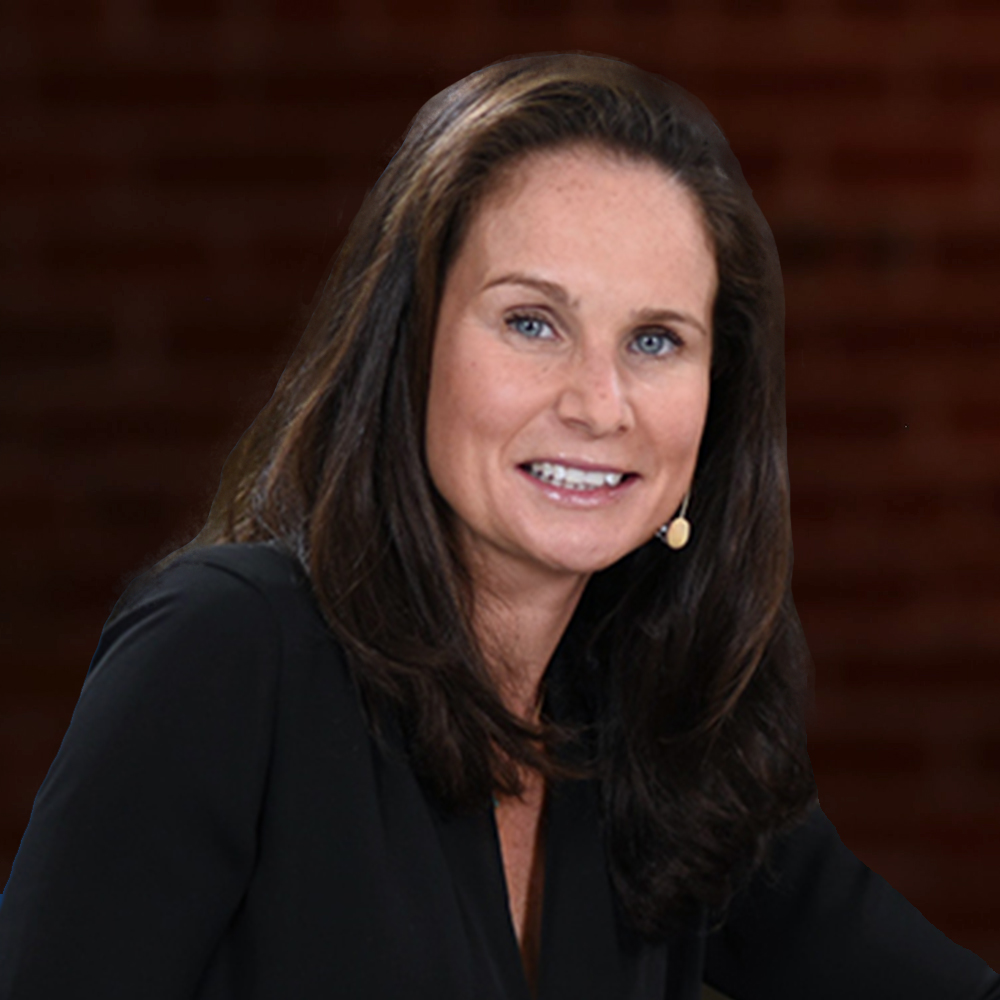
>> Hello everyone, and welcome to theCube's Tech Innovation Cubed Awards. I'm your host, Rebecca Knight, and we are celebrating the winners of our inaugural program that showcases the incredible creativity and ingenuity that is taking place across the technology landscape. Today, we are joined by Reggie Townsend. He is the Vice President of Data Ethics Practice at SAS, and the winner of theCube's Award for Responsible Innovation. So congrats and welcome, Reggie.
Reggie Townsend
>> Thank you. Thank you for having me. And thank you for the recognition.
Rebecca Knight
>> So this award recognizes a company that successfully has operationalized ethical AI practices and that demonstrates leadership in fostering accuracy, transparency, fairness, and accountability in AI. Why don't you start out by telling our viewers a little bit about your role and your approach to your role, particularly as AI evolves and becomes much more mainstream?
Reggie Townsend
>> So my role is really focused, I like to say, as a side remark and shorthand, my job is to make sure wherever our software shows up that we don't hurt people. But moreover, to make sure that wherever our software shows up that we actually help people to thrive. So that's the thrust of the practice. Now, I played a couple of different roles. One is leading that practice with the focus on making sure that we've got global consistency and coordination around all of these kinds of efforts. We want to continue to demonstrate ourselves worthy of trust, worthy of the trust of our customers, our governments, our partners, and the general public as well. And so that is largely our charge.
Rebecca Knight
>> So do no harm and also do some good.
Reggie Townsend
>> That's the general idea. And I might say that oftentimes when harm is experienced it's a result of unintended consequence and so we want to try to anticipate some of the unintended consequences and get out in front of those as best we can. So that's kind of that role. Internally, I help to shepherd our AI oversight activities as well. So everything from what we buy to what we sell as it relates to AI and making sure that we've got the adequate structures in place internally to ensure that we're, again, doing our level best to keep out of harm's way.
Rebecca Knight
>> One of the things that you have said in the past is that when you are evaluating AI models, you're not asking, could we? But rather you're asking, should we? I really liked that, that really resonated. How would you describe your core principles and values that shape SAS's commitment to responsible AI?
Reggie Townsend
>> Yeah, so we have six what we call data ethics principles. The first one that we really focus on, and they're in no particular order here, but human-centricity. Which we talk about human agency, wellbeing, and equity and with an idea of making sure that when we are in a situation we have to make tough calls about whether we are going to deploy a certain capability into a certain part of the world, as an example, or whether we're going to sell to a certain kind of customer for a certain type of purpose, we really want to examine really closely how are the humans centered in all of this? And importantly, when we think about this we also like to think about the most vulnerable in the chain of events. It's easy to conjure up images of what vulnerable people look like, but the reality is we're all vulnerable to something at some point in time. And so, we like to examine in a banking scenario who's the potential most vulnerable when we're making loan decisions? In a fraud example, who's the potential most vulnerable when we're declining credit to individuals? And so we like to think about those kinds of things. Now, oftentimes those are decisions that our customers ultimately have to make, but as a platform provider of these capabilities we want to help counsel them. We want to help them get to points at which they are also proving themselves trustworthy. And so we just see that as a part of our obligation.
Rebecca Knight
>> So talking more about this human-centered approach to innovation and making sure that these AI systems are developed and implemented in ways that are reducing bias while also prioritizing privacy, security and, as you said yourself, protecting the most vulnerable, how do you make sure that you are working to make all of that happen?
Reggie Townsend
>> Well, again, there are no absolute assurances here. But what we're trying to do is anticipate as best we can what the potential primary, secondary, and tertiary effects of our work might be. There still, even after all of that examination, there still are potential harms. But what's important in this space is that you put yourself in the best possible position to anticipate those potential harms and then you put measures for remediation in place. So if there is harm, then it's small, right? You're able to encapsulate it and hopefully have some means for redress. Do we get it right all the time? I'm sure not. I'm sure we don't, right? But this is the effort that we have underway. And it's important that we do so in a way that, again, is consistent and coordinated around the globe. Because importantly here, Rebecca, we're going to make certain decisions, we're a US-based company but we have presence literally around the world, and there are certain cultural norms and values that might exist in the US or in the West that may not be consistent with the global South or D different countries throughout the world. And so we need to take all of that into account and make sure that we, at the end of the day, are doing things I think that are consistent with the law and then also certainly consistent with our principles and values
Rebecca Knight
>> And as you said, also culturally appropriate too.
Reggie Townsend
>> Culturally appropriate. You got it. Yeah.
Rebecca Knight
>> Yeah. And I want to get into all of that a little bit more later in this interview. But before we do, can you share with our viewers some of the real life examples of how you are demonstrating leadership and responsible AI in terms of your offerings and solutions and services?
Reggie Townsend
>> Yeah. So, one of the things that I'll point to, it's easy to talk about the risk mitigation stuff, but I really like to talk about the area where we're seeing real rewards because of our focus in this area. So one of those would be in healthcare systems. So we work with a couple of different healthcare providers. One in particular I'll highlight, Erasmus Medical Center over in Amsterdam, or Rotterdam technically in the Netherlands. And we're working with them to put algorithms in the emergency room to help them evaluate patients and when patients are in a condition in which they can go home. So that sounds really simple, but you think about it like this: they're confronted with the same sort of supply and demand issues like the rest of the world, which is they've got more patients than they have doctors. And you can imagine in an emergency room setting how complicated that might be for a lot of patients. And so it's important that particularly after patients go through certain types of surgery and they're in a critical care setting that we're in the best possible position to give them the proper attention that they need, but at the same time put them in a position to get out of the hospital where they can actually go and heal well. And so where some of-
Rebecca Knight
>> And where doctors can also save more lives potentially.
Reggie Townsend
>> Exactly. Because you need to free up beds. And so putting the docs in a position to be augmented, if you will, with the AI gives them some intelligence to know that Rebecca is healing at a slightly faster rate so she can get out. Even if the evidence-based approach suggests seven days, she's at the condition where she can leave at five days, so let's get her out. And so it's using some of those capabilities with Erasmus that I think has proven to be very beneficial in terms of getting patients out of the door more quickly, saving costs for their insurance systems, as well as getting those patients in a position where they can heal much more quickly.
Rebecca Knight
>> Okay. And what about the idea, something that SAS has talked about is leaning into AI as wise counsel?
Reggie Townsend
>> Yeah. So the idea there is that we will soon be a 50-year-old company, and so we've seen a lot of cycles. We were there in the big drivers behind the big data movement. And when you think about AI, really it's a compilation of a few things. It's about big data coming together with cloud computing and whatnot, and developing models in those clouds to be able to then deploy some measure of insights to the world. And we've been a part of this journey for a really long time. We've gotten some bruises along the way and we've gotten smart along the way around some things as well. And so the thought here is that it's one thing to ... And this is certainly not to disparage younger companies. We need younger companies. But oftentimes younger companies are going to learn along the way as most young companies do.
Rebecca Knight
>> And like young people do.
Reggie Townsend
>> Sure. And so there's nothing wrong with that. However, just like young people sometimes you need wiser people around you who have applied knowledge over time. And so that's all that statement was about. I think we have a lot of applied knowledge at this point in our journey and we look forward to the next 50 years of applying more knowledge.
Rebecca Knight
>> One of the things that a lot of technology companies and executives are grappling with, and something that feels opaque to the rest of us is how you measure the effectiveness of these initiatives in terms of how do you know when it's working?
Reggie Townsend
>> Yeah, so that's a great question. I think it's important that particularly in a business context, that quantifying based on dollars and cents has its place. And we would be foolish to not think about how the data ethics practice lines up with the bottom line. That said, the charge from our executive leadership team from the very start has been, "Let's not let that be our primary focus. We know that there are some things that we have to do in order to be a good corporate steward in order to be a good partner and stakeholder, in the communities in which we serve. So let's let that be the primary emphasis. And then secondarily we can understand how we hit the bottom line."
Now, important to that is that gave us the time and space to think about some of these issues on a more, if I can use the term, moralistic perspective. So it allowed us to consider what really does responsible innovation mean? So we get a chance to define it as our duty to care. And so how do we express that duty to care in the marketplace? Well, that then informed some development that we did. So we did a lot of development around this idea of model cards. So model cards are just, real briefly, I won't go technical geek on you here.
Rebecca Knight
>> Thank you.
Reggie Townsend
>> But the idea is that every AI model needs to be evaluated to know whether or not it is continuing to perform consistent with the original expectations. We'll just leave it there. And so, what model cards are, they're sort of like a nutrition label for your food. It allows you to see how much salt or sugar or fat content. Well, the same is true with a model, allows you to see if there's model drift or if it's performing fairly. Those sorts of things are really important when it comes to AI. And so based on that duty to care, we said, "Well, here's an area where we've got some experience." We can build something we can put it into our platform, and then we can propagate that out and other people can use that same model card. So that yin and yang, if you will, was really important for us. And it has proven so far to be a worthwhile business endeavor. And let me say this: I don't think there's anything wrong with taking a view as it relates to responsible innovation and trying to map it to profitability. I think we all should recognize that you can do well and do good at the same time. Those two things are not counter to one another.
Rebecca Knight
>> Not mutually exclusive. So finally, you've said that you're nearly a 50-year-old company, you've seen a lot. This is not your first rodeo. You've been around, seen some cycles. I want to ask you about what's next, particularly in this questionable and uncertain regulatory environment. One of the things you've said in the past is that it's not enough for SAS to get responsible innovation right. Because if others don't and they get it wrong, everyone loses. So it really matters to be leaders in this area and luminaries in this area and setting standards and benchmarks. How do you think about that? And how do you make sense of what's taking place right now?
Reggie Townsend
>> Yeah. So there is some certainty from a AI regulatory perspective, particularly in Europe that we've got the EU AI Act. We see similar bodies of legislation, maybe not as comprehensive but popping up in Korea, in Japan. There's work going on in India, Canada. This is a global situation. And then certainly here in the US we've got fragmentation. We'll see states start to make certain movements. I think this is calling for a moment of self-governance, quite honestly, Rebecca. I think that while we all need to be able respond to our national call for regulation I think at the same time companies have an obligation, I'm going to put it on us. We have an obligation to be good stewards in our communities. And I think one thing we should not forget is that people still have a right to sue us if they are harmed, irrespective of what the regulation environment is like. And so it is only wise for a company, very much like we already do, we have risk management systems of all sorts, it's only wise as we start to adopt more artificial intelligence that we have some measure of managing the risk associated with artificial intelligence. But at the same time, what that governance allows companies to do is identify areas of competitive advantage that rest inside of that AI within their enterprises as well. So we've got to be able to see this not just as a moral imperative but as a market expectation as well, right? This is about marketability every bit as much as it is about acting on our "values."
Rebecca Knight
>> Excellent. Well, Reggie, thank you so much for coming on. And congratulations again on this award. Well deserved.
Reggie Townsend
>> Thank you so much.
Rebecca Knight
>> And thank you for tuning into this special segment of theCube's Tech Innovation Cube Awards. I'm your host, Rebecca Knight. Stay tuned for more.












 Rebecca Knight