Cube Host Stu Miniman (@stu) speaks with Brian Anderson at Winslow Technology Group Dell EMC Users Group at the Commonwealth Hotel in Boston MA
#DellEMC #theCUBE
https://siliconangle.com/2017/08/11/faculty-and-students-at-boston-university-dive-into-the-cloud-wtgusersgroup/
Faculty and students at Boston University dive into the cloud
Information technology managers at colleges and universities across the country often have to walk a fine line between long-tenured faculty who are reluctant to adopt new technologies and students who started using computers before they could even walk. Meeting the expectations of both groups is not easy, but at Boston University, the migration to cloud services has helped users find a happy medium.
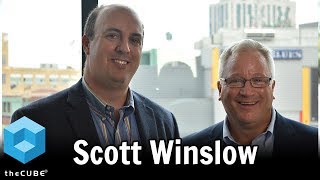
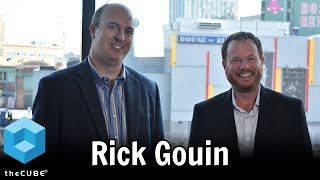
“We’re fighting the tide between what faculty want to do and their inertia versus what students are expecting when they walk in the door,” explained Brian Anderson (pictured, right), director of information technology at the Boston University College of Arts and Sciences.
Anderson stopped by theCUBE, SiliconANGLE’s mobile livestreaming studio, during the recent WTG Dell EMC Users’ Group event in Boston, Massachusetts. He spoke with host Stu Miniman (pictured, left) (@stu), and they discussed how the school uses cloud services for instruction and the need for easier manageability as the platform expands. (* Disclosure below.)
Transforming the chemistry lab experience
The school is already using cloud-based services for email and file storage, with a Dropbox implementation for faculty scheduled to take effect this year. The university is using the Dell XE series to provide virtual desktop infrastructure solutions for students, and approximately half of the students are on Blackboard Learn, a virtual learning and course management system, according to Anderson. One professor is seeking to transform the chemistry lab experience, providing students with hands-on learning without having to visit the lab room itself, he added.
“We have a lot of faculty that wants to use cloud solutions to teach. It’s a combination of what services can we take from on-campus, move much of it to the cloud and make it feasible financially,” Anderson stated.
The school currently hosts 10 Massively Open Online Courses per year. “They’re widely attended at the beginning and … every MOOC (participation) dwindles as the semester goes on,” Anderson said.
As the school moves steadily into a cloud services model, Anderson is looking for a service to provide “ease of manageability” for the various technologies under his umbrella. At the same time, he also expressed enthusiasm for the move toward hyperconvergence.
“That’s the future,” said Anderson “I think it’s going to be here a lot longer than people think.”
Watch the complete video interview below, and be sure to check out more of SiliconANGLE’s and theCUBE’s coverage of WTG Dell EMC Users’ Group. (* Disclosure: TheCUBE is a paid media partner for WTG Dell EMC Users Group. Neither Winslow Technology Group, the event sponsor, nor other sponsors have editorial influence on theCUBE or SiliconANGLE.)
Forgot Password
Almost there!
We just sent you a verification email. Please verify your account to gain access to
WTG & Dell EMC Users Group 2017. If you don’t think you received an email check your
spam folder.
In order to sign in, enter the email address you used to registered for the event. Once completed, you will receive an email with a verification link. Open this link to automatically sign into the site.
Register For WTG & Dell EMC Users Group 2017
Please fill out the information below. You will recieve an email with a verification link confirming your registration. Click the link to automatically sign into the site.
You’re almost there!
We just sent you a verification email. Please click the verification button in the email. Once your email address is verified, you will have full access to all event content for WTG & Dell EMC Users Group 2017.
I want my badge and interests to be visible to all attendees.
Checking this box will display your presense on the attendees list, view your profile and allow other attendees to contact you via 1-1 chat. Read the Privacy Policy. At any time, you can choose to disable this preference.
Select your Interests!
add
Upload your photo
Uploading..
OR
Connect via Twitter
Connect via Linkedin
EDIT PASSWORD
Share
Forgot Password
Almost there!
We just sent you a verification email. Please verify your account to gain access to
WTG & Dell EMC Users Group 2017. If you don’t think you received an email check your
spam folder.
In order to sign in, enter the email address you used to registered for the event. Once completed, you will receive an email with a verification link. Open this link to automatically sign into the site.
Sign in to gain access to WTG & Dell EMC Users Group 2017
Please sign in with LinkedIn to continue to WTG & Dell EMC Users Group 2017. Signing in with LinkedIn ensures a professional environment.
Are you sure you want to remove access rights for this user?
Details
Manage Access
email address
Community Invitation
Brian Anderson, Boston University | WTG & Dell EMC Users Group
Cube Host Stu Miniman (@stu) speaks with Brian Anderson at Winslow Technology Group Dell EMC Users Group at the Commonwealth Hotel in Boston MA
#DellEMC #theCUBE
https://siliconangle.com/2017/08/11/faculty-and-students-at-boston-university-dive-into-the-cloud-wtgusersgroup/
Faculty and students at Boston University dive into the cloud
Information technology managers at colleges and universities across the country often have to walk a fine line between long-tenured faculty who are reluctant to adopt new technologies and students who started using computers before they could even walk. Meeting the expectations of both groups is not easy, but at Boston University, the migration to cloud services has helped users find a happy medium.
“We’re fighting the tide between what faculty want to do and their inertia versus what students are expecting when they walk in the door,” explained Brian Anderson (pictured, right), director of information technology at the Boston University College of Arts and Sciences.
Anderson stopped by theCUBE, SiliconANGLE’s mobile livestreaming studio, during the recent WTG Dell EMC Users’ Group event in Boston, Massachusetts. He spoke with host Stu Miniman (pictured, left) (@stu), and they discussed how the school uses cloud services for instruction and the need for easier manageability as the platform expands. (* Disclosure below.)
Transforming the chemistry lab experience
The school is already using cloud-based services for email and file storage, with a Dropbox implementation for faculty scheduled to take effect this year. The university is using the Dell XE series to provide virtual desktop infrastructure solutions for students, and approximately half of the students are on Blackboard Learn, a virtual learning and course management system, according to Anderson. One professor is seeking to transform the chemistry lab experience, providing students with hands-on learning without having to visit the lab room itself, he added.
“We have a lot of faculty that wants to use cloud solutions to teach. It’s a combination of what services can we take from on-campus, move much of it to the cloud and make it feasible financially,” Anderson stated.
The school currently hosts 10 Massively Open Online Courses per year. “They’re widely attended at the beginning and … every MOOC (participation) dwindles as the semester goes on,” Anderson said.
As the school moves steadily into a cloud services model, Anderson is looking for a service to provide “ease of manageability” for the various technologies under his umbrella. At the same time, he also expressed enthusiasm for the move toward hyperconvergence.
“That’s the future,” said Anderson “I think it’s going to be here a lot longer than people think.”
Watch the complete video interview below, and be sure to check out more of SiliconANGLE’s and theCUBE’s coverage of WTG Dell EMC Users’ Group. (* Disclosure: TheCUBE is a paid media partner for WTG Dell EMC Users Group. Neither Winslow Technology Group, the event sponsor, nor other sponsors have editorial influence on theCUBE or SiliconANGLE.)