The upstream oil & gas industry (i.e. the exploration for and production of hydrocarbons) needs to reap the benefits of new technology to improve efficiency. Making more effective use of increasing amounts of collected data is on the verge of transforming the business.
Transformation through data analytics is equally relevant on both the operational and financial sides of the business.
On the upstream operational side: for decades now, we have been inventing new and increasingly sophisticated tools (both hardware and software) to generate new data types that extend the boundaries of geoscience knowledge, and allow us to understand our hydrocarbon reservoirs in ever increasing detail. Historically, we have processed only a fraction of the data collected, but that is changing. Now, among the most important criteria governing the efficiency of oil and gas companies are the hugely increased volume of data collected but also the variety, velocity and veracity of information that can be extracted from that data. That's data science! Data analytics as a discipline is now increasingly integrated within our upstream workflows in drilling, reservoir characterization and the actual production (extraction) of hydrocarbons in the most economically efficient ways possible. To this end, one goal is the development of an analytics platform that will perform a key role in increasing productivity through the simultaneous optimization of drilling planning and execution, the improvement of asset utilization and the overall reduction of non-productive time.
On the financial side: the oil and gas industry has a long history of being secretive and, as a result, judgment of the quality and accuracy of non-technical data has proved very difficult. In general, insufficient attention has been paid to addressing these challenges leading to unnecessary volatility in price movements through inadequate or conflicting data, and this volatility impacts decision-making within companies. In the information age, where markets react instantaneously to a multitude of data sources, it is time to understand better this key driver of our industry. Decision-enabling information is extremely critical to the efficient functioning of an industry that is driven by the signals coming from commercial markets. Understanding the quality and accuracy of that information through data science is a key enabler in filling a major gap currently preventing more effective management of oil and gas company assets.
Digital transformation, implying the transition from desktop to the cloud and mobile devices, easy access to information, new scalable online services and automated industrial workflows, is about to radically change the way we work in any industry (oil and gas, defense, transport, automotive, medicine, telecom, logistics, etc). This is no longer a trend, but a reality clearly demonstrated by the world's most valuable companies adopting expanded and enhanced data analytics in response to common drivers of operational efficiency, operational safety and accuracy of real-time decision-making. That's the promise of Big Data, to really understand the systems that make our technological industry. As you begin to understand the interactions of all the constituent components then you can build systems that are better and more effective at addressing the key industry drivers, irrespective of the industry. New technology is increasingly playing a huge new role. Data is the new oil!
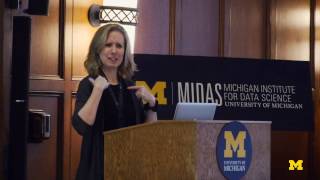
Dr. Gottlib-Zeh describes how data science is transforming the oil and gas industry for better planning and efficiency, for both drilling and production.
Forgot Password
Almost there!
We just sent you a verification email. Please verify your account to gain access to
Stanford Women in Data Science (WiDS) 2017. If you don’t think you received an email check your
spam folder.
Sign in to Stanford Women in Data Science (WiDS) 2017.
In order to sign in, enter the email address you used to registered for the event. Once completed, you will receive an email with a verification link. Open this link to automatically sign into the site.
Register For Stanford Women in Data Science (WiDS) 2017
Please fill out the information below. You will recieve an email with a verification link confirming your registration. Click the link to automatically sign into the site.
You’re almost there!
We just sent you a verification email. Please click the verification button in the email. Once your email address is verified, you will have full access to all event content for Stanford Women in Data Science (WiDS) 2017.
I want my badge and interests to be visible to all attendees.
Checking this box will display your presense on the attendees list, view your profile and allow other attendees to contact you via 1-1 chat. Read the Privacy Policy. At any time, you can choose to disable this preference.
Select your Interests!
add
Upload your photo
Uploading..
OR
Connect via Twitter
Connect via Linkedin
EDIT PASSWORD
Share
Forgot Password
Almost there!
We just sent you a verification email. Please verify your account to gain access to
Stanford Women in Data Science (WiDS) 2017. If you don’t think you received an email check your
spam folder.
Sign in to Stanford Women in Data Science (WiDS) 2017.
In order to sign in, enter the email address you used to registered for the event. Once completed, you will receive an email with a verification link. Open this link to automatically sign into the site.
Sign in to gain access to Stanford Women in Data Science (WiDS) 2017
Please sign in with LinkedIn to continue to Stanford Women in Data Science (WiDS) 2017. Signing in with LinkedIn ensures a professional environment.
Are you sure you want to remove access rights for this user?
Details
Manage Access
email address
Community Invitation
How Data Science is Revolutionizing the Oil & Gas Industry | Stephanie Gottlieb-Zeh | WiDS 2017
The upstream oil & gas industry (i.e. the exploration for and production of hydrocarbons) needs to reap the benefits of new technology to improve efficiency. Making more effective use of increasing amounts of collected data is on the verge of transforming the business.
Transformation through data analytics is equally relevant on both the operational and financial sides of the business.
On the upstream operational side: for decades now, we have been inventing new and increasingly sophisticated tools (both hardware and software) to generate new data types that extend the boundaries of geoscience knowledge, and allow us to understand our hydrocarbon reservoirs in ever increasing detail. Historically, we have processed only a fraction of the data collected, but that is changing. Now, among the most important criteria governing the efficiency of oil and gas companies are the hugely increased volume of data collected but also the variety, velocity and veracity of information that can be extracted from that data. That's data science! Data analytics as a discipline is now increasingly integrated within our upstream workflows in drilling, reservoir characterization and the actual production (extraction) of hydrocarbons in the most economically efficient ways possible. To this end, one goal is the development of an analytics platform that will perform a key role in increasing productivity through the simultaneous optimization of drilling planning and execution, the improvement of asset utilization and the overall reduction of non-productive time.
On the financial side: the oil and gas industry has a long history of being secretive and, as a result, judgment of the quality and accuracy of non-technical data has proved very difficult. In general, insufficient attention has been paid to addressing these challenges leading to unnecessary volatility in price movements through inadequate or conflicting data, and this volatility impacts decision-making within companies. In the information age, where markets react instantaneously to a multitude of data sources, it is time to understand better this key driver of our industry. Decision-enabling information is extremely critical to the efficient functioning of an industry that is driven by the signals coming from commercial markets. Understanding the quality and accuracy of that information through data science is a key enabler in filling a major gap currently preventing more effective management of oil and gas company assets.
Digital transformation, implying the transition from desktop to the cloud and mobile devices, easy access to information, new scalable online services and automated industrial workflows, is about to radically change the way we work in any industry (oil and gas, defense, transport, automotive, medicine, telecom, logistics, etc). This is no longer a trend, but a reality clearly demonstrated by the world's most valuable companies adopting expanded and enhanced data analytics in response to common drivers of operational efficiency, operational safety and accuracy of real-time decision-making. That's the promise of Big Data, to really understand the systems that make our technological industry. As you begin to understand the interactions of all the constituent components then you can build systems that are better and more effective at addressing the key industry drivers, irrespective of the industry. New technology is increasingly playing a huge new role. Data is the new oil!
Dr. Gottlib-Zeh describes how data science is transforming the oil and gas industry for better planning and efficiency, for both drilling and production.