Google it: The evolution of search | #WiDSConference
by Marlene Den Bleyker | Nov 13, 2015
https://siliconangle.com/2015/11/13/google-it-the-evolution-of-search-widsconference/
Google, the trailblazer of all search engines, has made a powerful impact over the years in the way users and businesses interact online.
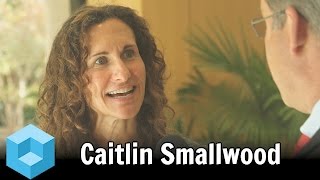
Carrie Grimes, distinguished engineer at Google, has been with the company since its early days, and she caught up with Jeff Frick, host of theCUBE, from the SiliconANGLE Media team, at the Women in Data Science Conference held at Stanford University to explain Google’s processes and the evolution of search.
The new questions
In the past, to extract meaningful data meant using algorithms; however, Grimes stated, “Now we actually have to ask questions, such as how do you make a business decision based on this data.” She believes that blending the computational ability of computer science with the confidence gained from statistics is critical for companies such as Netflix, Amazon or Google to make business-based decisions.
Grimes describes how traditionally the goal is to look at customer and user data and derive value, but now it is also essential to focus on the backend, where data science is really important to help make business decisions. According to Grimes, some of the considerations are: “How do I use data science to pick the optimal point? How much computational power do I put into indexing a tweet versus the value of going out and getting a whole new set of content that is more static?”
Grimes pointed out that you can’t force the algorithms Google uses to index, to crawl and to find the right meaning of content and keywords. She referenced the amount of content people are creating and having to decide whether to invest in compute power or invest in a feature, a cool new rendering or the ability to understand structured data. “That’s the kind of tradeoff we have internally,” she said.
New data issues to tackle
Grimes has worked for Google since 2003 and has seen the steady need to progress and adapt. She commented on how industry outsiders don’t understand the pressure from users. As search becomes more intelligent, customer expectations become higher.
When she began her career at Google, she recalled that a great deal of effort went into content that was static, managing scale and moving data around. Now, personalized recommendations and understanding the nuances about knowing who is searching and what the searches mean are a much larger focus for data scientists today than it was 10 years ago.
@Google #Google @Stanford #WiDS @SiliconANGLE theCUBE #theCUBE @theCUBE
Forgot Password
Almost there!
We just sent you a verification email. Please verify your account to gain access to
Stanford Women In Data Science (WiDS) 2015 | Stanford, CA. If you don’t think you received an email check your
spam folder.
Sign in to Stanford Women In Data Science (WiDS) 2015 | Stanford, CA.
In order to sign in, enter the email address you used to registered for the event. Once completed, you will receive an email with a verification link. Open this link to automatically sign into the site.
Register For Stanford Women In Data Science (WiDS) 2015 | Stanford, CA
Please fill out the information below. You will recieve an email with a verification link confirming your registration. Click the link to automatically sign into the site.
You’re almost there!
We just sent you a verification email. Please click the verification button in the email. Once your email address is verified, you will have full access to all event content for Stanford Women In Data Science (WiDS) 2015 | Stanford, CA.
I want my badge and interests to be visible to all attendees.
Checking this box will display your presense on the attendees list, view your profile and allow other attendees to contact you via 1-1 chat. Read the Privacy Policy. At any time, you can choose to disable this preference.
Select your Interests!
add
Upload your photo
Uploading..
OR
Connect via Twitter
Connect via Linkedin
EDIT PASSWORD
Share
Forgot Password
Almost there!
We just sent you a verification email. Please verify your account to gain access to
Stanford Women In Data Science (WiDS) 2015 | Stanford, CA. If you don’t think you received an email check your
spam folder.
Sign in to Stanford Women In Data Science (WiDS) 2015 | Stanford, CA.
In order to sign in, enter the email address you used to registered for the event. Once completed, you will receive an email with a verification link. Open this link to automatically sign into the site.
Sign in to gain access to Stanford Women In Data Science (WiDS) 2015 | Stanford, CA
Please sign in with LinkedIn to continue to Stanford Women In Data Science (WiDS) 2015 | Stanford, CA. Signing in with LinkedIn ensures a professional environment.
Are you sure you want to remove access rights for this user?
Details
Manage Access
email address
Community Invitation
Carrie Grimes, Google | Stanford Women In Data Science (WiDS) Conference 2015
Google it: The evolution of search | #WiDSConference
by Marlene Den Bleyker | Nov 13, 2015
https://siliconangle.com/2015/11/13/google-it-the-evolution-of-search-widsconference/
Google, the trailblazer of all search engines, has made a powerful impact over the years in the way users and businesses interact online.
Carrie Grimes, distinguished engineer at Google, has been with the company since its early days, and she caught up with Jeff Frick, host of theCUBE, from the SiliconANGLE Media team, at the Women in Data Science Conference held at Stanford University to explain Google’s processes and the evolution of search.
The new questions
In the past, to extract meaningful data meant using algorithms; however, Grimes stated, “Now we actually have to ask questions, such as how do you make a business decision based on this data.” She believes that blending the computational ability of computer science with the confidence gained from statistics is critical for companies such as Netflix, Amazon or Google to make business-based decisions.
Grimes describes how traditionally the goal is to look at customer and user data and derive value, but now it is also essential to focus on the backend, where data science is really important to help make business decisions. According to Grimes, some of the considerations are: “How do I use data science to pick the optimal point? How much computational power do I put into indexing a tweet versus the value of going out and getting a whole new set of content that is more static?”
Grimes pointed out that you can’t force the algorithms Google uses to index, to crawl and to find the right meaning of content and keywords. She referenced the amount of content people are creating and having to decide whether to invest in compute power or invest in a feature, a cool new rendering or the ability to understand structured data. “That’s the kind of tradeoff we have internally,” she said.
New data issues to tackle
Grimes has worked for Google since 2003 and has seen the steady need to progress and adapt. She commented on how industry outsiders don’t understand the pressure from users. As search becomes more intelligent, customer expectations become higher.
When she began her career at Google, she recalled that a great deal of effort went into content that was static, managing scale and moving data around. Now, personalized recommendations and understanding the nuances about knowing who is searching and what the searches mean are a much larger focus for data scientists today than it was 10 years ago.
@Google #Google @Stanford #WiDS @SiliconANGLE theCUBE #theCUBE @theCUBE