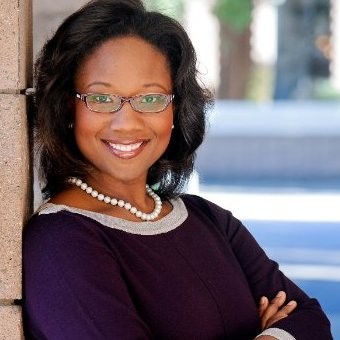
Talithia Williams, Host of NOVA Wonders PBS & Associate Professor of Mathematics, Harvey Mudd College | @Dr_TalithiaW sits down with Sonia Tagare for WiDS 2020 in Stanford, CA.
#WiDS2020 #WomenInTech #theCUBE
https://siliconangle.com/2020/03/05/importance-personal-health-data-diversity-tech-harvey-mudd-college-professor-weighs-wids2020/
Harvey Mudd College professor highlights importance of personal health data, diversity in tech
There’s no doubt that the use of data is valuable for businesses. But it’s not just companies that can benefit from data insights.
Individuals can and should also collect their own body data and use it to have a better life, according to Talithia Williams (pictured), associate dean and associate professor of mathematics at Harvey Mudd College.
“We have so many devices that collect data automatically for us, and often we don’t pause long enough to actually look at that history,” she said. “It’s really challenging people to think about how they can use data that they collect about their bodies to help make better health decisions.”
Williams spoke with Sonia Tagare, host of theCUBE, SiliconANGLE Media’s mobile livestreaming studio, during the Women in Data Science conference in Stanford, California. They discussed the ways in which people can obtain their own data, the importance of including women of color in the technology industry and the privacy challenges related to using data for business purposes.
Understanding the information
Among the information that people can collect about themselves are, for example, blood pressure, blood sugar, and temperature. But just as important as collecting the data is to be active in interpreting it, according to Williams.
“It’s not like if you take this data, you will be healthier or you will live to 100,” she added. “It’s really a matter of challenging people to own the data that they have and get excited about understanding it.”
Data is also important in enabling individuals to set goals to change their lifestyle practices.
“When I take my heart rate data or my pulse, I’m really trying to see if I can get lower than how it was before,” Williams said. “So, the push is really how my exercise and my diet are changing so that I can bring my resting heart rate down.”
Diversity in STEM fields
With a doctorate in statistics, in addition to her role as a professor, Williams is host of a PBS program called “NOVA Wonders,” which “follows researchers as they tackle unanswered questions about life and the cosmos.” She also wrote the book “Power in Numbers: The Rebel Women of Mathematics,” which aims to inspire women of color to work in technology-related industries.
“I really wanted to highlight sort of where we have been, but also where we are going and the amazing women that are doing work on it,” she explained.
It’s the responsibility of those in STEM fields to find ways to advocate for women and especially for women of color, according to Williams.
“Often it takes someone who’s already at the table to invite other people to the table,” she said. “I think the onus is more on people who occupy those spaces already to think about how they can be more intentional in bringing diversity.”
Forgot Password
Almost there!
We just sent you a verification email. Please verify your account to gain access to
Women In Data Science (WiDS) 2020 | Stanford, CA. If you don’t think you received an email check your
spam folder.
Sign in to Women In Data Science (WiDS) 2020 | Stanford, CA.
In order to sign in, enter the email address you used to registered for the event. Once completed, you will receive an email with a verification link. Open this link to automatically sign into the site.
Register For Women In Data Science (WiDS) 2020 | Stanford, CA
Please fill out the information below. You will recieve an email with a verification link confirming your registration. Click the link to automatically sign into the site.
You’re almost there!
We just sent you a verification email. Please click the verification button in the email. Once your email address is verified, you will have full access to all event content for Women In Data Science (WiDS) 2020 | Stanford, CA.
I want my badge and interests to be visible to all attendees.
Checking this box will display your presense on the attendees list, view your profile and allow other attendees to contact you via 1-1 chat. Read the Privacy Policy. At any time, you can choose to disable this preference.
Select your Interests!
add
Upload your photo
Uploading..
OR
Connect via Twitter
Connect via Linkedin
EDIT PASSWORD
Share
Forgot Password
Almost there!
We just sent you a verification email. Please verify your account to gain access to
Women In Data Science (WiDS) 2020 | Stanford, CA. If you don’t think you received an email check your
spam folder.
Sign in to Women In Data Science (WiDS) 2020 | Stanford, CA.
In order to sign in, enter the email address you used to registered for the event. Once completed, you will receive an email with a verification link. Open this link to automatically sign into the site.
Sign in to gain access to Women In Data Science (WiDS) 2020 | Stanford, CA
Please sign in with LinkedIn to continue to Women In Data Science (WiDS) 2020 | Stanford, CA. Signing in with LinkedIn ensures a professional environment.
Are you sure you want to remove access rights for this user?
Details
Manage Access
email address
Community Invitation
Talithia Williams, Harvey Mudd College | Stanford Women in Data Science (WiDS) Conference 2020
Talithia Williams, Host of NOVA Wonders PBS & Associate Professor of Mathematics, Harvey Mudd College | @Dr_TalithiaW sits down with Sonia Tagare for WiDS 2020 in Stanford, CA.
#WiDS2020 #WomenInTech #theCUBE
https://siliconangle.com/2020/03/05/importance-personal-health-data-diversity-tech-harvey-mudd-college-professor-weighs-wids2020/
Harvey Mudd College professor highlights importance of personal health data, diversity in tech
There’s no doubt that the use of data is valuable for businesses. But it’s not just companies that can benefit from data insights.
Individuals can and should also collect their own body data and use it to have a better life, according to Talithia Williams (pictured), associate dean and associate professor of mathematics at Harvey Mudd College.
“We have so many devices that collect data automatically for us, and often we don’t pause long enough to actually look at that history,” she said. “It’s really challenging people to think about how they can use data that they collect about their bodies to help make better health decisions.”
Williams spoke with Sonia Tagare, host of theCUBE, SiliconANGLE Media’s mobile livestreaming studio, during the Women in Data Science conference in Stanford, California. They discussed the ways in which people can obtain their own data, the importance of including women of color in the technology industry and the privacy challenges related to using data for business purposes.
Understanding the information
Among the information that people can collect about themselves are, for example, blood pressure, blood sugar, and temperature. But just as important as collecting the data is to be active in interpreting it, according to Williams.
“It’s not like if you take this data, you will be healthier or you will live to 100,” she added. “It’s really a matter of challenging people to own the data that they have and get excited about understanding it.”
Data is also important in enabling individuals to set goals to change their lifestyle practices.
“When I take my heart rate data or my pulse, I’m really trying to see if I can get lower than how it was before,” Williams said. “So, the push is really how my exercise and my diet are changing so that I can bring my resting heart rate down.”
Diversity in STEM fields
With a doctorate in statistics, in addition to her role as a professor, Williams is host of a PBS program called “NOVA Wonders,” which “follows researchers as they tackle unanswered questions about life and the cosmos.” She also wrote the book “Power in Numbers: The Rebel Women of Mathematics,” which aims to inspire women of color to work in technology-related industries.
“I really wanted to highlight sort of where we have been, but also where we are going and the amazing women that are doing work on it,” she explained.
It’s the responsibility of those in STEM fields to find ways to advocate for women and especially for women of color, according to Williams.
“Often it takes someone who’s already at the table to invite other people to the table,” she said. “I think the onus is more on people who occupy those spaces already to think about how they can be more intentional in bringing diversity.”