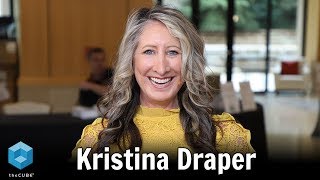
Liza Donnelly, Writer & Cartoonist, The New Yorker sits down with Lisa Martin at Stanford University for WiDS 2019.
#WiDS2019 #TheNewYorker #theCUBE
https://siliconangle.com/2019/03/07/qa-cartoons-illustrate-whats-possible-in-a-more-accessible-tech-industry-wids2019/
Q&A: Cartoons illustrate what’s possible in a more accessible tech industry
The real value of data is in its ability to tell a story through the technologists working to analyze and implement it in new creative solutions. Telling stories through a more accessible medium is what Liza Donnelly (pictured), staff cartoonist at “The New Yorker,” does in her visual journalism work by sharing sketches that condense a rich experience into a single snapshot.
Donnelly spoke with Lisa Martin (@LisaMartinTV), host of theCUBE, SiliconANGLE Media’s mobile livestreaming studio, during the Stanford Women in Data Science event in Stanford, California. They discussed how cartoons can be used to tell stories from different perspectives and why illustrating women working in technology is quietly revolutionary.
[Editor’s note: The following answers have been condensed for clarity.]
Tell us a little … about visual journalism.
Donnelly: I am somebody who goes to events — political, social or cultural — and draws what I see. I’m not a court reporter. I’m an impressionist. I give people the feeling that they’re there with me by what I draw. I try to capture that person’s essence. Oftentimes I try to capture a sentence that they’re saying that has a more universal appeal that somehow brings like a layman into the subject a little bit. This visual journalism is more like reportage. I do behind the scenes too. At the Oscars I’ll do the stars if I can get them … but then I also do the people taking out the trash, the guy painting the sideboard, the cameraman. I try to give a sense of what it’s like to be there.
I do them on my iPad, and I send them out on social media almost immediately so they feel like they’re there. It gives people a different perspective of what’s going on, and I think that my background as a cartoonist for “The New Yorker” for 40 years informs these drawings in an indirect background kind of way because I’ve been watching culture [and] politics for a very long time.
I’d love to understand, from your perspective, the evolution of cartoons and the impact they can make in society.
Donnelly: Cartoons can be very controversial and problematic. That’s been true through the course of the history of our country … but it’s compounded now because of the internet. Cartoons can be misunderstood. They can be used as weapons.
I’m going to be talking about this at South by Southwest … about political cartoons and what their impact has been in the past, and how they create an impact now, and why that is, and how we can use it to good effect. I think a problem we’re dealing with right now in our culture is everybody is so divided, and so opinionated, and so hateful towards each other. Can we use cartoons not to perpetuate that but to make things better in some way?
There are more and more cartoons on the internet now. There’s a lot of webcomics, and young cartoonists are using the internet effectively to put out their ideas. The internet is just a dialogue with people. I think this new generation is really trying to find ways to use these tools in a good way. They’re trying to make a better world.
Tell us about how you got involved with Women in Data Science.
Donnelly: A big part of what I want to do with my work is promoting equal rights for women around the world, and so I thought, “This sounds terrific.” Plus it’s global, and I do a lot of work globally to help women and freedom of speech as well. It seemed to be a great fit, and it seems even more to be a good fit in that it’s a way to get the information out there in a visual way, because people, they hear the word “data,” and they probably just glaze over. But they see it connected with a cartoon or a drawing, it humanizes it for them a little bit.
Today I was drawing a woman speaker talking about really technical data science. I put it on the internet and I thought, it’s just a constant reminder to people that women are doing this. If you see it, it resonates a little bit more quickly and more forcefully in your brain. I think more women are stepping into this field and being recognized for doing so.
Watch the complete video interview below, and be sure to check out more of SiliconANGLE’s and theCUBE’s coverage of the Stanford Women in Data Science event.
Forgot Password
Almost there!
We just sent you a verification email. Please verify your account to gain access to
Women in Data Science (WiDS) 2019 | Stanford, CA. If you don’t think you received an email check your
spam folder.
Sign in to Women in Data Science (WiDS) 2019 | Stanford, CA.
In order to sign in, enter the email address you used to registered for the event. Once completed, you will receive an email with a verification link. Open this link to automatically sign into the site.
Register For Women in Data Science (WiDS) 2019 | Stanford, CA
Please fill out the information below. You will recieve an email with a verification link confirming your registration. Click the link to automatically sign into the site.
You’re almost there!
We just sent you a verification email. Please click the verification button in the email. Once your email address is verified, you will have full access to all event content for Women in Data Science (WiDS) 2019 | Stanford, CA.
I want my badge and interests to be visible to all attendees.
Checking this box will display your presense on the attendees list, view your profile and allow other attendees to contact you via 1-1 chat. Read the Privacy Policy. At any time, you can choose to disable this preference.
Select your Interests!
add
Upload your photo
Uploading..
OR
Connect via Twitter
Connect via Linkedin
EDIT PASSWORD
Share
Forgot Password
Almost there!
We just sent you a verification email. Please verify your account to gain access to
Women in Data Science (WiDS) 2019 | Stanford, CA. If you don’t think you received an email check your
spam folder.
Sign in to Women in Data Science (WiDS) 2019 | Stanford, CA.
In order to sign in, enter the email address you used to registered for the event. Once completed, you will receive an email with a verification link. Open this link to automatically sign into the site.
Sign in to gain access to Women in Data Science (WiDS) 2019 | Stanford, CA
Please sign in with LinkedIn to continue to Women in Data Science (WiDS) 2019 | Stanford, CA. Signing in with LinkedIn ensures a professional environment.
Are you sure you want to remove access rights for this user?
Details
Manage Access
email address
Community Invitation
Liza Donnelly, The New Yorker | WiDS 2019
Liza Donnelly, Writer & Cartoonist, The New Yorker sits down with Lisa Martin at Stanford University for WiDS 2019.
#WiDS2019 #TheNewYorker #theCUBE
https://siliconangle.com/2019/03/07/qa-cartoons-illustrate-whats-possible-in-a-more-accessible-tech-industry-wids2019/
Q&A: Cartoons illustrate what’s possible in a more accessible tech industry
The real value of data is in its ability to tell a story through the technologists working to analyze and implement it in new creative solutions. Telling stories through a more accessible medium is what Liza Donnelly (pictured), staff cartoonist at “The New Yorker,” does in her visual journalism work by sharing sketches that condense a rich experience into a single snapshot.
Donnelly spoke with Lisa Martin (@LisaMartinTV), host of theCUBE, SiliconANGLE Media’s mobile livestreaming studio, during the Stanford Women in Data Science event in Stanford, California. They discussed how cartoons can be used to tell stories from different perspectives and why illustrating women working in technology is quietly revolutionary.
[Editor’s note: The following answers have been condensed for clarity.]
Tell us a little … about visual journalism.
Donnelly: I am somebody who goes to events — political, social or cultural — and draws what I see. I’m not a court reporter. I’m an impressionist. I give people the feeling that they’re there with me by what I draw. I try to capture that person’s essence. Oftentimes I try to capture a sentence that they’re saying that has a more universal appeal that somehow brings like a layman into the subject a little bit. This visual journalism is more like reportage. I do behind the scenes too. At the Oscars I’ll do the stars if I can get them … but then I also do the people taking out the trash, the guy painting the sideboard, the cameraman. I try to give a sense of what it’s like to be there.
I do them on my iPad, and I send them out on social media almost immediately so they feel like they’re there. It gives people a different perspective of what’s going on, and I think that my background as a cartoonist for “The New Yorker” for 40 years informs these drawings in an indirect background kind of way because I’ve been watching culture [and] politics for a very long time.
I’d love to understand, from your perspective, the evolution of cartoons and the impact they can make in society.
Donnelly: Cartoons can be very controversial and problematic. That’s been true through the course of the history of our country … but it’s compounded now because of the internet. Cartoons can be misunderstood. They can be used as weapons.
I’m going to be talking about this at South by Southwest … about political cartoons and what their impact has been in the past, and how they create an impact now, and why that is, and how we can use it to good effect. I think a problem we’re dealing with right now in our culture is everybody is so divided, and so opinionated, and so hateful towards each other. Can we use cartoons not to perpetuate that but to make things better in some way?
There are more and more cartoons on the internet now. There’s a lot of webcomics, and young cartoonists are using the internet effectively to put out their ideas. The internet is just a dialogue with people. I think this new generation is really trying to find ways to use these tools in a good way. They’re trying to make a better world.
Tell us about how you got involved with Women in Data Science.
Donnelly: A big part of what I want to do with my work is promoting equal rights for women around the world, and so I thought, “This sounds terrific.” Plus it’s global, and I do a lot of work globally to help women and freedom of speech as well. It seemed to be a great fit, and it seems even more to be a good fit in that it’s a way to get the information out there in a visual way, because people, they hear the word “data,” and they probably just glaze over. But they see it connected with a cartoon or a drawing, it humanizes it for them a little bit.
Today I was drawing a woman speaker talking about really technical data science. I put it on the internet and I thought, it’s just a constant reminder to people that women are doing this. If you see it, it resonates a little bit more quickly and more forcefully in your brain. I think more women are stepping into this field and being recognized for doing so.
Watch the complete video interview below, and be sure to check out more of SiliconANGLE’s and theCUBE’s coverage of the Stanford Women in Data Science event.