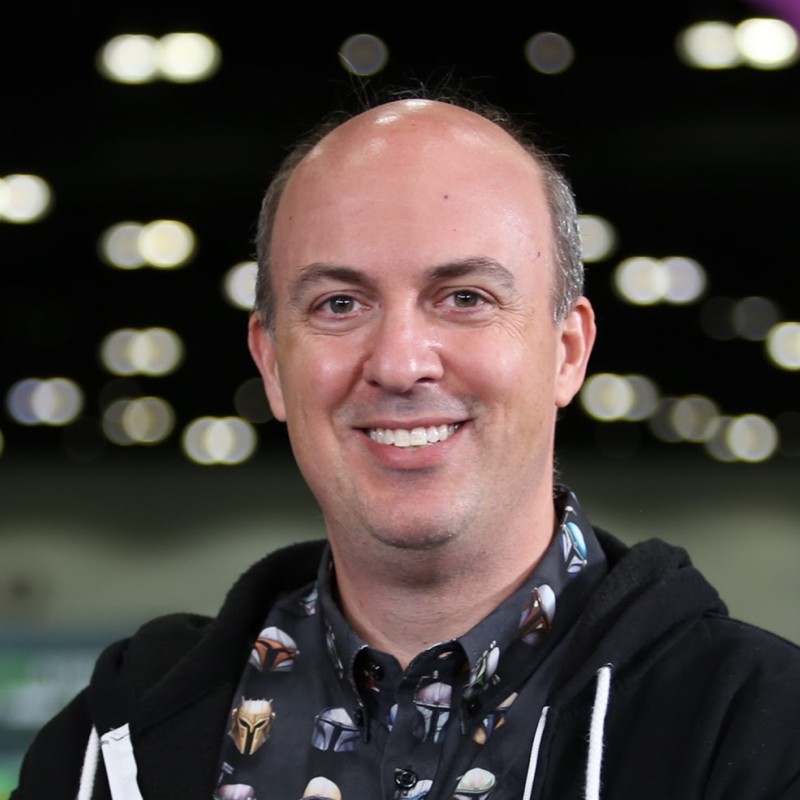
Chris Harney, VTUG, at VTUG Winter Warmer 2014 with Dave Vellante and Stu Miniman
@thecube
#VTUG
When Chris Harney launched the Virtual Technology Users Group (VTUG) nearly a decade ago, VMware had a monopoly on virtualizing x86 servers. But as the market grew and evolved, competitors such as Microsoft started gaining ground, and the agenda eventually had to be adapted for the rise of multi-hypervisor environments. Harney appeared on theCUBE for the first time at the recently concluded VTUG Winter Warmer 2014 meeting to discuss the shifting dynamics that led to this change in direction with Wikibon's Dave Vellante and Stu Miniman.
VMware is still a dominant force in the data center, but a growing number of customers -- particularly enterprise users and cloud service providers -- are deploying alternative solutions like Hyper-V and Xen. This trend is emerging as a major driver of complexity, as well as innovation.
"Competition breeds better prices, it breeds better features," Harney explains. "So if you don't have competition, why is there a reason to innovate? Having all these hypervisors I think is much better for the community, it's much better for the industry, not only financially but also [in terms of] all the options you have available now. I don't know if VMware would have bought Nicira if there wasn't competition breathing down their door."
The Nicira acquisition kicked off the software-defined networking race, catching the attention of Cisco, Broadcom and other prominent vendors that wouldn't recognize the technology as a threat before. SDN has the potential to disrupt the traditional power structure in the networking industry, Harney says, but adoption will take a while.
"What I'm seeing in software-defined is your service providers, Amazon, Microsoft -- they are adopting software-defined networking very highly, and that's the first step," he observes. "Now, all of your IT companies would like to see themselves as service providers, so I see them adopting software-defined networking 2 or 3 years down the road, but they're waiting for a true leader. VMware claims to be a software-defined networking company, Cisco claims to be, but there's no clear leader so no one is betting on a horse yet."
Harney predicts that software-defined networking will eventually find its way into traditional IT shops, but only a small percentage will commit to the technology and most will opt to keep a safe distance behind the bleeding edge.
SDN offers compelling benefits, but Harney views logical partitioning at the CPU level -- functionality INI Group CEO Tony Asaro hails as a potential game-changer for computationally intensive workloads -- as potentially far more transformative from a practitioner's point of view. He explains the ability to carve up physical processors, which is already possible in mainframes, would solve the noisy neighbor problem and eliminate the need for a lot of the duplicate infrastructure that is in place today.
Check out the video above for the full interview.
Forgot Password
Almost there!
We just sent you a verification email. Please verify your account to gain access to
VTUG Winter Warmer 2014. If you don’t think you received an email check your
spam folder.
In order to sign in, enter the email address you used to registered for the event. Once completed, you will receive an email with a verification link. Open this link to automatically sign into the site.
Register For VTUG Winter Warmer 2014
Please fill out the information below. You will recieve an email with a verification link confirming your registration. Click the link to automatically sign into the site.
You’re almost there!
We just sent you a verification email. Please click the verification button in the email. Once your email address is verified, you will have full access to all event content for VTUG Winter Warmer 2014.
I want my badge and interests to be visible to all attendees.
Checking this box will display your presense on the attendees list, view your profile and allow other attendees to contact you via 1-1 chat. Read the Privacy Policy. At any time, you can choose to disable this preference.
Select your Interests!
add
Upload your photo
Uploading..
OR
Connect via Twitter
Connect via Linkedin
EDIT PASSWORD
Share
Forgot Password
Almost there!
We just sent you a verification email. Please verify your account to gain access to
VTUG Winter Warmer 2014. If you don’t think you received an email check your
spam folder.
In order to sign in, enter the email address you used to registered for the event. Once completed, you will receive an email with a verification link. Open this link to automatically sign into the site.
Sign in to gain access to VTUG Winter Warmer 2014
Please sign in with LinkedIn to continue to VTUG Winter Warmer 2014. Signing in with LinkedIn ensures a professional environment.
Are you sure you want to remove access rights for this user?
Details
Manage Access
email address
Community Invitation
Chris Harney | VTUG Winter Warmer 2014
Chris Harney, VTUG, at VTUG Winter Warmer 2014 with Dave Vellante and Stu Miniman
@thecube
#VTUG
When Chris Harney launched the Virtual Technology Users Group (VTUG) nearly a decade ago, VMware had a monopoly on virtualizing x86 servers. But as the market grew and evolved, competitors such as Microsoft started gaining ground, and the agenda eventually had to be adapted for the rise of multi-hypervisor environments. Harney appeared on theCUBE for the first time at the recently concluded VTUG Winter Warmer 2014 meeting to discuss the shifting dynamics that led to this change in direction with Wikibon's Dave Vellante and Stu Miniman.
VMware is still a dominant force in the data center, but a growing number of customers -- particularly enterprise users and cloud service providers -- are deploying alternative solutions like Hyper-V and Xen. This trend is emerging as a major driver of complexity, as well as innovation.
"Competition breeds better prices, it breeds better features," Harney explains. "So if you don't have competition, why is there a reason to innovate? Having all these hypervisors I think is much better for the community, it's much better for the industry, not only financially but also [in terms of] all the options you have available now. I don't know if VMware would have bought Nicira if there wasn't competition breathing down their door."
The Nicira acquisition kicked off the software-defined networking race, catching the attention of Cisco, Broadcom and other prominent vendors that wouldn't recognize the technology as a threat before. SDN has the potential to disrupt the traditional power structure in the networking industry, Harney says, but adoption will take a while.
"What I'm seeing in software-defined is your service providers, Amazon, Microsoft -- they are adopting software-defined networking very highly, and that's the first step," he observes. "Now, all of your IT companies would like to see themselves as service providers, so I see them adopting software-defined networking 2 or 3 years down the road, but they're waiting for a true leader. VMware claims to be a software-defined networking company, Cisco claims to be, but there's no clear leader so no one is betting on a horse yet."
Harney predicts that software-defined networking will eventually find its way into traditional IT shops, but only a small percentage will commit to the technology and most will opt to keep a safe distance behind the bleeding edge.
SDN offers compelling benefits, but Harney views logical partitioning at the CPU level -- functionality INI Group CEO Tony Asaro hails as a potential game-changer for computationally intensive workloads -- as potentially far more transformative from a practitioner's point of view. He explains the ability to carve up physical processors, which is already possible in mainframes, would solve the noisy neighbor problem and eliminate the need for a lot of the duplicate infrastructure that is in place today.
Check out the video above for the full interview.