Solving the ‘copy creep’ problem in DevOps | #VMworld
by Betsy Amy-Vogt | Sep 2, 2015
“When you hear VMware talking about run, build, deliver, that’s
what we do but on the copy data side, on the storage side,” said Ed
Walsh, CEO of Catalogic.
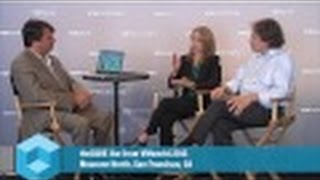
Walsh spoke with Dave Vellante of theCUBE, from the SiliconANGLE Media team, at VMworld 2015 on how compatible Catalogic is with VMware’s vision of the Unified Hybrid Cloud. “We are very complementary to what VMware is doing,” Walsh explained. “We give you the flexibility and openness, just like VMware.”
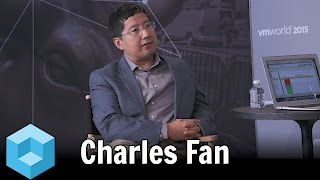
Joining Walsh on theCUBE was Charles Fan, SVP/GM of VMware, Inc.’s Storage Business Unit. From VMware’s perspective, “It’s not only about data protection, but about building apps and testing apps, and deploying apps,” Fan said. What were traditionally regarded as back-up copies are now used actively for test development.
Simplifying access for DevOps
Walsh explained that Catalogic not only solves the copy creep problem, it “simplifies the access for DevOps, but lets the infrastructure team keep control.”
Fan and Walsh also discussed the importance of catalogs for hyper-converged solutions, such as VMware Virtual SAN, and the fit for Virtual SAN vs. traditional array-based storage systems. Fan said, “The key is whatever the customer chooses, whether they pick an array or a hyper-converged solution, they can all be managed through the same automation layer, which is our storage policy-based management.”
@theCUBE
#VMworld
Forgot Password
Almost there!
We just sent you a verification email. Please verify your account to gain access to
VMworld 2015 | San Francisco. If you don’t think you received an email check your
spam folder.
In order to sign in, enter the email address you used to registered for the event. Once completed, you will receive an email with a verification link. Open this link to automatically sign into the site.
Register For VMworld 2015 | San Francisco
Please fill out the information below. You will recieve an email with a verification link confirming your registration. Click the link to automatically sign into the site.
You’re almost there!
We just sent you a verification email. Please click the verification button in the email. Once your email address is verified, you will have full access to all event content for VMworld 2015 | San Francisco.
I want my badge and interests to be visible to all attendees.
Checking this box will display your presense on the attendees list, view your profile and allow other attendees to contact you via 1-1 chat. Read the Privacy Policy. At any time, you can choose to disable this preference.
Select your Interests!
add
Upload your photo
Uploading..
OR
Connect via Twitter
Connect via Linkedin
EDIT PASSWORD
Share
Forgot Password
Almost there!
We just sent you a verification email. Please verify your account to gain access to
VMworld 2015 | San Francisco. If you don’t think you received an email check your
spam folder.
In order to sign in, enter the email address you used to registered for the event. Once completed, you will receive an email with a verification link. Open this link to automatically sign into the site.
Sign in to gain access to VMworld 2015 | San Francisco
Please sign in with LinkedIn to continue to VMworld 2015 | San Francisco. Signing in with LinkedIn ensures a professional environment.
Are you sure you want to remove access rights for this user?
Details
Manage Access
email address
Community Invitation
Ed Walsh & Charles Fan | VMworld 2015
Solving the ‘copy creep’ problem in DevOps | #VMworld
by Betsy Amy-Vogt | Sep 2, 2015
“When you hear VMware talking about run, build, deliver, that’s
what we do but on the copy data side, on the storage side,” said Ed
Walsh, CEO of Catalogic.
Walsh spoke with Dave Vellante of theCUBE, from the SiliconANGLE Media team, at VMworld 2015 on how compatible Catalogic is with VMware’s vision of the Unified Hybrid Cloud. “We are very complementary to what VMware is doing,” Walsh explained. “We give you the flexibility and openness, just like VMware.”
Joining Walsh on theCUBE was Charles Fan, SVP/GM of VMware, Inc.’s Storage Business Unit. From VMware’s perspective, “It’s not only about data protection, but about building apps and testing apps, and deploying apps,” Fan said. What were traditionally regarded as back-up copies are now used actively for test development.
Simplifying access for DevOps
Walsh explained that Catalogic not only solves the copy creep problem, it “simplifies the access for DevOps, but lets the infrastructure team keep control.”
Fan and Walsh also discussed the importance of catalogs for hyper-converged solutions, such as VMware Virtual SAN, and the fit for Virtual SAN vs. traditional array-based storage systems. Fan said, “The key is whatever the customer chooses, whether they pick an array or a hyper-converged solution, they can all be managed through the same automation layer, which is our storage policy-based management.”
@theCUBE
#VMworld