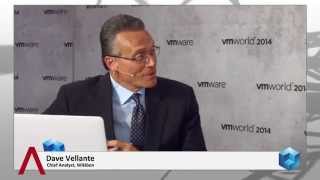
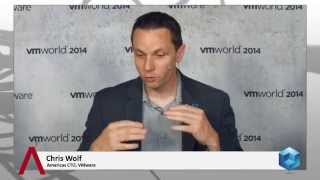
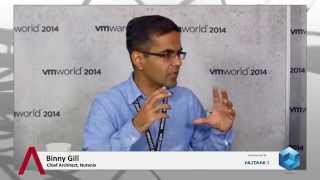
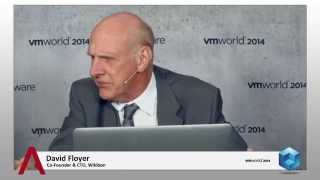
Analyst Segment, VMworld 2014 with John Furrier and Dave Vellante
@theCUBE
#vmworld2014
As expected, VMworld 2014 has underlined VMware’s ambitions to move away from its hypervisor roots and embed its ecosystem deeper into the enterprise. That much was evident in a string of new product announcements and rebranding efforts on days one and two of the event.
VMware has generated a lot of hype about its new products and partnerships – so much that customers could be forgiven for being swept away by it. With that in mind, SiliconANGLE brings to you a quick rundown on VMware’s new and repackaged products, and the role they’ll play as it bids to cement its place in the software-defined data center (SDDC).
EVO : RAIL
Perhaps VMware’s most compelling new offering is EVO:RAIL, a solution designed for converged infrastructures that delivers appliances with the help of strategic partnerships. Described by Wikibon’s Dave Vellante as “VMware’s play at mid-market converged infrastructure – simplify deployment and enable SDDC,” the software can be preinstalled on hardware and is designed for customer that want a “hyper-converged” building block for building out virtualized environments.
EVO:RAIL was born out of VMware’s Project Mystic, and combines four servers, direct-attached storage, vSphere, VSAN around a discrete package of commodity hardware from its manufacturing partners. VMware says that a single EVO:RAIL can support up to 250 virtual desktops or 100 server images, and can currently be stacked together with as many as three for a 16-node cluster, although this range will increase with future releases.
EVO:RAIL is a bit like competing hyper-converged solutions offered by Nutanix Inc., and SimpliVity Inc., as individual hardware elements can be treated as a single unit, as opposed to provisioning each unit separately. It’s far simpler than something VCE’s Vblocks, which combines compute, storage and transport capacity into a single box. That VCE is a subsidiary of company EMC might make it seem like VMware wants to compete, but Vblocks consist full racks of servers; VMware’s EVO:RAILs are fractions of racks: four server nodes sliding into the 2U space of a 42-space rack.
SAN Ready Nodes
In the lead up to VMworld, VMware announced the launch of 24 new Virtual SAN Ready Nodes from its OEM vendors, including Dell (3 Ready Nodes), Fujitsu (5 Ready Nodes), HP (10 Ready Nodes) and SuperMicro (6 Ready Nodes).
VMware’s SAN Ready Nodes are hyper-converged building blocks designed for large datacenter environments with strong automation and a need to customize hardware and software configurations. An extension of VMware’s vSAN product line, the company describes them as a “hyper-converged ready-to-go hardware solution sold by server OEMs which has been pre-configured to run the Virtual SAN in a certified hardware form factors”. The SAN Ready Nodes come with a unique combination of hardware components that are unique to the OEM’s server offerings and may also include software for Virtual SAN and vSphere.
VMware Integrated OpenStack (VIO)
Currently in beta, VMware Integrated OpenStack is scheduled for delivery in the first half of 2015 and is being slated as a cost-effective way for developers to use open APIs to access VMware infrastructure. In a nutshell, VIO is the open-source OpenStack code with VMware drivers, plus an OpenStack-specific management tool and reference architecture.
Explaining the move, VMware said that the OpenStack framework has emerged as the tool of choice for IT to provide application development teams with programmatic access to the infrastructure, but OpenStack can be tricky to deploy and maintain, and the underlying infrastructure does not always meet enterprise requirements for security, resilience and performance.
OpenStack is rapidly becoming critical to VMware’s hybrid cloud push. Wikibon analyst David Floyer spoke about this during an analyst segment on theCUBE, saying that the key for VMware is to cover all types of workloads at a cost that’s commensurate with the workload.
“You want to be able to use OpenStack when it’s cheapest, and use Vmware for the high end stuff,” explained Floyer. “You want an open environment to use Amazon.com Inc.’s Amazon Web Services (AWS), OpenStack, and Microsoft Corp.’s Azure as part of a hybrid cloud, not just VMware.”
Forgot Password
Almost there!
We just sent you a verification email. Please verify your account to gain access to
VMworld 2014 | San Francisco. If you don’t think you received an email check your
spam folder.
In order to sign in, enter the email address you used to registered for the event. Once completed, you will receive an email with a verification link. Open this link to automatically sign into the site.
Register For VMworld 2014 | San Francisco
Please fill out the information below. You will recieve an email with a verification link confirming your registration. Click the link to automatically sign into the site.
You’re almost there!
We just sent you a verification email. Please click the verification button in the email. Once your email address is verified, you will have full access to all event content for VMworld 2014 | San Francisco.
I want my badge and interests to be visible to all attendees.
Checking this box will display your presense on the attendees list, view your profile and allow other attendees to contact you via 1-1 chat. Read the Privacy Policy. At any time, you can choose to disable this preference.
Select your Interests!
add
Upload your photo
Uploading..
OR
Connect via Twitter
Connect via Linkedin
EDIT PASSWORD
Share
Forgot Password
Almost there!
We just sent you a verification email. Please verify your account to gain access to
VMworld 2014 | San Francisco. If you don’t think you received an email check your
spam folder.
In order to sign in, enter the email address you used to registered for the event. Once completed, you will receive an email with a verification link. Open this link to automatically sign into the site.
Sign in to gain access to VMworld 2014 | San Francisco
Please sign in with LinkedIn to continue to VMworld 2014 | San Francisco. Signing in with LinkedIn ensures a professional environment.
Are you sure you want to remove access rights for this user?
Details
Manage Access
email address
Community Invitation
Analyst Segment | VMworld 2014
Analyst Segment, VMworld 2014 with John Furrier and Dave Vellante
@theCUBE
#vmworld2014
As expected, VMworld 2014 has underlined VMware’s ambitions to move away from its hypervisor roots and embed its ecosystem deeper into the enterprise. That much was evident in a string of new product announcements and rebranding efforts on days one and two of the event.
VMware has generated a lot of hype about its new products and partnerships – so much that customers could be forgiven for being swept away by it. With that in mind, SiliconANGLE brings to you a quick rundown on VMware’s new and repackaged products, and the role they’ll play as it bids to cement its place in the software-defined data center (SDDC).
EVO : RAIL
Perhaps VMware’s most compelling new offering is EVO:RAIL, a solution designed for converged infrastructures that delivers appliances with the help of strategic partnerships. Described by Wikibon’s Dave Vellante as “VMware’s play at mid-market converged infrastructure – simplify deployment and enable SDDC,” the software can be preinstalled on hardware and is designed for customer that want a “hyper-converged” building block for building out virtualized environments.
EVO:RAIL was born out of VMware’s Project Mystic, and combines four servers, direct-attached storage, vSphere, VSAN around a discrete package of commodity hardware from its manufacturing partners. VMware says that a single EVO:RAIL can support up to 250 virtual desktops or 100 server images, and can currently be stacked together with as many as three for a 16-node cluster, although this range will increase with future releases.
EVO:RAIL is a bit like competing hyper-converged solutions offered by Nutanix Inc., and SimpliVity Inc., as individual hardware elements can be treated as a single unit, as opposed to provisioning each unit separately. It’s far simpler than something VCE’s Vblocks, which combines compute, storage and transport capacity into a single box. That VCE is a subsidiary of company EMC might make it seem like VMware wants to compete, but Vblocks consist full racks of servers; VMware’s EVO:RAILs are fractions of racks: four server nodes sliding into the 2U space of a 42-space rack.
SAN Ready Nodes
In the lead up to VMworld, VMware announced the launch of 24 new Virtual SAN Ready Nodes from its OEM vendors, including Dell (3 Ready Nodes), Fujitsu (5 Ready Nodes), HP (10 Ready Nodes) and SuperMicro (6 Ready Nodes).
VMware’s SAN Ready Nodes are hyper-converged building blocks designed for large datacenter environments with strong automation and a need to customize hardware and software configurations. An extension of VMware’s vSAN product line, the company describes them as a “hyper-converged ready-to-go hardware solution sold by server OEMs which has been pre-configured to run the Virtual SAN in a certified hardware form factors”. The SAN Ready Nodes come with a unique combination of hardware components that are unique to the OEM’s server offerings and may also include software for Virtual SAN and vSphere.
VMware Integrated OpenStack (VIO)
Currently in beta, VMware Integrated OpenStack is scheduled for delivery in the first half of 2015 and is being slated as a cost-effective way for developers to use open APIs to access VMware infrastructure. In a nutshell, VIO is the open-source OpenStack code with VMware drivers, plus an OpenStack-specific management tool and reference architecture.
Explaining the move, VMware said that the OpenStack framework has emerged as the tool of choice for IT to provide application development teams with programmatic access to the infrastructure, but OpenStack can be tricky to deploy and maintain, and the underlying infrastructure does not always meet enterprise requirements for security, resilience and performance.
OpenStack is rapidly becoming critical to VMware’s hybrid cloud push. Wikibon analyst David Floyer spoke about this during an analyst segment on theCUBE, saying that the key for VMware is to cover all types of workloads at a cost that’s commensurate with the workload.
“You want to be able to use OpenStack when it’s cheapest, and use Vmware for the high end stuff,” explained Floyer. “You want an open environment to use Amazon.com Inc.’s Amazon Web Services (AWS), OpenStack, and Microsoft Corp.’s Azure as part of a hybrid cloud, not just VMware.”