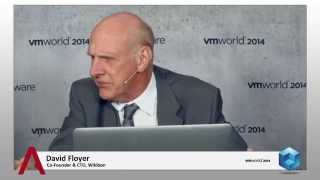
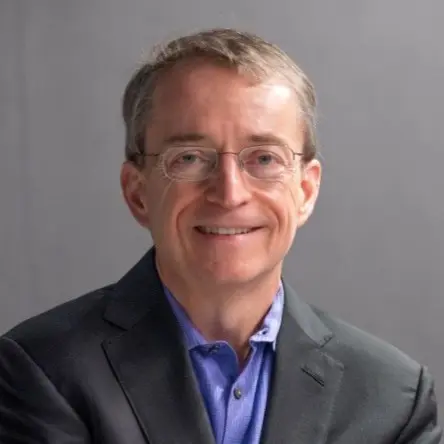
Pat Gelsinger, VMware, at VMworld 2014 with John Furrier and Dave Vellante
@theCUBE
#vmworld2014
nabling brave, new IT is the bumper sticker theme Pat Gelsinger put on his keynote presentation on Day 1 of VMworld. The VMware, Inc. CEO outlined his new vision for the company, how it fits into the EMC, Corp. federation strategy, and what his offensive moves will be in the coming year to curb encroaching competition from virtualized services like those from Microsoft, Corp.’s Azure and Amazon.com Inc.’s Amazon Web Services (AWS). Joining hosts John Furrier and Dave Vellante on theCUBE during SiliconANGLE’s live coverage of VMware’s annual VMworld conference, Gelsinger recapped his keynote and even commented on hot-button topics like the rise of Docker, Inc., a newcomer that’s pushing the envelope on virtualized tactics with the use of containers.
Gelsinger began by outlining what he sees as “brave, new IT,” sharing stories of VMware customers that have become critically important to business. “They’re redefining the entire business infrastructure,” Gelsinger said, calling out the IT guy as the most qualified to manage the transformation.
More choices for VMware users: OpenStack & containers
To that end, one of VMware’s most significant announcements today was what Gelsinger called a “choice” announcement, as the company now supports OpenStack APIs and containerization, extending more choices to customers. To some, including Furrier, VMware’s support of container technology is a bit surprising given the company’s stance on containers only last year. Furrier recalled an interview with Gelsinger from VMworld 2013 where the discussion around containers fell flat. “What’s changed?” Furrier prodded.
“It’s still very early,” Gelsinger warned. “In the hype cycle curve, we’re way up and we’ll probably go through the valley of despair. But there’s an emerging set using containers. If that’s how users want to deliver apps, we’re going to embrace and enable that as well.”
Gelsinger went on to detail how VMware’s support of containers quickly came about, leveraging relationships with Google, Inc. and Docker, among others. For Vmware, scalability is key to its use of containers, the end goal being to enable IT to satisfy the business guys. According to Gelsinger, VMware’s enterprise-ready container offering for virtual machines (VMs) is lighter and more efficient than a Linux implementation of Docker, hinting that we’ll see more container offerings with the next major release of vSphere.
Read more after the video.
Prepping popular technology like containers for the enterprise remains central to VMware’s vision. From Gelsinger’s perspective, his company has earned the right to a seat at the table with the CIO, “enabling programmable, flexible, scalable solutions so IT can worry about the application services and enabling business models.”
“We’re viewing this as the potential for a very scalable model, for those that have unique governed assets,” Gelsinger went on. “We’re building the stack, building the software layer to operationalize a 24/7 service with a hybrid model. Not a race to the bottom with the Amazons and Googles, but to enable rich, enterprise-class services on top of the services we do.”
Gelsinger’s offensive strategy for VMware
Gelsinger’s explanation prompted more detailed questions from theCUBE hosts regarding just how far up the stack VMware wants to go, addressing a question discussed earlier by Wikibon.org analysts on whether or not VMware is moving into the hardware business with its revamped vision.
The answer is no, Gelsinger said, going on to detail VMware’s offensive strategy for maintaining a leadership position in the virtualization market. The datacenters will not be built by VMware but will be achieved through co-location set ups, for which VMware receives a recurring revenue stream. Gelsinger also noted that the application is where VMware draws the line in its journey up the stack, sticking to enterprise services.
“We’re absolutely playing offense,” said Gelsinger. “We’re transforming networking and the entire datacenter operation, delivering the first truly hybrid cloud, enabling secure, managed environments on those devices. Some things I think we should’ve done sooner, like public cloud. The moves we’ve taken on OpenStack I think were pretty well-timed. Containers, I think we’re ahead in the enterprise.”
“Organic innovation and inorganic innovation – we’re playing both. We will use open source every place we can to accelerate offerings to customers,” Gelsinger concluded.
Forgot Password
Almost there!
We just sent you a verification email. Please verify your account to gain access to
VMworld 2014 | San Francisco. If you don’t think you received an email check your
spam folder.
In order to sign in, enter the email address you used to registered for the event. Once completed, you will receive an email with a verification link. Open this link to automatically sign into the site.
Register For VMworld 2014 | San Francisco
Please fill out the information below. You will recieve an email with a verification link confirming your registration. Click the link to automatically sign into the site.
You’re almost there!
We just sent you a verification email. Please click the verification button in the email. Once your email address is verified, you will have full access to all event content for VMworld 2014 | San Francisco.
I want my badge and interests to be visible to all attendees.
Checking this box will display your presense on the attendees list, view your profile and allow other attendees to contact you via 1-1 chat. Read the Privacy Policy. At any time, you can choose to disable this preference.
Select your Interests!
add
Upload your photo
Uploading..
OR
Connect via Twitter
Connect via Linkedin
EDIT PASSWORD
Share
Forgot Password
Almost there!
We just sent you a verification email. Please verify your account to gain access to
VMworld 2014 | San Francisco. If you don’t think you received an email check your
spam folder.
In order to sign in, enter the email address you used to registered for the event. Once completed, you will receive an email with a verification link. Open this link to automatically sign into the site.
Sign in to gain access to VMworld 2014 | San Francisco
Please sign in with LinkedIn to continue to VMworld 2014 | San Francisco. Signing in with LinkedIn ensures a professional environment.
Are you sure you want to remove access rights for this user?
Details
Manage Access
email address
Community Invitation
Pat Gelsinger, VMware | VMworld 2014
Pat Gelsinger, VMware, at VMworld 2014 with John Furrier and Dave Vellante
@theCUBE
#vmworld2014
nabling brave, new IT is the bumper sticker theme Pat Gelsinger put on his keynote presentation on Day 1 of VMworld. The VMware, Inc. CEO outlined his new vision for the company, how it fits into the EMC, Corp. federation strategy, and what his offensive moves will be in the coming year to curb encroaching competition from virtualized services like those from Microsoft, Corp.’s Azure and Amazon.com Inc.’s Amazon Web Services (AWS). Joining hosts John Furrier and Dave Vellante on theCUBE during SiliconANGLE’s live coverage of VMware’s annual VMworld conference, Gelsinger recapped his keynote and even commented on hot-button topics like the rise of Docker, Inc., a newcomer that’s pushing the envelope on virtualized tactics with the use of containers.
Gelsinger began by outlining what he sees as “brave, new IT,” sharing stories of VMware customers that have become critically important to business. “They’re redefining the entire business infrastructure,” Gelsinger said, calling out the IT guy as the most qualified to manage the transformation.
More choices for VMware users: OpenStack & containers
To that end, one of VMware’s most significant announcements today was what Gelsinger called a “choice” announcement, as the company now supports OpenStack APIs and containerization, extending more choices to customers. To some, including Furrier, VMware’s support of container technology is a bit surprising given the company’s stance on containers only last year. Furrier recalled an interview with Gelsinger from VMworld 2013 where the discussion around containers fell flat. “What’s changed?” Furrier prodded.
“It’s still very early,” Gelsinger warned. “In the hype cycle curve, we’re way up and we’ll probably go through the valley of despair. But there’s an emerging set using containers. If that’s how users want to deliver apps, we’re going to embrace and enable that as well.”
Gelsinger went on to detail how VMware’s support of containers quickly came about, leveraging relationships with Google, Inc. and Docker, among others. For Vmware, scalability is key to its use of containers, the end goal being to enable IT to satisfy the business guys. According to Gelsinger, VMware’s enterprise-ready container offering for virtual machines (VMs) is lighter and more efficient than a Linux implementation of Docker, hinting that we’ll see more container offerings with the next major release of vSphere.
Read more after the video.
Prepping popular technology like containers for the enterprise remains central to VMware’s vision. From Gelsinger’s perspective, his company has earned the right to a seat at the table with the CIO, “enabling programmable, flexible, scalable solutions so IT can worry about the application services and enabling business models.”
“We’re viewing this as the potential for a very scalable model, for those that have unique governed assets,” Gelsinger went on. “We’re building the stack, building the software layer to operationalize a 24/7 service with a hybrid model. Not a race to the bottom with the Amazons and Googles, but to enable rich, enterprise-class services on top of the services we do.”
Gelsinger’s offensive strategy for VMware
Gelsinger’s explanation prompted more detailed questions from theCUBE hosts regarding just how far up the stack VMware wants to go, addressing a question discussed earlier by Wikibon.org analysts on whether or not VMware is moving into the hardware business with its revamped vision.
The answer is no, Gelsinger said, going on to detail VMware’s offensive strategy for maintaining a leadership position in the virtualization market. The datacenters will not be built by VMware but will be achieved through co-location set ups, for which VMware receives a recurring revenue stream. Gelsinger also noted that the application is where VMware draws the line in its journey up the stack, sticking to enterprise services.
“We’re absolutely playing offense,” said Gelsinger. “We’re transforming networking and the entire datacenter operation, delivering the first truly hybrid cloud, enabling secure, managed environments on those devices. Some things I think we should’ve done sooner, like public cloud. The moves we’ve taken on OpenStack I think were pretty well-timed. Containers, I think we’re ahead in the enterprise.”
“Organic innovation and inorganic innovation – we’re playing both. We will use open source every place we can to accelerate offerings to customers,” Gelsinger concluded.