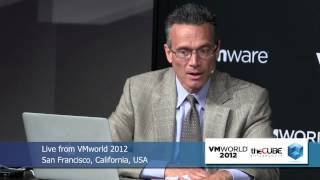
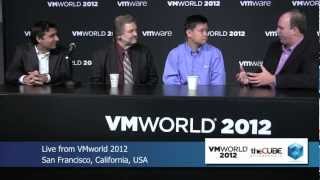
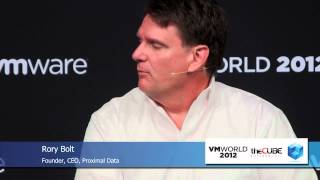
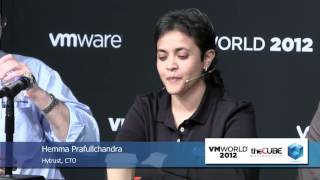
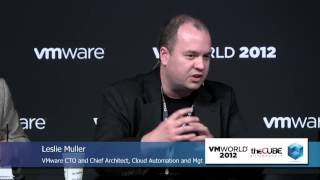
One of the main benefits driving server virtualization, according Orenstein, is "the flexibility that you get with these configurations" when it comes to moving data, growing at scale, compared with how things used to be done in the past. The large number of people demonstrating their use cases at VMWorld supports that point of view.
Discussing Fusion-io's role in pioneered flash, Orenstein said "the industry has come a great way. We are about delivering the data world faster," changing the shape of the data center, reducing the amount of infrastructure from a cost perspective. "When you reduce the cost of computing, you increase the size of the market."
Taking on the competition
As far as Fusion-io developments are concerned, as the competition in the flash market increases, the company has dramatically increased its portfolio, adding shared solutions, and a suite of virtualized solutions for both servers and desktops. "We haven't seen folks that they can offer such choice for their customers, not only about the products, but also the deployment method," he explained.
"The web is the engine of innovation, but the enterprise is the engine of our economy," Orenstein said. Across the spectrum of enterprise solutions, "we have a lot of activity in the database market. Server virtualization and virtual desktops are a big market for us." The company has seen increased adoption of the Big Data noSQL databases, such as MongoDB. The company's philosophy when addressing customers is to "give them choice of deployment and help reduce cost."
"There is a fixed stack in term of the applications that go into the storage," on VMware's side, while their focus is still on increasing the main stream functionality. Extreme server density with flash as a cache, while maintaining security and disaster recovery services, is the approach to follow. One of the big focuses of the Fusion-io solutions is "if you have a storage system that you know and love, don't change it. We want to help accelerate it."
Forgot Password
Almost there!
We just sent you a verification email. Please verify your account to gain access to
VMworld 2012 | San Francisco. If you don’t think you received an email check your
spam folder.
In order to sign in, enter the email address you used to registered for the event. Once completed, you will receive an email with a verification link. Open this link to automatically sign into the site.
Register For VMworld 2012 | San Francisco
Please fill out the information below. You will recieve an email with a verification link confirming your registration. Click the link to automatically sign into the site.
You’re almost there!
We just sent you a verification email. Please click the verification button in the email. Once your email address is verified, you will have full access to all event content for VMworld 2012 | San Francisco.
I want my badge and interests to be visible to all attendees.
Checking this box will display your presense on the attendees list, view your profile and allow other attendees to contact you via 1-1 chat. Read the Privacy Policy. At any time, you can choose to disable this preference.
Select your Interests!
add
Upload your photo
Uploading..
OR
Connect via Twitter
Connect via Linkedin
EDIT PASSWORD
Share
Forgot Password
Almost there!
We just sent you a verification email. Please verify your account to gain access to
VMworld 2012 | San Francisco. If you don’t think you received an email check your
spam folder.
In order to sign in, enter the email address you used to registered for the event. Once completed, you will receive an email with a verification link. Open this link to automatically sign into the site.
Sign in to gain access to VMworld 2012 | San Francisco
Please sign in with LinkedIn to continue to VMworld 2012 | San Francisco. Signing in with LinkedIn ensures a professional environment.
Are you sure you want to remove access rights for this user?
Details
Manage Access
email address
Community Invitation
Gary Orenstein | VMworld 2012
One of the main benefits driving server virtualization, according Orenstein, is "the flexibility that you get with these configurations" when it comes to moving data, growing at scale, compared with how things used to be done in the past. The large number of people demonstrating their use cases at VMWorld supports that point of view.
Discussing Fusion-io's role in pioneered flash, Orenstein said "the industry has come a great way. We are about delivering the data world faster," changing the shape of the data center, reducing the amount of infrastructure from a cost perspective. "When you reduce the cost of computing, you increase the size of the market."
Taking on the competition
As far as Fusion-io developments are concerned, as the competition in the flash market increases, the company has dramatically increased its portfolio, adding shared solutions, and a suite of virtualized solutions for both servers and desktops. "We haven't seen folks that they can offer such choice for their customers, not only about the products, but also the deployment method," he explained.
"The web is the engine of innovation, but the enterprise is the engine of our economy," Orenstein said. Across the spectrum of enterprise solutions, "we have a lot of activity in the database market. Server virtualization and virtual desktops are a big market for us." The company has seen increased adoption of the Big Data noSQL databases, such as MongoDB. The company's philosophy when addressing customers is to "give them choice of deployment and help reduce cost."
"There is a fixed stack in term of the applications that go into the storage," on VMware's side, while their focus is still on increasing the main stream functionality. Extreme server density with flash as a cache, while maintaining security and disaster recovery services, is the approach to follow. One of the big focuses of the Fusion-io solutions is "if you have a storage system that you know and love, don't change it. We want to help accelerate it."