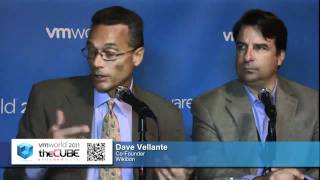
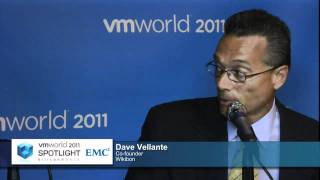
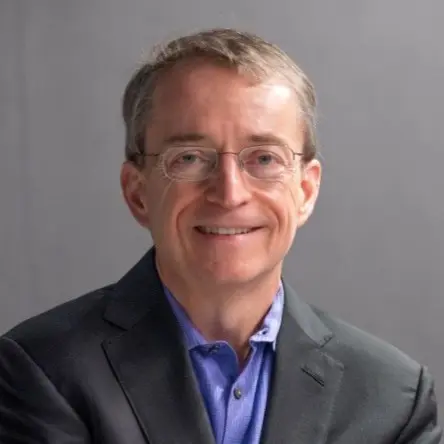
Storage infrastructure was the main topic on the table when SiliconANGLE Founder John Furrier and Dave Vellante, Co-Founder of Wikibon met up with Pat Gelsinger, COO of EMC at VMworld 2011. Furrier asked Gelsinger to describe his vision for the upcoming year. Gelsinger responded that EMC thinks about VMware, or the virtualization layer, as the new data center operating system and how it's the assumed layer of the infrastructure. He said, "It really has become the defining element of the next generation IT center for the future."
Furrier wondered if there were any areas EMC was looking at for R&D or from a mergers and acquisition (M&A) standpoint. Gelsinger identified the key areas where there's still a lot of work to do is in the management and security stacks, and that the whole data layer is a big layer. He said that the industry is just getting started with virtualizing databases and the mission critical applications.
Vellante observed that EMC has put a lot of effort into integration, making it a high priority. Gelsinger agreed, saying that at the highest level, compute is now fairly simple in a VM environment. He said, "Not to trivialize what Intel is doing, but it's pretty easy to vMotion around a few gigabytes of VMs." He explained that the storage infrastructure is getting bigger and heavier, and the sedimentation of these enormous storage environments is becoming overwhelming. In his keynote, Gelsinger showed that there's the ability to move the VM into the storage fabric. He stated, "That's powerful. Now we're moving compute . . . into the storage array for the first time, and that changes the game entirely."
Gelsinger went on to address Furrier's questions about data mobility and security, as well as EMC's competitive strategy. Gelsinger acknowledged that data mobility is one of the key challenges of cloud and hybrid cloud environments. He said EMC's approach to the competition is to benchmark data, predict where the competition will be, compare EMC's roadmap to where they think the competition will be, and measure what they thought the competition would do against what they actually did. He said their motto is to never be surprised. Gelsinger emphasized that his competitive analysis team's mission is to take an optimistic or conservative view, depending on what's happening in the industry, and constantly drive that into the product team so that the competition doesn't stand a chance to get a lead over them.
Gelsinger summed up his views on staying in front of the competition by saying, "The technology industry is ruthless and relentless. If you are not in front of those major waves of technological innovation, you will become one of the driftwood . . . of the industry."
Vellante called him out on playing catch up with Project Lightning. Gelsinger did not dispute this and admitted, "There's no reason that FusionIO should have been in the marketplace in front of us, and we're catching up." Gelsinger said that EMC took an array-centric view and reiterated that they are unquestionably the leader in applying flash in the array. However, he said what they didn't do was say that their business was about storage, no matter where it might appear in the network or in the customer solution, and that's what they didn't get ahead of. He agreed that Project Lightning is underway to catch up to the value proposition they have today, and at the same time, they're out to create a different value proposition for flash for the future with multi-server support, with array affinity, and things they think will differentiate their position in the storage industry.
Forgot Password
Almost there!
We just sent you a verification email. Please verify your account to gain access to
VMworld 2011 | Las Vegas. If you don’t think you received an email check your
spam folder.
In order to sign in, enter the email address you used to registered for the event. Once completed, you will receive an email with a verification link. Open this link to automatically sign into the site.
Register For VMworld 2011 | Las Vegas
Please fill out the information below. You will recieve an email with a verification link confirming your registration. Click the link to automatically sign into the site.
You’re almost there!
We just sent you a verification email. Please click the verification button in the email. Once your email address is verified, you will have full access to all event content for VMworld 2011 | Las Vegas.
I want my badge and interests to be visible to all attendees.
Checking this box will display your presense on the attendees list, view your profile and allow other attendees to contact you via 1-1 chat. Read the Privacy Policy. At any time, you can choose to disable this preference.
Select your Interests!
add
Upload your photo
Uploading..
OR
Connect via Twitter
Connect via Linkedin
EDIT PASSWORD
Share
Forgot Password
Almost there!
We just sent you a verification email. Please verify your account to gain access to
VMworld 2011 | Las Vegas. If you don’t think you received an email check your
spam folder.
In order to sign in, enter the email address you used to registered for the event. Once completed, you will receive an email with a verification link. Open this link to automatically sign into the site.
Sign in to gain access to VMworld 2011 | Las Vegas
Please sign in with LinkedIn to continue to VMworld 2011 | Las Vegas. Signing in with LinkedIn ensures a professional environment.
Are you sure you want to remove access rights for this user?
Details
Manage Access
email address
Community Invitation
Pat Gelsinger, EMC | VMworld 2011
Storage infrastructure was the main topic on the table when SiliconANGLE Founder John Furrier and Dave Vellante, Co-Founder of Wikibon met up with Pat Gelsinger, COO of EMC at VMworld 2011. Furrier asked Gelsinger to describe his vision for the upcoming year. Gelsinger responded that EMC thinks about VMware, or the virtualization layer, as the new data center operating system and how it's the assumed layer of the infrastructure. He said, "It really has become the defining element of the next generation IT center for the future."
Furrier wondered if there were any areas EMC was looking at for R&D or from a mergers and acquisition (M&A) standpoint. Gelsinger identified the key areas where there's still a lot of work to do is in the management and security stacks, and that the whole data layer is a big layer. He said that the industry is just getting started with virtualizing databases and the mission critical applications.
Vellante observed that EMC has put a lot of effort into integration, making it a high priority. Gelsinger agreed, saying that at the highest level, compute is now fairly simple in a VM environment. He said, "Not to trivialize what Intel is doing, but it's pretty easy to vMotion around a few gigabytes of VMs." He explained that the storage infrastructure is getting bigger and heavier, and the sedimentation of these enormous storage environments is becoming overwhelming. In his keynote, Gelsinger showed that there's the ability to move the VM into the storage fabric. He stated, "That's powerful. Now we're moving compute . . . into the storage array for the first time, and that changes the game entirely."
Gelsinger went on to address Furrier's questions about data mobility and security, as well as EMC's competitive strategy. Gelsinger acknowledged that data mobility is one of the key challenges of cloud and hybrid cloud environments. He said EMC's approach to the competition is to benchmark data, predict where the competition will be, compare EMC's roadmap to where they think the competition will be, and measure what they thought the competition would do against what they actually did. He said their motto is to never be surprised. Gelsinger emphasized that his competitive analysis team's mission is to take an optimistic or conservative view, depending on what's happening in the industry, and constantly drive that into the product team so that the competition doesn't stand a chance to get a lead over them.
Gelsinger summed up his views on staying in front of the competition by saying, "The technology industry is ruthless and relentless. If you are not in front of those major waves of technological innovation, you will become one of the driftwood . . . of the industry."
Vellante called him out on playing catch up with Project Lightning. Gelsinger did not dispute this and admitted, "There's no reason that FusionIO should have been in the marketplace in front of us, and we're catching up." Gelsinger said that EMC took an array-centric view and reiterated that they are unquestionably the leader in applying flash in the array. However, he said what they didn't do was say that their business was about storage, no matter where it might appear in the network or in the customer solution, and that's what they didn't get ahead of. He agreed that Project Lightning is underway to catch up to the value proposition they have today, and at the same time, they're out to create a different value proposition for flash for the future with multi-server support, with array affinity, and things they think will differentiate their position in the storage industry.