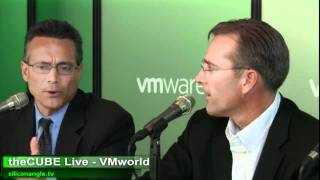
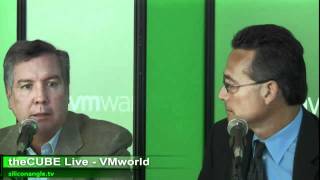
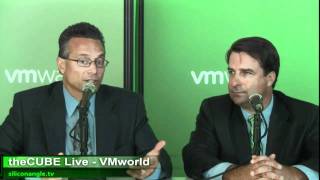
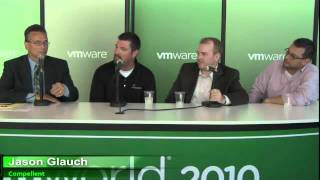
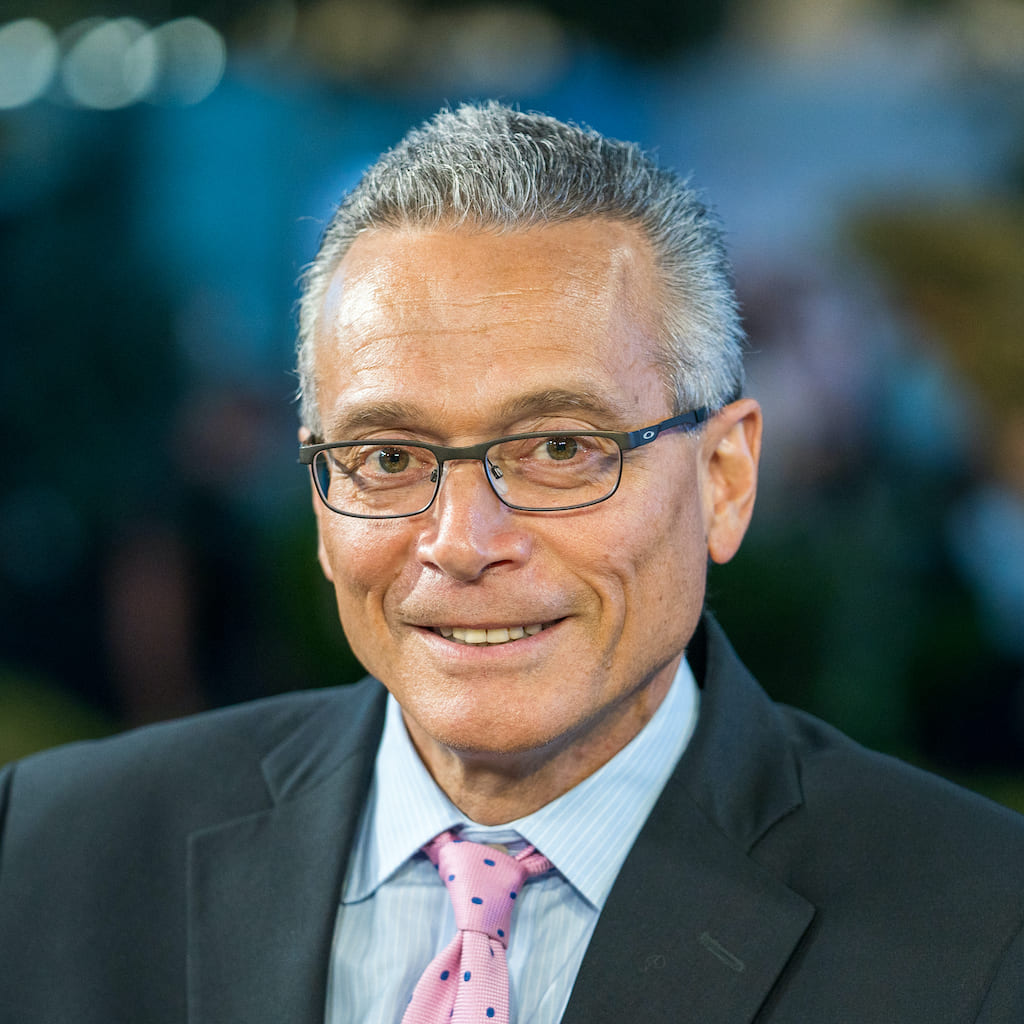
IBM's Alex Yost Vice President and Business Line Executive , IBM System X and Bladecenter at IBM and distinguished IBM engineer, Clod Barrera, join Dave Vellante in the Cube at VMWorld 2010 to discuss what IBM has been doing at VMWorld and what is hot at the moment, including virtualization and the combination of server and storage value for customers; also known as architecture.
Alex Yost starts out making mention of the incredible energy at VMWorld and then it is all virtualization, virtualization, virtualization. Yost notes the overwhelming support of virtualization from the clients, even quoting one who said "I am virtualizing everything"...it is not just about consolidating with small applications to get more utilization out of a server, we are taking and putting our mission critical application into virtualization environments".
Yost explains what this means for the client, "the impact being that clients are getting more virtual machines per server"..."giving them bigger virtualization, and these bigger virtual machines are more important than ever to the operation of their business".
Vellante asks Alex Yost about what the requirements are, what exactly is it that is driving clients towards virtualization; is it just "efficiency, or are we going beyond efficiency at this point?"
While Yost agrees it is mainly about efficiency, he also elaborates, "it is about management, and having pure physical resources to manage" and basically, "it (virtualization) simplifies your job as an owner, as a manger".
Dave Vellante moves the conversation to Clod Barrera, asking him to discuss architecture with the thought in mind that the benefits of virtualization seem to outweigh the downfall that putting something in between the application and the server might cause a slowdown.
Things that may outweigh are those such as flash and placement of system resources.
Clod offers his perspective in terms of IBM's vision for how architecture comes foreward; including flash.
Barrera says he looks at all those ideas through "a storage eye view", calling it "the important perspective".
He gives us a better understanding by, for starters, differentiating between virtualization on the storage side as opposed to virtualization on the server side; introducing the idea into the conversation, that, the combination of virtualization on both the server and storage sides can have the effect of a better delivery of truly enterprise-class applications, claiming one effect is that "hyperizers sensors side virtualization has experienced a take-off in environments like tester web serving, in which there really is not a lot of enterprise-class or truly mission critical data availability requirement." This has given way to the customers desire to "use those same technologies in big data mission critical environments". This, in turn, acted as demand for a resolution of what Clod Barrera calls a "key issue", that being, "to make those technology layers work in concert". Barrera goes on to close the segment with an example explaining how that is done using provisioning.
Forgot Password
Almost there!
We just sent you a verification email. Please verify your account to gain access to
VMworld 2010 | San Francisco. If you don’t think you received an email check your
spam folder.
In order to sign in, enter the email address you used to registered for the event. Once completed, you will receive an email with a verification link. Open this link to automatically sign into the site.
Register For VMworld 2010 | San Francisco
Please fill out the information below. You will recieve an email with a verification link confirming your registration. Click the link to automatically sign into the site.
You’re almost there!
We just sent you a verification email. Please click the verification button in the email. Once your email address is verified, you will have full access to all event content for VMworld 2010 | San Francisco.
I want my badge and interests to be visible to all attendees.
Checking this box will display your presense on the attendees list, view your profile and allow other attendees to contact you via 1-1 chat. Read the Privacy Policy. At any time, you can choose to disable this preference.
Select your Interests!
add
Upload your photo
Uploading..
OR
Connect via Twitter
Connect via Linkedin
EDIT PASSWORD
Share
Forgot Password
Almost there!
We just sent you a verification email. Please verify your account to gain access to
VMworld 2010 | San Francisco. If you don’t think you received an email check your
spam folder.
In order to sign in, enter the email address you used to registered for the event. Once completed, you will receive an email with a verification link. Open this link to automatically sign into the site.
Sign in to gain access to VMworld 2010 | San Francisco
Please sign in with LinkedIn to continue to VMworld 2010 | San Francisco. Signing in with LinkedIn ensures a professional environment.
Are you sure you want to remove access rights for this user?
Details
Manage Access
email address
Community Invitation
IBM's Alex Yost (Systems) and Clod Barrera (Storage) | VMworld 2010
IBM's Alex Yost Vice President and Business Line Executive , IBM System X and Bladecenter at IBM and distinguished IBM engineer, Clod Barrera, join Dave Vellante in the Cube at VMWorld 2010 to discuss what IBM has been doing at VMWorld and what is hot at the moment, including virtualization and the combination of server and storage value for customers; also known as architecture.
Alex Yost starts out making mention of the incredible energy at VMWorld and then it is all virtualization, virtualization, virtualization. Yost notes the overwhelming support of virtualization from the clients, even quoting one who said "I am virtualizing everything"...it is not just about consolidating with small applications to get more utilization out of a server, we are taking and putting our mission critical application into virtualization environments".
Yost explains what this means for the client, "the impact being that clients are getting more virtual machines per server"..."giving them bigger virtualization, and these bigger virtual machines are more important than ever to the operation of their business".
Vellante asks Alex Yost about what the requirements are, what exactly is it that is driving clients towards virtualization; is it just "efficiency, or are we going beyond efficiency at this point?"
While Yost agrees it is mainly about efficiency, he also elaborates, "it is about management, and having pure physical resources to manage" and basically, "it (virtualization) simplifies your job as an owner, as a manger".
Dave Vellante moves the conversation to Clod Barrera, asking him to discuss architecture with the thought in mind that the benefits of virtualization seem to outweigh the downfall that putting something in between the application and the server might cause a slowdown.
Things that may outweigh are those such as flash and placement of system resources.
Clod offers his perspective in terms of IBM's vision for how architecture comes foreward; including flash.
Barrera says he looks at all those ideas through "a storage eye view", calling it "the important perspective".
He gives us a better understanding by, for starters, differentiating between virtualization on the storage side as opposed to virtualization on the server side; introducing the idea into the conversation, that, the combination of virtualization on both the server and storage sides can have the effect of a better delivery of truly enterprise-class applications, claiming one effect is that "hyperizers sensors side virtualization has experienced a take-off in environments like tester web serving, in which there really is not a lot of enterprise-class or truly mission critical data availability requirement." This has given way to the customers desire to "use those same technologies in big data mission critical environments". This, in turn, acted as demand for a resolution of what Clod Barrera calls a "key issue", that being, "to make those technology layers work in concert". Barrera goes on to close the segment with an example explaining how that is done using provisioning.