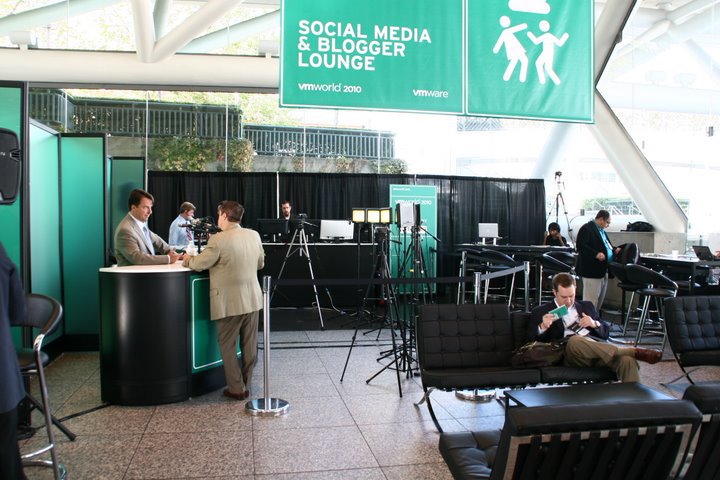
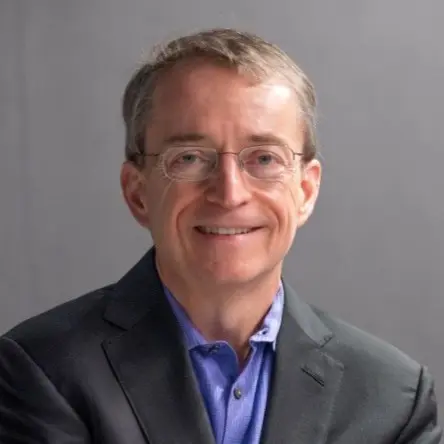
The new wave of virtualization and cloud technology will have a much larger impact than previous waves, even than the PC revolution, in part because the IT industry is larger now and is much more deeply integrated into every aspect of business, and also because it will disrupt every level of the IT technology stack, EMC President and Chief Technology Officer Pat Gelsinger said Tuesday at VMworld 2010 in San Francisco. It will impact the infrastructure, the application model, the service model, service providers and systems integrators. "This is a tsunami."
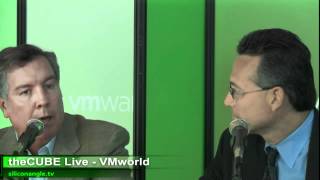
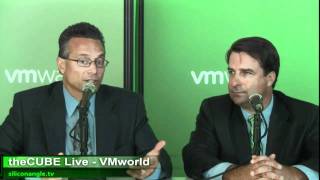
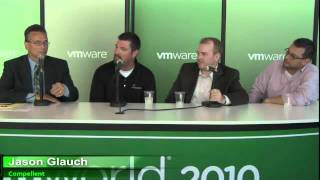
"For the past two years the hype cycle has been ahead of reality," he said in an interview on SiliconAngle TV (www.siliconangle.tv). "Now we are seeing the reality starting to build as real customers and apps are being deployed. We are seeing increasing momentum as IT says 'Yes, we need to rate our services against the cloud.'"image
This does not mean that everything will change instantly. In 1990, Gelsinger predicted the end of the mainframe, but mainframes are still around. Today, he said, "I am much more productive on my laptop than on my smartphone. But I can't carry my laptop in my pocket." The PC will remain, but the focus of innovation has shifted to device-agnostic, consumer-centric usage models designed for fully mobile platforms such as handhelds and the iPad.
While the mobile apps are the sexy stuff of this new wave, the infrastructure developers are the central players in this wave. "You don't write apps for platforms that don't exist yet. We infrastructure guys create capabilities that the app guys then come in and use to provide new things. So our job is to create the new vacuums for the apps guys to fill in."
On that level, the new technologies have already created tremendous new capabilities. "Think of how easy it is to provision a VM today," he said. "It the past it might have taken months to provision a new enterprise application -- to install and configure the server, etc. Now it takes a few clicks."
Being able to create a new virtual infrastructure quickly is a profound advance that then enables a new developer model for tomorrow's apps.
The infrastructure developers should not take sides in the competition between in-house IT and cloud services. "Our job is to make the infrastructure as efficient as possible on both sides of that equation, so the IT guy can make the decision between in-house and cloud service based on relevant business factors, not cost."
Virtualization also makes it easier to federate in-house and cloud services -- for instance to develop apps externally and then bring them in-house, to use the cloud to cover high-demand periods such as quarter ends, and to let the company's customers see the company as a cloud service provider.
He sees three views of the cloud developing, with leading vendors in each: the ubercloud as seen by Google and Amazon, the vertical cloud advocated by HP and IBM, and the virtual cloud of companies like VMware. From his standpoint, "everything is riding on the cloud/virtualization trend. Everyone wants to build new apps on the virtual cloud model."
Forgot Password
Almost there!
We just sent you a verification email. Please verify your account to gain access to
VMworld 2010 | San Francisco. If you don’t think you received an email check your
spam folder.
In order to sign in, enter the email address you used to registered for the event. Once completed, you will receive an email with a verification link. Open this link to automatically sign into the site.
Register For VMworld 2010 | San Francisco
Please fill out the information below. You will recieve an email with a verification link confirming your registration. Click the link to automatically sign into the site.
You’re almost there!
We just sent you a verification email. Please click the verification button in the email. Once your email address is verified, you will have full access to all event content for VMworld 2010 | San Francisco.
I want my badge and interests to be visible to all attendees.
Checking this box will display your presense on the attendees list, view your profile and allow other attendees to contact you via 1-1 chat. Read the Privacy Policy. At any time, you can choose to disable this preference.
Select your Interests!
add
Upload your photo
Uploading..
OR
Connect via Twitter
Connect via Linkedin
EDIT PASSWORD
Share
Forgot Password
Almost there!
We just sent you a verification email. Please verify your account to gain access to
VMworld 2010 | San Francisco. If you don’t think you received an email check your
spam folder.
In order to sign in, enter the email address you used to registered for the event. Once completed, you will receive an email with a verification link. Open this link to automatically sign into the site.
Sign in to gain access to VMworld 2010 | San Francisco
Please sign in with LinkedIn to continue to VMworld 2010 | San Francisco. Signing in with LinkedIn ensures a professional environment.
Are you sure you want to remove access rights for this user?
Details
Manage Access
email address
Community Invitation
Pat Gelsinger, President & COO, EMC | VMworld 2010
The new wave of virtualization and cloud technology will have a much larger impact than previous waves, even than the PC revolution, in part because the IT industry is larger now and is much more deeply integrated into every aspect of business, and also because it will disrupt every level of the IT technology stack, EMC President and Chief Technology Officer Pat Gelsinger said Tuesday at VMworld 2010 in San Francisco. It will impact the infrastructure, the application model, the service model, service providers and systems integrators. "This is a tsunami."
"For the past two years the hype cycle has been ahead of reality," he said in an interview on SiliconAngle TV (www.siliconangle.tv). "Now we are seeing the reality starting to build as real customers and apps are being deployed. We are seeing increasing momentum as IT says 'Yes, we need to rate our services against the cloud.'"image
This does not mean that everything will change instantly. In 1990, Gelsinger predicted the end of the mainframe, but mainframes are still around. Today, he said, "I am much more productive on my laptop than on my smartphone. But I can't carry my laptop in my pocket." The PC will remain, but the focus of innovation has shifted to device-agnostic, consumer-centric usage models designed for fully mobile platforms such as handhelds and the iPad.
While the mobile apps are the sexy stuff of this new wave, the infrastructure developers are the central players in this wave. "You don't write apps for platforms that don't exist yet. We infrastructure guys create capabilities that the app guys then come in and use to provide new things. So our job is to create the new vacuums for the apps guys to fill in."
On that level, the new technologies have already created tremendous new capabilities. "Think of how easy it is to provision a VM today," he said. "It the past it might have taken months to provision a new enterprise application -- to install and configure the server, etc. Now it takes a few clicks."
Being able to create a new virtual infrastructure quickly is a profound advance that then enables a new developer model for tomorrow's apps.
The infrastructure developers should not take sides in the competition between in-house IT and cloud services. "Our job is to make the infrastructure as efficient as possible on both sides of that equation, so the IT guy can make the decision between in-house and cloud service based on relevant business factors, not cost."
Virtualization also makes it easier to federate in-house and cloud services -- for instance to develop apps externally and then bring them in-house, to use the cloud to cover high-demand periods such as quarter ends, and to let the company's customers see the company as a cloud service provider.
He sees three views of the cloud developing, with leading vendors in each: the ubercloud as seen by Google and Amazon, the vertical cloud advocated by HP and IBM, and the virtual cloud of companies like VMware. From his standpoint, "everything is riding on the cloud/virtualization trend. Everyone wants to build new apps on the virtual cloud model."