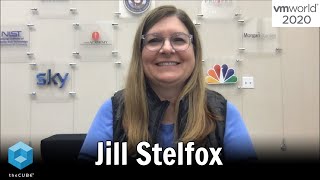
Shannon Champion, Director, HCI & CI Product Marketing at Dell Technologies, joins Stu Miniman for coverage of VMworld 2020.
#VMworld #theCUBE #WomeninTech @SiliconANGLE theCUBE @VMware
https://siliconangle.com/2020/10/01/application-modernization-helps-businesses-thrive-in-a-post-pandemic-world-vmworld/
Application modernization helps businesses thrive in a post-pandemic world
BY SILVIA FREGONI
It has been imperative for business to deepen their digital transformation to accommodate the new demands for remote work and online operations imposed by the global pandemic. And an essential part of this process is the modernization of applications, necessary to drive innovation and give organizations a competitive advantage during and post-COVID, according to Shannon Champion (pictured), director of product marketing at Dell Technologies.
“One way that they’re able to do that [digital transformation] is by finding ways to flexibly and rapidly move workloads to where they make sense, whether that’s on-premises or in the public cloud,” Champion said. “And the new standard for doing this is becoming cloud native applications.”
Champion spoke with Stu Miniman, host of theCUBE, SiliconANGLE Media’s livestreaming studio, during VMworld. They discussed how enterprises can boost their IT modernization, Dell and VMware solutions for business dealing with modern and legacy infrastructures, and the challenges associated with the upgrade process. (* Disclosure below.)
Managing new and old applications
The modernization trend seems like a path of no return. A recent IDC report predicted that by 2025 nearby two-thirds of enterprises will be prolific software producers with code being deployed on a daily basis and that over 90% of applications at that time will be delivered with cloud native approaches.
“What’s really impressive, too, is the sheer volume of applications that are anticipated to be produced with these cloud native approaches,” Champion said. “It’s expected to be over 500 million new apps created with cloud native approaches by 2024 … the same number that’s been created over the last 40 years.”
Despite producing more and more native applications, many companies will still need to maintain their legacy, which often drives business-critical applications and workloads. Therefore, these organizations will need to look for solutions that help them manage both and allow them to remove some legacies at their own pace so that they can maintain business continuity, according to Champion.
“When you look at trends, especially for hyperconverged edge and cloud native, [they] are kind of taking up a lot of the airwaves right now,” she pointed out. “And I think the intersection of those two comes into play with things like the remote cluster support for VMware Cloud Foundation on VxRail, where you can run cloud native-based modern applications with Tanzu alongside traditional workloads at the edge.”
The idea is to support the client wherever they are on their modernization path. Some companies have developed in-house mature capabilities for Kubernetes and software-defined networks and may still want to use a reference architecture and build on top of VxRail for a specific custom cloud native application, according to Champion.
However, what Dell is finding is that many customers do not have this level of expertise in Kubernetes, especially at scale. “So, VMware vSphere, with Tanzu on VxRail, as well as VMware Cloud Foundation on VxRail, are ways to get a fast start on Kubernetes directly on vSphere, or kind of go with the full monte of VMware cloud foundation on VxRail,” she concluded.
Watch the complete video interview below, and be sure to check out more of SiliconANGLE’s and theCUBE’s coverage of VMworld. (* Disclosure: Dell Technologies sponsored this segment of theCUBE. Neither Dell nor other sponsors have editorial control over content on theCUBE or SiliconANGLE.)
Forgot Password
Almost there!
We just sent you a verification email. Please verify your account to gain access to
VMworld 2020 | Digital. If you don’t think you received an email check your
spam folder.
In order to sign in, enter the email address you used to registered for the event. Once completed, you will receive an email with a verification link. Open this link to automatically sign into the site.
Register For VMworld 2020 | Digital
Please fill out the information below. You will recieve an email with a verification link confirming your registration. Click the link to automatically sign into the site.
You’re almost there!
We just sent you a verification email. Please click the verification button in the email. Once your email address is verified, you will have full access to all event content for VMworld 2020 | Digital.
I want my badge and interests to be visible to all attendees.
Checking this box will display your presense on the attendees list, view your profile and allow other attendees to contact you via 1-1 chat. Read the Privacy Policy. At any time, you can choose to disable this preference.
Select your Interests!
add
Upload your photo
Uploading..
OR
Connect via Twitter
Connect via Linkedin
EDIT PASSWORD
Share
Forgot Password
Almost there!
We just sent you a verification email. Please verify your account to gain access to
VMworld 2020 | Digital. If you don’t think you received an email check your
spam folder.
In order to sign in, enter the email address you used to registered for the event. Once completed, you will receive an email with a verification link. Open this link to automatically sign into the site.
Sign in to gain access to VMworld 2020 | Digital
Please sign in with LinkedIn to continue to VMworld 2020 | Digital. Signing in with LinkedIn ensures a professional environment.
Shannon Champion, Director, HCI & CI Product Marketing at Dell Technologies, joins Stu Miniman for coverage of VMworld 2020.
#VMworld #theCUBE #WomeninTech @SiliconANGLE theCUBE @VMware
https://siliconangle.com/2020/10/01/application-modernization-helps-businesses-thrive-in-a-post-pandemic-world-vmworld/
Application modernization helps businesses thrive in a post-pandemic world
BY SILVIA FREGONI
It has been imperative for business to deepen their digital transformation to accommodate the new demands for remote work and online operations imposed by the global pandemic. And an essential part of this process is the modernization of applications, necessary to drive innovation and give organizations a competitive advantage during and post-COVID, according to Shannon Champion (pictured), director of product marketing at Dell Technologies.
“One way that they’re able to do that [digital transformation] is by finding ways to flexibly and rapidly move workloads to where they make sense, whether that’s on-premises or in the public cloud,” Champion said. “And the new standard for doing this is becoming cloud native applications.”
Champion spoke with Stu Miniman, host of theCUBE, SiliconANGLE Media’s livestreaming studio, during VMworld. They discussed how enterprises can boost their IT modernization, Dell and VMware solutions for business dealing with modern and legacy infrastructures, and the challenges associated with the upgrade process. (* Disclosure below.)
Managing new and old applications
The modernization trend seems like a path of no return. A recent IDC report predicted that by 2025 nearby two-thirds of enterprises will be prolific software producers with code being deployed on a daily basis and that over 90% of applications at that time will be delivered with cloud native approaches.
“What’s really impressive, too, is the sheer volume of applications that are anticipated to be produced with these cloud native approaches,” Champion said. “It’s expected to be over 500 million new apps created with cloud native approaches by 2024 … the same number that’s been created over the last 40 years.”
Despite producing more and more native applications, many companies will still need to maintain their legacy, which often drives business-critical applications and workloads. Therefore, these organizations will need to look for solutions that help them manage both and allow them to remove some legacies at their own pace so that they can maintain business continuity, according to Champion.
“When you look at trends, especially for hyperconverged edge and cloud native, [they] are kind of taking up a lot of the airwaves right now,” she pointed out. “And I think the intersection of those two comes into play with things like the remote cluster support for VMware Cloud Foundation on VxRail, where you can run cloud native-based modern applications with Tanzu alongside traditional workloads at the edge.”
The idea is to support the client wherever they are on their modernization path. Some companies have developed in-house mature capabilities for Kubernetes and software-defined networks and may still want to use a reference architecture and build on top of VxRail for a specific custom cloud native application, according to Champion.
However, what Dell is finding is that many customers do not have this level of expertise in Kubernetes, especially at scale. “So, VMware vSphere, with Tanzu on VxRail, as well as VMware Cloud Foundation on VxRail, are ways to get a fast start on Kubernetes directly on vSphere, or kind of go with the full monte of VMware cloud foundation on VxRail,” she concluded.
Watch the complete video interview below, and be sure to check out more of SiliconANGLE’s and theCUBE’s coverage of VMworld. (* Disclosure: Dell Technologies sponsored this segment of theCUBE. Neither Dell nor other sponsors have editorial control over content on theCUBE or SiliconANGLE.)