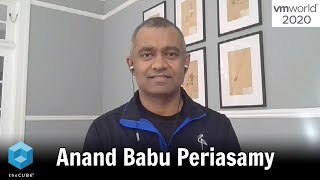
Greg Lavender, SVP & CTO of VMware, joins John Furrier and Dave Vellante for coverage of VMworld 2020.
#VMworld #theCUBE #VMware @SiliconANGLE theCUBE @VMware
https://siliconangle.com/2020/09/29/qa-welcome-project-monterey-vmware-gets-ready-rip-apart-io-stack-vmworld/
Q&A: Welcome to Project Monterey: VMware gets ready to rip apart the I/O stack
VIDEO EXCLUSIVE BY BETSY AMY-VOGT
VMworld is known for being a technical conference. Last year Project Pacific made a match between vSphere and Kubernetes. This year Project Monterey is aimed at reimagining the data center for next-generation applications.
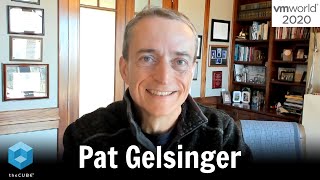
During an interview today with theCUBE, SiliconANGLE Media’s livestreaming studio, VMware Inc. Chief Executive Officer Pat Gelsinger described the project as “ripping apart the I/O stack from the intrinsic operation of a vSphere.”
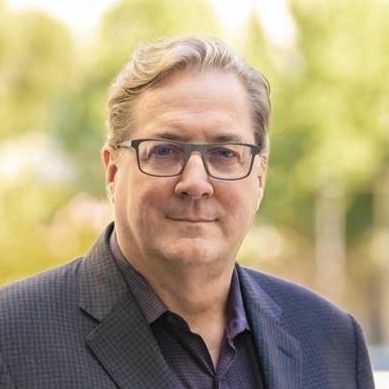
To delve deeper into the technology behind Project Monterey and other technological innovations in the VMware pipeline, Greg Lavender (pictured), senior vice president and chief technology officer of VMware, spoke with John Furrier and Dave Vellante, co-hosts of theCUBE, during VMworld. (* Disclosure below.)
[Editor’s note: The following content has been condensed for clarity.]
Furrier: Where did the innovation behind Project Monterey come from?
Lavender: Four years ago, in the office of the CTO, we actually had a future-looking project to get our core hypervisor technology running on Arm processors. That incubated for three years, and then last December, I moved the engineering team that had done that research and advanced development work over to our cloud platforms business unit, and SmartNIC kind of converged with that. So we were already well along the innovation path there, and it’s really now about building the partnerships we have with SmartNIC vendors and driving this technology out to the benefit of our customers who want to leverage it.
Vellante: Could you clarify something on that? When we interviewed Pat Gelsinger he talked about Monterey as a complete re-architecting of the I/O stack. What specifically was he talking about there?
Lavender: With any computing server in the data center, in a colo facility or even in the cloud, a large portion of the CPU resources, and even some memory resources, can get consumed by just processing the high volumes of I/O that’s going out to storage devices, communicating between the different parts of multitiered applications. So there’s an overhead that gets consumed in the core server CPU, even if it’s multicore, multisocket.
By offloading a lot of that I/O work onto the Arm core and taking advantage of hardware offloads there in those SmartNICs, you can offload that processing and free up even as much as 30% of the CPU of a multi-socket, multi-core server and give that back to the application so that the application gets the benefit of those extra compute and memory resources.
Vellante: VMware published data that shows hybrid is 30 to 40% cheaper than the cloud. Can you add some color to the economics of hybrid?
Lavender: Somebody asked me one time: ‘What’s really a cloud. Greg?’ And I said: ‘Automation. Automation. Automation.’ You can take your current environments and highly automate the release, lifecycle management, develop more agile software delivery methods, and so therefore you could get sort of cloud benefits from your existing applications by just highly optimizing them on the cost of goods and services.
Then again, the hybrid cloud model just gives customers more choice. For example, I want to reduce the number of data centers I have but I need to maintain reliability, scalability, et cetera. So, take advantage of the hybrid cloud that we offer, but you’ll still run things cloud native. You’re seeing this true multicloud technology and paradigm grow out as people have these choices.
Then the question is: If you have those choices, how do you maintain security? How do you maintain reliability? How do you maintain up-time yet be able to move quickly? So I think there’s different speeds in which those platforms will evolve, and our goal is to give you the ability to basically make those choices and optimize for economics as well as technical capability.
Furrier: VMware announced last month that the United States Space Force has committed to the Tanzu platform. When theCUBE interviewed Lieutenant General John Thompson recently, he talked about how Space Force is looking at software-defined as a key operating reality. What’s your take on this?
...
Here’s the complete video interview, part of SiliconANGLE’s and theCUBE’s coverage of VMworld. (* Disclosure: VMware sponsored this segment of theCUBE. Neither VMware nor other sponsors have editorial control over content on theCUBE or SiliconANGLE.)
Forgot Password
Almost there!
We just sent you a verification email. Please verify your account to gain access to
VMworld 2020 | Digital. If you don’t think you received an email check your
spam folder.
In order to sign in, enter the email address you used to registered for the event. Once completed, you will receive an email with a verification link. Open this link to automatically sign into the site.
Register For VMworld 2020 | Digital
Please fill out the information below. You will recieve an email with a verification link confirming your registration. Click the link to automatically sign into the site.
You’re almost there!
We just sent you a verification email. Please click the verification button in the email. Once your email address is verified, you will have full access to all event content for VMworld 2020 | Digital.
I want my badge and interests to be visible to all attendees.
Checking this box will display your presense on the attendees list, view your profile and allow other attendees to contact you via 1-1 chat. Read the Privacy Policy. At any time, you can choose to disable this preference.
Select your Interests!
add
Upload your photo
Uploading..
OR
Connect via Twitter
Connect via Linkedin
EDIT PASSWORD
Share
Forgot Password
Almost there!
We just sent you a verification email. Please verify your account to gain access to
VMworld 2020 | Digital. If you don’t think you received an email check your
spam folder.
In order to sign in, enter the email address you used to registered for the event. Once completed, you will receive an email with a verification link. Open this link to automatically sign into the site.
Sign in to gain access to VMworld 2020 | Digital
Please sign in with LinkedIn to continue to VMworld 2020 | Digital. Signing in with LinkedIn ensures a professional environment.
Are you sure you want to remove access rights for this user?
Details
Manage Access
email address
Community Invitation
Greg Lavender, VMware | VMworld 2020
Greg Lavender, SVP & CTO of VMware, joins John Furrier and Dave Vellante for coverage of VMworld 2020.
#VMworld #theCUBE #VMware @SiliconANGLE theCUBE @VMware
https://siliconangle.com/2020/09/29/qa-welcome-project-monterey-vmware-gets-ready-rip-apart-io-stack-vmworld/
Q&A: Welcome to Project Monterey: VMware gets ready to rip apart the I/O stack
VIDEO EXCLUSIVE BY BETSY AMY-VOGT
VMworld is known for being a technical conference. Last year Project Pacific made a match between vSphere and Kubernetes. This year Project Monterey is aimed at reimagining the data center for next-generation applications.
During an interview today with theCUBE, SiliconANGLE Media’s livestreaming studio, VMware Inc. Chief Executive Officer Pat Gelsinger described the project as “ripping apart the I/O stack from the intrinsic operation of a vSphere.”
To delve deeper into the technology behind Project Monterey and other technological innovations in the VMware pipeline, Greg Lavender (pictured), senior vice president and chief technology officer of VMware, spoke with John Furrier and Dave Vellante, co-hosts of theCUBE, during VMworld. (* Disclosure below.)
[Editor’s note: The following content has been condensed for clarity.]
Furrier: Where did the innovation behind Project Monterey come from?
Lavender: Four years ago, in the office of the CTO, we actually had a future-looking project to get our core hypervisor technology running on Arm processors. That incubated for three years, and then last December, I moved the engineering team that had done that research and advanced development work over to our cloud platforms business unit, and SmartNIC kind of converged with that. So we were already well along the innovation path there, and it’s really now about building the partnerships we have with SmartNIC vendors and driving this technology out to the benefit of our customers who want to leverage it.
Vellante: Could you clarify something on that? When we interviewed Pat Gelsinger he talked about Monterey as a complete re-architecting of the I/O stack. What specifically was he talking about there?
Lavender: With any computing server in the data center, in a colo facility or even in the cloud, a large portion of the CPU resources, and even some memory resources, can get consumed by just processing the high volumes of I/O that’s going out to storage devices, communicating between the different parts of multitiered applications. So there’s an overhead that gets consumed in the core server CPU, even if it’s multicore, multisocket.
By offloading a lot of that I/O work onto the Arm core and taking advantage of hardware offloads there in those SmartNICs, you can offload that processing and free up even as much as 30% of the CPU of a multi-socket, multi-core server and give that back to the application so that the application gets the benefit of those extra compute and memory resources.
Vellante: VMware published data that shows hybrid is 30 to 40% cheaper than the cloud. Can you add some color to the economics of hybrid?
Lavender: Somebody asked me one time: ‘What’s really a cloud. Greg?’ And I said: ‘Automation. Automation. Automation.’ You can take your current environments and highly automate the release, lifecycle management, develop more agile software delivery methods, and so therefore you could get sort of cloud benefits from your existing applications by just highly optimizing them on the cost of goods and services.
Then again, the hybrid cloud model just gives customers more choice. For example, I want to reduce the number of data centers I have but I need to maintain reliability, scalability, et cetera. So, take advantage of the hybrid cloud that we offer, but you’ll still run things cloud native. You’re seeing this true multicloud technology and paradigm grow out as people have these choices.
Then the question is: If you have those choices, how do you maintain security? How do you maintain reliability? How do you maintain up-time yet be able to move quickly? So I think there’s different speeds in which those platforms will evolve, and our goal is to give you the ability to basically make those choices and optimize for economics as well as technical capability.
Furrier: VMware announced last month that the United States Space Force has committed to the Tanzu platform. When theCUBE interviewed Lieutenant General John Thompson recently, he talked about how Space Force is looking at software-defined as a key operating reality. What’s your take on this?
...
Here’s the complete video interview, part of SiliconANGLE’s and theCUBE’s coverage of VMworld. (* Disclosure: VMware sponsored this segment of theCUBE. Neither VMware nor other sponsors have editorial control over content on theCUBE or SiliconANGLE.)