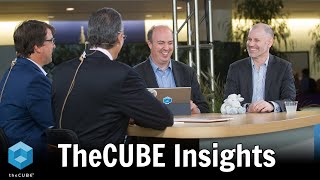
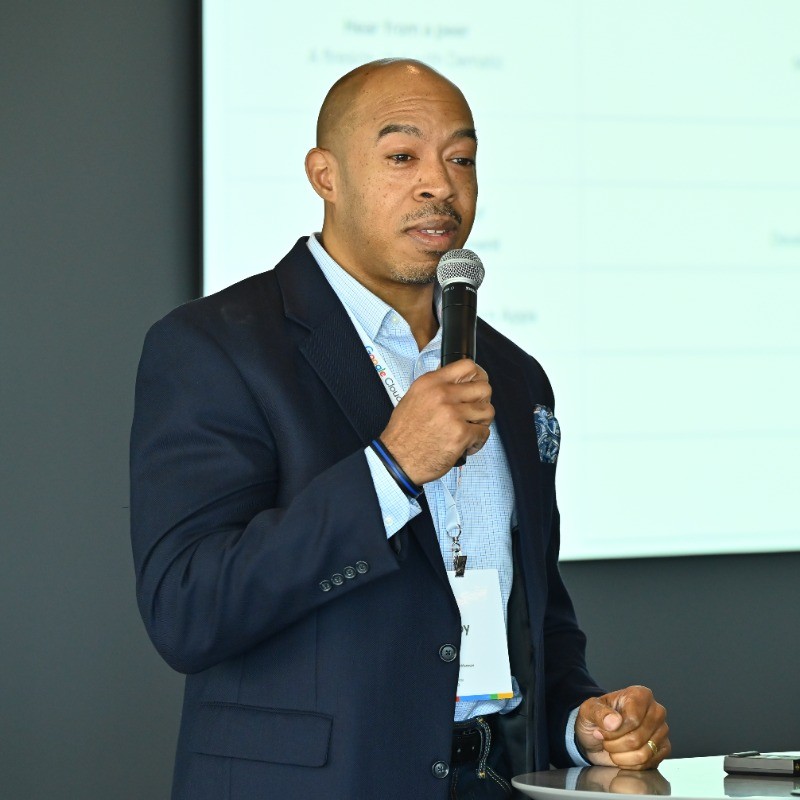
Ajay Patel, SVP & GM, Cloud Provider Software Business Unit, VMware & Peter FitzGibbon, VP, Product Alliances, Rackspace, talk with Stu Miniman & Bobby Allen, CloudGenera, at VMworld 2019 from Moscone North in San Francisco, CA.
#theCUBE #VMware #Rackspace @SiliconANGLE theCUBE @VMware
https://siliconangle.com/2019/09/06/multicloud-vs-multiple-clouds-do-your-clouds-have-anything-in-common-vmworld/
Multicloud vs. multiple clouds: Do your clouds have anything in common?
What does it mean today when we talk about application-driven information technology? For starters, the way end users experience apps is crucial to digital business. Their performance can’t be second priority to whatever infrastructure is cheap or convenient. It also means a lot of apps in different environments potentially driving IT pros nuts.
“Applications are driving location and platform choices,” said Ajay Patel (pictured, left), senior vice president and general manager of the Cloud Provider Software Business Unit at VMware Inc. This results in a multicloud environment that companies are not used to managing. They long for a common foundation or abstraction to gather them together and make them gel.
They can achieve consistency by picking some common elements to link them, according to Patel.
Patel and Peter FitzGibbon (pictured, right), vice president of product alliances at Rackspace Inc., spoke with Stu Miniman (@stu), host of theCUBE, SiliconANGLE Media’s mobile livestreaming studio, and guest host Bobby Allen, chief technology officer and chief evangelist at CloudGenera Inc., during the VMworld event in San Francisco. They discussed unifying technologies that bring sanity to multicloud madness (see the full interview with transcript here). (* Disclosure below.)
No round apps in square clouds
The proper unifying technologies multicloud customers choose depends on what their environment and apps ultimately look like. It might be Kubernetes, the open-source platform for orchestrating containers (a virtualized method for running distributed apps). Or it may be VMware.
“Those are a way to kind of unify these desperate choices that are made individually,” Patel said.
VMware partner Rackspace remains neutral when helping multicloud customers pick a home for apps.
“Before we ever talk about where we’re going to put a workload, we assess what our client’s environment is and determine: maybe this is an AWS workload; maybe this is an [Oracle Corp.] WMS workload; maybe this workload really belongs in the data center due to laws of gravity and physics,” FitzGibbon said.
Rackspace just announced new Service Blocks for VMware and Amazon Web Services Inc. These are like “Lego” blocks of services that address a particular problem. For example, they might help prep workloads for a move to a new environment.
“We launched a cloud-native service block today that is really giving customers access to deep engineering skills and giving them cloud-reliability engineers that can help them transform their workloads and get them ready for the cloud,” FitzGibbon explained.
Watch the complete video interview below, and be sure to check out more of SiliconANGLE’s and theCUBE’s coverage of the VMworld event. (* Disclosure: Rackspace Inc. sponsored this segment of theCUBE. Neither Rackspace nor other sponsors have editorial control over content on theCUBE or SiliconANGLE.)
Forgot Password
Almost there!
We just sent you a verification email. Please verify your account to gain access to
VMworld 2019 | San Francisco. If you don’t think you received an email check your
spam folder.
In order to sign in, enter the email address you used to registered for the event. Once completed, you will receive an email with a verification link. Open this link to automatically sign into the site.
Register For VMworld 2019 | San Francisco
Please fill out the information below. You will recieve an email with a verification link confirming your registration. Click the link to automatically sign into the site.
You’re almost there!
We just sent you a verification email. Please click the verification button in the email. Once your email address is verified, you will have full access to all event content for VMworld 2019 | San Francisco.
I want my badge and interests to be visible to all attendees.
Checking this box will display your presense on the attendees list, view your profile and allow other attendees to contact you via 1-1 chat. Read the Privacy Policy. At any time, you can choose to disable this preference.
Select your Interests!
add
Upload your photo
Uploading..
OR
Connect via Twitter
Connect via Linkedin
EDIT PASSWORD
Share
Forgot Password
Almost there!
We just sent you a verification email. Please verify your account to gain access to
VMworld 2019 | San Francisco. If you don’t think you received an email check your
spam folder.
In order to sign in, enter the email address you used to registered for the event. Once completed, you will receive an email with a verification link. Open this link to automatically sign into the site.
Sign in to gain access to VMworld 2019 | San Francisco
Please sign in with LinkedIn to continue to VMworld 2019 | San Francisco. Signing in with LinkedIn ensures a professional environment.
Are you sure you want to remove access rights for this user?
Details
Manage Access
email address
Community Invitation
Ajay Patel, VMware & Peter FitzGibbon, Rackspace | VMworld 2019
Ajay Patel, SVP & GM, Cloud Provider Software Business Unit, VMware & Peter FitzGibbon, VP, Product Alliances, Rackspace, talk with Stu Miniman & Bobby Allen, CloudGenera, at VMworld 2019 from Moscone North in San Francisco, CA.
#theCUBE #VMware #Rackspace @SiliconANGLE theCUBE @VMware
https://siliconangle.com/2019/09/06/multicloud-vs-multiple-clouds-do-your-clouds-have-anything-in-common-vmworld/
Multicloud vs. multiple clouds: Do your clouds have anything in common?
What does it mean today when we talk about application-driven information technology? For starters, the way end users experience apps is crucial to digital business. Their performance can’t be second priority to whatever infrastructure is cheap or convenient. It also means a lot of apps in different environments potentially driving IT pros nuts.
“Applications are driving location and platform choices,” said Ajay Patel (pictured, left), senior vice president and general manager of the Cloud Provider Software Business Unit at VMware Inc. This results in a multicloud environment that companies are not used to managing. They long for a common foundation or abstraction to gather them together and make them gel.
They can achieve consistency by picking some common elements to link them, according to Patel.
Patel and Peter FitzGibbon (pictured, right), vice president of product alliances at Rackspace Inc., spoke with Stu Miniman (@stu), host of theCUBE, SiliconANGLE Media’s mobile livestreaming studio, and guest host Bobby Allen, chief technology officer and chief evangelist at CloudGenera Inc., during the VMworld event in San Francisco. They discussed unifying technologies that bring sanity to multicloud madness (see the full interview with transcript here). (* Disclosure below.)
No round apps in square clouds
The proper unifying technologies multicloud customers choose depends on what their environment and apps ultimately look like. It might be Kubernetes, the open-source platform for orchestrating containers (a virtualized method for running distributed apps). Or it may be VMware.
“Those are a way to kind of unify these desperate choices that are made individually,” Patel said.
VMware partner Rackspace remains neutral when helping multicloud customers pick a home for apps.
“Before we ever talk about where we’re going to put a workload, we assess what our client’s environment is and determine: maybe this is an AWS workload; maybe this is an [Oracle Corp.] WMS workload; maybe this workload really belongs in the data center due to laws of gravity and physics,” FitzGibbon said.
Rackspace just announced new Service Blocks for VMware and Amazon Web Services Inc. These are like “Lego” blocks of services that address a particular problem. For example, they might help prep workloads for a move to a new environment.
“We launched a cloud-native service block today that is really giving customers access to deep engineering skills and giving them cloud-reliability engineers that can help them transform their workloads and get them ready for the cloud,” FitzGibbon explained.
Watch the complete video interview below, and be sure to check out more of SiliconANGLE’s and theCUBE’s coverage of the VMworld event. (* Disclosure: Rackspace Inc. sponsored this segment of theCUBE. Neither Rackspace nor other sponsors have editorial control over content on theCUBE or SiliconANGLE.)