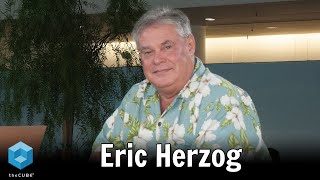
Eric Herzog, CMO and Vice President Global Channel Sales, IBM Storage, talks with John Walls & Dave Vellante at VMworld 2019 from Moscone North in San Francisco, CA.
#theCUBE #VMware #IBMStorage @SiliconANGLE theCUBE @VMware
https://siliconangle.com/2019/09/06/qa-realities-quantum-computing-effects-cybersecurity-vmworld/
Q&A: The realities of quantum computing, effects on cybersecurity
Although it sounds like something from a sci-fi movie, quantum computers will have the power to predict Earth’s climate and also encrypt/decrypt any security algorithm out there. Without a doubt, quantum computers are becoming a reality. But will they pose a threat to cybersecurity?
Research is being pushed at IBM to improve the cyber resiliency across systems, even if it is coming from quantum computers. The legacy computing company is looking to uncover methods to avoid vulnerabilities in sensitive data, according to Eric Herzog, chief marketing officer and vice president of worldwide storage sales of IBM’s Storage Division at IBM Corp.
Currently, data can be protected from the most potent cryptographic attacks, as well as from sophisticated malware and ransomware. IBM is planting itself at the center of the cybersecurity hurricane with its Spectrum Protect, which promises scalable data protection for physical file servers, applications, and virtual environments.
“One of the things, obviously, that people complain about quantum computing, whether it’s us or anyone else, is that with the quantum computing you can crack, basically, any encryption,” Herzog said. “IBM Research has developed tape that can be encrypted … you can have secure data because the quantum computer can’t actually crack the encryption that we just put into that new tape.”
Herzog spoke with Dave Vellante and John Walls, co-hosts of theCUBE, SiliconANGLE Media’s mobile livestreaming studio, during the VMworld event in San Francisco. They discussed IBM Storage organizational structure, IBM’s product portfolio, cyber-resilience and quantum computing (see the full interview with transcript here). (* Disclosure below.)
[Editor’s note: The following answers have been condensed for clarity.]
Vellante: Help people understand the IBM Storage organization.
Herzog: The IBM Storage division is part of IBM Systems, which includes both the mainframe products Z and the Power server entities. So it’s a server and storage division. The Z guys, in particular, have lots of software that they sell, and not just mainframe.
We’re the second-largest storage software company in the world, and the bulk of that software is not running on IBM gear. For example, Spectrum Protect will back up anyone’s array. Spectrum Scale and our IBM Cloud Object Storage are sold as software-only, software-defined, as is Spectrum Virtualize.
Vellante: I wonder if you could take the audience through the portfolio because it’s vast … and the names have changed.
Herzog: The three real elements in the portfolio are storage arrays. We lead with all-flash, but we still sell hybrid. And, obviously, for backup and archive, we still sell all hard drive. Then we have a business built around software, and we have two key elements there: software-defined storage, and we sell that software completely standalone, [which] happens to be embedded on the arrays.
And then the third is around modern data protection. So a modern data protection portfolio built around Spectrum Protect and Protect Plus and some other elements. Now the one thing that spans the whole portfolio is cyber-resiliency. It’s pervasive. So we’ve got, for example, malware and ransomware detection also in Spectrum Protect. [For that] we have both tape and tape and cloud air gapping [to encrypt data at rest].
Vellante: Tell us about how you do air gapping with your customers.
Herzog: There’s a whole strategy of how we outline how you would do a tape air gap. When you do a cloud air gap, of course, you’re replicating or stepping out the cloud anyway, so they can’t get to that. So if you have a failure, you have a known good copy depending on what time that is. And then you just recover back to that. We [also] have data-at-rest encryption. A lot of people don’t use it or won’t use it on storage because it’s often software-based and so there’s a performance hit. With us, there is no performance hit when you encrypt. So we have encryption at rest, encryption at flight, malware and ransomware detection, we’ve got WORM [Write Once Read Many], which is important obviously.
Vellante: You’ve got [at IBM] a lot of research facilities, brainiac scientists. I wonder if you could talk about how the storage division takes advantage of that. Either specifically, as it relates to cyber-resiliency, or generally.
...
(* Disclosure: IBM Corp. sponsored this segment of theCUBE. Neither IBM nor other sponsors have editorial control over content on theCUBE or SiliconANGLE.)
Forgot Password
Almost there!
We just sent you a verification email. Please verify your account to gain access to
VMworld 2019 | San Francisco. If you don’t think you received an email check your
spam folder.
In order to sign in, enter the email address you used to registered for the event. Once completed, you will receive an email with a verification link. Open this link to automatically sign into the site.
Register For VMworld 2019 | San Francisco
Please fill out the information below. You will recieve an email with a verification link confirming your registration. Click the link to automatically sign into the site.
You’re almost there!
We just sent you a verification email. Please click the verification button in the email. Once your email address is verified, you will have full access to all event content for VMworld 2019 | San Francisco.
I want my badge and interests to be visible to all attendees.
Checking this box will display your presense on the attendees list, view your profile and allow other attendees to contact you via 1-1 chat. Read the Privacy Policy. At any time, you can choose to disable this preference.
Select your Interests!
add
Upload your photo
Uploading..
OR
Connect via Twitter
Connect via Linkedin
EDIT PASSWORD
Share
Forgot Password
Almost there!
We just sent you a verification email. Please verify your account to gain access to
VMworld 2019 | San Francisco. If you don’t think you received an email check your
spam folder.
In order to sign in, enter the email address you used to registered for the event. Once completed, you will receive an email with a verification link. Open this link to automatically sign into the site.
Sign in to gain access to VMworld 2019 | San Francisco
Please sign in with LinkedIn to continue to VMworld 2019 | San Francisco. Signing in with LinkedIn ensures a professional environment.
Are you sure you want to remove access rights for this user?
Details
Manage Access
email address
Community Invitation
Eric Herzog, IBM Storage | VMworld 2019
Eric Herzog, CMO and Vice President Global Channel Sales, IBM Storage, talks with John Walls & Dave Vellante at VMworld 2019 from Moscone North in San Francisco, CA.
#theCUBE #VMware #IBMStorage @SiliconANGLE theCUBE @VMware
https://siliconangle.com/2019/09/06/qa-realities-quantum-computing-effects-cybersecurity-vmworld/
Q&A: The realities of quantum computing, effects on cybersecurity
Although it sounds like something from a sci-fi movie, quantum computers will have the power to predict Earth’s climate and also encrypt/decrypt any security algorithm out there. Without a doubt, quantum computers are becoming a reality. But will they pose a threat to cybersecurity?
Research is being pushed at IBM to improve the cyber resiliency across systems, even if it is coming from quantum computers. The legacy computing company is looking to uncover methods to avoid vulnerabilities in sensitive data, according to Eric Herzog, chief marketing officer and vice president of worldwide storage sales of IBM’s Storage Division at IBM Corp.
Currently, data can be protected from the most potent cryptographic attacks, as well as from sophisticated malware and ransomware. IBM is planting itself at the center of the cybersecurity hurricane with its Spectrum Protect, which promises scalable data protection for physical file servers, applications, and virtual environments.
“One of the things, obviously, that people complain about quantum computing, whether it’s us or anyone else, is that with the quantum computing you can crack, basically, any encryption,” Herzog said. “IBM Research has developed tape that can be encrypted … you can have secure data because the quantum computer can’t actually crack the encryption that we just put into that new tape.”
Herzog spoke with Dave Vellante and John Walls, co-hosts of theCUBE, SiliconANGLE Media’s mobile livestreaming studio, during the VMworld event in San Francisco. They discussed IBM Storage organizational structure, IBM’s product portfolio, cyber-resilience and quantum computing (see the full interview with transcript here). (* Disclosure below.)
[Editor’s note: The following answers have been condensed for clarity.]
Vellante: Help people understand the IBM Storage organization.
Herzog: The IBM Storage division is part of IBM Systems, which includes both the mainframe products Z and the Power server entities. So it’s a server and storage division. The Z guys, in particular, have lots of software that they sell, and not just mainframe.
We’re the second-largest storage software company in the world, and the bulk of that software is not running on IBM gear. For example, Spectrum Protect will back up anyone’s array. Spectrum Scale and our IBM Cloud Object Storage are sold as software-only, software-defined, as is Spectrum Virtualize.
Vellante: I wonder if you could take the audience through the portfolio because it’s vast … and the names have changed.
Herzog: The three real elements in the portfolio are storage arrays. We lead with all-flash, but we still sell hybrid. And, obviously, for backup and archive, we still sell all hard drive. Then we have a business built around software, and we have two key elements there: software-defined storage, and we sell that software completely standalone, [which] happens to be embedded on the arrays.
And then the third is around modern data protection. So a modern data protection portfolio built around Spectrum Protect and Protect Plus and some other elements. Now the one thing that spans the whole portfolio is cyber-resiliency. It’s pervasive. So we’ve got, for example, malware and ransomware detection also in Spectrum Protect. [For that] we have both tape and tape and cloud air gapping [to encrypt data at rest].
Vellante: Tell us about how you do air gapping with your customers.
Herzog: There’s a whole strategy of how we outline how you would do a tape air gap. When you do a cloud air gap, of course, you’re replicating or stepping out the cloud anyway, so they can’t get to that. So if you have a failure, you have a known good copy depending on what time that is. And then you just recover back to that. We [also] have data-at-rest encryption. A lot of people don’t use it or won’t use it on storage because it’s often software-based and so there’s a performance hit. With us, there is no performance hit when you encrypt. So we have encryption at rest, encryption at flight, malware and ransomware detection, we’ve got WORM [Write Once Read Many], which is important obviously.
Vellante: You’ve got [at IBM] a lot of research facilities, brainiac scientists. I wonder if you could talk about how the storage division takes advantage of that. Either specifically, as it relates to cyber-resiliency, or generally.
...
(* Disclosure: IBM Corp. sponsored this segment of theCUBE. Neither IBM nor other sponsors have editorial control over content on theCUBE or SiliconANGLE.)