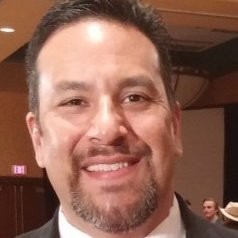
Andrew Chavez, Network and Information Technology Manager, Indian Pueblosits with Stu Miniman, @stu, and Justin Warren, @jpwarren, from VMworld 2018 in Las Vegas, NV.
#VMworld #theCUBE
https://siliconangle.com/2018/09/04/how-hyperconvergence-helps-preserve-native-american-culture-vmworld/
How hyperconvergence helps preserve Native American culture
The Indian Pueblo Cultural Center in Albuquerque, New Mexico, has two missions: safeguarding the cultural heritage of New Mexico’s Native American tribes through an interactive museum and historical archive and developing investments for the tribes’ future financial stability. Recent changes in the center’s information technology department have made an impact on both missions, allowing more secure data storage for sensitive historical records and artifact catalogs and greater oversight on the development side.
“[If] we can be a showcase, not only in the technological realm, but also how we budget and take care of money, that shows huge commitment to what we’re doing,” said Andrew Chavez (pictured), network and information technology manager at the Indian Pueblo Cultural Center.
Chavez spoke with Stu Miniman (@stu), host of theCUBE, SiliconANGLE Media’s mobile livestreaming studio, and guest host Justin Warren (@jpwarren); chief analyst at PivotNine Pty Ltd, during the VMworld conference in Las Vegas, Nevada. They discussed how adopting a hyperconverged solution is changing the face of IT at the Indian Pueblo Cultural Center. (* Disclosure below.)
Flexibility key to fiscally responsible IT
Chavez came to the Indian Pueblo Cultural Center with a background working with unified computing solutions, so hyperconvergence wasn’t part of his original plan. However, an introduction to Nutanix Inc.’s HCI solutions at the TribalNet conference turned Chavez onto the hyperconverged path, and he committed to a five-year plan with Nutanix, building out a data center and moving to a full virtual environment.
“What we’ve been able to do is take those different single servers and move them into a virtualized environment, and then be able to build out a storage area and place user files, and group files, and all the disparate storage areas that were siloed throughout the environment,” Chavez said. “It’s just made us better at what we do and [to] be able to watch what we’re doing a lot better.”
Geographical dispersion is a key benefit of using Nutanix HCI, with Chavez describing how his team has separated multi-node clusters in single boxes to protect data, with VMware’s site recovery manager keeping the geographical locations up and maintaining business continuity. “At the end of the day when we’re all done, we can have up to four to six sets of backups throughout any portion,” Chavez said.
The ability to budget conservatively, buying piece-by-piece and building out as needed, is important for Chavez’s goal of being a showcase for fiscal responsibility.
“IT is always seen as a cost center, and we’d eventually like to not be a cost center,” he said. “We’d like to make money, but we have to be fiscally responsible.”
Watch the complete video interview below, and be sure to check out more of SiliconANGLE’s and theCUBE’s coverage of the VMworld conference. (* Disclosure: Nutanix Inc. sponsored this segment, with additional broadcast sponsorship from VMware Inc. Nutanix, VMware, and other sponsors do not have editorial control over content on theCUBE or SiliconANGLE.)
Forgot Password
Almost there!
We just sent you a verification email. Please verify your account to gain access to
VMworld 2018 | Las Vegas. If you don’t think you received an email check your
spam folder.
In order to sign in, enter the email address you used to registered for the event. Once completed, you will receive an email with a verification link. Open this link to automatically sign into the site.
Register For VMworld 2018 | Las Vegas
Please fill out the information below. You will recieve an email with a verification link confirming your registration. Click the link to automatically sign into the site.
You’re almost there!
We just sent you a verification email. Please click the verification button in the email. Once your email address is verified, you will have full access to all event content for VMworld 2018 | Las Vegas.
I want my badge and interests to be visible to all attendees.
Checking this box will display your presense on the attendees list, view your profile and allow other attendees to contact you via 1-1 chat. Read the Privacy Policy. At any time, you can choose to disable this preference.
Select your Interests!
add
Upload your photo
Uploading..
OR
Connect via Twitter
Connect via Linkedin
EDIT PASSWORD
Share
Forgot Password
Almost there!
We just sent you a verification email. Please verify your account to gain access to
VMworld 2018 | Las Vegas. If you don’t think you received an email check your
spam folder.
In order to sign in, enter the email address you used to registered for the event. Once completed, you will receive an email with a verification link. Open this link to automatically sign into the site.
Sign in to gain access to VMworld 2018 | Las Vegas
Please sign in with LinkedIn to continue to VMworld 2018 | Las Vegas. Signing in with LinkedIn ensures a professional environment.
Are you sure you want to remove access rights for this user?
Details
Manage Access
email address
Community Invitation
Andrew Chavez, Indian Pueblo | VMworld 2018
Andrew Chavez, Network and Information Technology Manager, Indian Pueblosits with Stu Miniman, @stu, and Justin Warren, @jpwarren, from VMworld 2018 in Las Vegas, NV.
#VMworld #theCUBE
https://siliconangle.com/2018/09/04/how-hyperconvergence-helps-preserve-native-american-culture-vmworld/
How hyperconvergence helps preserve Native American culture
The Indian Pueblo Cultural Center in Albuquerque, New Mexico, has two missions: safeguarding the cultural heritage of New Mexico’s Native American tribes through an interactive museum and historical archive and developing investments for the tribes’ future financial stability. Recent changes in the center’s information technology department have made an impact on both missions, allowing more secure data storage for sensitive historical records and artifact catalogs and greater oversight on the development side.
“[If] we can be a showcase, not only in the technological realm, but also how we budget and take care of money, that shows huge commitment to what we’re doing,” said Andrew Chavez (pictured), network and information technology manager at the Indian Pueblo Cultural Center.
Chavez spoke with Stu Miniman (@stu), host of theCUBE, SiliconANGLE Media’s mobile livestreaming studio, and guest host Justin Warren (@jpwarren); chief analyst at PivotNine Pty Ltd, during the VMworld conference in Las Vegas, Nevada. They discussed how adopting a hyperconverged solution is changing the face of IT at the Indian Pueblo Cultural Center. (* Disclosure below.)
Flexibility key to fiscally responsible IT
Chavez came to the Indian Pueblo Cultural Center with a background working with unified computing solutions, so hyperconvergence wasn’t part of his original plan. However, an introduction to Nutanix Inc.’s HCI solutions at the TribalNet conference turned Chavez onto the hyperconverged path, and he committed to a five-year plan with Nutanix, building out a data center and moving to a full virtual environment.
“What we’ve been able to do is take those different single servers and move them into a virtualized environment, and then be able to build out a storage area and place user files, and group files, and all the disparate storage areas that were siloed throughout the environment,” Chavez said. “It’s just made us better at what we do and [to] be able to watch what we’re doing a lot better.”
Geographical dispersion is a key benefit of using Nutanix HCI, with Chavez describing how his team has separated multi-node clusters in single boxes to protect data, with VMware’s site recovery manager keeping the geographical locations up and maintaining business continuity. “At the end of the day when we’re all done, we can have up to four to six sets of backups throughout any portion,” Chavez said.
The ability to budget conservatively, buying piece-by-piece and building out as needed, is important for Chavez’s goal of being a showcase for fiscal responsibility.
“IT is always seen as a cost center, and we’d eventually like to not be a cost center,” he said. “We’d like to make money, but we have to be fiscally responsible.”
Watch the complete video interview below, and be sure to check out more of SiliconANGLE’s and theCUBE’s coverage of the VMworld conference. (* Disclosure: Nutanix Inc. sponsored this segment, with additional broadcast sponsorship from VMware Inc. Nutanix, VMware, and other sponsors do not have editorial control over content on theCUBE or SiliconANGLE.)