Rob Young, @robyoungky, Lead Manager, Virtualization Product Management & Strategy + James Labocki, @jameslabocki, Director Product Management at Red Hat sits with Stu Miniman, @stu, and Justin Warren, @jpwarren, from VMworld 2018 in Las Vegas, NV.
#VMworld #theCUBE
https://siliconangle.com/2018/09/10/red-hat-brings-controlled-open-source-chaos-to-multicloud-vmworld/
Red Hat brings controlled open-source chaos to multicloud
For all the buzz around open-source technologies, they can be a hot mess for enterprises to actually put into production. Red Hat Inc. stands out in the industry for its success in profitably slinging open source to customers in managed packages. Can the hatter bring multicloud under its roof and make it doable for enterprises in the same manner?
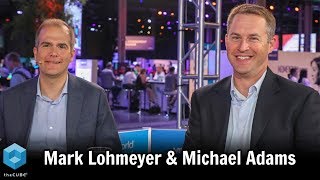
Consumable open-source ought to be delivered with a side of community influence and customer support, according to James Labocki (pictured, right), director of product management at Red Hat. “It’s easy just to say, ‘Hey, we do open source.’ But actually providing that life cycle around it is a whole other story,” he said.
Labocki and Rob Young (pictured, left), manager of virtualization product and strategy at Red Hat, spoke with Stu Miniman (@stu), host of theCUBE, SiliconANGLE Media’s mobile livestreaming studio, and guest host Justin Warren (@jpwarren), chief analyst at PivotNine Pty Ltd, during the VMworld conference in Las Vegas, Nevada. They discussed Red Hat’s latest open-source endeavors in containers and Kubernetes, as well as its approach to multicloud. (* Disclosure below.)
Kubernetes and friends take on multicloud complexity
Open-source and Linux open-source operating systems (and particularly containers, a virtualized method for running distributed applications) are driving a large portion of innovation taking place today, according to Labocki. Large numbers of containers can be tough to manage on top of everything else information technology departments juggle.
“One of the interesting trends we’re seeing is that as people are beginning to adopt containers, they’re also beginning to realize that they’re looking to simplify their environments as they do that,” Labocki said.
One means they may turn to is the Kernel-based Virtual Machine — virtualization infrastructure for the Linux kernel that turns it into a hypervisor. “We’re seeing reinvigoration of the ecosystem around KVM with partners of ours like Trilio, Maxta, Veeam, and so on and so forth,” Labocki stated.
Customers are considering using KVM to help orchestrate containers and virtual machines with the Kubernetes container orchestration platform across on-premise and cloud environments, he added.
The Red Hat Management Console provided with the CloudForms open hybrid cloud-management framework allows users to span heterogeneous environments, Young explained. “Our approach is not only do we allow the deployment there, but also the management of that as well,” he said.
Red Hat acquired the CoreOS Tectonic Kubernetes platform to help flesh out its multicloud story. Rather than one piece to a solution they have to hobble together, “We want people to see Red Hat as a platform to stabilize on,” Young concluded.
Watch the complete video interview below, and be sure to check out more of SiliconANGLE’s and theCUBE’s coverage of the VMworld conference. (* Disclosure: Red Hat Inc. sponsored this segment, with additional broadcast sponsorship from VMware Inc. Red Hat, VMware, and other sponsors do not have editorial control over content on theCUBE or SiliconANGLE.)
Forgot Password
Almost there!
We just sent you a verification email. Please verify your account to gain access to
VMworld 2018 | Las Vegas. If you don’t think you received an email check your
spam folder.
In order to sign in, enter the email address you used to registered for the event. Once completed, you will receive an email with a verification link. Open this link to automatically sign into the site.
Register For VMworld 2018 | Las Vegas
Please fill out the information below. You will recieve an email with a verification link confirming your registration. Click the link to automatically sign into the site.
You’re almost there!
We just sent you a verification email. Please click the verification button in the email. Once your email address is verified, you will have full access to all event content for VMworld 2018 | Las Vegas.
I want my badge and interests to be visible to all attendees.
Checking this box will display your presense on the attendees list, view your profile and allow other attendees to contact you via 1-1 chat. Read the Privacy Policy. At any time, you can choose to disable this preference.
Select your Interests!
add
Upload your photo
Uploading..
OR
Connect via Twitter
Connect via Linkedin
EDIT PASSWORD
Share
Forgot Password
Almost there!
We just sent you a verification email. Please verify your account to gain access to
VMworld 2018 | Las Vegas. If you don’t think you received an email check your
spam folder.
In order to sign in, enter the email address you used to registered for the event. Once completed, you will receive an email with a verification link. Open this link to automatically sign into the site.
Sign in to gain access to VMworld 2018 | Las Vegas
Please sign in with LinkedIn to continue to VMworld 2018 | Las Vegas. Signing in with LinkedIn ensures a professional environment.
Are you sure you want to remove access rights for this user?
Details
Manage Access
email address
Community Invitation
Rob Young & James Labocki, Red Hat | VMworld 2018
Rob Young, @robyoungky, Lead Manager, Virtualization Product Management & Strategy + James Labocki, @jameslabocki, Director Product Management at Red Hat sits with Stu Miniman, @stu, and Justin Warren, @jpwarren, from VMworld 2018 in Las Vegas, NV.
#VMworld #theCUBE
https://siliconangle.com/2018/09/10/red-hat-brings-controlled-open-source-chaos-to-multicloud-vmworld/
Red Hat brings controlled open-source chaos to multicloud
For all the buzz around open-source technologies, they can be a hot mess for enterprises to actually put into production. Red Hat Inc. stands out in the industry for its success in profitably slinging open source to customers in managed packages. Can the hatter bring multicloud under its roof and make it doable for enterprises in the same manner?
Consumable open-source ought to be delivered with a side of community influence and customer support, according to James Labocki (pictured, right), director of product management at Red Hat. “It’s easy just to say, ‘Hey, we do open source.’ But actually providing that life cycle around it is a whole other story,” he said.
Labocki and Rob Young (pictured, left), manager of virtualization product and strategy at Red Hat, spoke with Stu Miniman (@stu), host of theCUBE, SiliconANGLE Media’s mobile livestreaming studio, and guest host Justin Warren (@jpwarren), chief analyst at PivotNine Pty Ltd, during the VMworld conference in Las Vegas, Nevada. They discussed Red Hat’s latest open-source endeavors in containers and Kubernetes, as well as its approach to multicloud. (* Disclosure below.)
Kubernetes and friends take on multicloud complexity
Open-source and Linux open-source operating systems (and particularly containers, a virtualized method for running distributed applications) are driving a large portion of innovation taking place today, according to Labocki. Large numbers of containers can be tough to manage on top of everything else information technology departments juggle.
“One of the interesting trends we’re seeing is that as people are beginning to adopt containers, they’re also beginning to realize that they’re looking to simplify their environments as they do that,” Labocki said.
One means they may turn to is the Kernel-based Virtual Machine — virtualization infrastructure for the Linux kernel that turns it into a hypervisor. “We’re seeing reinvigoration of the ecosystem around KVM with partners of ours like Trilio, Maxta, Veeam, and so on and so forth,” Labocki stated.
Customers are considering using KVM to help orchestrate containers and virtual machines with the Kubernetes container orchestration platform across on-premise and cloud environments, he added.
The Red Hat Management Console provided with the CloudForms open hybrid cloud-management framework allows users to span heterogeneous environments, Young explained. “Our approach is not only do we allow the deployment there, but also the management of that as well,” he said.
Red Hat acquired the CoreOS Tectonic Kubernetes platform to help flesh out its multicloud story. Rather than one piece to a solution they have to hobble together, “We want people to see Red Hat as a platform to stabilize on,” Young concluded.
Watch the complete video interview below, and be sure to check out more of SiliconANGLE’s and theCUBE’s coverage of the VMworld conference. (* Disclosure: Red Hat Inc. sponsored this segment, with additional broadcast sponsorship from VMware Inc. Red Hat, VMware, and other sponsors do not have editorial control over content on theCUBE or SiliconANGLE.)