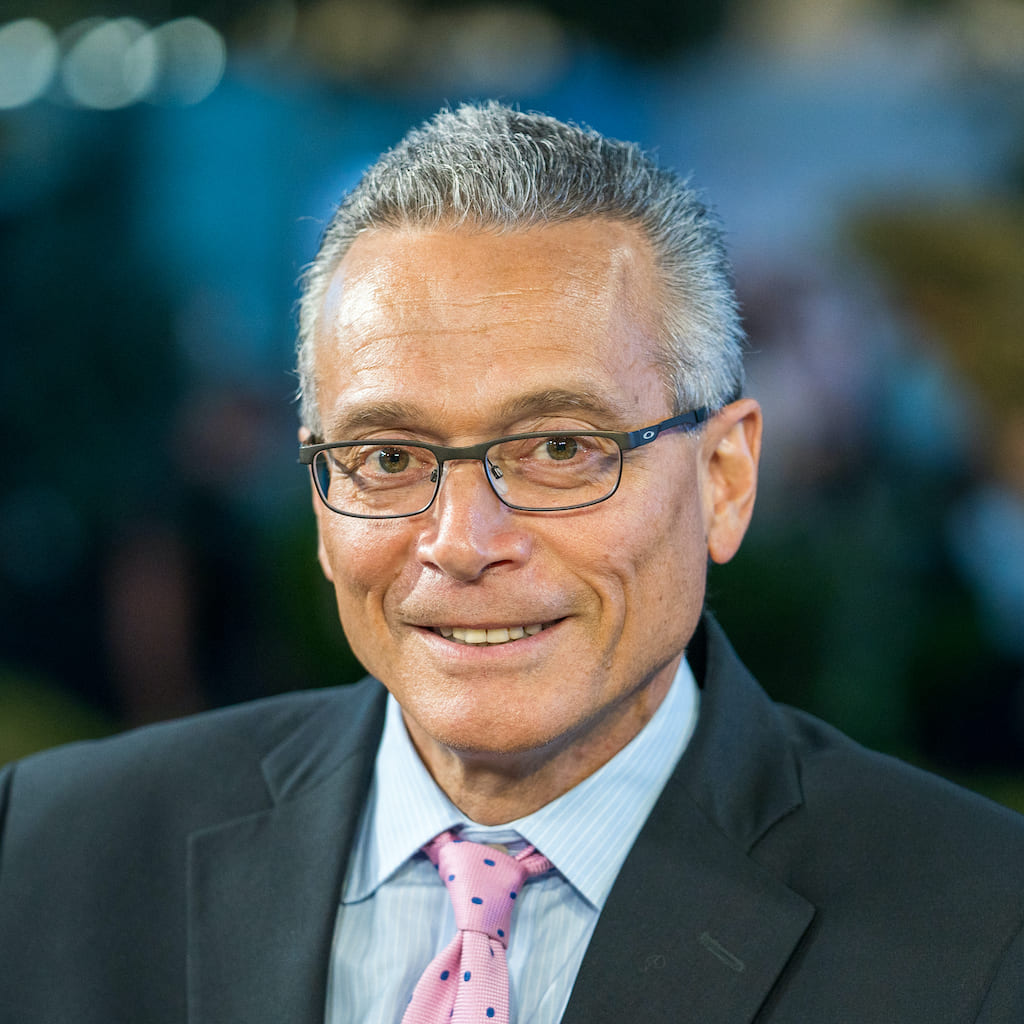
Pat Gelsinger, VMware, sits with Dave Vellante and John Furrier at VMworld 2017 in Las Vegas, NV
#WMworld #theCUBE
https://siliconangle.com/2017/09/05/multiclouds-partners-take-vmwares-pat-gelsinger-wild-ride-vmworld-guestoftheweek/
Multiclouds and partners take VMware’s Pat Gelsinger on wild ride
The experience of a technology company’s chief executive officer can often be a roller coaster ride with highs, lows, dips, hairpin turns, sudden drops and a lot of bumping around. So Pat Gelsinger (pictured), chief executive of VMware Inc., could probably be forgiven if he pleads a severe case of whiplash.
After taking the company’s helm in 2012, Gelsinger ended a vSphere server virtualization licensing program and dismantled an application portfolio. VMware’s share price and annual revenue began a steady climb, but the company was then acquired in 2016 as part of Dell’s buyout of EMC for $67 billion. The spotlight got hotter for VMware’s CEO after the share price lost half its value (to a low of $43) and criticism mounted over weaker-than-expected performance of vCloud Air. Things got so bad, it was openly speculated that Gelsinger would be gone before VMworld in August last year.
As it turned out, Gelsinger not only stayed in the top spot, but has orchestrated quite a turnaround in VMware’s performance. The company boasts double-digit revenue and income growth, a stock price north of $100 per share and new partnerships with three of the industry’s most powerful — Google LLC, Amazon Web Services Inc. and Microsoft Corp.
“The Dell deal is working for us. It’s delivering real acceleration to our business. We’ve come through the other side,” Gelsinger said.
Gelsinger visited theCUBE, SiliconANGLE’s mobile livestreaming studio, and spoke with co-hosts John Furrier (@furrier) and Dave Vellante (@dvellante) during VMworld 2017 in Las Vegas. They discussed VMware’s multicloud bet, the impact of automation on edge computing and the coming 5G network. (* Disclosure below.)
This week theCUBE features Pat Gelsinger as our Guest of the Week.
Marriage of number ones
Many analysts believe that a successful multicloud strategy will require partnering with the major power players in the hyperscale world. VMware’s delivery on its earlier promise to go live on AWS fits neatly with that strategy.
The combination of VMware’s private cloud services with Amazon’s massive public cloud footprint has fueled the multicloud bandwagon. “It’s the number one public with the number one private. Boom,” Gelsinger said. “Every CIO [chief information officer] now has a massive new capability in his toolbox to set his [information services] strategy for the future.”
The move into a multicloud world is also putting VMware in a position where its own services become more than just a bridge to AWS. Just before VMware announced its agreement with AWS last October, Gelsinger was contacted by another, unnamed cloud provider who competed directly with Amazon and wanted to resell VMware as an additional service.
This story highlights a developing trend in enterprise computing, where VMware’s customers will use its workloads and services as the focal point of their own customer relationships. “If you’re Rackspace, you’re going to call that ‘fanatical service.’ If you’re IBM, you’re going to call that ‘vertical industry competence,’” Gelsinger said. “In many cases, those are going to be specialized clouds as well.”
Further validation of the move to partner with the big players as part of its multicloud strategy could be seen in VMware’s evolving deals with IBM. Although IBM did announce recovery and policy management tools in virtual environments at VMworld, there is apparently more news to follow, as Gelsinger offered a hint that his company was involved in other discussions with Big Blue. “You might see them again at an event in the near future in a more prominent way as well,” Gelsinger said.
VMware’s story of resurrection in 2017 is grounded in a bet that information technology managers would embrace multicloud and hybrid cloud models based on a variety of different reasons for finding the right place to store data. Aside from bringing down operational cost and having the data globally accessible, there was also the problem that the public cloud couldn’t always provide what the enterprise required.
A report from the digital performance monitoring firm New Relic Inc. characterizes organizations that adopt-the-multicloud model as “dynamic” cloud users dividing resources between private data centers and public clouds. This is the market opportunity that VMware is successfully exploiting.
...
Watch the complete video interview below, and be sure to check out more of SiliconANGLE’s and theCUBE’s coverage of VMworld 2017. (* Disclosure: TheCUBE is a paid media partner for VMworld 2017. Neither VMware Inc. nor other sponsors have editorial control over content on theCUBE or SiliconANGLE.)
Forgot Password
Almost there!
We just sent you a verification email. Please verify your account to gain access to
VMworld 2017 | Las Vegas. If you don’t think you received an email check your
spam folder.
In order to sign in, enter the email address you used to registered for the event. Once completed, you will receive an email with a verification link. Open this link to automatically sign into the site.
Register For VMworld 2017 | Las Vegas
Please fill out the information below. You will recieve an email with a verification link confirming your registration. Click the link to automatically sign into the site.
You’re almost there!
We just sent you a verification email. Please click the verification button in the email. Once your email address is verified, you will have full access to all event content for VMworld 2017 | Las Vegas.
I want my badge and interests to be visible to all attendees.
Checking this box will display your presense on the attendees list, view your profile and allow other attendees to contact you via 1-1 chat. Read the Privacy Policy. At any time, you can choose to disable this preference.
Select your Interests!
add
Upload your photo
Uploading..
OR
Connect via Twitter
Connect via Linkedin
EDIT PASSWORD
Share
Forgot Password
Almost there!
We just sent you a verification email. Please verify your account to gain access to
VMworld 2017 | Las Vegas. If you don’t think you received an email check your
spam folder.
In order to sign in, enter the email address you used to registered for the event. Once completed, you will receive an email with a verification link. Open this link to automatically sign into the site.
Sign in to gain access to VMworld 2017 | Las Vegas
Please sign in with LinkedIn to continue to VMworld 2017 | Las Vegas. Signing in with LinkedIn ensures a professional environment.
Are you sure you want to remove access rights for this user?
Details
Manage Access
email address
Community Invitation
Pat Gelsinger, VMware | VMworld 2017
Pat Gelsinger, VMware, sits with Dave Vellante and John Furrier at VMworld 2017 in Las Vegas, NV
#WMworld #theCUBE
https://siliconangle.com/2017/09/05/multiclouds-partners-take-vmwares-pat-gelsinger-wild-ride-vmworld-guestoftheweek/
Multiclouds and partners take VMware’s Pat Gelsinger on wild ride
The experience of a technology company’s chief executive officer can often be a roller coaster ride with highs, lows, dips, hairpin turns, sudden drops and a lot of bumping around. So Pat Gelsinger (pictured), chief executive of VMware Inc., could probably be forgiven if he pleads a severe case of whiplash.
After taking the company’s helm in 2012, Gelsinger ended a vSphere server virtualization licensing program and dismantled an application portfolio. VMware’s share price and annual revenue began a steady climb, but the company was then acquired in 2016 as part of Dell’s buyout of EMC for $67 billion. The spotlight got hotter for VMware’s CEO after the share price lost half its value (to a low of $43) and criticism mounted over weaker-than-expected performance of vCloud Air. Things got so bad, it was openly speculated that Gelsinger would be gone before VMworld in August last year.
As it turned out, Gelsinger not only stayed in the top spot, but has orchestrated quite a turnaround in VMware’s performance. The company boasts double-digit revenue and income growth, a stock price north of $100 per share and new partnerships with three of the industry’s most powerful — Google LLC, Amazon Web Services Inc. and Microsoft Corp.
“The Dell deal is working for us. It’s delivering real acceleration to our business. We’ve come through the other side,” Gelsinger said.
Gelsinger visited theCUBE, SiliconANGLE’s mobile livestreaming studio, and spoke with co-hosts John Furrier (@furrier) and Dave Vellante (@dvellante) during VMworld 2017 in Las Vegas. They discussed VMware’s multicloud bet, the impact of automation on edge computing and the coming 5G network. (* Disclosure below.)
This week theCUBE features Pat Gelsinger as our Guest of the Week.
Marriage of number ones
Many analysts believe that a successful multicloud strategy will require partnering with the major power players in the hyperscale world. VMware’s delivery on its earlier promise to go live on AWS fits neatly with that strategy.
The combination of VMware’s private cloud services with Amazon’s massive public cloud footprint has fueled the multicloud bandwagon. “It’s the number one public with the number one private. Boom,” Gelsinger said. “Every CIO [chief information officer] now has a massive new capability in his toolbox to set his [information services] strategy for the future.”
The move into a multicloud world is also putting VMware in a position where its own services become more than just a bridge to AWS. Just before VMware announced its agreement with AWS last October, Gelsinger was contacted by another, unnamed cloud provider who competed directly with Amazon and wanted to resell VMware as an additional service.
This story highlights a developing trend in enterprise computing, where VMware’s customers will use its workloads and services as the focal point of their own customer relationships. “If you’re Rackspace, you’re going to call that ‘fanatical service.’ If you’re IBM, you’re going to call that ‘vertical industry competence,’” Gelsinger said. “In many cases, those are going to be specialized clouds as well.”
Further validation of the move to partner with the big players as part of its multicloud strategy could be seen in VMware’s evolving deals with IBM. Although IBM did announce recovery and policy management tools in virtual environments at VMworld, there is apparently more news to follow, as Gelsinger offered a hint that his company was involved in other discussions with Big Blue. “You might see them again at an event in the near future in a more prominent way as well,” Gelsinger said.
VMware’s story of resurrection in 2017 is grounded in a bet that information technology managers would embrace multicloud and hybrid cloud models based on a variety of different reasons for finding the right place to store data. Aside from bringing down operational cost and having the data globally accessible, there was also the problem that the public cloud couldn’t always provide what the enterprise required.
A report from the digital performance monitoring firm New Relic Inc. characterizes organizations that adopt-the-multicloud model as “dynamic” cloud users dividing resources between private data centers and public clouds. This is the market opportunity that VMware is successfully exploiting.
...
Watch the complete video interview below, and be sure to check out more of SiliconANGLE’s and theCUBE’s coverage of VMworld 2017. (* Disclosure: TheCUBE is a paid media partner for VMworld 2017. Neither VMware Inc. nor other sponsors have editorial control over content on theCUBE or SiliconANGLE.)