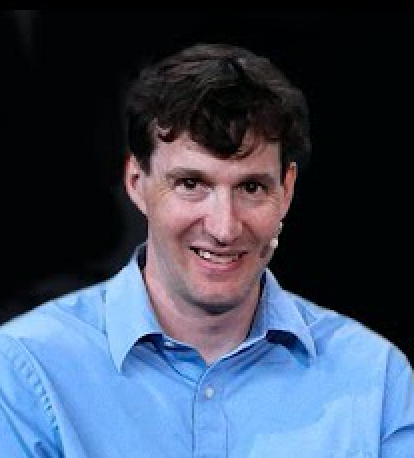
Yanbing Li, VMware & Matt Amdur, VMware sits down with Stu Miniman & Lisa Martin at VMworld 2017 in Las Vegas.
#WMworld #theCUBE
https://siliconangle.com/2017/09/18/private-cloud-goes-level-via-hci-public-cloud-ramp-vmworld/
Private cloud goes up a level via HCI and public cloud on-ramp
Private cloud environments are gaining new powers thanks to hyperconverged infrastructure, or HCI, and public-cloud compatibility. These infusions are making private clouds easier to manage and giving them the agility and elasticity of public cloud, according to Yanbing Li (pictured, right), senior vice president and general manager of storage and availability at VMware Inc.
“Private cloud is sexy again,” said Li, who joined Matt Amdur (pictured, left), principal engineer at VMware, during an interview with Lisa Martin (@LisaDaliMartin) and Stu Miniman (@stu), co-hosts of theCUBE, SiliconANGLE Media’s mobile livestreaming studio, at the recent VMworld conference in Las Vegas, Nevada. (* Disclosure below.)
HCI is the new architecture of choice for private clouds, according to Li. Part of its appeal is the ease with which its software-defined aspects extend to public cloud. In fact, customer requests to extend VMware’s virtualization technology to public cloud was a catalyst for VMware Cloud on Amazon Web Services Inc.
“If you had vSphere [VMware hypervisor] workloads and you wanted to bring them to the cloud, there was nothing that was compatible,” Amdur said, explaining that he helped to integrate VMware and AWS technologies into the finished product. VMware’s goal was to build a bridge for vSphere and vSAN software-defined storage to AWS’ highly scalable cloud infrastructure.
A little help from managed service friends
VMware Cloud on AWS is a managed service, which makes operating a private, hybrid-cloud environment simpler for customers, Amdur explained. “Customers don’t have to worry about managing the vSphere software life cycle — VMware’s now going to do that for them. And Amazon’s going to manage the physical infrastructure,” he said.
VMware has also introduced proactive support technology called Skyline Collector that automatically collects and analyzes data on customers’ infrastructure. “Customers do not want to worry about the plumbing around their infra, so we’re gathering analytics, we’re pumping them into the cloud, we’re performing intelligent analysis,” Li stated.
Skyline provides cloud analytics on how businesses are using storage and data, what applications are consuming storage, latency constraints, etc. “Being able to package that up and show it to customers in real time and help them both understand what they’re currently doing and future planning, we see a lot of value in,” Amdur concluded.
Watch the complete video interview below, and be sure to check out more of SiliconANGLE’s and theCUBE’s coverage of VMworld 2017. (* Disclosure: TheCUBE is a paid media partner for VMworld 2017. Neither VMware Inc. nor other sponsors have editorial control over content on theCUBE or SiliconANGLE.)
Forgot Password
Almost there!
We just sent you a verification email. Please verify your account to gain access to
VMworld 2017 | Las Vegas. If you don’t think you received an email check your
spam folder.
In order to sign in, enter the email address you used to registered for the event. Once completed, you will receive an email with a verification link. Open this link to automatically sign into the site.
Register For VMworld 2017 | Las Vegas
Please fill out the information below. You will recieve an email with a verification link confirming your registration. Click the link to automatically sign into the site.
You’re almost there!
We just sent you a verification email. Please click the verification button in the email. Once your email address is verified, you will have full access to all event content for VMworld 2017 | Las Vegas.
I want my badge and interests to be visible to all attendees.
Checking this box will display your presense on the attendees list, view your profile and allow other attendees to contact you via 1-1 chat. Read the Privacy Policy. At any time, you can choose to disable this preference.
Select your Interests!
add
Upload your photo
Uploading..
OR
Connect via Twitter
Connect via Linkedin
EDIT PASSWORD
Share
Forgot Password
Almost there!
We just sent you a verification email. Please verify your account to gain access to
VMworld 2017 | Las Vegas. If you don’t think you received an email check your
spam folder.
In order to sign in, enter the email address you used to registered for the event. Once completed, you will receive an email with a verification link. Open this link to automatically sign into the site.
Sign in to gain access to VMworld 2017 | Las Vegas
Please sign in with LinkedIn to continue to VMworld 2017 | Las Vegas. Signing in with LinkedIn ensures a professional environment.
Are you sure you want to remove access rights for this user?
Details
Manage Access
email address
Community Invitation
Yanbing Li & Matt Amdur, VMware | VMworld 2017
Yanbing Li, VMware & Matt Amdur, VMware sits down with Stu Miniman & Lisa Martin at VMworld 2017 in Las Vegas.
#WMworld #theCUBE
https://siliconangle.com/2017/09/18/private-cloud-goes-level-via-hci-public-cloud-ramp-vmworld/
Private cloud goes up a level via HCI and public cloud on-ramp
Private cloud environments are gaining new powers thanks to hyperconverged infrastructure, or HCI, and public-cloud compatibility. These infusions are making private clouds easier to manage and giving them the agility and elasticity of public cloud, according to Yanbing Li (pictured, right), senior vice president and general manager of storage and availability at VMware Inc.
“Private cloud is sexy again,” said Li, who joined Matt Amdur (pictured, left), principal engineer at VMware, during an interview with Lisa Martin (@LisaDaliMartin) and Stu Miniman (@stu), co-hosts of theCUBE, SiliconANGLE Media’s mobile livestreaming studio, at the recent VMworld conference in Las Vegas, Nevada. (* Disclosure below.)
HCI is the new architecture of choice for private clouds, according to Li. Part of its appeal is the ease with which its software-defined aspects extend to public cloud. In fact, customer requests to extend VMware’s virtualization technology to public cloud was a catalyst for VMware Cloud on Amazon Web Services Inc.
“If you had vSphere [VMware hypervisor] workloads and you wanted to bring them to the cloud, there was nothing that was compatible,” Amdur said, explaining that he helped to integrate VMware and AWS technologies into the finished product. VMware’s goal was to build a bridge for vSphere and vSAN software-defined storage to AWS’ highly scalable cloud infrastructure.
A little help from managed service friends
VMware Cloud on AWS is a managed service, which makes operating a private, hybrid-cloud environment simpler for customers, Amdur explained. “Customers don’t have to worry about managing the vSphere software life cycle — VMware’s now going to do that for them. And Amazon’s going to manage the physical infrastructure,” he said.
VMware has also introduced proactive support technology called Skyline Collector that automatically collects and analyzes data on customers’ infrastructure. “Customers do not want to worry about the plumbing around their infra, so we’re gathering analytics, we’re pumping them into the cloud, we’re performing intelligent analysis,” Li stated.
Skyline provides cloud analytics on how businesses are using storage and data, what applications are consuming storage, latency constraints, etc. “Being able to package that up and show it to customers in real time and help them both understand what they’re currently doing and future planning, we see a lot of value in,” Amdur concluded.
Watch the complete video interview below, and be sure to check out more of SiliconANGLE’s and theCUBE’s coverage of VMworld 2017. (* Disclosure: TheCUBE is a paid media partner for VMworld 2017. Neither VMware Inc. nor other sponsors have editorial control over content on theCUBE or SiliconANGLE.)