In this interview from VeeamOn 2026, Rick Vanover, vice president of product strategy at Veeam, joins Kristie Bunn-Kingston, systems and storage architect at WellSpan Health, to talk with theCUBE's Dave Vellante about how enterprises are operationalizing data resilience as cloud adoption accelerates. Bunn-Kingston shares how WellSpan Health — a 23,000-person health system spanning more than 220 locations — completed a full shift from a hardware procurement model to a cloud operating model on AWS in just four months. Vanover underscores why cloud migration doesn't eliminate the need for independent data protection, pointing to the shared responsibility model as a clear reminder that customer data remains the customer's obligation regardless of where workloads run.
The conversation also explores Veeam Data Cloud Vault, Vanover's standout announcement at VeeamON 2026. The service delivers backup storage as a service with mandatory encryption and immutability built in — a combination he credits with eliminating on-record recovery failures for customers facing ransomware incidents, a meaningful safeguard given that over 96% of ransomware attacks target backup environments. Bunn-Kingston details the practical business case for WellSpan: predictable pricing with egress costs included, removing the hidden charges that accumulate with traditional cloud storage targets. Vanover also introduces the newly announced Veeam Data AI Command Platform, which extends the company's capabilities beyond backup into data intelligence — surfacing redundant, obsolete or over-permissioned data across enterprise environments. Bunn-Kingston, already exploring how the feature would scan WellSpan's infrastructure, notes that detecting sensitive data exposure is especially relevant in healthcare, where regulatory retention requirements are strict but duplication risk remains real. From defending critical patient care systems against ransomware to converging resilience and AI-driven data trust in a single platform, the discussion charts Veeam's evolution into a full-spectrum data management company.
Forgot Password
Almost there!
We just sent you a verification email. Please verify your account to gain access to
VeeamON. If you don’t think you received an email check your
spam folder.
In order to sign in, enter the email address you used to registered for the event. Once completed, you will receive an email with a verification link. Open the link to automatically sign into the site.
Register for VeeamON
Please fill out the information below. You will receive an email with a verification link confirming your registration. Click the link to automatically sign into the site.
You are already logged into TheCUBE Network as
You’re almost there!
We just sent you a verification email. Please click the verification button in the email. Once your email address is verified, you will have full access to all event content for VeeamON.
I want my badge and interests to be visible to all attendees.
Checking this box will display your presense on the attendees list, view your profile and allow other attendees to contact you via 1-1 chat. Read the Privacy Policy. At any time, you can choose to disable this preference.
Select your Interests!
add
Upload your photo
Uploading..
OR
Connect via Twitter
Connect via Linkedin
EDIT PASSWORD
Share
Forgot Password
Almost there!
We just sent you a verification email. Please verify your account to gain access to
VeeamON. If you don’t think you received an email check your
spam folder.
In order to sign in, enter the email address you used to registered for the event. Once completed, you will receive an email with a verification link. Open the link to automatically sign into the site.
Sign in to gain access to VeeamON
Please sign in with LinkedIn to continue to VeeamON. Signing in with LinkedIn ensures a professional environment.
Are you sure you want to remove access rights for this user?
Details
Manage Access
email address
Community Invitation
Rick Vanover, Veeam & Kristie Bunn-Kingston, WellSpan Health
In this interview from VeeamOn 2026, Rick Vanover, vice president of product strategy at Veeam, joins Kristie Bunn-Kingston, systems and storage architect at WellSpan Health, to talk with theCUBE's Dave Vellante about how enterprises are operationalizing data resilience as cloud adoption accelerates. Bunn-Kingston shares how WellSpan Health — a 23,000-person health system spanning more than 220 locations — completed a full shift from a hardware procurement model to a cloud operating model on AWS in just four months. Vanover underscores why cloud migration doesn't eliminate the need for independent data protection, pointing to the shared responsibility model as a clear reminder that customer data remains the customer's obligation regardless of where workloads run.
The conversation also explores Veeam Data Cloud Vault, Vanover's standout announcement at VeeamON 2026. The service delivers backup storage as a service with mandatory encryption and immutability built in — a combination he credits with eliminating on-record recovery failures for customers facing ransomware incidents, a meaningful safeguard given that over 96% of ransomware attacks target backup environments. Bunn-Kingston details the practical business case for WellSpan: predictable pricing with egress costs included, removing the hidden charges that accumulate with traditional cloud storage targets. Vanover also introduces the newly announced Veeam Data AI Command Platform, which extends the company's capabilities beyond backup into data intelligence — surfacing redundant, obsolete or over-permissioned data across enterprise environments. Bunn-Kingston, already exploring how the feature would scan WellSpan's infrastructure, notes that detecting sensitive data exposure is especially relevant in healthcare, where regulatory retention requirements are strict but duplication risk remains real. From defending critical patient care systems against ransomware to converging resilience and AI-driven data trust in a single platform, the discussion charts Veeam's evolution into a full-spectrum data management company.
Rick Vanover, Veeam & Kristie Bunn-Kingston, WellSpan Health
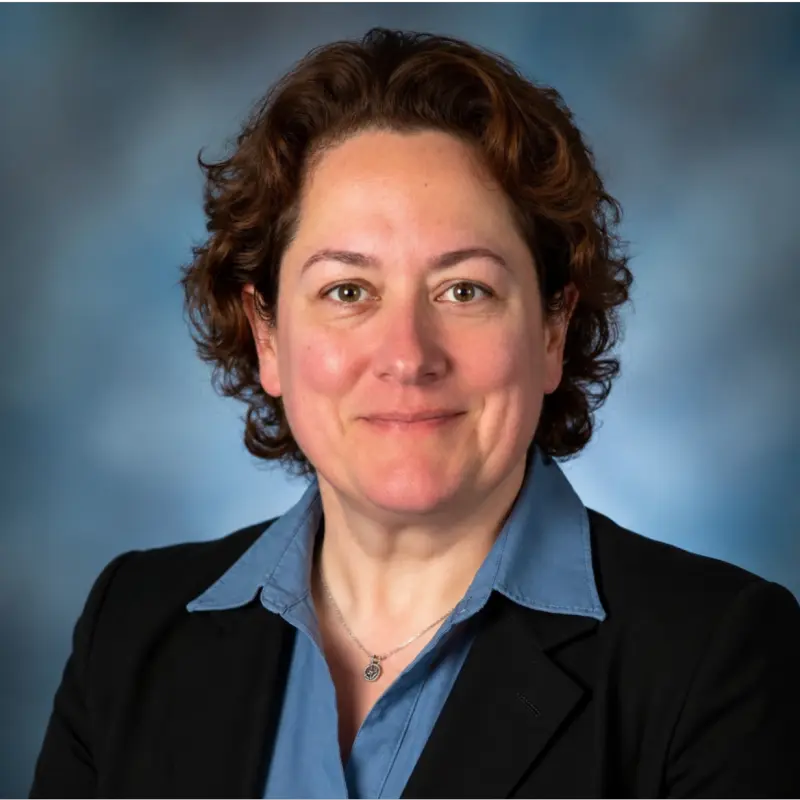
Kristie Bunn-Kingston
Systems & Storage ArchitectWellSpan Health
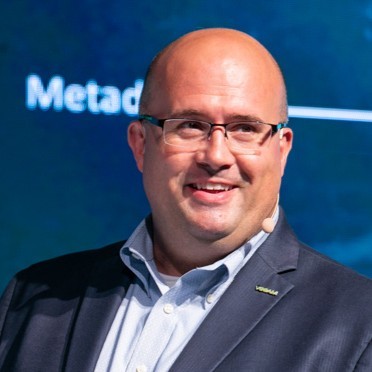
Rick Vanover
VP Product StrategyVeeam
In this interview from VeeamOn 2026, Rick Vanover, vice president of product strategy at Veeam, joins Kristie Bunn-Kingston, systems and storage architect at WellSpan Health, to talk with theCUBE's Dave Vellante about how enterprises are operationalizing data resilience as cloud adoption accelerates. Bunn-Kingston shares how WellSpan Health — a 23,000-person health system spanning more than 220 locations — completed a full shift from a hardware procurement model to a cloud operating model on AWS in just four months. Vanover underscores why cloud migration doe...Read more
exploreKeep Exploring
Why do organizations need Veeam if their data resides in the cloud?add
What is Veeam Data Cloud Vault (where is it hosted), why does it require backup data to be encrypted and immutable, and what are its pricing/egress features?add
What is Veeam Data Cloud Vault, and what are its benefits and user experience — including setup, availability on AWS, egress/pricing, and storage location/air‑gap options?add
How has the transition from on‑premises licensing to a SaaS consumption‑based pricing model affected your organization — do finance teams like it, how do you predict and manage costs (FinOps), and what tooling do you use to monitor/forecast those costs?add
Rick Vanover, Veeam & Kristie Bunn-Kingston, WellSpan Health
search
Dave Vellante
>> Welcome back to New York City. We're here to convene at Hudson Yards overlooking beautiful, lovely day here in New York City. My name is Dave Vellante and you're watching theCUBE's coverage of VeeamON 2026. TheCUBE has done VeeamON many, many times. Rick Vanover is back on theCUBE. He's the vice president of product strategy at Veeam. Rick, great to see you. The man, the myth, the legend. Mr. Veeam, Mr. Product. And I'm really excited of the customer segment here. Kristie Bunn-Kingston, systems and storage architect at WellSpan Health. Kristie, thank you for spending some time and speaking about WellSpan and the organization. So your systems and storage architect, I think the title says it all, but tell us a little bit about your role.
Kristie Bunn-Kingston
>> Yeah. So part of what we do is making sure that we can integrate systems, whether it's acquisitions, new things, whatever we can do to make sure that our clinicians can provide the most excellent patient care.
Dave Vellante
>> So just to give you a sense, I mean, WellSpan's not a startup. I mean, 23,000 people, they do primary care, 220 locations. They do cardiac oncology. I think you said you're level one trauma as well.
Kristie Bunn-Kingston
>> Yep.
Dave Vellante
>> And you're not for profit as well.
Kristie Bunn-Kingston
>> Yes.
Dave Vellante
>> Okay. So what would you say are the drivers in your business? The things that you hear that, it's do more with less. We hear that all the time for roles like yourselves, and your budget's not growing it the way that hyperscalers, CapEx budgets are growing. I mean, you're under a lot of budgetary pressure. You got to be efficient. What do you hear from your management that says, "Kristie, this is what we need you to do this year."
Kristie Bunn-Kingston
>> We need to be agile. We need to be able to do things as fast as possible, as efficiently as we can, and keeping patient safety as a priority. That is very important for us is making sure that we have good patient safety. So, when we have new initiatives or new things that come out, we have to make sure that they align properly with the business, and making sure that we can continue on that mission.
Dave Vellante
>> Yeah, I get it. Be agile, but you can't be agile and say, "Well, we're going to sacrifice patient care."
Kristie Bunn-Kingston
>> No.
Dave Vellante
>> That's a non-starter in your business. I want to talk about digital transformation, which, if I understand it started, correct me if I'm wrong, with an AWS transformation. Was that a key part of it? Tell us about your, sort of digital journey.
Kristie Bunn-Kingston
>> Yeah. So part of being agile obviously is making sure that we can change the type of model that we're using. We went from a hardware procurement model more to a cloud operating model. And so, leadership chose AWS to best fit with that. And we went through that journey with them and just completed that transformation last month.
Dave Vellante
>> And it took four months, is that right?
Kristie Bunn-Kingston
>> About four months, yes.
Dave Vellante
>> Which is very rapid. I was saying off camera, it took us six months back when we were a small company and it took Us a long time to... Because we were racking and stacking servers and in a colo, and we had to do that transition and move our apps over. It was fast. We thought six months was fast, but four months is, record. So what was the driver of that? You wanted to be more agile. You make a transition from racking and stacking servers, you said the infrastructure is code. What did that do for the organization?
Kristie Bunn-Kingston
>> Well, I feel like when you're in that cloud model, then you're less relying on vendor. You don't have really vendor lock. You can be more agnostic with the services that you choose. I think that's important in a landscape like healthcare that is constantly changing. There's lots of AI things out there. So just being able to quickly ramp up and scale is very important.
Dave Vellante
>> And what was your Veeam journey like? How did you find Veeam? What was the original use case? How are you using them today?
Kristie Bunn-Kingston
>> We've been a long-term Veeam customer. We've had them for a long time here. They've been protecting our virtual environment for over a decade. It's probably closer to 12 or 15 years. It was a logical step when we were going to move things into AWS was how we're going to continue that. Talking to the sales team, talked about Veeam Vault as a way to save some money. Some of those costs, some of those hidden costs that happen with the cloud. And it just made sense for us and it's been great. It just kind of works.
Dave Vellante
>> So I want to get into some of the Veeam Vault and the enterprise licensing that you guys are doing, but Rick, Kristie's in the cloud. Why do they need Veeam? It's in the cloud.
Rick Vanover
>> Oh, Dave. Oh, come on. You got to have control of your data wherever it resides, on premises, in the cloud, as a service model. And I've been talking with Kristie and her team for years. In fact, before we're like, when was the last time we were on a call together? And it does go way back. I've been at Veeam, this is my 16th year, but people have learned in the cloud and actually this is actually kind of unique. We mentioned AWS is the platform that Kristie's organization chose, but this is one of the rare things that the cloud platforms are consistent about. They all have a shared responsibility model that says that the customer data is the responsibility of the customer. And even software as a service is consistent in that area. And also the validation is that there is native backup in the clouds, but that becomes an opportunity for ISVs like Veeam to provide portability innovation. Because honestly, the hyperscalers don't really want the data to leave. They're fine with hybrid. They're not so fine with multi-cloud, but Veeam doesn't really have a bias on where the data lives. So we want to have organizations reduce that risk wherever they keep that data.
Dave Vellante
>> So set up the whole Vault discussion. Tell us about Vault. What is it? What's the value proposition? Give us the low down.
Rick Vanover
>> Yeah. So Vault actually has a really interesting history. So by the book, what is Veeam Data Cloud Vault? It is backup storage as a service and it is hosted in, it started in Azure and we're adding AWS regions on offer, worldwide. But here's the interesting Zinger, Dave. Two things. We require that the backup data in Veeam Data Cloud Vault be encrypted and immutable. And then, the interesting part of that is when our regular customers keep backup data in an immutable target like the cloud, as long as they have their encryption password, we actually don't have a case on record of someone unable to recover data, like in a ransomware event, which is really, really powerful. So those were two driving factors of why both of those are required for the Vault implementation. And the thought here, that's great, keeping good data safe from bad things. But we've also gone down the path of providing predictable pricing or including egress with the Veeam Data Cloud Vault offerings, which if you think about where we're going with all these AI initiatives, the analytics is really going to be a big deal with the egress included. So that's the kind of not by the book history and future of Veeam Data Cloud Vault.
Dave Vellante
>> Okay. So Kristie, I think I heard Rick say you're moving to AWS next. You started at Azure.
Rick Vanover
>> Well, it's available now.
Dave Vellante
>> Okay, great.
Rick Vanover
>> We've put it on offer now in AWS.
Dave Vellante
>> Okay. And so you have experience with Vault or you're just kicking tires?
Kristie Bunn-Kingston
>> Yes, yes, yes. We've been testing Vault, yes.
Dave Vellante
>> What have you learned?
Kristie Bunn-Kingston
>> It just works.
Dave Vellante
>> That's so beautiful. That's like the Veeam tagline for-2017 tagline.
Kristie Bunn-Kingston
>> Yeah. It does. It was not difficult to set up or configure. It works for us. It's like one of those things that I just don't have to worry about. I have enough going on and I don't have to worry about that piece of it, and it's just peace of mind.
Dave Vellante
>> What's the sort of business case for Vault from your perspective? How do you justify it? What does it do for your business?
Kristie Bunn-Kingston
>> So, as far as what it does for us, it is an additional copy of our data outside of AWS. It's stored in Veeam's Vault. The egress charges, you don't have to pay for that. The API, those things are all included. Those are individual costs that add up if you're using traditional S3 storage for your targets. So as a new customer going into the AWS cloud or going into any cloud, that's something that was a little bit unfamiliar and it was like, this is kind of already figured out by Veeam, so let's just kind of use this. And with the ELP that we had, it was easy to kind of purchase. And so that's what we did.
Dave Vellante
>> So what's the, sort of edict? So it's in a different physical location, is that right or not necessarily or?
Kristie Bunn-Kingston
>> It's the cloud. You don't know really where it's at.
Dave Vellante
>> Can it be air gapped or?
Rick Vanover
>> Well, it's immutable in cloud storage terms. So the end user cannot delete it. And we started with different products in our portfolio with direct support for Vault. Not everything supports Vault, but it is reasonable to expect that it is an absolute priority for most of our products to get there. Our Veeam data platform supports it, our cast and product supports it. The Azure native backup supports it. The AWS native backup will soon support it. I can't remember all the timelines, but everything will eventually get there. But the thought is, I have a word, Dave, I have a word and it's ultra-resilient. So highly recommend all organizations have one or more copy of their data that's ultra-resilient. And that can be one of four characteristics, offline, air gaps, immutable, or it requires four eyes authorization. One or more of those media characteristics would be a media storage specimen that's highly resilient and gives a very high likelihood of data recovery in a ransomware incident.
Dave Vellante
>> Okay. Because we know, the data shows that a large percentage, I don't have the numbers off the top of my head, but on a ransomware attack, a very large percentage of those attacks go after the backup.
Rick Vanover
>> Yeah, over 90%. It's like 96 or something. It's almost all of them, right?
Dave Vellante
>> Okay. So if you can make that immutable, irrespective of... I like your four strategies here.
Rick Vanover
>> Yeah, because it doesn't have to always be the cloud. It doesn't have to.
Dave Vellante
>> Okay. Nor does it have to be air gapped? If you're comfortable with immutability and, okay, cool. So where would you like to see that go? So you're kind of testing it now.
Kristie Bunn-Kingston
>> Well, I'm waiting for it to kind of come to the AWS, Veeam for AWS. That's the piece that I'm eager for, is to be able to use it there. So we're using it in a different scenario now and I want to use it the next phase of what we're going to do is use Veeam and AWS.
Dave Vellante
>> And of course, when we went from on prem software to SaaS, one of the things that changed was the pricing model. So, consumption pricing was something that became more in vogue. I presume you're taking advantage of that with your enterprise license agreements.
Kristie Bunn-Kingston
>> Yes.
Dave Vellante
>> What's that been like transitioning to that model? Finance love it? They don't always love it? How do you predict it? What's the FinOps side of that?
Kristie Bunn-Kingston
>> So it's still a little bit new to know. I love it right now just because I can kind of use what I want. As far as what that's going to look like in six months, nine months. I don't know, but that's the great thing about being in a cloud operating model is that you can kind of change. You can kind of pick and choose and change and adapt and you're not locked into something.
Dave Vellante
>> Do you have tooling to help you understand how those costs will evolve?
Kristie Bunn-Kingston
>> Yeah. So there's obviously a dashboard that comes with Veeam Vault, so you can see that. You get alerts and notifications and things like that, so you know when you're starting to hit thresholds.
Dave Vellante
>> So where would you like to see this relationship go? I mean, if you had to think out a year, year and a half, what's the state, Kristie, that you'd like your organization to be in from your role's perspective?
Kristie Bunn-Kingston
>> I'm not sure. I think I'm still spinning from the previous four months. I haven't really thought much about what that future's going to look like.
Dave Vellante
>> Okay. Well, let me ask it differently. Think about the things that matter to you. Resilience, being able to recover, not getting yelled at from the business, right? Those are the kinds of things that I think in your role, you want to affect.
Kristie Bunn-Kingston
>> Yeah. So I mean, obviously having predictive costs and being able to monitor your growth, seeing things that you can stop reacting to but just kind of know about, like that this is a potential thing that's going to be an issue, is a big deal. I really feel like just having a good handle on growth and just that predictive analysis is very important.
Dave Vellante
>> Without sacrificing patient care, obviously, that's something that you stressed upfront. Rick, last night you gave us a preview to some of the announcements today. I posted at 9:45 and one second.
Rick Vanover
>> I saw it.
Dave Vellante
>> So thank you for that preview. So we got the Veeam Data AI command platform, Intelligent RevOps. You got Veeam Data Platform 13.1. I mean, wow. I mean, it just, keeps the truck keeps rolling. And of course we've been talking about the maturity model. Which is your favorite child?
Rick Vanover
>> Ooh. Well, I will say that this VeeamON has four distinct pieces of news and it is hard to pick a favorite, but I'm going to go with the first one believe it or not, which is Veeam announced the Veeam Data AI command center as a platform. And this overarching umbrella is truly the direction that will land the message that we heard today, of converging data and AI trust. Lest we forget about resilience. And now, make no mistake, the Veeam that people have come to know is around that resilience set of capabilities, but the Veeam of today is really expanding to these other areas and the Veeam Data AI command platform will really help us deliver that to customers. And I'm also excited for that because a lot of people come to Veeam for data protection and backup, make no mistake of that. Big customer count, most of those are backup. Now they've got a secret weapon. Now they've got things like file rot analysis that says, "Hey, this is redundant obsolete or trivial data." And oh no, this is over permissioned or sensitive data where it's not supposed to be. So I look at the market at large as now if I have one platform that I can try or evaluate some of these capabilities, that gets really interesting. And that really is the Veeam of today where this data and AI trust really converges on the needs of our customers. And we're on a journey. Today's day one with it and we're just getting started.
Dave Vellante
>> So Kristie, as an architect, what do you think about that? How does that resonate? When you hear these keynotes, keynotes are always designed to excite, and be out there a little bit. You got the day-to-day, you're in the arena fighting the battle. How do you think about, from an architect standpoint, do you get a chance to step back and think about the future of storage and your infrastructure and your business, or do you just have to just keep putting out fires?
Kristie Bunn-Kingston
>> Yeah. So I mean, I already had a session where I talked to our account team just asking what's that going to look like? How's the infrastructure going to look? Where would I need to put those things to be able to scan and get that information? Is it going to be part of the backup agent? How are you getting that information? Just kind of starting some of the wheels of thought of how we might be able to use that. It certainly is very interesting. Just the idea to know that something is old, that may or may not necessarily be relevant in healthcare. We keep a lot of data we're required to, but do we have duplicates of that data? Is it being exposed? That is a very interesting story. It's something I'm curious about. I would like to see that more in practice and how long in a large environment it might take to be able to scan and get that information and what that looks like. So I'm eager to see more about that.
Dave Vellante
>> Rick, thanks so much for coming on theCUBE. Really appreciate the customer perspective. And Rick, always a pleasure. Cheers.
Kristie Bunn-Kingston
>> Yeah. Thank you.
Rick Vanover
>> You're welcome.
Dave Vellante
>> All right and thank you for watching. This is Dave Vellante for theCUBE. Krista Case is here. She's up next. VeeamON 2026 from New York City. We're right back, right after this short break.







 Dave Vellante