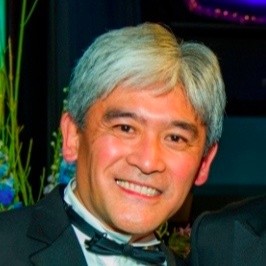
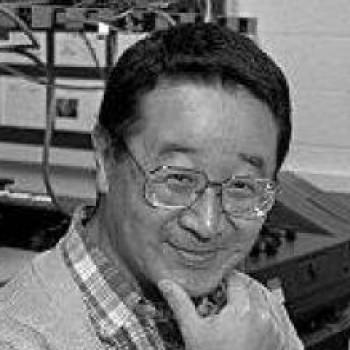
Kazu Gomi & Yoshihisa Yamamoto talk with Jeff Frick for Upgrade 2020.
For more information on the event, visit:
https://ntt-research.events.cube365.net/ntt-research/nttvirtualsummit
#Upgrade2020 #theCUBE #NTT @SiliconANGLE theCUBE
https://siliconangle.com/2020/09/28/as-moores-law-crumbles-researchers-seek-a-hybrid-quantum-conventional-computing-solution-upgrade2020/
As Moore’s law crumbles, researchers seek a hybrid quantum-conventional computing solution
BY BETSY AMY-VOGT
It was 1985. “We are the World” won record of the year, “Back to the Future” hit the movie screens, and Dr. David Deutsch invented the first quantum algorithm.
For most young adults, the first two events were of ultimate importance; the third went largely unnoticed. It was big news, however, for a group of fledgling researchers in Japan.
“That paper actually created a lot of excitement among the young scientists at NTT Basic Research Lab,” said Yoshihisa Yamamoto (pictured, right), director of the NTT Research Physics and Informatics Lab, and professor of electrical engineering, emeritus, at Stanford University. “We agreed that an interesting future direction is quantum information processing. And that’s how it started.”
Yamamoto and Kazuhiro Gomi (pictured, left), president and chief executive officer of NTT Research Inc., spoke with Jeff Frick, host of theCUBE, SiliconANGLE Media’s livestreaming studio, during Upgrade 2020, the NTT Research Summit. They discussed quantum computing and its relevance to the future of modern technology. (* Disclosure below.)
Quantum computing addresses possible future problems
Sinking three decades of funding into researching a field that may or may not produce any return on investment isn’t an option for most companies. But the goal of NTT’s Basic Research Laboratories isn’t financial gain; instead they are looking to make a long-term investment in the future of computer technology for the good of humanity.
“It is very important for us to understand the quantum principles and quantum limit for communication and computing, first of all,” Yamamoto said. “If we are lucky, maybe we can make a breakthrough for the next-generation communication and computing technology.“
The most pressing problem that quantum computing could solve is the potential demise of Moore’s law. As devices become ever faster, smaller and more powerful, there is a concern that society is heading toward a point where the technology can’t evolve any further. Calling it a “big, big, wall,” this computational dead end could happen within the next 10 years, stopping technological progress as we know it, according to Gomi.
The potential importance of quantum computing is not as a replacement for current technology, but as part of a hybrid quantum-silicon solution, Gomi explained. “Quantum will not displace classical computing. Rather, it should be utilized as an accelerator to take up specific kinds of tasks or applications,” he wrote in a recent Forbes Technology Council post on the “limits, options and applications” of quantum computing.
“We need to be prepared for those kinds of things,” Gomi stated. “We are … fortunate that we have a great team and a special expertise in this field, and we can spend some resources towards [researching] that. So why not?”
Quantum rule vs. classical reality
Most of us will never gain a true understanding of quantum research due to its refusal to abide by the rules of physics we experience in our daily lives. But that doesn’t mean we don’t want to try. When asked for a simple explanation of his research, Yamamoto explained that the fundamental particles that form the basis of our world behave according to quantum rule.
“[This] is a very different from classical reality, namely the world where we are living every day,” he said. “The relevant question is how our classical world or classical reality surfaces from the general or universal quantum substrate where our intuition never works,” he continued. “And that sort of a fundamental question actually opens the possibility [that] by utilizing quantum principle or quantum-classical crossover principle, we can revolutionize the current limitation in communication and computation.”
Watch the complete video interview below for more of Dr. Yoshihisa Yamamoto and Kazuhiro Gomi’s discussion on quantum research, And be sure to check out more of SiliconANGLE’s and theCUBE’s coverage of Upgrade 2020, the NTT Research Summit. (* Disclosure: TheCUBE is a paid media partner for Upgrade 2020, the NTT Research Summit. Neither NTT Research, the sponsor for theCUBE’s event coverage, nor other sponsors have editorial control over content on theCUBE or SiliconANGLE.)
Forgot Password
Almost there!
We just sent you a verification email. Please verify your account to gain access to
Upgrade 2020 The NTT Research Summit. If you don’t think you received an email check your
spam folder.
In order to sign in, enter the email address you used to registered for the event. Once completed, you will receive an email with a verification link. Open this link to automatically sign into the site.
Register For Upgrade 2020 The NTT Research Summit
Please fill out the information below. You will recieve an email with a verification link confirming your registration. Click the link to automatically sign into the site.
You’re almost there!
We just sent you a verification email. Please click the verification button in the email. Once your email address is verified, you will have full access to all event content for Upgrade 2020 The NTT Research Summit.
I want my badge and interests to be visible to all attendees.
Checking this box will display your presense on the attendees list, view your profile and allow other attendees to contact you via 1-1 chat. Read the Privacy Policy. At any time, you can choose to disable this preference.
Select your Interests!
add
Upload your photo
Uploading..
OR
Connect via Twitter
Connect via Linkedin
EDIT PASSWORD
Share
Forgot Password
Almost there!
We just sent you a verification email. Please verify your account to gain access to
Upgrade 2020 The NTT Research Summit. If you don’t think you received an email check your
spam folder.
In order to sign in, enter the email address you used to registered for the event. Once completed, you will receive an email with a verification link. Open this link to automatically sign into the site.
Sign in to gain access to Upgrade 2020 The NTT Research Summit
Please sign in with LinkedIn to continue to Upgrade 2020 The NTT Research Summit. Signing in with LinkedIn ensures a professional environment.
Are you sure you want to remove access rights for this user?
Details
Manage Access
email address
Community Invitation
Kazuhiro Gomi & Yoshihisa Yamamoto | Upgrade 2020 The NTT Research Summit
Kazu Gomi & Yoshihisa Yamamoto talk with Jeff Frick for Upgrade 2020.
For more information on the event, visit:
https://ntt-research.events.cube365.net/ntt-research/nttvirtualsummit
#Upgrade2020 #theCUBE #NTT @SiliconANGLE theCUBE
https://siliconangle.com/2020/09/28/as-moores-law-crumbles-researchers-seek-a-hybrid-quantum-conventional-computing-solution-upgrade2020/
As Moore’s law crumbles, researchers seek a hybrid quantum-conventional computing solution
BY BETSY AMY-VOGT
It was 1985. “We are the World” won record of the year, “Back to the Future” hit the movie screens, and Dr. David Deutsch invented the first quantum algorithm.
For most young adults, the first two events were of ultimate importance; the third went largely unnoticed. It was big news, however, for a group of fledgling researchers in Japan.
“That paper actually created a lot of excitement among the young scientists at NTT Basic Research Lab,” said Yoshihisa Yamamoto (pictured, right), director of the NTT Research Physics and Informatics Lab, and professor of electrical engineering, emeritus, at Stanford University. “We agreed that an interesting future direction is quantum information processing. And that’s how it started.”
Yamamoto and Kazuhiro Gomi (pictured, left), president and chief executive officer of NTT Research Inc., spoke with Jeff Frick, host of theCUBE, SiliconANGLE Media’s livestreaming studio, during Upgrade 2020, the NTT Research Summit. They discussed quantum computing and its relevance to the future of modern technology. (* Disclosure below.)
Quantum computing addresses possible future problems
Sinking three decades of funding into researching a field that may or may not produce any return on investment isn’t an option for most companies. But the goal of NTT’s Basic Research Laboratories isn’t financial gain; instead they are looking to make a long-term investment in the future of computer technology for the good of humanity.
“It is very important for us to understand the quantum principles and quantum limit for communication and computing, first of all,” Yamamoto said. “If we are lucky, maybe we can make a breakthrough for the next-generation communication and computing technology.“
The most pressing problem that quantum computing could solve is the potential demise of Moore’s law. As devices become ever faster, smaller and more powerful, there is a concern that society is heading toward a point where the technology can’t evolve any further. Calling it a “big, big, wall,” this computational dead end could happen within the next 10 years, stopping technological progress as we know it, according to Gomi.
The potential importance of quantum computing is not as a replacement for current technology, but as part of a hybrid quantum-silicon solution, Gomi explained. “Quantum will not displace classical computing. Rather, it should be utilized as an accelerator to take up specific kinds of tasks or applications,” he wrote in a recent Forbes Technology Council post on the “limits, options and applications” of quantum computing.
“We need to be prepared for those kinds of things,” Gomi stated. “We are … fortunate that we have a great team and a special expertise in this field, and we can spend some resources towards [researching] that. So why not?”
Quantum rule vs. classical reality
Most of us will never gain a true understanding of quantum research due to its refusal to abide by the rules of physics we experience in our daily lives. But that doesn’t mean we don’t want to try. When asked for a simple explanation of his research, Yamamoto explained that the fundamental particles that form the basis of our world behave according to quantum rule.
“[This] is a very different from classical reality, namely the world where we are living every day,” he said. “The relevant question is how our classical world or classical reality surfaces from the general or universal quantum substrate where our intuition never works,” he continued. “And that sort of a fundamental question actually opens the possibility [that] by utilizing quantum principle or quantum-classical crossover principle, we can revolutionize the current limitation in communication and computation.”
Watch the complete video interview below for more of Dr. Yoshihisa Yamamoto and Kazuhiro Gomi’s discussion on quantum research, And be sure to check out more of SiliconANGLE’s and theCUBE’s coverage of Upgrade 2020, the NTT Research Summit. (* Disclosure: TheCUBE is a paid media partner for Upgrade 2020, the NTT Research Summit. Neither NTT Research, the sponsor for theCUBE’s event coverage, nor other sponsors have editorial control over content on theCUBE or SiliconANGLE.)