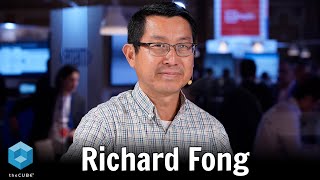
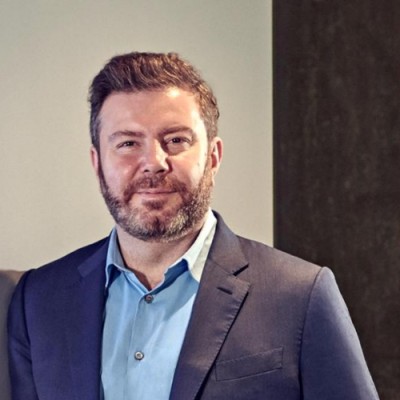
Daniel Dines, CEO & Founder, UiPath, sits with Dave Vellante at UiPath FORWARD III 2019 at the Bellagio Hotel in Las Vegas, NV.
#FORWARDIII #theCUBE
https://siliconangle.com/2019/10/21/show-him-the-light-how-customer-feedback-and-humility-led-uipath-ceo-daniel-dines-to-rpa-success-uipathforward-guestoftheweek/
Show him the light: How customer feedback led UiPath CEO Daniel Dines to RPA success
With a funding valuation of $7 billion and a spot in the top five on the Forbes Cloud 100 list, UiPath Inc. is generally viewed today as the leader in the robotic process automation market.
Like a freight train emerging from a long, dark tunnel into blinding daylight, UiPath has suddenly appeared with a force few would have expected five years ago when the company was chugging along at a mere $500,000 in revenue.
There are number of reasons for UiPath’s rapid success since then. With a focus on programs that could run autonomously and automate front- or back-office tasks, the company built robotic tools that could scale rapidly across large enterprise platforms. UiPath also secured critical early funding to help accelerate growth, enticing investment firms, such as Accel and the SoftBank Vision Fund, to dive in.
Yet a case could be made that what truly propelled UiPath forward was when its founder decided to hit the road and talk with his RPA customers. Those conversations instilled what he characterizes as a sense of humility, an acceptance that no one should ever be too self-important to tune out what others had to say, that became a core tenet of UiPath’s company culture.
“After I started to visit customers and understand their pain points and their requests, I actually realized they were smarter than us in using our own technology because they used it in the real world,” recalled Daniel Dines (pictured), founder and chief executive officer of UiPath. “I went back to my engineering team and told them: ‘From this day, I don’t want to ever hear we don’t fix bugs or features. When the customers say we need to do this, you say thank you for showing me the light.’”
Dines spoke with Dave Vellante, host of theCUBE, SiliconANGLE Media’s mobile livestreaming studio, during the UiPath Forward event in Las Vegas. They discussed how UiPath’s approach attracted large companies, the importance of scale in RPA deployment, why the firm did not get its start in the cloud, plans for a public offering and the role of its corporate philosophy in generating success (see the full interview with transcript here). (* Disclosure below.)
This week, theCUBE features Daniel Dines as its Guest of the Week.
Bottom-line impact
What Dines and his company had tapped into was a realization that RPA was about a lot more than autonomously ordering business cards or processing insurance claims. Major businesses, such as Toyota Motor Corp. and Walmart Inc., were using UiPath’s blocks of code to carry out repetitive tasks in hundreds or even thousands of ways that were having a significant impact on the bottom line.
Sumitomo Mitsui Banking Corp. has projected $500 million in savings by 2020 from busywork-saving RPA initiatives, and DHL Corp. was able to achieve 100% return on its pilot UiPath investment in one month. Other customers include Google LLC., McDonalds Corp., Uber Inc., NTT Communications, and the U.S. Navy.
“We can make a business case easily,” Dines said. “Our approach is just to replicate humans using the same tools, the same technologies that are familiar to business people. We can go into a large enterprise, show them how it works, and it doesn’t require such a huge investment, at least to get started.”
Deployment at scale
A key element of UiPath’s success has been deployment of its RPA technology at scale. Security Benefit Corp., a retirement insurance provider, has implemented UiPath’s solution for 300 internal processes, with an estimated 12,000 to 15,000 hours of time saved annually.
GE Electric Co. also has 300 automations in process, designed to generate major time savings, as opposed to “saving somebody five or maybe 10 minutes per week,” as one executive described his firm’s use of UiPath’s scalable technology.
UiPath has used its own technology to the same effect, manually building processes and then scaling up to automation as usage grows.
“We’ve built initial finance, HR and procurement processes in a very manual style using people, and then scaling up to reach a point where we become big consumers of our own technology,” Dines said. “All of this stuff requires a lot of work. We have automated more than a hundred thousand manual hours within UiPath to date.”
...
(* Disclosure: TheCUBE is a paid media partner for UiPath Forward. Neither UiPath, the sponsor for theCUBE’s event coverage, nor other sponsors have editorial control over content on theCUBE or SiliconANGLE.)
Forgot Password
Almost there!
We just sent you a verification email. Please verify your account to gain access to
UiPath Forward Americas 2019 | Las Vegas. If you don’t think you received an email check your
spam folder.
Sign in to UiPath Forward Americas 2019 | Las Vegas.
In order to sign in, enter the email address you used to registered for the event. Once completed, you will receive an email with a verification link. Open this link to automatically sign into the site.
Register For UiPath Forward Americas 2019 | Las Vegas
Please fill out the information below. You will recieve an email with a verification link confirming your registration. Click the link to automatically sign into the site.
You’re almost there!
We just sent you a verification email. Please click the verification button in the email. Once your email address is verified, you will have full access to all event content for UiPath Forward Americas 2019 | Las Vegas.
I want my badge and interests to be visible to all attendees.
Checking this box will display your presense on the attendees list, view your profile and allow other attendees to contact you via 1-1 chat. Read the Privacy Policy. At any time, you can choose to disable this preference.
Select your Interests!
add
Upload your photo
Uploading..
OR
Connect via Twitter
Connect via Linkedin
EDIT PASSWORD
Share
Forgot Password
Almost there!
We just sent you a verification email. Please verify your account to gain access to
UiPath Forward Americas 2019 | Las Vegas. If you don’t think you received an email check your
spam folder.
Sign in to UiPath Forward Americas 2019 | Las Vegas.
In order to sign in, enter the email address you used to registered for the event. Once completed, you will receive an email with a verification link. Open this link to automatically sign into the site.
Sign in to gain access to UiPath Forward Americas 2019 | Las Vegas
Please sign in with LinkedIn to continue to UiPath Forward Americas 2019 | Las Vegas. Signing in with LinkedIn ensures a professional environment.
Are you sure you want to remove access rights for this user?
Details
Manage Access
email address
Community Invitation
Daniel Dines, UiPath | UiPath FORWARD III 2019
Daniel Dines, CEO & Founder, UiPath, sits with Dave Vellante at UiPath FORWARD III 2019 at the Bellagio Hotel in Las Vegas, NV.
#FORWARDIII #theCUBE
https://siliconangle.com/2019/10/21/show-him-the-light-how-customer-feedback-and-humility-led-uipath-ceo-daniel-dines-to-rpa-success-uipathforward-guestoftheweek/
Show him the light: How customer feedback led UiPath CEO Daniel Dines to RPA success
With a funding valuation of $7 billion and a spot in the top five on the Forbes Cloud 100 list, UiPath Inc. is generally viewed today as the leader in the robotic process automation market.
Like a freight train emerging from a long, dark tunnel into blinding daylight, UiPath has suddenly appeared with a force few would have expected five years ago when the company was chugging along at a mere $500,000 in revenue.
There are number of reasons for UiPath’s rapid success since then. With a focus on programs that could run autonomously and automate front- or back-office tasks, the company built robotic tools that could scale rapidly across large enterprise platforms. UiPath also secured critical early funding to help accelerate growth, enticing investment firms, such as Accel and the SoftBank Vision Fund, to dive in.
Yet a case could be made that what truly propelled UiPath forward was when its founder decided to hit the road and talk with his RPA customers. Those conversations instilled what he characterizes as a sense of humility, an acceptance that no one should ever be too self-important to tune out what others had to say, that became a core tenet of UiPath’s company culture.
“After I started to visit customers and understand their pain points and their requests, I actually realized they were smarter than us in using our own technology because they used it in the real world,” recalled Daniel Dines (pictured), founder and chief executive officer of UiPath. “I went back to my engineering team and told them: ‘From this day, I don’t want to ever hear we don’t fix bugs or features. When the customers say we need to do this, you say thank you for showing me the light.’”
Dines spoke with Dave Vellante, host of theCUBE, SiliconANGLE Media’s mobile livestreaming studio, during the UiPath Forward event in Las Vegas. They discussed how UiPath’s approach attracted large companies, the importance of scale in RPA deployment, why the firm did not get its start in the cloud, plans for a public offering and the role of its corporate philosophy in generating success (see the full interview with transcript here). (* Disclosure below.)
This week, theCUBE features Daniel Dines as its Guest of the Week.
Bottom-line impact
What Dines and his company had tapped into was a realization that RPA was about a lot more than autonomously ordering business cards or processing insurance claims. Major businesses, such as Toyota Motor Corp. and Walmart Inc., were using UiPath’s blocks of code to carry out repetitive tasks in hundreds or even thousands of ways that were having a significant impact on the bottom line.
Sumitomo Mitsui Banking Corp. has projected $500 million in savings by 2020 from busywork-saving RPA initiatives, and DHL Corp. was able to achieve 100% return on its pilot UiPath investment in one month. Other customers include Google LLC., McDonalds Corp., Uber Inc., NTT Communications, and the U.S. Navy.
“We can make a business case easily,” Dines said. “Our approach is just to replicate humans using the same tools, the same technologies that are familiar to business people. We can go into a large enterprise, show them how it works, and it doesn’t require such a huge investment, at least to get started.”
Deployment at scale
A key element of UiPath’s success has been deployment of its RPA technology at scale. Security Benefit Corp., a retirement insurance provider, has implemented UiPath’s solution for 300 internal processes, with an estimated 12,000 to 15,000 hours of time saved annually.
GE Electric Co. also has 300 automations in process, designed to generate major time savings, as opposed to “saving somebody five or maybe 10 minutes per week,” as one executive described his firm’s use of UiPath’s scalable technology.
UiPath has used its own technology to the same effect, manually building processes and then scaling up to automation as usage grows.
“We’ve built initial finance, HR and procurement processes in a very manual style using people, and then scaling up to reach a point where we become big consumers of our own technology,” Dines said. “All of this stuff requires a lot of work. We have automated more than a hundred thousand manual hours within UiPath to date.”
...
(* Disclosure: TheCUBE is a paid media partner for UiPath Forward. Neither UiPath, the sponsor for theCUBE’s event coverage, nor other sponsors have editorial control over content on theCUBE or SiliconANGLE.)