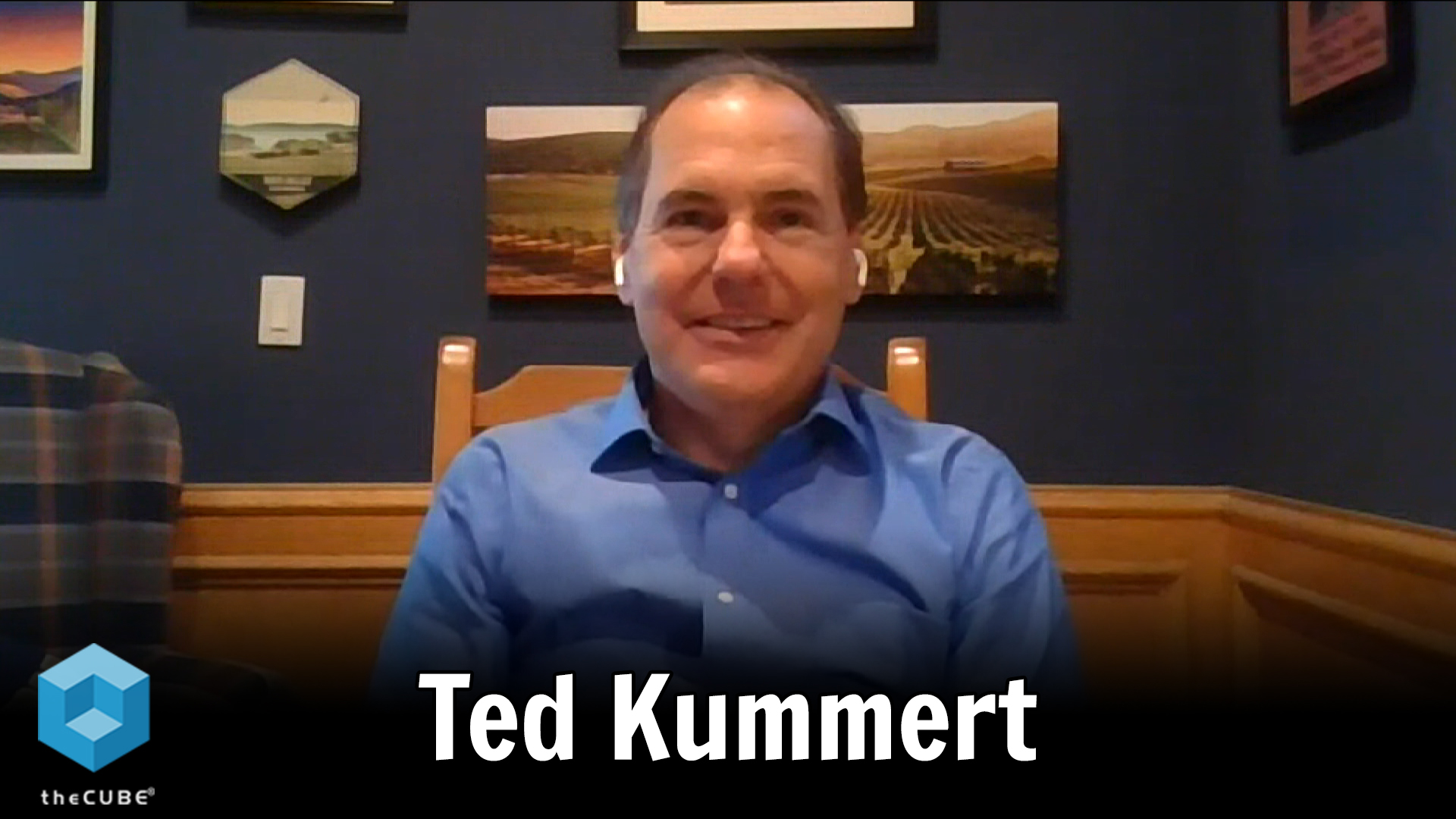
Ted Kummert, Executive Vice President of Product & Engineering, UiPath sits down with Dave Vellante for The Release Show: Post Event Analysis.
#UiPathLive #theCUBE
https://siliconangle.com/2020/05/20/hyperautomation-hype-insights-behind-uipaths-intelligent-rpa-platform-uipathlive/
Is hyperautomation more than hype? Insights behind UiPath’s intelligent RPA platform
The 20.4 release “is the most ambitious thing that this company has ever done from a release perspective,” Kummert said. “We’re talking about 1,000 feature improvements, hundreds of discrete features, new products, as well as now our Automation Cloud has become generally available as well.”
Breaking down some of these features, Kummert described how the new evolution of UiPath’s Studio automation canvas, StudioX, adds intelligence to simplify building automations. “StudioX is really our way of enabling citizen developers … to get some automation work done on their own,” he said.
Customer input was important in the design, with some of the major features, the out-of-box templates, and the studio governance features developed from customer suggestions.
Automation Hub is another intelligence-laced feature that brings employee input into the automation development loop. It addresses the problem of how to determine which processes should be automated by gathering data in three different ways, giving a holistic systems view.
The first way is through crowd mining, a collaborative method of gathering data. It involves the community by basically just asking those who are actually doing the work what tasks they think are candidates for automation. Tools such as Task Capture enable employees to identify processes to submit for consideration.
“People across the company can then collaborate, eventually moving on building the best ideas,” Kummert said.
The second method, called process mining, focuses on big-picture operational processes, such as backend systems and enterprise resource planning. While the third, task mining, is more of an individual collaborative and front-end processes.
“Let’s watch the log of events there, let’s apply some machine learning processing to that, and say, ‘Here’s the repetitive things we’ve found,'” Kummert said.
While process and task mining are traditional methods of gathering data, the connection to an automation platform is a new and powerful idea, Kummert added.
Forgot Password
Almost there!
We just sent you a verification email. Please verify your account to gain access to
UiPath's The Release Show: Post Event Analysis. If you don’t think you received an email check your
spam folder.
Sign in to UiPath's The Release Show: Post Event Analysis.
In order to sign in, enter the email address you used to registered for the event. Once completed, you will receive an email with a verification link. Open this link to automatically sign into the site.
Register For UiPath's The Release Show: Post Event Analysis
Please fill out the information below. You will recieve an email with a verification link confirming your registration. Click the link to automatically sign into the site.
You’re almost there!
We just sent you a verification email. Please click the verification button in the email. Once your email address is verified, you will have full access to all event content for UiPath's The Release Show: Post Event Analysis.
I want my badge and interests to be visible to all attendees.
Checking this box will display your presense on the attendees list, view your profile and allow other attendees to contact you via 1-1 chat. Read the Privacy Policy. At any time, you can choose to disable this preference.
Select your Interests!
add
Upload your photo
Uploading..
OR
Connect via Twitter
Connect via Linkedin
EDIT PASSWORD
Share
Forgot Password
Almost there!
We just sent you a verification email. Please verify your account to gain access to
UiPath's The Release Show: Post Event Analysis. If you don’t think you received an email check your
spam folder.
Sign in to UiPath's The Release Show: Post Event Analysis.
In order to sign in, enter the email address you used to registered for the event. Once completed, you will receive an email with a verification link. Open this link to automatically sign into the site.
Sign in to gain access to UiPath's The Release Show: Post Event Analysis
Please sign in with LinkedIn to continue to UiPath's The Release Show: Post Event Analysis. Signing in with LinkedIn ensures a professional environment.
Are you sure you want to remove access rights for this user?
Details
Manage Access
email address
Community Invitation
Ted Kummert, UiPath | The Release Show: Post Event Analysis
Ted Kummert, Executive Vice President of Product & Engineering, UiPath sits down with Dave Vellante for The Release Show: Post Event Analysis.
#UiPathLive #theCUBE
https://siliconangle.com/2020/05/20/hyperautomation-hype-insights-behind-uipaths-intelligent-rpa-platform-uipathlive/
Is hyperautomation more than hype? Insights behind UiPath’s intelligent RPA platform
The 20.4 release “is the most ambitious thing that this company has ever done from a release perspective,” Kummert said. “We’re talking about 1,000 feature improvements, hundreds of discrete features, new products, as well as now our Automation Cloud has become generally available as well.”
Breaking down some of these features, Kummert described how the new evolution of UiPath’s Studio automation canvas, StudioX, adds intelligence to simplify building automations. “StudioX is really our way of enabling citizen developers … to get some automation work done on their own,” he said.
Customer input was important in the design, with some of the major features, the out-of-box templates, and the studio governance features developed from customer suggestions.
Automation Hub is another intelligence-laced feature that brings employee input into the automation development loop. It addresses the problem of how to determine which processes should be automated by gathering data in three different ways, giving a holistic systems view.
The first way is through crowd mining, a collaborative method of gathering data. It involves the community by basically just asking those who are actually doing the work what tasks they think are candidates for automation. Tools such as Task Capture enable employees to identify processes to submit for consideration.
“People across the company can then collaborate, eventually moving on building the best ideas,” Kummert said.
The second method, called process mining, focuses on big-picture operational processes, such as backend systems and enterprise resource planning. While the third, task mining, is more of an individual collaborative and front-end processes.
“Let’s watch the log of events there, let’s apply some machine learning processing to that, and say, ‘Here’s the repetitive things we’ve found,'” Kummert said.
While process and task mining are traditional methods of gathering data, the connection to an automation platform is a new and powerful idea, Kummert added.