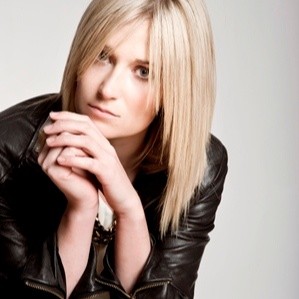
Billie Whitehouse @BillieWHouse @WearableX, CEO, Wearable X sits downs with Dave Vellante and Sonia Tagare at theCUBE NYC 2018 in New York, New York.
#CUBENYC #theCUBE #WearableX
https://siliconangle.com/2018/09/21/wearable-x-designing-future-technology-fits-cubenyc/
Wearable X: Designing a future of technology that fits
To continue expanding the opportunities in connected technology without the burden of managing yet another device, some are looking to the emerging potential of wearable tech.
Despite criticisms, “internet of things”-enabled phones, computers, and other tools have undoubtedly enabled convenience and improved efficiencies for users. But these devices rely on near-constant human interaction to provide such a benefit, a model that risks social upheaval at scale. Wearable tech is striving to be a happy medium.
“We believe that we can empower clothing with technology to do far more than it ever has for you before and to really give you control back of your life,” said Billie Whitehouse (pictured), chief executive officer of Wearable X. She leverages her background in design to engineer tech-enabled clothing that provides all the benefits of artificial intelligence through a fluid integration of action and analysis for a future propelled by technology that moves with the wearer.
Whitehouse sat down with Dave Vellante and Sonia Tagare, co-hosts of theCUBE, SiliconANGLE Media’s mobile livestreaming studio, during theCUBE NYC event in New York. This week, theCUBE spotlights Billie Whitehouse in its Women in Tech feature.
Communicating through vibration
Though wearable technology has been available for years, its utility was long recognized solely by industries, such as military and healthcare, that could afford to implement and manage it at scale. With the resurgence of AI in the wake of tech’s data renaissance, IoT-enabled tools are quickly gaining popularity in the consumer market. Wearable devices are forecast to represent a market worth of $45 billion by the end of 2021 as the technology’s advancements enable a more manageable size and cost for mainstream users.
Devices like fitness trackers, smartwatches and tech-enabled glasses are among the most familiar to emerge from this growing trend, but Whitehouse is pushing wearable boundaries with her inventive applications for the technology. Her innovations in the field include a GPS-enabled blazer, Navigate, designed to direct travelers in new environments without requiring a handheld tool and multiple stops to verify directions, and the Alert Shirt, a jersey that transmits the sensations felt by players during a game to their fans. Both use haptic feedback, a vibration motivated by AI that communicates with the body.
Whitehouse’s latest design, NadiX, is a line of yoga apparel that guides users into poses through small devices that utilize the same vibrational tech. The haptic sensors provide feedback to a paired smartphone app that then gives users custom audio instructions.
“Similarly to a personal instructor, the vibrations will show you where to isolate, where to ground down, where to lift up or to rotate,” Whitehouse said.
Accelerometers are built in through the ankles, behind the knees and in the hip of the yoga pants, embedded at key hinge points to determine user poses and assess their successful completion.
“They connect and understand your body orientation and at the end ask you to address whether you made it into the pose or not by reading the accelerometer values,” Whitehouse said. “Then we give you vibrational feedback where to focus.”
The accelerometers and pulse device that carry that leggings’ Bluetooth module, battery and printed-circuit board are designed for easy washing and drying and to be unobtrusive to wearers. “We have tested on every body shape you can imagine across five different continents, because we wanted to make sure that the algorithms we built understand poses for everybody,” Whitehouse said.
How AI fits
Conceptualized as a tool to improve accessibility to wellness, NadiX was created to be inclusive and highly customizable, a feature artificial intelligence is uniquely equipped to provide. In addition to pants that direct movements for every individual body, the tech also provides in-app customizations that allow users to build a “class” fit to their needs.
“You can build a sequence of poses that is defined by you, for your body, instead of going to a class where you end up getting a terrible teacher or music that you don’t like,” Whitehouse said.
Even at $250 for the leggings (a higher-than-average price point for most yoga pants) and a $10-a-month subscription, the cost of NadiX rivals that of most yoga studios and actually offers a more cost-effective option for its convenience and constant availability.
...
Here’s the complete video interview, part of SiliconANGLE’s and theCUBE’s coverage of theCUBE NYC event:
Forgot Password
Almost there!
We just sent you a verification email. Please verify your account to gain access to
theCUBE NYC 2018 | New York. If you don’t think you received an email check your
spam folder.
In order to sign in, enter the email address you used to registered for the event. Once completed, you will receive an email with a verification link. Open this link to automatically sign into the site.
Register For theCUBE NYC 2018 | New York
Please fill out the information below. You will recieve an email with a verification link confirming your registration. Click the link to automatically sign into the site.
You’re almost there!
We just sent you a verification email. Please click the verification button in the email. Once your email address is verified, you will have full access to all event content for theCUBE NYC 2018 | New York.
I want my badge and interests to be visible to all attendees.
Checking this box will display your presense on the attendees list, view your profile and allow other attendees to contact you via 1-1 chat. Read the Privacy Policy. At any time, you can choose to disable this preference.
Select your Interests!
add
Upload your photo
Uploading..
OR
Connect via Twitter
Connect via Linkedin
EDIT PASSWORD
Share
Forgot Password
Almost there!
We just sent you a verification email. Please verify your account to gain access to
theCUBE NYC 2018 | New York. If you don’t think you received an email check your
spam folder.
In order to sign in, enter the email address you used to registered for the event. Once completed, you will receive an email with a verification link. Open this link to automatically sign into the site.
Sign in to gain access to theCUBE NYC 2018 | New York
Please sign in with LinkedIn to continue to theCUBE NYC 2018 | New York. Signing in with LinkedIn ensures a professional environment.
Are you sure you want to remove access rights for this user?
Details
Manage Access
email address
Community Invitation
Billie Whitehouse, Wearable X | theCUBE NYC 2018
Billie Whitehouse @BillieWHouse @WearableX, CEO, Wearable X sits downs with Dave Vellante and Sonia Tagare at theCUBE NYC 2018 in New York, New York.
#CUBENYC #theCUBE #WearableX
https://siliconangle.com/2018/09/21/wearable-x-designing-future-technology-fits-cubenyc/
Wearable X: Designing a future of technology that fits
To continue expanding the opportunities in connected technology without the burden of managing yet another device, some are looking to the emerging potential of wearable tech.
Despite criticisms, “internet of things”-enabled phones, computers, and other tools have undoubtedly enabled convenience and improved efficiencies for users. But these devices rely on near-constant human interaction to provide such a benefit, a model that risks social upheaval at scale. Wearable tech is striving to be a happy medium.
“We believe that we can empower clothing with technology to do far more than it ever has for you before and to really give you control back of your life,” said Billie Whitehouse (pictured), chief executive officer of Wearable X. She leverages her background in design to engineer tech-enabled clothing that provides all the benefits of artificial intelligence through a fluid integration of action and analysis for a future propelled by technology that moves with the wearer.
Whitehouse sat down with Dave Vellante and Sonia Tagare, co-hosts of theCUBE, SiliconANGLE Media’s mobile livestreaming studio, during theCUBE NYC event in New York. This week, theCUBE spotlights Billie Whitehouse in its Women in Tech feature.
Communicating through vibration
Though wearable technology has been available for years, its utility was long recognized solely by industries, such as military and healthcare, that could afford to implement and manage it at scale. With the resurgence of AI in the wake of tech’s data renaissance, IoT-enabled tools are quickly gaining popularity in the consumer market. Wearable devices are forecast to represent a market worth of $45 billion by the end of 2021 as the technology’s advancements enable a more manageable size and cost for mainstream users.
Devices like fitness trackers, smartwatches and tech-enabled glasses are among the most familiar to emerge from this growing trend, but Whitehouse is pushing wearable boundaries with her inventive applications for the technology. Her innovations in the field include a GPS-enabled blazer, Navigate, designed to direct travelers in new environments without requiring a handheld tool and multiple stops to verify directions, and the Alert Shirt, a jersey that transmits the sensations felt by players during a game to their fans. Both use haptic feedback, a vibration motivated by AI that communicates with the body.
Whitehouse’s latest design, NadiX, is a line of yoga apparel that guides users into poses through small devices that utilize the same vibrational tech. The haptic sensors provide feedback to a paired smartphone app that then gives users custom audio instructions.
“Similarly to a personal instructor, the vibrations will show you where to isolate, where to ground down, where to lift up or to rotate,” Whitehouse said.
Accelerometers are built in through the ankles, behind the knees and in the hip of the yoga pants, embedded at key hinge points to determine user poses and assess their successful completion.
“They connect and understand your body orientation and at the end ask you to address whether you made it into the pose or not by reading the accelerometer values,” Whitehouse said. “Then we give you vibrational feedback where to focus.”
The accelerometers and pulse device that carry that leggings’ Bluetooth module, battery and printed-circuit board are designed for easy washing and drying and to be unobtrusive to wearers. “We have tested on every body shape you can imagine across five different continents, because we wanted to make sure that the algorithms we built understand poses for everybody,” Whitehouse said.
How AI fits
Conceptualized as a tool to improve accessibility to wellness, NadiX was created to be inclusive and highly customizable, a feature artificial intelligence is uniquely equipped to provide. In addition to pants that direct movements for every individual body, the tech also provides in-app customizations that allow users to build a “class” fit to their needs.
“You can build a sequence of poses that is defined by you, for your body, instead of going to a class where you end up getting a terrible teacher or music that you don’t like,” Whitehouse said.
Even at $250 for the leggings (a higher-than-average price point for most yoga pants) and a $10-a-month subscription, the cost of NadiX rivals that of most yoga studios and actually offers a more cost-effective option for its convenience and constant availability.
...
Here’s the complete video interview, part of SiliconANGLE’s and theCUBE’s coverage of theCUBE NYC event: