Daniel Dines, CEO & Founder at UiPath joins Dave Vellante for theCUBE on Cloud 2021.
#theCUBE #CUBEOnCloud
https://siliconangle.com/2021/01/21/automation-is-an-essential-driver-of-post-pandemic-business-value-cubeoncloud/
Automation is an essential driver of post-pandemic business value
SPECIAL COVERAGE: THECUBE ON CLOUD BY BETSY AMY-VOGT
Robotic process automation was already experiencing strong growth in 2019. By the middle of 2020, the pandemic had accelerated the automation mandate, pushing adoption up 27%.
And the trend is not slowing anytime soon, with Allied Market Research forecasting a compound annual growth rate of 36.4% over the next seven years.
If cloud adoption is the first critical factor in post-pandemic business success, then RPA isn’t far behind. Infused with machine learning and artificial intelligence, RPA becomes hyperautomation, exploding use cases out of the information technology department into all areas of business operations.
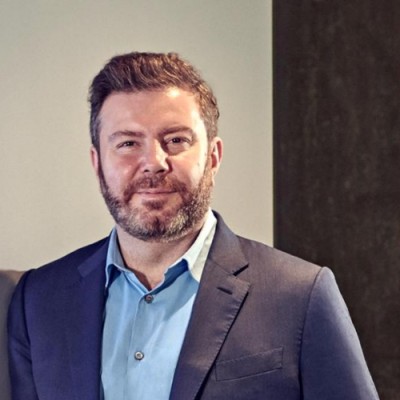
“I believe that [RPA] can do for business processes what the cloud has done for IT processes,” said Daniel Dines (pictured), founder and chief executive officer of UiPath Inc.
Dines spoke with Dave Vellante, host of theCUBE, SiliconANGLE Media’s livestreaming studio, during theCUBE on Cloud event. They discussed the future of automation and the cloud, with a focus on how RPA is moving from a point tool to capture a broader automation agenda.
RPA adoption mirrors the growth of cloud
The advances in cloud at the start of the last decade parallel today’s rise of RPA, according to Vellante. “When you go back to the early days of cloud, what they got right was they were attacking the human labor problem and they automated it,” he said. “It was storage; it was networking; it was compute. But the automation that they brought to IT, the quality that drove and the flexibility was a game-changer.”
“The cloud was built by looking at IT automation use cases,” Dines agreed. This was because software engineers didn’t understand the business side of operations, “and they don’t care,” Dines stated, not as a negative comment on engineers, but rather an observation that they’re focused on what is relevant to their area of expertise. “Initially, they built the cloud to help them on what they know the best,” he added.
Dines had the same disciplined view for RPA when he founded UiPath with a laser focus on computer vision technology. Then he discovered the “messy world of business processes” and had an “aha moment,” he recalled.
By emulating how a human user works, computer vision offers the best technology for robots to interact with the computer screen. This makes it ideal for the automation of mundane, time-consuming business tasks, such as data entry.
“Everyone has on her or his plate today 10, 20 different activities. Some of them can be completely delegated to robots so they have the low-value type of activities, while [humans] can focus on the high-value activities like interaction with people, creativity [and] decision-making,” Dines said. “[RPA interacting] more like a human user is quintessential in making our business reliable and easy to use.”
Vendor lock-in is out; multicloud is in
Ingesting data automatically and intelligently via computer vision technology will be key to value generation and by extension the ability to access that data across clouds, according to Vellante. There is already a mesh between services that makes data location irrelevant, Dines explained.
“People would like to have optionality,” he said. “It’s not necessarily that I will use three clouds, but I would like to use a vendor that gives me optionality.”
When choosing a technology, the first priority is to choose something that’s multicloud rather than from one cloud vendor, according to Dines, who predicts a slew in use cases on-premises. “There will be different sorts of cloud from a completely managed automation service … to managing your automation in your cloud tenant yourself. But not on-prem … unless in a few critical sectors,” he said.
A big shift into building containerized microservices, specifically with Kubernetes, will accompany the multicloud approach, according to Dines.
“What it takes when you create an addition for another cloud is to have the underlying services,” he said. He gives the example of using a specific data platform in an analytics offering. If the platform is only available in one cloud, “probably the analytics will have to be delayed or use less of one part technology,” he said. “So it’s not only about what we are building, but it’s also the vast availability of other sets of technologies that we try to use.”
The key takeaway is that it’s the value that’s running on top of the cloud that’s driving Cloud 2.0 to the next generation, according to Vellante. “As the workloads will move to cloud, it’s absolutely critical that the processes will move to cloud,” Dines said, linking the future of cloud with RPA. “There is no way back.”
Forgot Password
Almost there!
We just sent you a verification email. Please verify your account to gain access to
theCUBE on Cloud 2021 | Digital. If you don’t think you received an email check your
spam folder.
In order to sign in, enter the email address you used to registered for the event. Once completed, you will receive an email with a verification link. Open this link to automatically sign into the site.
Register For theCUBE on Cloud 2021 | Digital
Please fill out the information below. You will recieve an email with a verification link confirming your registration. Click the link to automatically sign into the site.
You’re almost there!
We just sent you a verification email. Please click the verification button in the email. Once your email address is verified, you will have full access to all event content for theCUBE on Cloud 2021 | Digital.
I want my badge and interests to be visible to all attendees.
Checking this box will display your presense on the attendees list, view your profile and allow other attendees to contact you via 1-1 chat. Read the Privacy Policy. At any time, you can choose to disable this preference.
Select your Interests!
add
Upload your photo
Uploading..
OR
Connect via Twitter
Connect via Linkedin
EDIT PASSWORD
Share
Forgot Password
Almost there!
We just sent you a verification email. Please verify your account to gain access to
theCUBE on Cloud 2021 | Digital. If you don’t think you received an email check your
spam folder.
In order to sign in, enter the email address you used to registered for the event. Once completed, you will receive an email with a verification link. Open this link to automatically sign into the site.
Sign in to gain access to theCUBE on Cloud 2021 | Digital
Please sign in with LinkedIn to continue to theCUBE on Cloud 2021 | Digital. Signing in with LinkedIn ensures a professional environment.
Are you sure you want to remove access rights for this user?
Details
Manage Access
email address
Community Invitation
Daniel Dines, Ui Path | theCUBE on Cloud 2021
Daniel Dines, CEO & Founder at UiPath joins Dave Vellante for theCUBE on Cloud 2021.
#theCUBE #CUBEOnCloud
https://siliconangle.com/2021/01/21/automation-is-an-essential-driver-of-post-pandemic-business-value-cubeoncloud/
Automation is an essential driver of post-pandemic business value
SPECIAL COVERAGE: THECUBE ON CLOUD BY BETSY AMY-VOGT
Robotic process automation was already experiencing strong growth in 2019. By the middle of 2020, the pandemic had accelerated the automation mandate, pushing adoption up 27%.
And the trend is not slowing anytime soon, with Allied Market Research forecasting a compound annual growth rate of 36.4% over the next seven years.
If cloud adoption is the first critical factor in post-pandemic business success, then RPA isn’t far behind. Infused with machine learning and artificial intelligence, RPA becomes hyperautomation, exploding use cases out of the information technology department into all areas of business operations.
“I believe that [RPA] can do for business processes what the cloud has done for IT processes,” said Daniel Dines (pictured), founder and chief executive officer of UiPath Inc.
Dines spoke with Dave Vellante, host of theCUBE, SiliconANGLE Media’s livestreaming studio, during theCUBE on Cloud event. They discussed the future of automation and the cloud, with a focus on how RPA is moving from a point tool to capture a broader automation agenda.
RPA adoption mirrors the growth of cloud
The advances in cloud at the start of the last decade parallel today’s rise of RPA, according to Vellante. “When you go back to the early days of cloud, what they got right was they were attacking the human labor problem and they automated it,” he said. “It was storage; it was networking; it was compute. But the automation that they brought to IT, the quality that drove and the flexibility was a game-changer.”
“The cloud was built by looking at IT automation use cases,” Dines agreed. This was because software engineers didn’t understand the business side of operations, “and they don’t care,” Dines stated, not as a negative comment on engineers, but rather an observation that they’re focused on what is relevant to their area of expertise. “Initially, they built the cloud to help them on what they know the best,” he added.
Dines had the same disciplined view for RPA when he founded UiPath with a laser focus on computer vision technology. Then he discovered the “messy world of business processes” and had an “aha moment,” he recalled.
By emulating how a human user works, computer vision offers the best technology for robots to interact with the computer screen. This makes it ideal for the automation of mundane, time-consuming business tasks, such as data entry.
“Everyone has on her or his plate today 10, 20 different activities. Some of them can be completely delegated to robots so they have the low-value type of activities, while [humans] can focus on the high-value activities like interaction with people, creativity [and] decision-making,” Dines said. “[RPA interacting] more like a human user is quintessential in making our business reliable and easy to use.”
Vendor lock-in is out; multicloud is in
Ingesting data automatically and intelligently via computer vision technology will be key to value generation and by extension the ability to access that data across clouds, according to Vellante. There is already a mesh between services that makes data location irrelevant, Dines explained.
“People would like to have optionality,” he said. “It’s not necessarily that I will use three clouds, but I would like to use a vendor that gives me optionality.”
When choosing a technology, the first priority is to choose something that’s multicloud rather than from one cloud vendor, according to Dines, who predicts a slew in use cases on-premises. “There will be different sorts of cloud from a completely managed automation service … to managing your automation in your cloud tenant yourself. But not on-prem … unless in a few critical sectors,” he said.
A big shift into building containerized microservices, specifically with Kubernetes, will accompany the multicloud approach, according to Dines.
“What it takes when you create an addition for another cloud is to have the underlying services,” he said. He gives the example of using a specific data platform in an analytics offering. If the platform is only available in one cloud, “probably the analytics will have to be delayed or use less of one part technology,” he said. “So it’s not only about what we are building, but it’s also the vast availability of other sets of technologies that we try to use.”
The key takeaway is that it’s the value that’s running on top of the cloud that’s driving Cloud 2.0 to the next generation, according to Vellante. “As the workloads will move to cloud, it’s absolutely critical that the processes will move to cloud,” Dines said, linking the future of cloud with RPA. “There is no way back.”