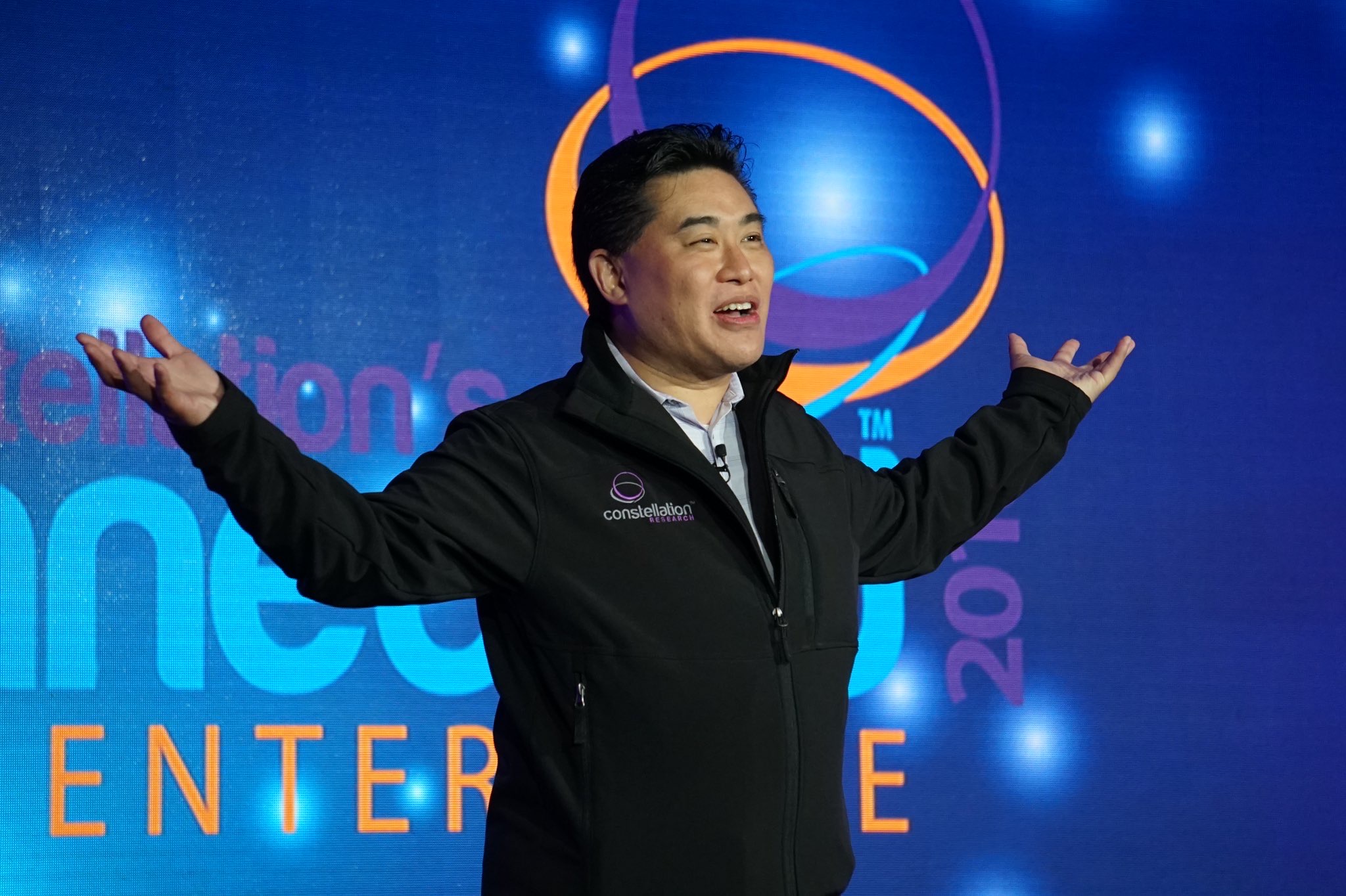
R "Ray" Wang, Principal Analyst & Founder, Constellation Research; Churchill Club Board Member sits down with Jeff Frick for The Churchills 2019 at the Hyatt Regency in Santa Clara, CA.
#TheChurchills #theCUBE
https://siliconangle.com/2019/02/25/straight-takes-ray-wang-weighs-in-on-ibm-red-hat-salesforce-google-and-amazon-think2019-guestoftheweek/
Straight takes: Ray Wang weighs in on IBM, Red Hat, Salesforce, Google and Amazon
Analysts are paid to have opinions, and Ray Wang (pictured), founder, chairman and principal analyst of Constellation Research Inc., doesn’t pull any punches when it comes to assessing the state of the enterprise tech world today.
Take IBM Corp.’s blockbuster acquisition of Red Hat Inc. in October. The computing giant paid $34 billion to acquire the open-source company, the largest price ever paid by IBM in its 108-year history and the biggest software buyout ever made.
Despite the eye-popping price tag, the deal was greenlighted by shareholders last month and is expected to be finalized in the second half of this year. The question being asked around the tech world is: Did IBM pay too much?
“The Red Hat deal to me was overpaid,” Wang said. “It’s kind of like is this the Hail Mary? Or is this the future strategy? Or is this basically what the new company is? I would have rather taken that money and put it into venture funds to continue what they’re doing with network models.”
Wang spoke with Dave Vellante and Stu Miniman, co-hosts of theCUBE, SiliconANGLE Media’s mobile livestreaming studio, during the IBM Think event in San Francisco. They discussed IBM’s strategic direction and future leadership, signs of progress at the company’s recent conference, developer involvement, a unique skills training approach by Salesforce.com Inc., and growing competition between two major tech giants.
This week, theCUBE features Ray Wang as its Guest of the Week.
IBM’s tough years
The dynamics surrounding the Red Hat acquisition have brought further scrutiny of IBM’s long-term strategic direction, especially where it involves the cloud. The company’s cloud strategy was perceived by many analysts as not a resounding success, and the company’s stock, prior to the Red Hat acquisition, approached a nine-year low. Aside from mainframe sales and services, IBM had ceded its enterprise leadership position to other tech giants, recording 22 straight quarters of declining revenue until last year.
This October will mark the eight-year run of IBM Chief Executive Officer Ginni Rometty, and there has been speculation about both her legacy and the possibility that Red Hat’s CEO — Jim Whitehurst — would succeed her in the leadership spot. In an ironic twist, Rometty could depart after taking over the company when her predecessor failed to heed the public cloud momentum generated by Amazon.com Inc.
“She had a bad hand, but we’ve had over seven years to play this,” Wang said. “It’s now on her. She’s got to turn this around, finish the legacy. You’ve got a great CEO-in-waiting with the Red Hat guy.”
Hope for hybrid
Despite the storm clouds of uncertainty around IBM’s future, Wang and other analysts saw hopeful signs during the company’s recent Think conference that the narrative may be changing for the better. Rometty made it clear that the company was all-in on the hybrid cloud, and a parade of customers and partners joined her and other IBM executives in assessing IBM’s latest moves in that space.
The message from IBM in San Francisco this month was that when it comes to data, artificial intelligence and cloud solutions, it’s open for business.
“We see a flicker of hope here at IBM that they’re turning around,” Wang noted. “They’re not just selling services; they’re not just selling software. They’re actually delivering these business models to executives and companies and the early adopters are getting it.”
Another area of the business that offers cause for optimism at IBM involves developers. The Red Hat acquisition will bring the open-source software company’s 8 million developers into the fold, an attractive boost for IBM’s enterprise development plans.
IBM also rolled out a host of partner program updates this month designed to strengthen its channel ecosystem and appeal to developers. New initiatives include IBM Cloud Paks, container software with support for open standards in multicloud environments, and forthcoming Red Hat training involving mutual offerings, such as IBM Cloud Private on top of OpenShift.
“It’s the partner developers that are coming in,” Wang said. “It’s people that work for large system integrators, large networks, small-to-mid-size value-added resellers. Those are where the developers are coming from.”
Innovative competitors
The challenge for IBM in its game of “catch-up” is that a number of enterprise competitors are so far down the track that they’re either out of sight or creating new communities outside traditional channels.
...
Forgot Password
Almost there!
We just sent you a verification email. Please verify your account to gain access to
The Churchills 2019. If you don’t think you received an email check your
spam folder.
In order to sign in, enter the email address you used to registered for the event. Once completed, you will receive an email with a verification link. Open this link to automatically sign into the site.
Register For The Churchills 2019
Please fill out the information below. You will recieve an email with a verification link confirming your registration. Click the link to automatically sign into the site.
You’re almost there!
We just sent you a verification email. Please click the verification button in the email. Once your email address is verified, you will have full access to all event content for The Churchills 2019.
I want my badge and interests to be visible to all attendees.
Checking this box will display your presense on the attendees list, view your profile and allow other attendees to contact you via 1-1 chat. Read the Privacy Policy. At any time, you can choose to disable this preference.
Select your Interests!
add
Upload your photo
Uploading..
OR
Connect via Twitter
Connect via Linkedin
EDIT PASSWORD
Share
Forgot Password
Almost there!
We just sent you a verification email. Please verify your account to gain access to
The Churchills 2019. If you don’t think you received an email check your
spam folder.
In order to sign in, enter the email address you used to registered for the event. Once completed, you will receive an email with a verification link. Open this link to automatically sign into the site.
Sign in to gain access to The Churchills 2019
Please sign in with LinkedIn to continue to The Churchills 2019. Signing in with LinkedIn ensures a professional environment.
Are you sure you want to remove access rights for this user?
Details
Manage Access
email address
Community Invitation
R "Ray" Wang, Constellation Research & Churchill Club | The Churchills 2019
R "Ray" Wang, Principal Analyst & Founder, Constellation Research; Churchill Club Board Member sits down with Jeff Frick for The Churchills 2019 at the Hyatt Regency in Santa Clara, CA.
#TheChurchills #theCUBE
https://siliconangle.com/2019/02/25/straight-takes-ray-wang-weighs-in-on-ibm-red-hat-salesforce-google-and-amazon-think2019-guestoftheweek/
Straight takes: Ray Wang weighs in on IBM, Red Hat, Salesforce, Google and Amazon
Analysts are paid to have opinions, and Ray Wang (pictured), founder, chairman and principal analyst of Constellation Research Inc., doesn’t pull any punches when it comes to assessing the state of the enterprise tech world today.
Take IBM Corp.’s blockbuster acquisition of Red Hat Inc. in October. The computing giant paid $34 billion to acquire the open-source company, the largest price ever paid by IBM in its 108-year history and the biggest software buyout ever made.
Despite the eye-popping price tag, the deal was greenlighted by shareholders last month and is expected to be finalized in the second half of this year. The question being asked around the tech world is: Did IBM pay too much?
“The Red Hat deal to me was overpaid,” Wang said. “It’s kind of like is this the Hail Mary? Or is this the future strategy? Or is this basically what the new company is? I would have rather taken that money and put it into venture funds to continue what they’re doing with network models.”
Wang spoke with Dave Vellante and Stu Miniman, co-hosts of theCUBE, SiliconANGLE Media’s mobile livestreaming studio, during the IBM Think event in San Francisco. They discussed IBM’s strategic direction and future leadership, signs of progress at the company’s recent conference, developer involvement, a unique skills training approach by Salesforce.com Inc., and growing competition between two major tech giants.
This week, theCUBE features Ray Wang as its Guest of the Week.
IBM’s tough years
The dynamics surrounding the Red Hat acquisition have brought further scrutiny of IBM’s long-term strategic direction, especially where it involves the cloud. The company’s cloud strategy was perceived by many analysts as not a resounding success, and the company’s stock, prior to the Red Hat acquisition, approached a nine-year low. Aside from mainframe sales and services, IBM had ceded its enterprise leadership position to other tech giants, recording 22 straight quarters of declining revenue until last year.
This October will mark the eight-year run of IBM Chief Executive Officer Ginni Rometty, and there has been speculation about both her legacy and the possibility that Red Hat’s CEO — Jim Whitehurst — would succeed her in the leadership spot. In an ironic twist, Rometty could depart after taking over the company when her predecessor failed to heed the public cloud momentum generated by Amazon.com Inc.
“She had a bad hand, but we’ve had over seven years to play this,” Wang said. “It’s now on her. She’s got to turn this around, finish the legacy. You’ve got a great CEO-in-waiting with the Red Hat guy.”
Hope for hybrid
Despite the storm clouds of uncertainty around IBM’s future, Wang and other analysts saw hopeful signs during the company’s recent Think conference that the narrative may be changing for the better. Rometty made it clear that the company was all-in on the hybrid cloud, and a parade of customers and partners joined her and other IBM executives in assessing IBM’s latest moves in that space.
The message from IBM in San Francisco this month was that when it comes to data, artificial intelligence and cloud solutions, it’s open for business.
“We see a flicker of hope here at IBM that they’re turning around,” Wang noted. “They’re not just selling services; they’re not just selling software. They’re actually delivering these business models to executives and companies and the early adopters are getting it.”
Another area of the business that offers cause for optimism at IBM involves developers. The Red Hat acquisition will bring the open-source software company’s 8 million developers into the fold, an attractive boost for IBM’s enterprise development plans.
IBM also rolled out a host of partner program updates this month designed to strengthen its channel ecosystem and appeal to developers. New initiatives include IBM Cloud Paks, container software with support for open standards in multicloud environments, and forthcoming Red Hat training involving mutual offerings, such as IBM Cloud Private on top of OpenShift.
“It’s the partner developers that are coming in,” Wang said. “It’s people that work for large system integrators, large networks, small-to-mid-size value-added resellers. Those are where the developers are coming from.”
Innovative competitors
The challenge for IBM in its game of “catch-up” is that a number of enterprise competitors are so far down the track that they’re either out of sight or creating new communities outside traditional channels.
...