Aggregation and abstraction core of API management
by Gabriel Pesek | Nov 19, 2015
#theCUBE #StructureConf#Structure #CloudElements #SiliconANGLE
As Structure, LLC’s Structure 2015 conference progresses, the attendees are continuing to mix and encounter each other, leading to combinations of interests that would be unlikely to come together in their usual environments.
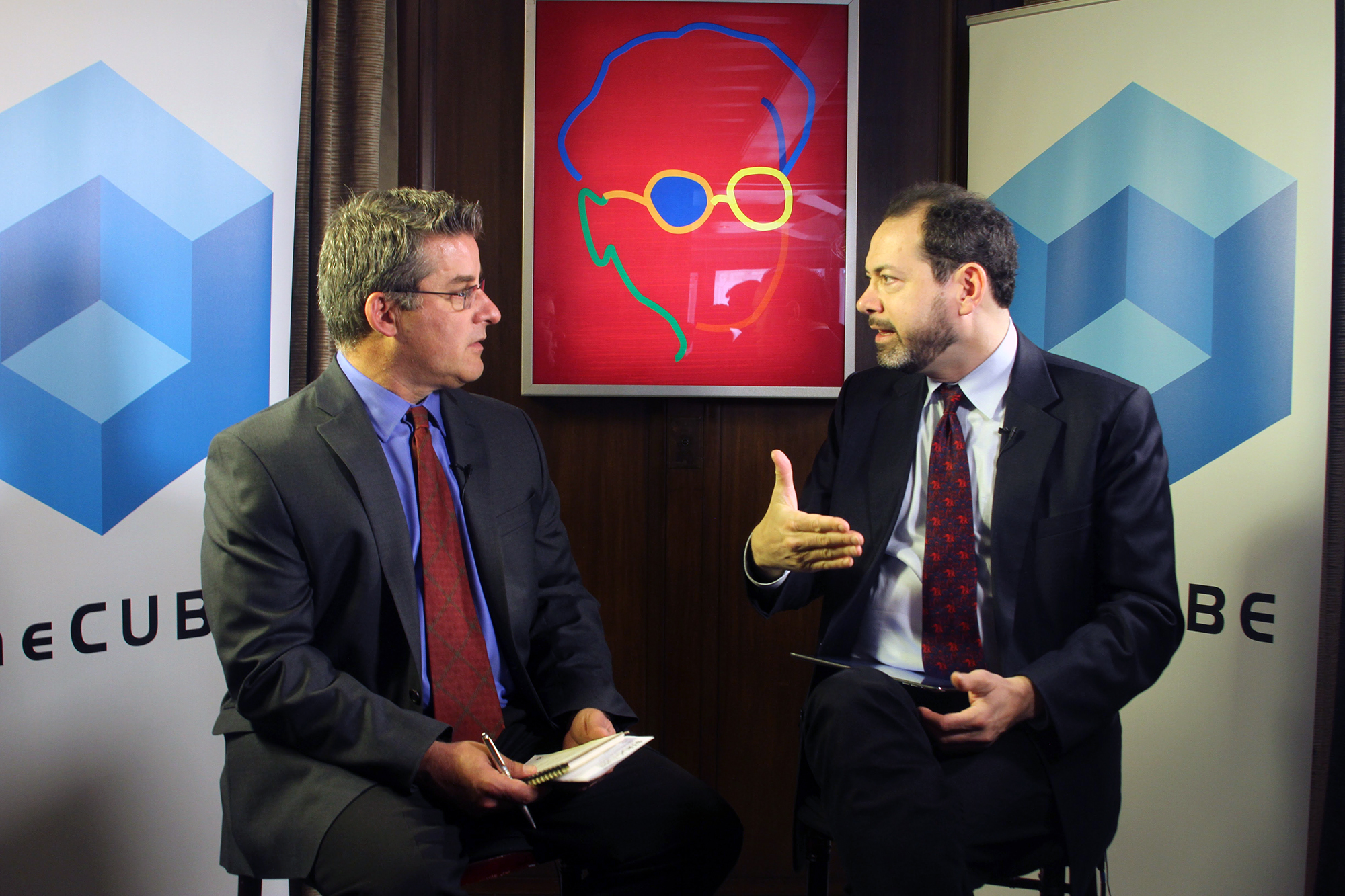
For Mark Geene, cofounder and CEO of Cloud Elements, Inc., bringing together disparate elements is an everyday focus. He sat down with Jeff Frick, cohost of theCUBE, from the SiliconANGLE Media team, to talk about how his company is handling the staggeringly fast growth and wide variety of APIs inhabiting the modern applications ecosystem.
API control
“We essentially are an integration platform and service, all in the form of API, so developers can integrate lots of APIs into that faster,” Geene stated, going on to outline the evolution of API management.
“If you really look at the first generation of API management, it was about publishing APIs,” he said. “There’s now millions of available APIs; problem is, they’re all different, they all have their own data structure, their own syntax, their own format. So what we do is help developers kind of normalize those APIs so they can consume them faster.”
API growth
“The next generation of API management is about ‘how can I consume all these millions of APIs that have been developed?’” Geene said.
As an example, Geene took a cross-section of marketing applications, which had seen their numbers doubled in the space of year, and described the complexity of bringing together all of these underlying APIs and making them work together without conflict.
Highlighting the importance of the advent of micro-services, as well as conflicts with entrenched API sets when their companies are subject to mergers and acquisitions, Geene feels that simply managing and streamlining API functionality has the potential to grow into its own full industry in the near future, with aggregation and abstraction as the key principles to follow.
@theCUBE
#StructureConf
Forgot Password
Almost there!
We just sent you a verification email. Please verify your account to gain access to
Structure 2015 | San Francisco. If you don’t think you received an email check your
spam folder.
In order to sign in, enter the email address you used to registered for the event. Once completed, you will receive an email with a verification link. Open this link to automatically sign into the site.
Register For Structure 2015 | San Francisco
Please fill out the information below. You will recieve an email with a verification link confirming your registration. Click the link to automatically sign into the site.
You’re almost there!
We just sent you a verification email. Please click the verification button in the email. Once your email address is verified, you will have full access to all event content for Structure 2015 | San Francisco.
I want my badge and interests to be visible to all attendees.
Checking this box will display your presense on the attendees list, view your profile and allow other attendees to contact you via 1-1 chat. Read the Privacy Policy. At any time, you can choose to disable this preference.
Select your Interests!
add
Upload your photo
Uploading..
OR
Connect via Twitter
Connect via Linkedin
EDIT PASSWORD
Share
Forgot Password
Almost there!
We just sent you a verification email. Please verify your account to gain access to
Structure 2015 | San Francisco. If you don’t think you received an email check your
spam folder.
In order to sign in, enter the email address you used to registered for the event. Once completed, you will receive an email with a verification link. Open this link to automatically sign into the site.
Sign in to gain access to Structure 2015 | San Francisco
Please sign in with LinkedIn to continue to Structure 2015 | San Francisco. Signing in with LinkedIn ensures a professional environment.
Are you sure you want to remove access rights for this user?
Details
Manage Access
email address
Community Invitation
Mark Geene, Cloud Elements | Structure 2015
Aggregation and abstraction core of API management
by Gabriel Pesek | Nov 19, 2015
#theCUBE #StructureConf#Structure #CloudElements #SiliconANGLE
As Structure, LLC’s Structure 2015 conference progresses, the attendees are continuing to mix and encounter each other, leading to combinations of interests that would be unlikely to come together in their usual environments.
For Mark Geene, cofounder and CEO of Cloud Elements, Inc., bringing together disparate elements is an everyday focus. He sat down with Jeff Frick, cohost of theCUBE, from the SiliconANGLE Media team, to talk about how his company is handling the staggeringly fast growth and wide variety of APIs inhabiting the modern applications ecosystem.
API control
“We essentially are an integration platform and service, all in the form of API, so developers can integrate lots of APIs into that faster,” Geene stated, going on to outline the evolution of API management.
“If you really look at the first generation of API management, it was about publishing APIs,” he said. “There’s now millions of available APIs; problem is, they’re all different, they all have their own data structure, their own syntax, their own format. So what we do is help developers kind of normalize those APIs so they can consume them faster.”
API growth
“The next generation of API management is about ‘how can I consume all these millions of APIs that have been developed?’” Geene said.
As an example, Geene took a cross-section of marketing applications, which had seen their numbers doubled in the space of year, and described the complexity of bringing together all of these underlying APIs and making them work together without conflict.
Highlighting the importance of the advent of micro-services, as well as conflicts with entrenched API sets when their companies are subject to mergers and acquisitions, Geene feels that simply managing and streamlining API functionality has the potential to grow into its own full industry in the near future, with aggregation and abstraction as the key principles to follow.
@theCUBE
#StructureConf