01. Chris Kammerman, Shazam, Visits #theCUBE!. (00:20)
02. Give Us The Overview On Shazam. (00:50)
03. Show Us How Shazam Works. (02:31)
04. Do You Use Audio For Everything. (03:25)
05. What Are You Doing Now To Create More Headroom. (04:25)
06. Does The Mobile Environment Change Things. (04:58)
07. What's The Coolest Use Cases You've Seen With Shazam. (05:34)
08. How Do People Work With You Guys. (06:57)
09. What Are You Finding Useful To Fine Tune Your Services. (08:14)
10. What If I Wanted To Build Into A Mobile App. (10:46)
11. Is There An Opportunity To Get Into Security. (12:33)
12. What Trends And Techs Are You Most Excited About. (13:47)
Track List created with http://www.vinjavideo.com.
--- ---
Overcoming the limitations of “app real estate” | #splunkconf16
by Gabriel Pesek | Sep 27, 2016
As data-mining, the Internet of Things and various other utilizations of advancing tech push and blur the boundaries between intended app design and their full functionalities, the battle for consumer attention is driving the development of nexus platforms beyond the business realm and into the hands of regular users.
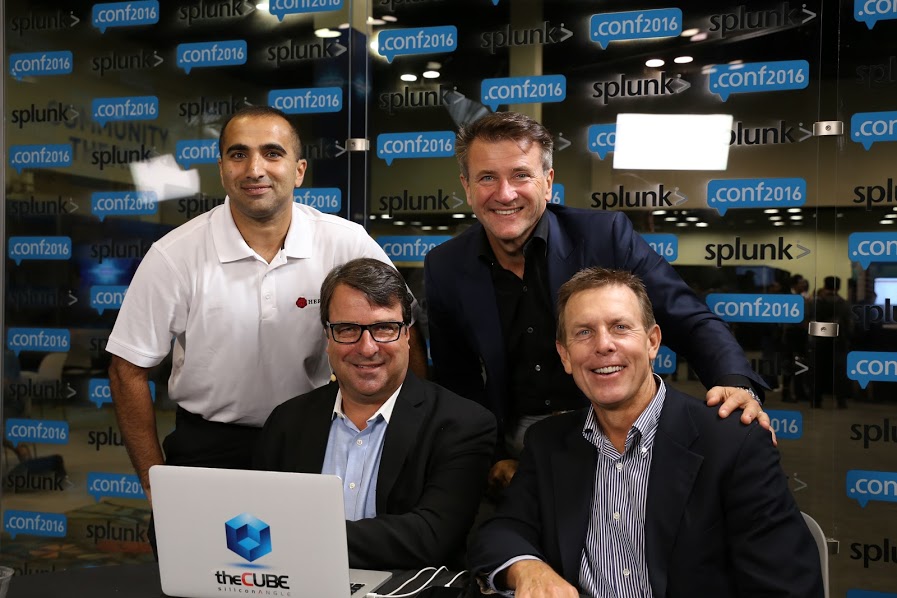
At this year’s Splunk.CONF event, Chris Kammermann, senior infrastructure engineer at Shazam Entertainment Ltd., joined John Walls (@JohnWalls21) and John Furrier (@furrier), cohosts of theCUBE, from the SiliconANGLE Media team, to talk about the options open to Shazam’s app, the limitations of “app real estate” and how Kammermann sees the possibilities expanding.
Recognizing power
Fitting with the focus of the conference, the initial portion of the discussion concentrated on how Shazam is handling the heavy loads of data coming in from its many users. Kammermann described Shazam’s mixture of data centers, noting that it has “about 30 Splunk indexes,” before moving on to the app and its abilities.
After a real-time demonstration of how the app could use a mobile device’s camera to identify a person and pull up their online bio and LinkedIn page, Kammermann gave some more examples of how the app’s functionality could be applied. Use-cases of recognizing songs as they play, giving information on racecars and their drivers and similar instances were shared, though Kammermann stated, “The Shazam ethos is to be able to do anything.”
Data versatility
Addressing the reliability of the app’s performance in a variety of settings, Kammermann also noted, “Mobile poses its own challenge, Wi-Fi drops in and out … but mobile, it’s a mature environment right now. … It’s really, in some ways, no different to a normal web app.”
More possibilities for Shazam’s app were shared, with a focus on augmented reality enablement through scanning and recognition and a use-case example of a movie poster scan potentially shifting your phone into part of the set.
RELATED: Will the Industrial Internet usher in a bigger, better algorithm? | #PredixTransform
“We’re trying to sell data to other people as well,” Kammermann shared. “If you want access to our data … you can buy some of that.” Tying into that, he said, Shazam was capable of determining ways to best sell to people through the mining of their gathered data.
As optimistic as Kammermann was, saying, “The sectors we can play in are virtually limitless, it’s just up to us to choose where we want to go. … We can go anywhere with this app, and the future is our oyster,” what really had him excited were the possibilities of machine learning to make further use of its data.
Throwing out one last example of the app’s power, he stated that once that sort of computing is integrated, “I can go play with Shazam data, manipulate it and predict the next #1 song.”
Forgot Password
Almost there!
We just sent you a verification email. Please verify your account to gain access to
Splunk.conf 2016 | Orlando. If you don’t think you received an email check your
spam folder.
In order to sign in, enter the email address you used to registered for the event. Once completed, you will receive an email with a verification link. Open this link to automatically sign into the site.
Register For Splunk.conf 2016 | Orlando
Please fill out the information below. You will recieve an email with a verification link confirming your registration. Click the link to automatically sign into the site.
You’re almost there!
We just sent you a verification email. Please click the verification button in the email. Once your email address is verified, you will have full access to all event content for Splunk.conf 2016 | Orlando.
I want my badge and interests to be visible to all attendees.
Checking this box will display your presense on the attendees list, view your profile and allow other attendees to contact you via 1-1 chat. Read the Privacy Policy. At any time, you can choose to disable this preference.
Select your Interests!
add
Upload your photo
Uploading..
OR
Connect via Twitter
Connect via Linkedin
EDIT PASSWORD
Share
Forgot Password
Almost there!
We just sent you a verification email. Please verify your account to gain access to
Splunk.conf 2016 | Orlando. If you don’t think you received an email check your
spam folder.
In order to sign in, enter the email address you used to registered for the event. Once completed, you will receive an email with a verification link. Open this link to automatically sign into the site.
Sign in to gain access to Splunk.conf 2016 | Orlando
Please sign in with LinkedIn to continue to Splunk.conf 2016 | Orlando. Signing in with LinkedIn ensures a professional environment.
Are you sure you want to remove access rights for this user?
Details
Manage Access
email address
Community Invitation
Chris Kammerman, Shazam | Splunk .conf2016
01. Chris Kammerman, Shazam, Visits #theCUBE!. (00:20)
02. Give Us The Overview On Shazam. (00:50)
03. Show Us How Shazam Works. (02:31)
04. Do You Use Audio For Everything. (03:25)
05. What Are You Doing Now To Create More Headroom. (04:25)
06. Does The Mobile Environment Change Things. (04:58)
07. What's The Coolest Use Cases You've Seen With Shazam. (05:34)
08. How Do People Work With You Guys. (06:57)
09. What Are You Finding Useful To Fine Tune Your Services. (08:14)
10. What If I Wanted To Build Into A Mobile App. (10:46)
11. Is There An Opportunity To Get Into Security. (12:33)
12. What Trends And Techs Are You Most Excited About. (13:47)
Track List created with http://www.vinjavideo.com.
--- ---
Overcoming the limitations of “app real estate” | #splunkconf16
by Gabriel Pesek | Sep 27, 2016
As data-mining, the Internet of Things and various other utilizations of advancing tech push and blur the boundaries between intended app design and their full functionalities, the battle for consumer attention is driving the development of nexus platforms beyond the business realm and into the hands of regular users.
At this year’s Splunk.CONF event, Chris Kammermann, senior infrastructure engineer at Shazam Entertainment Ltd., joined John Walls (@JohnWalls21) and John Furrier (@furrier), cohosts of theCUBE, from the SiliconANGLE Media team, to talk about the options open to Shazam’s app, the limitations of “app real estate” and how Kammermann sees the possibilities expanding.
Recognizing power
Fitting with the focus of the conference, the initial portion of the discussion concentrated on how Shazam is handling the heavy loads of data coming in from its many users. Kammermann described Shazam’s mixture of data centers, noting that it has “about 30 Splunk indexes,” before moving on to the app and its abilities.
After a real-time demonstration of how the app could use a mobile device’s camera to identify a person and pull up their online bio and LinkedIn page, Kammermann gave some more examples of how the app’s functionality could be applied. Use-cases of recognizing songs as they play, giving information on racecars and their drivers and similar instances were shared, though Kammermann stated, “The Shazam ethos is to be able to do anything.”
Data versatility
Addressing the reliability of the app’s performance in a variety of settings, Kammermann also noted, “Mobile poses its own challenge, Wi-Fi drops in and out … but mobile, it’s a mature environment right now. … It’s really, in some ways, no different to a normal web app.”
More possibilities for Shazam’s app were shared, with a focus on augmented reality enablement through scanning and recognition and a use-case example of a movie poster scan potentially shifting your phone into part of the set.
RELATED: Will the Industrial Internet usher in a bigger, better algorithm? | #PredixTransform
“We’re trying to sell data to other people as well,” Kammermann shared. “If you want access to our data … you can buy some of that.” Tying into that, he said, Shazam was capable of determining ways to best sell to people through the mining of their gathered data.
As optimistic as Kammermann was, saying, “The sectors we can play in are virtually limitless, it’s just up to us to choose where we want to go. … We can go anywhere with this app, and the future is our oyster,” what really had him excited were the possibilities of machine learning to make further use of its data.
Throwing out one last example of the app’s power, he stated that once that sort of computing is integrated, “I can go play with Shazam data, manipulate it and predict the next #1 song.”