01. Mike Fluharty, Defense Point Security, visits #theCUBE!. (00:19)
02. Duane Waddle, Defense Point Security, visits #theCUBE!. (00:43)
03. The Reason Behind the Fez. (00:54)
04. The Role of Community in Splunk's Growth. (01:50)
05. Defense Point Security and the Splunk Relationship. (03:31)
06. Defense Point Use Cases Where Splunk is Winning. (04:55)
07. Managing Attack Factors. (06:12)
08. Keeping Up with Technology's Paradigm Shifts. (07:09)
09. Machine Learning Meets Human Side of Security. (09:22)
10. When are There Too Many Tools?. (11:22)
11. What to Take Home from Splunk 2016. (13:05)
12. Customizing Splunk and Making it the Right Tool. (14:00)
Track List created with http://www.vinjavideo.com.
--- ---
Big Data’s need for adaptable security tools | #splunkconf16
by Gabriel Pesek | Oct 2, 2016
As networks and storage access forms diversify, the organizations responsible for providing security to those many forms are finding a need for toolsets that can be easily adapted to meet individual needs while retaining interoperability and ease of communication.
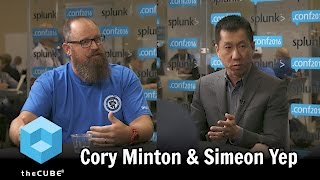
At this year’s Splunk.conf event, Duane Waddle, security engineer at Defense Point Security LLC, and Mike Fluharty, VP of Security Engineering and Architecture at Defense Point Security, joined John Walls (@JohnWalls21) and John Furrier (@furrier), cohosts of theCUBE, from the SiliconANGLE Media team, to talk about Splunk’s uses for its work and the increasing need for flexibility in its security responses.
More than tools
Early on, Fluharty helped lay out the mindset behind Defense Point Security’s usage of Splunk.
“In general, the idea is … if you have a tool that can go do a business context and a business use-case, that business use-case is what you can drive security through,” he explained. “So we wholeheartedly believe in Splunk as a tool for everyone and the ability to aggregate all of this data and make intelligent decisions off of that. That’s the reason why we are so invested in the toolset itself.”
He continued: “Security tools can’t just be security tools anymore. There’s no time for just a sim; there has to be a sim and a way to go build business intelligence out of things.”
Working for the customers
Fluharty also touched on Splunk’s neutrality in the context of how Defense Point Security brings its services to the company’s customers. “We’re not reselling a product, so therefore we can make the best decisions for the company.”
That ease of adjustment also applies to scaling, as Waddle explained: “We’ve got customers who do Splunk in the very large, multi-terabytes a day, and it’s kind of driving their whole security operations. And then we have some who, frankly, they’re very small and trying to come up with being able to do those same techniques without necessarily having the ability to deploy a whole team of people to do Splunk.”
RELATED: IoT express: Can the path to value from IoT be shortened? | #BigData
He added: “And it can be a challenge, just because any tool you invest in, you’ve got to have a certain amount of people to also support that tool.”
Security tools
Moving through a quick discussion of how Defense Point Security handles securing attack vectors, Fluharty addressed the versatility of Splunk’s tools in its work: “The idea is to build a toolset that has business relevance, and that we can actually take and go make into something that has security expertise individuals to go get that in there.”
But as many situations as it has been able to handle with Splunk so far, Fluharty recognized that Defense Point Security eventually needs to take a step back and consider how to refit its whole approach. “Technology is innately a thing where, every five years, you need to rethink on how you’re doing things,” he said. “Big Data analytics may or may not be the end of that paradigm. The idea of being able to take data … and being able to basically munch that into things that are necessary for different operational units is really where the industry’s going.”
Forgot Password
Almost there!
We just sent you a verification email. Please verify your account to gain access to
Splunk.conf 2016 | Orlando. If you don’t think you received an email check your
spam folder.
In order to sign in, enter the email address you used to registered for the event. Once completed, you will receive an email with a verification link. Open this link to automatically sign into the site.
Register For Splunk.conf 2016 | Orlando
Please fill out the information below. You will recieve an email with a verification link confirming your registration. Click the link to automatically sign into the site.
You’re almost there!
We just sent you a verification email. Please click the verification button in the email. Once your email address is verified, you will have full access to all event content for Splunk.conf 2016 | Orlando.
I want my badge and interests to be visible to all attendees.
Checking this box will display your presense on the attendees list, view your profile and allow other attendees to contact you via 1-1 chat. Read the Privacy Policy. At any time, you can choose to disable this preference.
Select your Interests!
add
Upload your photo
Uploading..
OR
Connect via Twitter
Connect via Linkedin
EDIT PASSWORD
Share
Forgot Password
Almost there!
We just sent you a verification email. Please verify your account to gain access to
Splunk.conf 2016 | Orlando. If you don’t think you received an email check your
spam folder.
In order to sign in, enter the email address you used to registered for the event. Once completed, you will receive an email with a verification link. Open this link to automatically sign into the site.
Sign in to gain access to Splunk.conf 2016 | Orlando
Please sign in with LinkedIn to continue to Splunk.conf 2016 | Orlando. Signing in with LinkedIn ensures a professional environment.
Are you sure you want to remove access rights for this user?
Details
Manage Access
email address
Community Invitation
Duane Waddle & Mike Fluharty, Defense Point Security | Splunk .conf2016
01. Mike Fluharty, Defense Point Security, visits #theCUBE!. (00:19)
02. Duane Waddle, Defense Point Security, visits #theCUBE!. (00:43)
03. The Reason Behind the Fez. (00:54)
04. The Role of Community in Splunk's Growth. (01:50)
05. Defense Point Security and the Splunk Relationship. (03:31)
06. Defense Point Use Cases Where Splunk is Winning. (04:55)
07. Managing Attack Factors. (06:12)
08. Keeping Up with Technology's Paradigm Shifts. (07:09)
09. Machine Learning Meets Human Side of Security. (09:22)
10. When are There Too Many Tools?. (11:22)
11. What to Take Home from Splunk 2016. (13:05)
12. Customizing Splunk and Making it the Right Tool. (14:00)
Track List created with http://www.vinjavideo.com.
--- ---
Big Data’s need for adaptable security tools | #splunkconf16
by Gabriel Pesek | Oct 2, 2016
As networks and storage access forms diversify, the organizations responsible for providing security to those many forms are finding a need for toolsets that can be easily adapted to meet individual needs while retaining interoperability and ease of communication.
At this year’s Splunk.conf event, Duane Waddle, security engineer at Defense Point Security LLC, and Mike Fluharty, VP of Security Engineering and Architecture at Defense Point Security, joined John Walls (@JohnWalls21) and John Furrier (@furrier), cohosts of theCUBE, from the SiliconANGLE Media team, to talk about Splunk’s uses for its work and the increasing need for flexibility in its security responses.
More than tools
Early on, Fluharty helped lay out the mindset behind Defense Point Security’s usage of Splunk.
“In general, the idea is … if you have a tool that can go do a business context and a business use-case, that business use-case is what you can drive security through,” he explained. “So we wholeheartedly believe in Splunk as a tool for everyone and the ability to aggregate all of this data and make intelligent decisions off of that. That’s the reason why we are so invested in the toolset itself.”
He continued: “Security tools can’t just be security tools anymore. There’s no time for just a sim; there has to be a sim and a way to go build business intelligence out of things.”
Working for the customers
Fluharty also touched on Splunk’s neutrality in the context of how Defense Point Security brings its services to the company’s customers. “We’re not reselling a product, so therefore we can make the best decisions for the company.”
That ease of adjustment also applies to scaling, as Waddle explained: “We’ve got customers who do Splunk in the very large, multi-terabytes a day, and it’s kind of driving their whole security operations. And then we have some who, frankly, they’re very small and trying to come up with being able to do those same techniques without necessarily having the ability to deploy a whole team of people to do Splunk.”
RELATED: IoT express: Can the path to value from IoT be shortened? | #BigData
He added: “And it can be a challenge, just because any tool you invest in, you’ve got to have a certain amount of people to also support that tool.”
Security tools
Moving through a quick discussion of how Defense Point Security handles securing attack vectors, Fluharty addressed the versatility of Splunk’s tools in its work: “The idea is to build a toolset that has business relevance, and that we can actually take and go make into something that has security expertise individuals to go get that in there.”
But as many situations as it has been able to handle with Splunk so far, Fluharty recognized that Defense Point Security eventually needs to take a step back and consider how to refit its whole approach. “Technology is innately a thing where, every five years, you need to rethink on how you’re doing things,” he said. “Big Data analytics may or may not be the end of that paradigm. The idea of being able to take data … and being able to basically munch that into things that are necessary for different operational units is really where the industry’s going.”