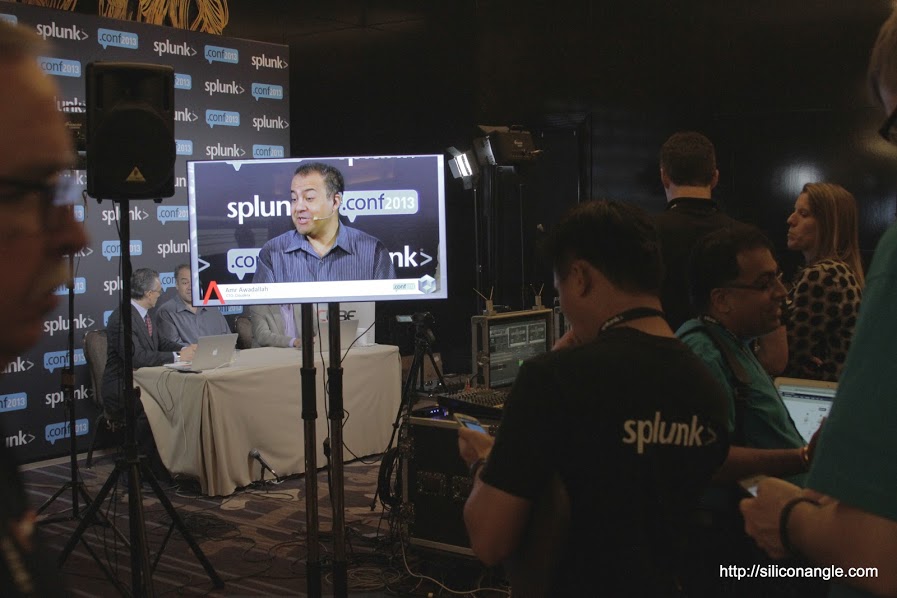
Nathaniel Collinsworth, Media Operations, Neustar, talked about the company's experience building the UltraViolet platform around Splunk with theCUBE co-hosts John Furrier and Dave Vellante, live from Splunk .conf.
UltraViolet is described by Neustar as a cloud-based "digital rights locker" system for consumers, or as Collinsworth explains, "a centralized library platform.The idea is that we can disconnect your assets from your retailer," which prevents the lock-in that usually happens when buying from a certain company.
The portability of media entails certain privacy, security, tracking requirements, as Furrier pointed out. Collinsworth agreed, saying that was the basic idea of how the platform works. "For the retailers we have, that's how it works." UltraViolet allows users to "access the assets regardless of who you bought it from."
Asked why the company chose Splunk, Collinsworth said, "We need something that can ingest logs and give us an idea of what goes on. As the platform got bigger, more complicated, and got more transactions, we got more from Splunk. Because we put everything to Splunk from the start, there [were] no problems we couldn't solve."
"Because splunk was there when we started developing ultraviolet, the better question for UltraViolet is why we are still on Splunk," Collinsworth added. The first reason is the scaling, there is an incredible amount of data that Splunk can handle. Another reason is their support. "If it's broken, I can get immediate support. DevOps is all about velocity, and it helps me keep velocity."
Commenting on how their DevOps team runs, Collinsworth said, "in my mind, DevOps is the next generation of operations. In the DevOps philosophy, it's a collaborative effort," a team bringing together developers with operations experience, and operations experts with development experience.
Asked what advice he would give companies embarking on an IT transformation process, Collinsworth said, "My biggest piece of advice is to have patience." Most companies decide to move to DevOps or the cloud and want to do so in 6 months. When they are a rack and stack company, that is not going to happen, as the process takes time. "It also depends on your operational maturity," he added.
@thecube
#theCUBE #Splunk #SplunkConf #SiliconANGLE @Splunk
Forgot Password
Almost there!
We just sent you a verification email. Please verify your account to gain access to
Splunk.conf 2013. If you don’t think you received an email check your
spam folder.
In order to sign in, enter the email address you used to registered for the event. Once completed, you will receive an email with a verification link. Open this link to automatically sign into the site.
Register For Splunk.conf 2013
Please fill out the information below. You will recieve an email with a verification link confirming your registration. Click the link to automatically sign into the site.
You’re almost there!
We just sent you a verification email. Please click the verification button in the email. Once your email address is verified, you will have full access to all event content for Splunk.conf 2013.
I want my badge and interests to be visible to all attendees.
Checking this box will display your presense on the attendees list, view your profile and allow other attendees to contact you via 1-1 chat. Read the Privacy Policy. At any time, you can choose to disable this preference.
Select your Interests!
add
Upload your photo
Uploading..
OR
Connect via Twitter
Connect via Linkedin
EDIT PASSWORD
Share
Forgot Password
Almost there!
We just sent you a verification email. Please verify your account to gain access to
Splunk.conf 2013. If you don’t think you received an email check your
spam folder.
In order to sign in, enter the email address you used to registered for the event. Once completed, you will receive an email with a verification link. Open this link to automatically sign into the site.
Sign in to gain access to Splunk.conf 2013
Please sign in with LinkedIn to continue to Splunk.conf 2013. Signing in with LinkedIn ensures a professional environment.
Nathaniel Collinsworth, Media Operations, Neustar, talked about the company's experience building the UltraViolet platform around Splunk with theCUBE co-hosts John Furrier and Dave Vellante, live from Splunk .conf.
UltraViolet is described by Neustar as a cloud-based "digital rights locker" system for consumers, or as Collinsworth explains, "a centralized library platform.The idea is that we can disconnect your assets from your retailer," which prevents the lock-in that usually happens when buying from a certain company.
The portability of media entails certain privacy, security, tracking requirements, as Furrier pointed out. Collinsworth agreed, saying that was the basic idea of how the platform works. "For the retailers we have, that's how it works." UltraViolet allows users to "access the assets regardless of who you bought it from."
Asked why the company chose Splunk, Collinsworth said, "We need something that can ingest logs and give us an idea of what goes on. As the platform got bigger, more complicated, and got more transactions, we got more from Splunk. Because we put everything to Splunk from the start, there [were] no problems we couldn't solve."
"Because splunk was there when we started developing ultraviolet, the better question for UltraViolet is why we are still on Splunk," Collinsworth added. The first reason is the scaling, there is an incredible amount of data that Splunk can handle. Another reason is their support. "If it's broken, I can get immediate support. DevOps is all about velocity, and it helps me keep velocity."
Commenting on how their DevOps team runs, Collinsworth said, "in my mind, DevOps is the next generation of operations. In the DevOps philosophy, it's a collaborative effort," a team bringing together developers with operations experience, and operations experts with development experience.
Asked what advice he would give companies embarking on an IT transformation process, Collinsworth said, "My biggest piece of advice is to have patience." Most companies decide to move to DevOps or the cloud and want to do so in 6 months. When they are a rack and stack company, that is not going to happen, as the process takes time. "It also depends on your operational maturity," he added.
@thecube
#theCUBE #Splunk #SplunkConf #SiliconANGLE @Splunk