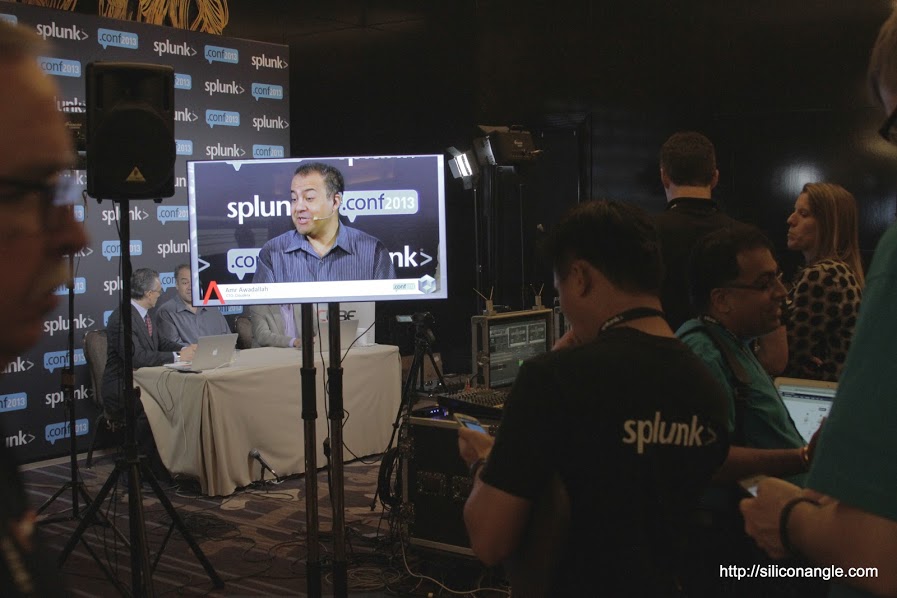
In their ongoing coverage of Splunk 2013, John Furrier and Dave Vellante spoke with Beau Christensen, Manager, Infrastructure Operations. The three discuss security, Ping Identity's growth and it's recent Boundary app.
Vellante asks Christensen what powers Ping Identity's growth. Christensen says the big driver is cloud and SaaS applications. Customer security concerns have also been important to the company's rise. As Christensen explains, "If you're a huge enterprise and you have 35 different applications that you use everyday, it's a big IT task, and it can also be a big security risk."
Ping Identity's focus remains at the application level. The company enables customers to leverage IT to maintain control over different SaaS applications. For example, Christen explains that Ping Identity has really large customers that want to use SaaS applications in the cloud. In some instances, they opt use new Silicon Valley startup companies and request Ping Identity to enable them to work with the enterprise. So, as Christensen puts it, "we'll get them setup and have the large customers retain control."
Over 10 years since it's founding, Ping is a pre-cloud company. The original project was designed for the enterprise and all on-premise. Now, Ping provides options for smaller companies that don't have infrastructure or don't want to work behind their firewall. The company continues to be application and service agnostic.
Vellante inquires about Boundary. Christensen describes it as "A real-time Cisco net-flow type system." He adds, "Because we're hybrid cloud deployment, we don't have the ability to look into Cisco gear based on AWS." Christensen also says there is a conversation exploring how to use different monitoring systems including Boundary and Splunk.
Christensen's talk later at the Splunk conference will discuss how to build trust in a SaaS system and in an organization as well as how to use monitoring to attain those ends. When it comes to security, Christensen concludes, "I don't think there's any reason why SaaS can't be more secure."
@thecube
#theCUBE #Splunk #SplunkConf #SiliconANGLE #PingIdentity @Splunk
Forgot Password
Almost there!
We just sent you a verification email. Please verify your account to gain access to
Splunk.conf 2013. If you don’t think you received an email check your
spam folder.
In order to sign in, enter the email address you used to registered for the event. Once completed, you will receive an email with a verification link. Open this link to automatically sign into the site.
Register For Splunk.conf 2013
Please fill out the information below. You will recieve an email with a verification link confirming your registration. Click the link to automatically sign into the site.
You’re almost there!
We just sent you a verification email. Please click the verification button in the email. Once your email address is verified, you will have full access to all event content for Splunk.conf 2013.
I want my badge and interests to be visible to all attendees.
Checking this box will display your presense on the attendees list, view your profile and allow other attendees to contact you via 1-1 chat. Read the Privacy Policy. At any time, you can choose to disable this preference.
Select your Interests!
add
Upload your photo
Uploading..
OR
Connect via Twitter
Connect via Linkedin
EDIT PASSWORD
Share
Forgot Password
Almost there!
We just sent you a verification email. Please verify your account to gain access to
Splunk.conf 2013. If you don’t think you received an email check your
spam folder.
In order to sign in, enter the email address you used to registered for the event. Once completed, you will receive an email with a verification link. Open this link to automatically sign into the site.
Sign in to gain access to Splunk.conf 2013
Please sign in with LinkedIn to continue to Splunk.conf 2013. Signing in with LinkedIn ensures a professional environment.
In their ongoing coverage of Splunk 2013, John Furrier and Dave Vellante spoke with Beau Christensen, Manager, Infrastructure Operations. The three discuss security, Ping Identity's growth and it's recent Boundary app.
Vellante asks Christensen what powers Ping Identity's growth. Christensen says the big driver is cloud and SaaS applications. Customer security concerns have also been important to the company's rise. As Christensen explains, "If you're a huge enterprise and you have 35 different applications that you use everyday, it's a big IT task, and it can also be a big security risk."
Ping Identity's focus remains at the application level. The company enables customers to leverage IT to maintain control over different SaaS applications. For example, Christen explains that Ping Identity has really large customers that want to use SaaS applications in the cloud. In some instances, they opt use new Silicon Valley startup companies and request Ping Identity to enable them to work with the enterprise. So, as Christensen puts it, "we'll get them setup and have the large customers retain control."
Over 10 years since it's founding, Ping is a pre-cloud company. The original project was designed for the enterprise and all on-premise. Now, Ping provides options for smaller companies that don't have infrastructure or don't want to work behind their firewall. The company continues to be application and service agnostic.
Vellante inquires about Boundary. Christensen describes it as "A real-time Cisco net-flow type system." He adds, "Because we're hybrid cloud deployment, we don't have the ability to look into Cisco gear based on AWS." Christensen also says there is a conversation exploring how to use different monitoring systems including Boundary and Splunk.
Christensen's talk later at the Splunk conference will discuss how to build trust in a SaaS system and in an organization as well as how to use monitoring to attain those ends. When it comes to security, Christensen concludes, "I don't think there's any reason why SaaS can't be more secure."
@thecube
#theCUBE #Splunk #SplunkConf #SiliconANGLE #PingIdentity @Splunk