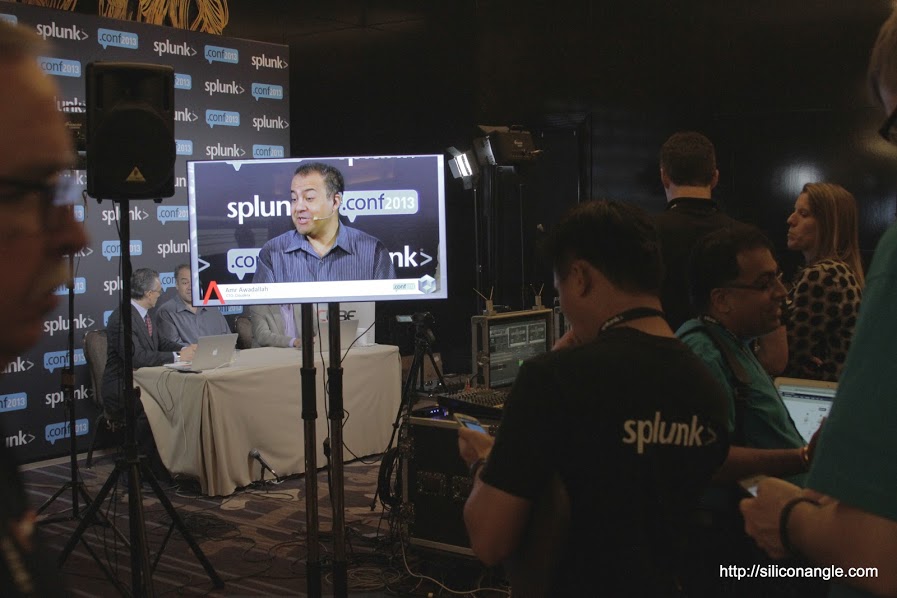
Covering the Splunk Conference live from Las Vegas this week, theCUBE co-hosts John Furrier and Dave Vellante managed to track down Rich Collier, Prelert's Principal Solutions Architect, to discuss the current event and the new developments of the company. trying to explain the general excitement of the people attending the event, Collier stated they primarily come here to learn new things, as this is "the intrinsic aspect of this conference."
Why Prelert built on Splunk
For those unfamiliar with the company, Prelert has built an anomaly detection application that sits on top of the Splunk platform. Despite being fairly small with a headcount under 20, the company already sports offices in London and Boston, making predictive analytics software for IT operations, trying to provide the users with a set of tools that enhance the way that they look at data. It is similar to the way statistics has helped other things, from weather forecasting to election predictions.
Vellante wanted to know whether there was any particular industry focus for Prelert, or was it horizontal? "It's really across the board," said Colliers. "We've got users that are social media companies, security companies, banks, insurance companies, basically anyone trying to get more value out of their data with less human effort."
Vellante summarized some of the features of Prelert: it beefs up Splunk, making it more scalable and more functional, providing deeper function, and there's also a performance aspect. He wanted to know how this was working out, as both companies evolve all the time.
"We certainly spend a lot of time with Splunk at a corporate level, understanding things; we work a lot with the product Management team and discuss how we can work together better and we're very much in-tune with the engineering roadmap. Splunk was so impressed with what we've done, they wanted us to be heavily involved with the new Splunk 6 app framework," boasted Collier, "because of all the new changes that were involved there."
Are you typically selling to the IT function? or increasing the business function? Vellante prodded Collier to talk more about who their customers are. "When we first released our app we were in the sweet spot of IT ops and performance management crowd -- traditional data center monitoring, infrastructure, application monitoring and so forth. With our most recent release, we've started getting a lot of traction in the security context. We do have some customers who've been using us on business data, but the big push is now in the security side."
Always searching for the unknown unknowns
"If you can't search for it, how do you know what's out there?" rhetorically asked Collier. "I think a lot of security experts are now coming to grips with using more of our statistical method to find what's different in their data, instead of relying on traditional tools," said Rich Collier, and Vellante added it's about "finding out what you don't know."
Looking at the automation of things, Furrier asked Rich Collier what the next leg of their journey was. Not aiming short of perfection, Collier replied: "We want to make our technology so ubiquitous that everyone can use it."
@thecube #theCUBE #Splunk #SiliconANGLE @Splunk
#SplunkConf
Forgot Password
Almost there!
We just sent you a verification email. Please verify your account to gain access to
Splunk.conf 2013. If you don’t think you received an email check your
spam folder.
In order to sign in, enter the email address you used to registered for the event. Once completed, you will receive an email with a verification link. Open this link to automatically sign into the site.
Register For Splunk.conf 2013
Please fill out the information below. You will recieve an email with a verification link confirming your registration. Click the link to automatically sign into the site.
You’re almost there!
We just sent you a verification email. Please click the verification button in the email. Once your email address is verified, you will have full access to all event content for Splunk.conf 2013.
I want my badge and interests to be visible to all attendees.
Checking this box will display your presense on the attendees list, view your profile and allow other attendees to contact you via 1-1 chat. Read the Privacy Policy. At any time, you can choose to disable this preference.
Select your Interests!
add
Upload your photo
Uploading..
OR
Connect via Twitter
Connect via Linkedin
EDIT PASSWORD
Share
Forgot Password
Almost there!
We just sent you a verification email. Please verify your account to gain access to
Splunk.conf 2013. If you don’t think you received an email check your
spam folder.
In order to sign in, enter the email address you used to registered for the event. Once completed, you will receive an email with a verification link. Open this link to automatically sign into the site.
Sign in to gain access to Splunk.conf 2013
Please sign in with LinkedIn to continue to Splunk.conf 2013. Signing in with LinkedIn ensures a professional environment.
Are you sure you want to remove access rights for this user?
Details
Manage Access
email address
Community Invitation
Rich Collier, Prelert | Splunk .conf2013
Covering the Splunk Conference live from Las Vegas this week, theCUBE co-hosts John Furrier and Dave Vellante managed to track down Rich Collier, Prelert's Principal Solutions Architect, to discuss the current event and the new developments of the company. trying to explain the general excitement of the people attending the event, Collier stated they primarily come here to learn new things, as this is "the intrinsic aspect of this conference."
Why Prelert built on Splunk
For those unfamiliar with the company, Prelert has built an anomaly detection application that sits on top of the Splunk platform. Despite being fairly small with a headcount under 20, the company already sports offices in London and Boston, making predictive analytics software for IT operations, trying to provide the users with a set of tools that enhance the way that they look at data. It is similar to the way statistics has helped other things, from weather forecasting to election predictions.
Vellante wanted to know whether there was any particular industry focus for Prelert, or was it horizontal? "It's really across the board," said Colliers. "We've got users that are social media companies, security companies, banks, insurance companies, basically anyone trying to get more value out of their data with less human effort."
Vellante summarized some of the features of Prelert: it beefs up Splunk, making it more scalable and more functional, providing deeper function, and there's also a performance aspect. He wanted to know how this was working out, as both companies evolve all the time.
"We certainly spend a lot of time with Splunk at a corporate level, understanding things; we work a lot with the product Management team and discuss how we can work together better and we're very much in-tune with the engineering roadmap. Splunk was so impressed with what we've done, they wanted us to be heavily involved with the new Splunk 6 app framework," boasted Collier, "because of all the new changes that were involved there."
Are you typically selling to the IT function? or increasing the business function? Vellante prodded Collier to talk more about who their customers are. "When we first released our app we were in the sweet spot of IT ops and performance management crowd -- traditional data center monitoring, infrastructure, application monitoring and so forth. With our most recent release, we've started getting a lot of traction in the security context. We do have some customers who've been using us on business data, but the big push is now in the security side."
Always searching for the unknown unknowns
"If you can't search for it, how do you know what's out there?" rhetorically asked Collier. "I think a lot of security experts are now coming to grips with using more of our statistical method to find what's different in their data, instead of relying on traditional tools," said Rich Collier, and Vellante added it's about "finding out what you don't know."
Looking at the automation of things, Furrier asked Rich Collier what the next leg of their journey was. Not aiming short of perfection, Collier replied: "We want to make our technology so ubiquitous that everyone can use it."
@thecube #theCUBE #Splunk #SiliconANGLE @Splunk
#SplunkConf